
Matrice 4T on a Cold Coastline: A Field Report on Sensors
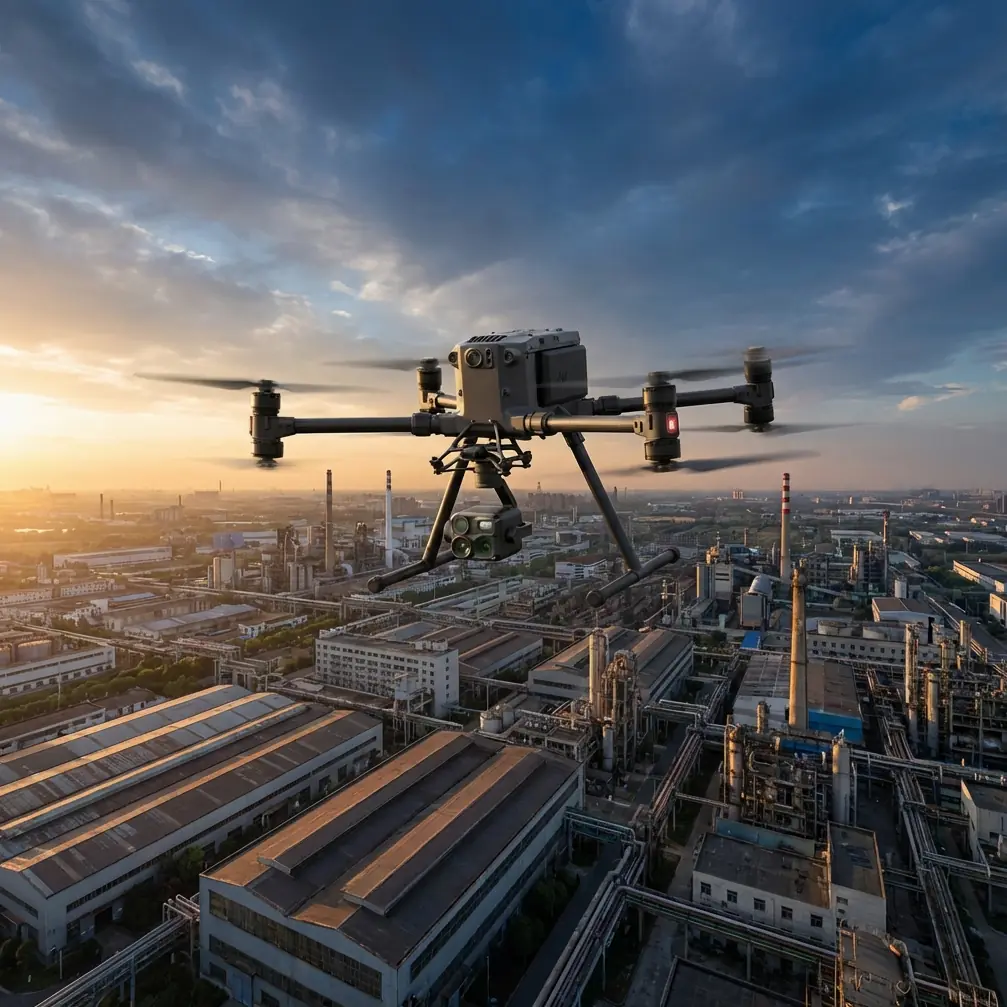
Matrice 4T on a Cold Coastline: A Field Report on Sensors, Salt Air, and Mid-Flight Weather Shift
META: Field report from Dr. Lisa Wang on using the DJI Matrice 4T for coastline capture in extreme temperatures, with practical insight on thermal work, photogrammetry, transmission reliability, battery strategy, and weather resilience.
I took the Matrice 4T to the coast for a reason that looks simple on paper and gets complicated the moment the wind turns. Shoreline work asks a drone to do several jobs at once. It has to map accurately enough for change detection, see heat differences across wet rock and built structures, hold a dependable link over reflective water, and keep doing all of that when the temperature swings and sea air starts working against every exposed surface.
This flight was planned as a combined thermal and photogrammetry mission along a mixed stretch of coastline: rock revetment, concrete drainage outlets, a service road, and a short run of cliff-backed shoreline where morning frost still held in the shaded sections. Ambient conditions at launch were cold, dry, and manageable. Forty minutes later, they were not.
That shift matters, because the Matrice 4T is often discussed in broad terms. “Good for inspection.” “Good for public works.” “Good for search.” Those labels flatten what actually determines success in the field. Coastal capture, especially in extreme temperatures, is about system behavior under stress. Not brochure features. Behavior.
Why coastline work punishes weak drone workflows
A shoreline is one of the least forgiving places to collect clean data. Water reflects light unpredictably. Spray and salt contaminate lenses and landing zones. Wind over rocks creates turbulence that does not match what the app forecast suggested. Thermal readings can be distorted by recent sun exposure, moisture retention, and rapidly changing surface temperatures.
And then there is continuity. If your mission breaks halfway through, the trouble is bigger than a lost few minutes. Tidal position changes. Shadows move. Wet zones expand. What looked like one dataset becomes two incompatible snapshots.
That is where the Matrice 4T has an advantage when used properly. Not because it removes the environment’s complexity, but because it gives the operator a better chance of holding a coherent workflow when conditions deteriorate.
The mission profile
The assignment had two deliverables.
First, a photogrammetry set for shoreline condition documentation. We wanted overlap robust enough to support a reliable orthomosaic and usable 3D reconstruction around drainage features and the slope transition near the cliff line. Ground control points were placed on stable surfaces above the splash zone, with extra care taken to avoid visually ambiguous placements on textured stone. GCP discipline matters more near coastlines than many teams admit. If targets are too close to edge transitions, pooled water, or repeating rock patterns, alignment confidence drops fast.
Second, we needed thermal review of several built assets along the route, including a drainage outlet and retaining structure interfaces where moisture pathways can become visible as thermal anomalies before they are obvious in visible imagery. The phrase thermal signature gets thrown around casually, but in a cold coastal environment it has real value. Moisture retention, subsurface seepage, and material transitions often separate thermally before they separate visually.
The M4T’s mixed-sensor approach let us collect both datasets in one field window rather than splitting the job into a mapping sortie and a separate thermal pass later in the day, when the temperature profile would already be different.
What changed mid-flight
About a third of the way through the second leg, the weather shifted faster than expected. A cold crosswind built from the water, low cloud started flattening contrast, and the apparent temperature at the operating position dropped sharply. This is where many missions begin to unravel—not through dramatic failure, but through small degradations that compound. The aircraft works harder. Link confidence becomes less comfortable. Battery planning tightens. Thermal interpretation becomes trickier because surface conditions are changing while you are still collecting.
The Matrice 4T stayed composed.
That sounds vague, so let me be specific. The transmission link remained stable enough to continue with confidence over a reflective coastal corridor where weaker systems often show their limitations. For any operator considering shoreline work, O3 transmission is not a line-item luxury. Over water and broken terrain, reliable video and control continuity are operationally significant. Reflection, uneven topography, and crosswind repositioning can all challenge your situational awareness. A robust link gives you cleaner decision-making when you need to adapt the route, tighten spacing, or terminate a section cleanly.
The second thing that mattered was energy continuity. In cold conditions, battery strategy is never just about how long the aircraft can remain airborne. It is about whether your operational rhythm survives interruptions. Hot-swap batteries kept the mission moving without turning a weather-sensitive capture into a stop-start mess. That continuity preserved lighting consistency across the mapping sequence better than a longer ground delay would have. On coastal jobs, where a passing weather band can completely alter the scene, saving that transition time is not a convenience feature. It protects data quality.
Thermal data in cold, wet, high-contrast terrain
The useful test was not whether the thermal view looked impressive on-screen. It was whether it stayed interpretable after the weather changed.
Cold shorelines generate extreme contrast. Dry concrete, wet stone, shallow standing water, algae-covered surfaces, and metal fixtures all respond differently. Add cloud movement and the thermal picture can become noisy if the operator has not planned the sequence carefully. We adjusted by shortening dwell time over the most variable surfaces and prioritizing the drainage interfaces first, before the next cloud bank flattened the gradients further.
The Matrice 4T was especially effective where moisture transition zones mattered more than absolute temperatures. That is an underappreciated distinction. In field inspection, you are often looking less for “hot” or “cold” and more for patterns that do not belong. Along the retaining structure, thermal separation hinted at persistent dampness around a joint line that in RGB looked unremarkable from altitude. That kind of finding is exactly why pairing photogrammetry with thermal work is more powerful than running them as disconnected tasks.
The visible model tells you where deformation, cracking, or washout may be forming. The thermal layer can suggest why.
A note on environmental durability, from an unexpected source
One of the more interesting reference points in this mission did not come from drone marketing at all. It came from older aerospace material literature discussing sealants formulated to maintain adhesion across demanding temperature ranges. In one case, the cited range was -55 to 120. Another detail described good bonding performance with materials such as anodized alloys and glass-like surfaces under exposure to atmospheric conditions, water, and heat.
Why bring that up in a Matrice 4T field report?
Because extreme-temperature coastline work always raises the same engineering question: which parts of the system keep their integrity when the environment cycles quickly? On aircraft of any kind, material stability around bonded surfaces, transparent elements, and aerodynamic fairings matters. In the older handbook language, one application explicitly referenced surface aerodynamic fairing work. That is not a drone specification, but it is a useful reminder of what harsh environments punish first: interfaces. Seals. Bond lines. Windows. Fairings. Protective layers.
For UAV operators, the practical lesson is simple. On coastal missions, inspect the aircraft with special attention to sensor windows, gaskets, battery interfaces, and any exposed surfaces that repeatedly see cold air, moisture, and salt residue. Environmental resilience is not only about what the drone can survive in a single flight. It is about what repeated exposure does to precision over time.
Avionics history still teaches a lesson here
Another reference I kept thinking about came from a cockpit systems discussion of the F-16, which highlighted its early use of the MIL-STD-1553 data bus to connect radar, inertial navigation, air data, computing, and displays in a distributed avionics architecture. Leave aside the military context; that is not relevant to how we use drones commercially. What matters is the underlying design principle: integrated data systems reduce operator workload and improve mission coherence.
That principle shows up clearly in the Matrice 4T workflow. Coastal documentation is not helped by isolated tools that force the pilot to mentally stitch together thermal observations, navigation decisions, map progress, and communications status while weather is shifting. It is helped by a unified operational picture. When your aircraft, payload, navigation logic, and transmission system behave as one system instead of several loosely connected ones, adaptation gets faster and mistakes get rarer.
That is exactly what I felt during the weather turn. I was not fighting individual subsystems. I was making mission decisions.
Accuracy is won before takeoff
A lot of operators ask whether the Matrice 4T is “good for photogrammetry.” The better question is whether your shoreline method is good enough to let the aircraft perform.
For this job, the GCP layout was what protected the dataset. We used conservative target placement on stable, non-reflective surfaces, verified visibility from the planned altitude, and deliberately avoided marginal points near the wet boundary where changing sheen could interfere with recognition. I would rather deploy fewer clean control points than more questionable ones.
If you are capturing coastlines in extreme temperatures, keep three things in mind:
- Surface appearance changes during the mission. Wetness, frost, and low-angle light can alter target contrast.
- Edge zones are unstable references. The exact shoreline boundary can shift visually within the same flight window.
- Wind changes overlap discipline. If the weather builds, do not assume your original spacing still protects reconstruction quality.
The M4T gives you the platform. Accuracy still comes from field rigor.
Security and long-route confidence
For teams operating infrastructure surveys, utilities corridors near shore, or industrial coastal assets, data handling is not a side issue. It is part of mission design. AES-256 matters here for a practical reason: it supports secure transmission and handling in environments where imagery may include sensitive civilian infrastructure. On a coastline, that might mean ports, outfalls, erosion defenses, utility crossings, or access roads linked to larger facilities.
The same goes for BVLOS planning. I am not recommending any operation outside local regulations, but I will say this: when teams build legal BVLOS workflows for long linear assets, the M4T’s communications reliability and sensor integration become much more valuable than they appear on short demo flights. Coastlines are linear, repetitive, and operationally hungry. Every efficiency gain compounds over distance.
What the Matrice 4T did well on this coastline
The real strength of the aircraft was not a single feature. It was its composure as conditions drifted away from the initial plan.
It maintained useful transmission quality when the reflective water and crosswind could have made command confidence fragile. It supported thermal and visual collection in one coherent field window. The hot-swap workflow reduced downtime at exactly the moment when weather continuity mattered most. And it handled a cold, unstable coastal environment without forcing compromises that would have broken the data story in half.
That last point is worth stressing. A shoreline mission is not successful because the drone returns safely with images. It is successful when the collected imagery still forms one trustworthy narrative of the site.
On this job, the Matrice 4T delivered that narrative.
My operating takeaway
If your work involves coastline condition surveys, drainage infrastructure, erosion monitoring, utility inspection near shore, or environmental documentation in cold weather, the Matrice 4T deserves to be judged by field behavior, not spec-sheet excitement.
Ask different questions.
Can it preserve thermal interpretability when cloud and wind shift mid-mission?
Can it maintain link confidence over reflective coastal surfaces?
Can its battery workflow protect continuity when the environment is changing faster than your original timeline?
Can it support precise photogrammetry without splitting the mission into disconnected parts?
On this coastline, the answer was yes.
If you are building a similar mission profile and want to compare planning notes, battery rotation strategy, or sensor setup for cold coastal capture, you can message me here.
Ready for your own Matrice 4T? Contact our team for expert consultation.