
Matrice 4T on the Coast: What Actually Matters in Complex
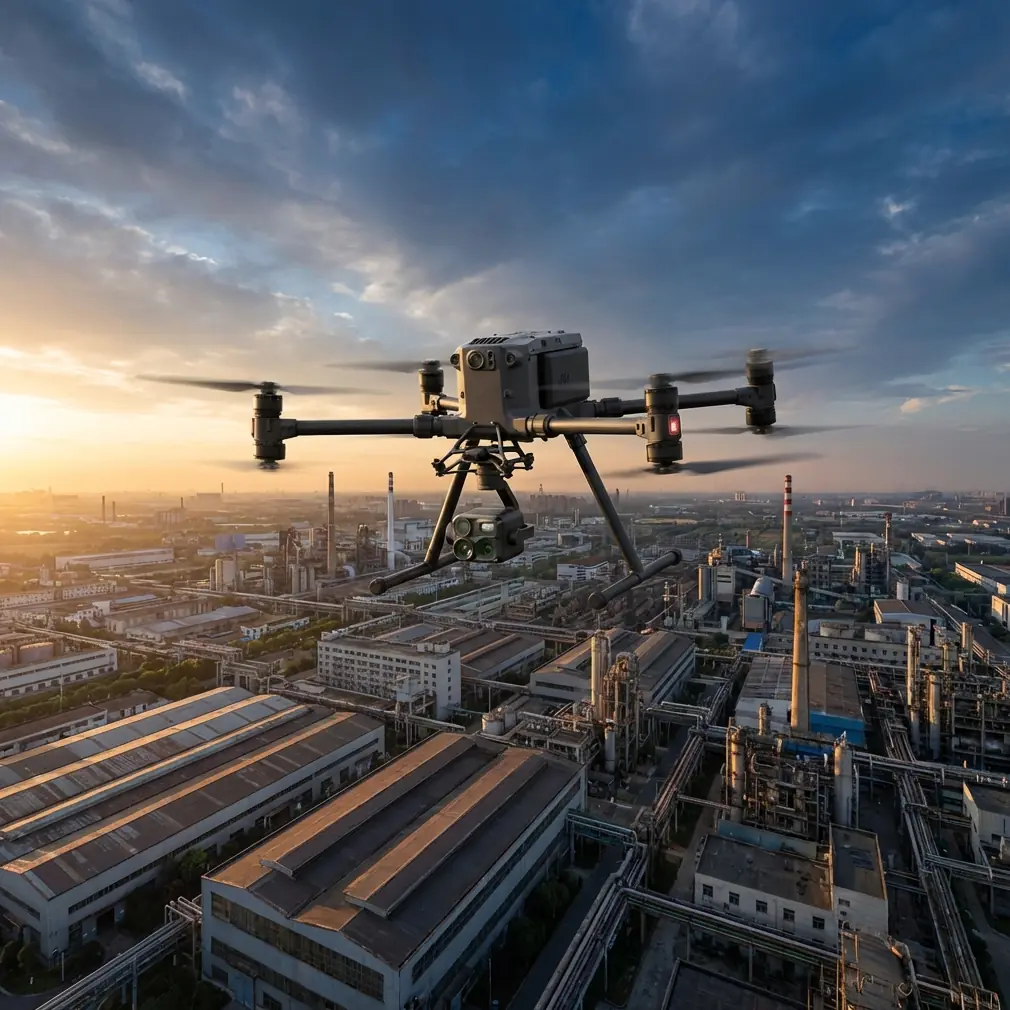
Matrice 4T on the Coast: What Actually Matters in Complex Terrain
META: A field-focused look at using the Matrice 4T for coastline capture in complex terrain, with practical insight on thermal signature, photogrammetry, O3 transmission, AES-256 security, hot-swap workflow, and data quality control.
By Dr. Lisa Wang, Specialist
Coastlines expose every weakness in an aerial workflow.
Steep escarpments, broken ridgelines, reflective water, salt haze, crosswinds, patchy GNSS conditions, and long transit legs all stack into one difficult job. A drone that performs well over a flat industrial yard may feel very different when it is asked to document tidal inlets, rock faces, sea walls, and narrow access points in one mission window. That is where the Matrice 4T conversation becomes interesting—not as a generic platform summary, but as a tool for collecting usable data when the terrain fights back.
The real issue is not whether the aircraft can fly the route. Most professional systems can. The issue is whether the output remains coherent across changing geometry, changing light, and changing signal conditions. On the coast, that distinction is everything.
The problem: coastal terrain punishes weak data discipline
A lot of operators approach coastline capture as a simple imaging task. It rarely is.
When a shoreline bends around headlands and drops into coves, the geometry of the scene changes continuously. A vertical rock face beside a gently sloped beach demands different camera angles, different overlap logic, and different confidence in your surface reconstruction. Add thermal work—such as identifying moisture intrusion in coastal infrastructure, heat loss on exposed buildings, or drainage paths after wave impact—and the challenge shifts again. You are no longer just collecting images. You are trying to preserve meaning across multiple sensing modes.
This is where an old aircraft-design principle becomes surprisingly relevant. In the civil aircraft design literature, smooth geometric form is not judged only by whether a line connects from one point to the next. It is judged by continuity and by whether curvature changes remain controlled. One cited criterion is that for lower-order spline curves, a curvature jump at a node may exist, but it should be kept very small, expressed as a difference bounded by an epsilon threshold, effectively a “keep the discontinuity minimal” rule. Another related standard warns against extra inflection points that do not belong in the intended shape.
That sounds abstract until you apply it to drone mapping.
When you fly a coastline with inconsistent overlap, abrupt altitude changes, or poorly planned turn geometry, your reconstructed surface often develops exactly those kinds of defects: false undulations, unnecessary inflection artifacts, and discontinuities between passes. In plain language, the model stops representing the coast and starts representing your mission mistakes.
Why the Matrice 4T fits this environment
The Matrice 4T is compelling in coastal work because it supports mixed-sensor operations without forcing the pilot to split the mission into disconnected fragments. In complex terrain, that matters more than brochure specs.
A seawall inspection, for example, often begins as a visual survey. Then the operator notices patterns that may relate to seepage, delamination, drainage, or retained heat. Thermal signature becomes useful. Next, the client wants measurable context—orthomosaic sections, façade references, or 3D site relationships. Now photogrammetry enters the workflow. On a difficult shoreline, the time lost swapping platforms or rebuilding the mission plan is usually more costly than most teams expect.
The Matrice 4T reduces that friction. It lets one field team maintain continuity from reconnaissance to thermal review to structured image capture. That continuity is operationally significant because coastline conditions are unstable. Tides shift. Sun angle changes. Wind funnels around terrain. If you have to reset the whole operation between tasks, your data comparability weakens.
The platform’s O3 transmission capability is also especially relevant here. Coastal topography is deceptive: open water gives a false sense of easy signal propagation, while cliffs, vegetation, and man-made structures create sudden occlusions. A robust link is not just about range on paper. It is about keeping the aircraft responsive and the live view trustworthy as the drone crosses from an exposed headland into a recessed or partially shielded zone. In complex terrain, transmission stability often becomes the difference between confident capture and conservative retreat.
Signal security matters more than many coastal teams admit
Not every coastline mission is remote and empty. Many are adjacent to ports, energy assets, utilities, private developments, transport corridors, or environmental monitoring sites with sensitive location data. That makes secure transmission part of the operational brief, not an IT afterthought.
AES-256 support matters here because inspection imagery and thermal outputs are frequently more revealing than standard site photographs. Thermal anomalies can expose building-envelope weaknesses, pipeline pathways, equipment activity, or occupancy patterns in commercial contexts. Secure handling of that stream protects both the operator and the client. In other words, security is not separate from mission quality. It is one of the conditions that defines whether the mission is professionally managed.
What coastal photogrammetry gets wrong without control
The most common failure in shoreline mapping is assuming nadir coverage alone will solve the job.
It will not.
Water edges, rock ledges, revetments, retaining structures, and vegetated slopes all create gaps in a conventional top-down dataset. The result is a visually acceptable map with weak geometric truth where the client most needs confidence. This is where GCP strategy and flight design become inseparable. Ground control points are not just for improving an overall accuracy report. In coastal terrain, they anchor reality when elevation changes and oblique surfaces confuse reconstruction.
Again, the design-manual analogy is useful. The source material emphasizes not merely continuity, but uniformity in curvature change, and it rejects extra inflection points that arise from poor representation rather than the intended form. In drone terms, if your flight lines and control network do not respect the physical shape of the coast, the software may create smooth-looking but misleading geometry. That is the digital equivalent of an unnecessary inflection point. It looks plausible until somebody measures against it.
With the Matrice 4T, the right approach is usually a layered capture plan:
- broad contextual passes for shoreline continuity,
- targeted obliques for escarpments and structures,
- thermal passes timed for useful contrast,
- and GCP placement that supports both open shoreline sections and terrain transitions.
The aircraft can support that kind of staged capture efficiently, especially when the team is working against a narrow tidal or weather window.
Hot-swap batteries change the rhythm of real fieldwork
This feature gets mentioned casually, but in coastal terrain it has outsized value.
Hot-swap batteries are not just a convenience. They preserve mission tempo at exactly the moments when environmental timing matters. If you are documenting a rock platform during a falling tide, or trying to maintain comparable thermal conditions across successive passes, every minute spent shutting down and rebuilding the sequence increases variation in the dataset.
On straightforward inland jobs, those interruptions can be absorbed. On the coast, they can break the logic of the entire capture set.
A continuous operating rhythm helps maintain overlap consistency, lighting continuity, and safer crew coordination on awkward launch points. It also reduces the temptation to rush the final flights because daylight, tide, or access permissions are tightening. In practice, that usually improves data quality more than any minor software tweak.
A third-party accessory that genuinely helps
One accessory I have seen make a practical difference on shoreline jobs is a high-visibility landing pad with weighted edge anchors designed for uneven, windy surfaces. It is not glamorous, but it solves a recurring field problem: coastal launch areas are often sandy, gravelly, or cluttered with salt spray residue. Stable takeoff and recovery reduce contamination risk and keep the aircraft out of blown grit.
On one survey campaign, pairing the Matrice 4T with that simple third-party landing setup improved turnaround between battery cycles and reduced hesitation during recoveries in gusty conditions. The value was not in adding capability in the abstract. It was in protecting mission consistency. On the coast, small handling improvements compound quickly.
Why expertise still matters more than software
One passage from the aerodynamic design reference stands out because it speaks directly to modern UAV operations: software provides powerful computational and analytical tools, but effective use, continued development, and sound judgment still require systematic professional knowledge and engineering understanding. That insight remains true in drone work.
It is easy to overestimate what automated mission planning or post-processing can fix.
A shoreline model may process cleanly and still encode poor decisions:
- the wrong time of day for thermal contrast,
- inadequate angle diversity for cliff faces,
- control points placed for convenience rather than geometry,
- or line spacing chosen for battery economy rather than reconstruction integrity.
Tools accelerate work. They do not replace judgment.
The same source also mentions that one handbook section was written by 35 contributors drawn entirely from frontline aircraft design, many of them senior discipline leaders. That matters because it reflects a culture of practice-based knowledge. Coastline capture with the Matrice 4T benefits from the same mindset. The best operators are not simply flying a mission app. They are interpreting terrain, atmosphere, reflectivity, sensor behavior, and client deliverables as one connected system.
Thermal signature on the coast: useful, but only if timed correctly
Thermal imaging along coastal infrastructure can reveal a lot: retained heat in concrete, moisture pathways, failed drainage, inconsistent roofing behavior, and stress patterns in built assets exposed to salt and wave action. But shoreline environments are noisy thermal environments. Water moderates temperature. Wind strips surface heat. Wet substrates distort interpretation.
So the question is not “does the Matrice 4T have thermal capability?” The real question is whether the operator understands when a thermal signature is meaningful and when it is being washed out by environmental conditions.
This is another reason battery continuity and transmission reliability matter. If a team can reposition quickly, maintain link confidence with O3 transmission, and stay on schedule through battery changes, they can hit the narrow intervals when thermal contrast is useful. That often determines whether the thermal dataset supports a maintenance decision or merely fills a report appendix.
BVLOS thinking changes route design, even when you are not flying full BVLOS
For coastal corridors, BVLOS planning principles are worth adopting even within more constrained operating frameworks. Long linear assets invite fragmented line-of-sight assumptions. Teams focus on where the aircraft is now instead of where terrain or access will force the operation ten minutes later.
Planning with BVLOS discipline means thinking ahead about signal continuity, emergency landing options, terrain shielding, handoff logic within the crew, and where the live data feed may become unreliable. The Matrice 4T is well suited to this style of planning because it supports professional-grade mission structure rather than ad hoc flying. Even when the operation remains within local visual rules, the planning philosophy improves safety and data continuity.
The practical takeaway
The Matrice 4T is not interesting because it can collect visible and thermal imagery. Plenty of readers already know that.
It becomes genuinely valuable on coastlines because it helps an experienced team preserve coherence across a difficult mission. O3 transmission helps keep control and visibility stable where terrain interrupts signal paths. AES-256 supports the secure handling of sensitive inspection data. Hot-swap batteries maintain capture rhythm when tide, weather, and thermal timing are narrow. And when paired with disciplined GCP strategy and proper photogrammetric design, the platform is capable of producing outputs that reflect the real shape of the site instead of artifacts from a rushed flight plan.
That last point is the one I would stress most. The aircraft-design references behind this discussion keep returning to continuity, controlled change, and the avoidance of artificial inflections. Those ideas map neatly onto coastal drone work. Good data is not just complete. It is geometrically honest.
If your team is planning a complex shoreline mission and wants to compare workflow options, you can message our field specialist directly here.
Ready for your own Matrice 4T? Contact our team for expert consultation.