
Matrice 4T: Mastering Field Capture in Low Light
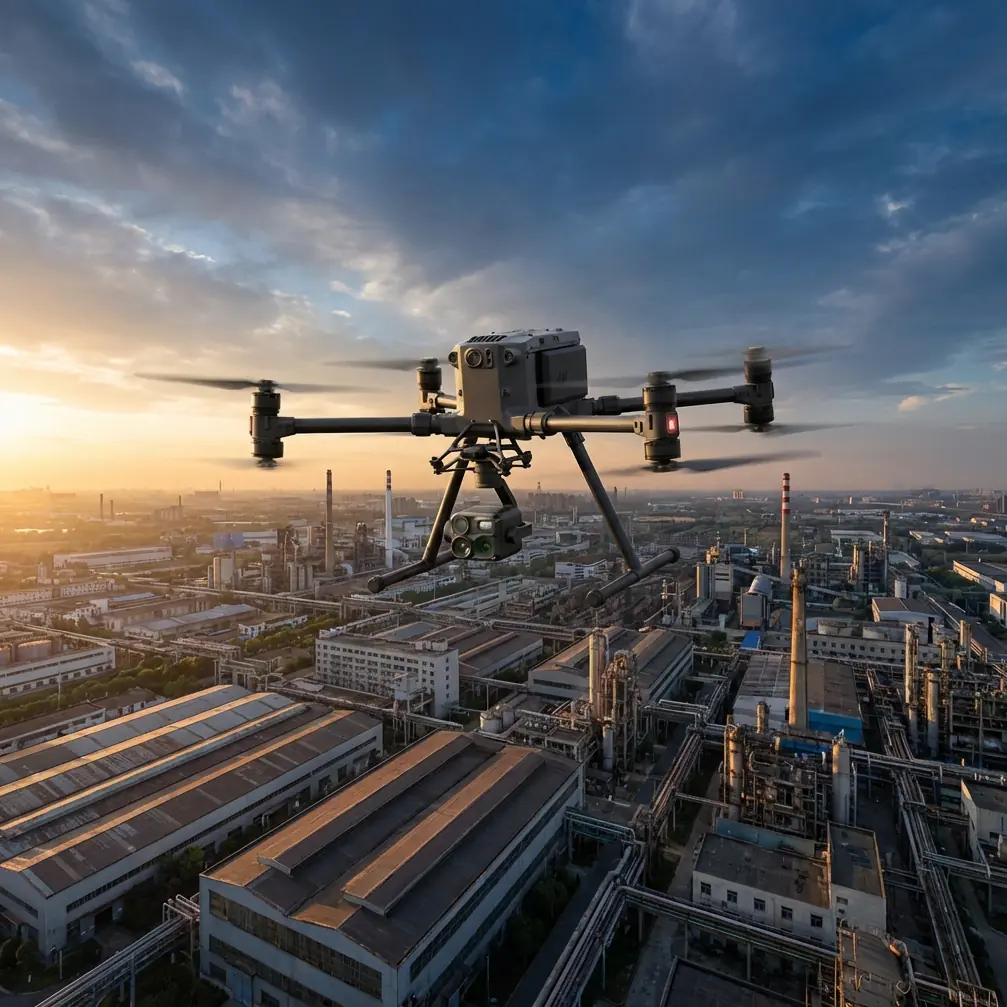
Matrice 4T: Mastering Field Capture in Low Light
META: Learn how the DJI Matrice 4T captures detailed field data in low-light conditions using thermal imaging, optimized altitude settings, and advanced sensors.
By Dr. Lisa Wang, Remote Sensing & Drone Mapping Specialist
TL;DR
- The Matrice 4T combines a wide-angle thermal sensor with a 56× zoom visual camera to capture agricultural fields when visible light fails.
- Flying at 80–120 meters AGL delivers the optimal balance between thermal signature resolution and area coverage during dusk, dawn, or overcast sessions.
- O3 transmission and AES-256 encryption ensure reliable, secure data links even during extended BVLOS operations across large parcels.
- Hot-swap batteries eliminate downtime, allowing continuous capture across hundreds of hectares in a single low-light window.
Why Low-Light Field Capture Matters
Traditional RGB drone surveys depend on consistent sunlight. That dependency creates a bottleneck: crews lose productive hours waiting for ideal conditions, and critical agronomic events—early-morning frost patterns, post-sunset irrigation anomalies, pre-dawn pest activity—go completely undocumented.
The Matrice 4T was engineered to break that dependency. Its multi-sensor payload captures actionable field data when ambient light drops below 50 lux, a threshold where most commercial drones produce unusable imagery.
This guide walks you through the exact workflow, altitude settings, sensor configurations, and data-processing steps needed to capture publication-grade field data in low-light conditions with the Matrice 4T.
Understanding the Matrice 4T's Low-Light Sensor Suite
Visual Camera Performance After Dark
The Matrice 4T's wide-angle camera uses a 1/1.3-inch CMOS sensor with an f/2.8 aperture. This combination pulls in significantly more light than the smaller sensors found on lightweight enterprise drones. At ISO settings up to 12,800, the camera resolves crop row detail during civil twilight without introducing excessive noise.
The telephoto camera—offering up to 56× hybrid zoom—lets operators inspect specific anomalies spotted during a thermal sweep without descending or repositioning the aircraft.
Thermal Imaging for Field Analysis
The real workhorse in low-light scenarios is the 640 × 512 uncooled infrared sensor. Unlike visible-light cameras, this thermal sensor operates independently of ambient illumination. It detects thermal signature differences as small as ≤50 mK (NETD), meaning it can distinguish:
- Stressed crop zones radiating slightly more heat than healthy canopy
- Irrigation leaks producing cooler soil patches
- Wildlife or pest concentrations generating localized heat plumes
- Drainage tile malfunctions beneath the soil surface
Expert Insight: Thermal signature contrast in agricultural fields peaks during the first 90 minutes after sunset. The soil is still releasing absorbed solar energy while the crop canopy cools rapidly. This differential creates the widest temperature spread and the most readable thermal maps. Schedule your flights accordingly.
Laser Rangefinder Integration
The onboard laser rangefinder measures distances up to 1,200 meters, enabling precise GCP (Ground Control Point) validation from altitude. This matters for photogrammetry workflows where positional accuracy drives the quality of ortho-mosaics and elevation models.
Step-by-Step: How to Capture Fields in Low Light
Step 1 — Pre-Flight Planning
Before powering on the aircraft, define your objectives clearly. Low-light capture demands tighter planning than midday missions because your operational window is shorter.
- Define the AOI (Area of Interest) using DJI Pilot 2 or DJI FlightHub 2
- Set waypoints at consistent altitude with 70% frontal overlap and 65% side overlap for photogrammetry
- Check civil twilight times for your GPS coordinates—this is your optimal thermal window
- Verify airspace for BVLOS authorization if covering parcels beyond visual line of sight
- Place GCPs before light fades completely; use retro-reflective targets visible to the laser rangefinder
Step 2 — Optimal Flight Altitude Selection
Altitude is the single most impacthat variable in low-light thermal mapping.
| Altitude (AGL) | Thermal GSD | Coverage per Pass | Best Use Case |
|---|---|---|---|
| 40–60 m | ~5.5 cm/px | Narrow swath | High-detail crop stress analysis |
| 80–120 m | ~9–14 cm/px | Medium swath | Recommended — balanced field mapping |
| 150–200 m | ~18–24 cm/px | Wide swath | Rapid large-parcel screening |
Pro Tip: For most agricultural low-light applications, 100 meters AGL is the sweet spot. At this altitude, the thermal sensor resolves individual crop rows while covering approximately 8 hectares per battery. Going higher saves time but blurs the thermal gradients you need to detect early-stage stress.
Step 3 — Sensor Configuration
Switch the Matrice 4T into split-screen mode to monitor thermal and visual feeds simultaneously. Configure these settings:
- Thermal palette: Ironbow or White Hot (Ironbow reveals subtle gradients better in vegetation)
- Thermal gain mode: High Gain for agricultural scenes (optimized for -20°C to 150°C range)
- Visual camera: Shutter priority at 1/120 s minimum to avoid motion blur during waypoint flight
- ISO: Auto with upper limit set to 6,400 to control noise
- File format: Radiometric JPEG (R-JPEG) for thermal; DNG + JPEG for visual
R-JPEG files embed per-pixel temperature data, which is essential for post-processing thermal mosaics in software like DJI Terra, Pix4Dfields, or QGIS.
Step 4 — Executing the Flight
Launch from a position upwind of the AOI. The Matrice 4T's quad-rotor configuration handles crosswinds up to 12 m/s, but calmer conditions produce sharper thermal imagery because the aircraft maintains steadier gimbal positioning.
During the automated waypoint mission:
- Monitor the O3 transmission feed for latency—low-light flights often coincide with atmospheric conditions that affect signal propagation
- Verify that the AES-256 encrypted link shows a stable connection icon in DJI Pilot 2
- Watch battery voltage closely; cold evening air reduces cell performance by 8–15% compared to daytime temperatures
Step 5 — Hot-Swap Battery Transition
When the first battery pair reaches 25% remaining, the Matrice 4T triggers an automatic RTH (Return to Home). This is where hot-swap batteries become essential.
Land, swap both battery packs in under 60 seconds, and relaunch to the next uncompleted waypoint. The flight controller remembers the mission progress, so no waypoints are duplicated or skipped.
For a 200-hectare field, expect 3–4 battery cycles at 100 meters AGL. Pre-stage charged batteries in an insulated case to maintain optimal cell temperature.
Step 6 — Post-Processing and Photogrammetry
After landing, transfer R-JPEG and DNG files to your processing workstation. Here's the recommended workflow:
- Import thermal R-JPEGs into DJI Terra or Pix4Dfields
- Align images using embedded GPS/IMU data and GCP coordinates
- Generate a thermal orthomosaic with per-pixel temperature calibration
- Overlay the thermal layer onto the visual orthomosaic for a fused analysis map
- Export as GeoTIFF for integration into your farm management or GIS platform
Photogrammetry accuracy depends heavily on overlap consistency. If your overlap dropped below 60% on any flight leg due to wind gusts, re-fly that segment before processing.
Technical Comparison: Matrice 4T vs. Common Alternatives for Low-Light Field Capture
| Feature | Matrice 4T | Competitor A (Mid-Range) | Competitor B (Enterprise) |
|---|---|---|---|
| Thermal Resolution | 640 × 512 | 320 × 256 | 640 × 512 |
| Thermal Sensitivity (NETD) | ≤50 mK | ≤60 mK | ≤50 mK |
| Visual Zoom | 56× hybrid | 10× hybrid | 30× hybrid |
| Transmission System | O3 (triple-channel) | OcuSync 2.0 | Proprietary |
| Encryption | AES-256 | AES-128 | AES-256 |
| Hot-Swap Batteries | Yes | No | Yes |
| Max Flight Time | ~38 min | ~28 min | ~34 min |
| BVLOS Ready | Yes | Limited | Yes |
| Integrated Laser Rangefinder | Yes | No | Optional add-on |
Common Mistakes to Avoid
1. Flying too low for thermal coverage. Operators often default to 30–40 meters because that altitude produces excellent visual imagery. But at those heights, the thermal sensor's narrow field of view forces excessive passes, burning battery life and shrinking your capture window.
2. Using the wrong thermal palette. Rainbow palettes look dramatic but mask subtle temperature gradients in vegetation. Stick with Ironbow or White Hot for agricultural analysis.
3. Ignoring atmospheric moisture. Dew formation begins shortly after sunset in many growing regions. Moisture on leaf surfaces alters thermal emissivity and can produce misleading thermal signatures. Fly before dew point is reached or document the dew condition in your metadata.
4. Skipping GCPs because "it's dark." Retro-reflective GCP targets remain visible to the laser rangefinder and even to the visual camera at moderate ISO. Skipping ground control degrades your photogrammetry accuracy from centimeter-level to meter-level.
5. Neglecting AES-256 data security settings. Agricultural data—yield predictions, stress maps, drainage analysis—carries significant commercial value. Ensure encryption is active on every flight to protect data during O3 transmission.
Frequently Asked Questions
Can the Matrice 4T capture usable visual imagery at night, not just thermal?
The visual camera performs well during civil and nautical twilight (roughly 30 minutes before sunrise to 30 minutes after sunset). In full darkness, visual imagery degrades significantly even at high ISO. For nighttime operations, rely primarily on the thermal sensor and use the visual camera only for reference with the IR illumination from nearby ground lights when available.
What is the minimum overlap recommended for low-light photogrammetry?
Aim for 70% frontal overlap and 65% side overlap as a baseline. Low-light imagery has slightly lower feature contrast than daylight imagery, so photogrammetry algorithms need the extra redundancy to match tie points accurately. Dropping below 60% in either axis often causes alignment failures in processing software.
How does BVLOS authorization affect low-light agricultural missions?
BVLOS (Beyond Visual Line of Sight) operations are governed by national aviation authorities, and many jurisdictions impose additional restrictions for night or low-light flights, including requirements for anti-collision lighting, a remote pilot certificate with night endorsement, and real-time telemetry monitoring. The Matrice 4T supports programmable anti-collision strobes and continuous O3 telemetry, meeting the technical requirements of most BVLOS waiver applications. Always consult local regulations before planning extended-range low-light missions.
Ready for your own Matrice 4T? Contact our team for expert consultation.