
Matrice 4T Field Report: Low-Light Field Capture Without
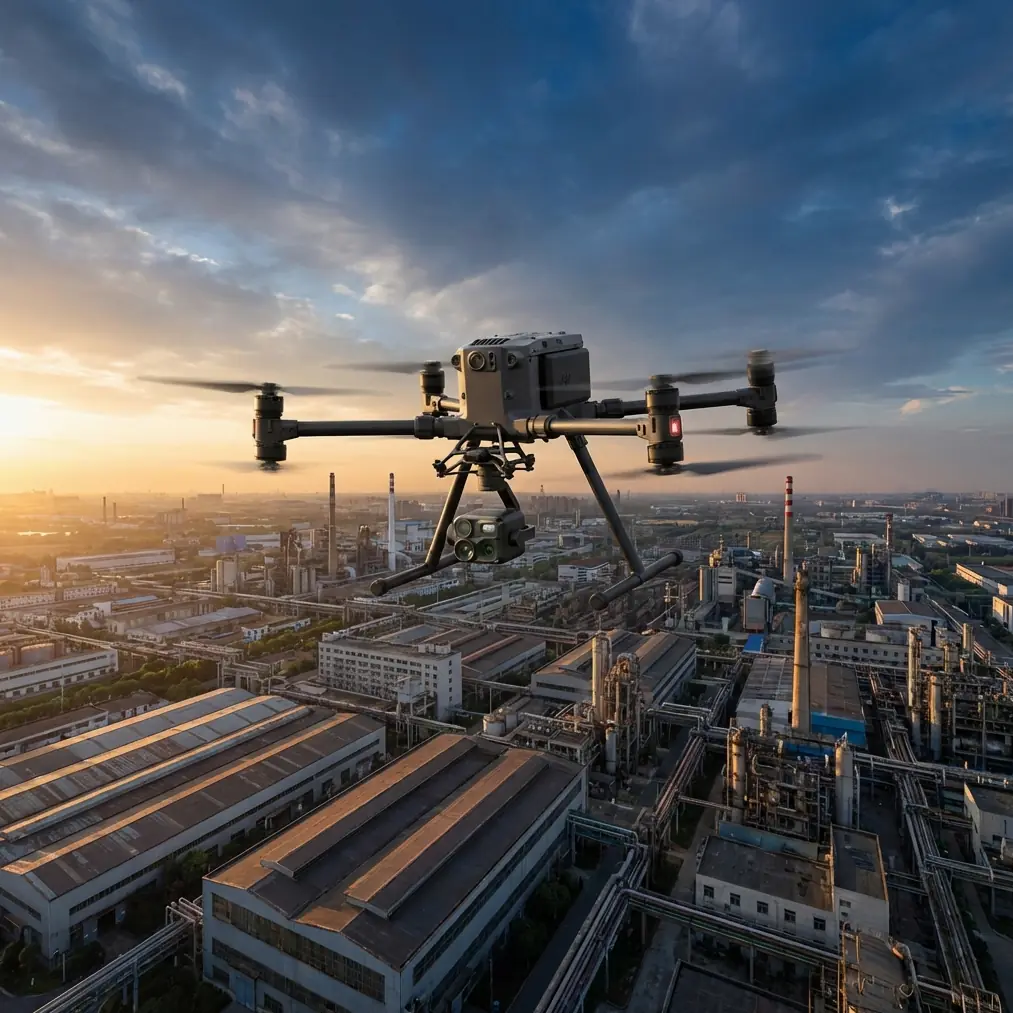
Matrice 4T Field Report: Low-Light Field Capture Without Guesswork
META: Specialist field report on using the DJI Matrice 4T for low-light agricultural capture, with practical guidance on thermal signature reading, photogrammetry limits, O3 transmission, AES-256 security, and battery workflow.
There is a specific kind of frustration that only shows up at dawn.
You arrive before sunrise because that is when field stress often reveals itself best. Moisture variation, irrigation faults, early animal intrusion, and heat loss around infrastructure can all stand out before the day warms up and smooths everything over. The light is poor, the window is short, and every mistake compounds. If your aircraft struggles with visibility, battery swaps, link stability, or sensor coordination, you do not just lose images. You lose the moment that made the mission worth flying.
That is the context where the Matrice 4T makes sense.
I am not talking about it as a generic enterprise drone or a catch-all solution. I am talking specifically about the kind of low-light field capture work where a pilot needs to move from “Can I safely get usable data right now?” to “What decision does this data support before 8 a.m.?” Those are very different questions. The first is about flying. The second is about operations. The Matrice 4T helps bridge that gap.
My own perspective on this comes from a job that still sticks with me. We were documenting a large agricultural site with recurring drainage inconsistencies along one boundary and suspected equipment heat anomalies near a pump station. The visible-light captures looked acceptable after sunrise, but by then the thermal contrast had already started to flatten. Earlier flights had been limited by weak situational awareness at takeoff, inconsistent link quality at distance, and the constant pressure of battery timing when we needed repeat passes over the same area. We could collect images, yes. What we could not reliably collect was confidence.
That is where a platform like the Matrice 4T changes the workflow.
The first operational advantage in low light is not just that it carries thermal. It is that thermal signature becomes part of the planning logic rather than an emergency backup when RGB conditions are poor. For field users, that matters more than spec-sheet theater. In predawn capture, the thermal camera is often the first sensor that tells you where to spend your next three minutes. A leaky irrigation line, a blocked section creating uneven ground moisture, or an overheated electrical enclosure can present as a temperature pattern before it presents as a visible problem. That means your mission is no longer just “map everything.” It becomes “identify anomalies, confirm them, then capture the supporting visual record while contrast still exists.”
That distinction saves time, batteries, and unnecessary re-flights.
The Matrice 4T is particularly effective when the operator treats thermal and photogrammetry as complementary rather than interchangeable. This is where many field teams get tripped up. They assume that because the aircraft can collect multiple data types, every mission can be solved with one universal flight plan. In practice, low-light photogrammetry is a narrower discipline. If you are building a measurable surface model or orthomosaic, you still need disciplined overlap, stable exposure behavior, and good ground control. GCP placement remains critical whenever the final output has to support comparison over time or tie accurately into field boundaries, drainage lines, or infrastructure records. Low light does not remove that requirement. It makes it more unforgiving.
So the smart use of the Matrice 4T is usually phased.
Start with thermal to identify priority zones while the field is still holding useful temperature separation. Then decide whether those same zones need higher-confidence visual capture for documentation, measurement, or stakeholder reporting. If the answer is yes, shift the mission profile accordingly rather than trying to force one pass to do everything. This is the difference between collecting images and building a repeatable evidence chain.
Transmission quality is another issue that gets underrated until a mission turns ugly. In low-light agricultural work, crews often operate across large parcels, irrigation corridors, road edges, and patchy terrain where maintaining orientation can become surprisingly difficult. The Matrice 4T’s O3 transmission matters here because stable video and telemetry are not luxuries when visibility is compromised. They are the basis for deciding whether your aircraft is still in the right place, at the right height, with the right sensor on target. A stronger link reduces the temptation to creep closer than necessary and allows the pilot to work more deliberately at standoff distances that make sense for safety and crop protection.
That operational discipline becomes even more relevant when teams begin planning toward BVLOS-style thinking, even where regulations still require direct visual compliance. I am deliberately careful with that distinction. BVLOS is not just a checkbox or a longer route. It is a system-level commitment involving regulatory approval, risk controls, detect-and-avoid strategy, and communications reliability. But the habits start earlier. If your field workflow already depends on stable, trustworthy transmission and clear mission segmentation under marginal light, you are building the right foundations. The Matrice 4T fits naturally into that progression because it rewards structured operations rather than improvised flying.
Security is another point that serious operators should not brush aside. Agricultural and infrastructure-adjacent field data can be more sensitive than people assume. A survey of water access points, pump layouts, storage locations, or site access roads may carry operational implications beyond agronomy. AES-256 support matters because it addresses the basic question every enterprise team should ask: who can intercept, access, or mishandle this mission data? Security features are only one part of a full data governance policy, but they are not abstract. They shape whether a platform is suitable for clients and organizations that need traceable handling standards.
Then there is battery management, which sounds mundane until you are standing in wet grass at first light trying to preserve continuity across multiple target areas. Hot-swap batteries are one of those features that reveal their value in the field, not in a brochure. On low-light missions, the useful capture window can be brief. You may need one pass for thermal screening, another for visual confirmation, and a third for a tighter inspection over a hotspot that was not in the original plan. If battery exchange forces a long interruption, the environment changes while you are on the ground. Temperatures rise. Shadows shift. Condensation clears. Livestock moves. Equipment cycles on or off. The scene you return to is not the scene you left.
Hot-swap capability does not just reduce downtime. It preserves comparability.
That is especially helpful when you are documenting thermal anomalies that need to be judged against a stable environmental backdrop. If one area is flown at 5:40 and another at 6:15 after a long pause, the data may be harder to compare in a meaningful way. A cleaner battery workflow helps compress the mission timeline and keeps the dataset more coherent.
For readers focused on fields specifically, one question always comes up: can the Matrice 4T replace a dedicated mapping workflow? Sometimes, but not automatically.
If the mission is about detecting thermal irregularities, checking perimeters, locating stressed zones, or inspecting specific structures in low light, the aircraft is exceptionally strong. If the mission is rigorous photogrammetric reconstruction with repeatable measurement tolerances, then execution discipline still determines success. You need proper overlap, altitude planning, GCP strategy, and an honest understanding of what the light is doing to your imagery. The aircraft expands your envelope. It does not suspend the laws of data quality.
That is why I think the best way to approach the Matrice 4T is not as a single-purpose field camera, but as a decision accelerator. It lets you move from anomaly detection to targeted documentation with fewer handoffs and less hesitation. In practical farm or land-management terms, that can mean finding a warm motor housing before failure, spotting uneven moisture patterns before sunrise masks them, or confirming whether a suspicious patch is a drainage issue, irrigation problem, or simple visual noise.
The operators who get the most out of it usually follow a few habits.
They pre-plan the mission around the thermal window, not just sunrise time. They identify where GCPs matter and where they do not. They avoid pretending that every field task is a mapping task. They treat transmission integrity as part of safety, not convenience. They standardize battery rotations so that hot-swap efficiency actually translates into better datasets. And they brief stakeholders on what thermal can indicate versus what it can prove. That last point matters. A thermal signature is evidence of a condition worth investigating, not always a diagnosis by itself.
I also recommend building a repeatable field log for low-light missions. Note ambient conditions, time from takeoff, battery sequence, observed thermal anomalies, and whether those anomalies were cross-checked visually on the same sortie. That kind of documentation turns one-off flights into an operational record. It also makes future comparisons much more useful, especially when the same field issue returns under slightly different weather or irrigation conditions. If you want to compare notes with a specialist team on setting up that workflow, this direct field support channel is often the fastest route: message us here.
What stands out most about the Matrice 4T in this role is not any one feature in isolation. It is the way the platform reduces friction between sensing and decision-making. Thermal signature tells you where to look. O3 transmission helps you stay confident while looking. AES-256 supports responsible handling of what you collect. Hot-swap batteries protect the narrow timing that gives low-light missions their value. And if you need measurable outputs, disciplined photogrammetry with GCP support keeps the workflow honest.
That combination matters because low-light field capture is unforgiving. The conditions are fleeting, the interpretation can be subtle, and the operational penalties for delay are real. A platform that merely flies well is not enough. It has to help the crew think clearly under time pressure.
The Matrice 4T does that best when it is treated as part of a method, not a shortcut.
Used properly, it gives field teams a cleaner read on what is happening before daylight levels the scene. It helps isolate priority areas before labor and machinery are committed. It makes follow-up flights more intentional. And it reduces the amount of guesswork that too often creeps into early-morning operations when visibility is low and everyone is trying to move quickly.
That is why I keep coming back to that dawn problem.
The real challenge was never simply getting airborne in poor light. It was capturing something reliable enough, early enough, to change what happened next on the ground. For that job, the Matrice 4T is at its best.
Ready for your own Matrice 4T? Contact our team for expert consultation.