
Capturing Dusty Fields with the Matrice 4T
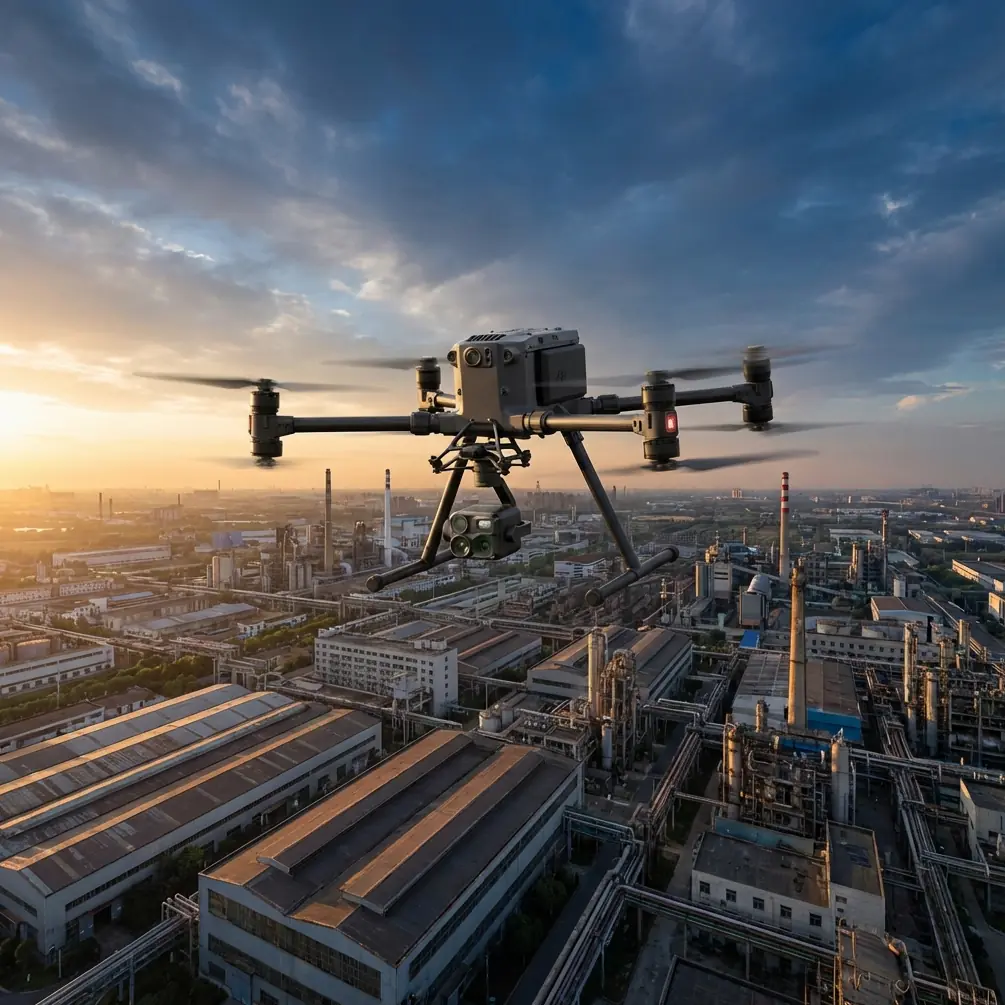
Capturing Dusty Fields with the Matrice 4T: What Actually Matters When Conditions Turn Mid-Flight
META: A field-tested look at using the DJI Matrice 4T in dusty agricultural and survey environments, with practical insight on thermal workflows, transmission stability, encrypted data handling, and weather shifts during flight.
Dusty field work exposes the difference between a drone that looks capable on paper and one that stays useful when visibility drops, wind picks up, and the mission still has to finish. That is where the Matrice 4T becomes interesting—not as a spec-sheet trophy, but as a working platform for survey teams, agronomists, and environmental operators who need reliable data after the easy flying ends.
I’m writing this from the perspective of a specialist who cares less about abstract promises and more about field output: did the aircraft keep its link, did the payload produce usable imagery, did the operator have options when the weather shifted, and was the data secure enough for professional workflows?
For readers planning to capture fields in dusty conditions, the harder question is not whether the Matrice 4T can fly. It can. The real question is whether it can preserve decision-quality information when the environment starts interfering with every layer of the mission at once: optics, transmission, battery timing, and image consistency.
The real problem with dusty field capture
Dust changes the mission before the drone even leaves the ground. It reduces contrast in visible imagery, increases the chance of haze across oblique views, and can make edge definition less clean for photogrammetry. In agriculture and land inspection, that matters because surface texture is often what helps you distinguish wheel tracks, irrigation inconsistencies, crop stress patterns, drainage lines, or disturbed soil.
Then weather adds another layer. Many operators launch in stable morning conditions and assume the rest of the flight will behave the same way. But open fields create their own surprises. A light crosswind becomes a stronger gust. Fine dust starts rising from the dry surface. Sun angle changes. In some regions, heat shimmer appears faster than expected. A mission designed for straightforward RGB mapping suddenly needs thermal context, stable transmission, and enough battery flexibility to avoid rushing the final passes.
That is the operational frame where the Matrice 4T earns attention.
Why a multi-sensor platform matters more in the field than in the brochure
The Matrice 4T is most useful when you stop thinking of it as one camera in the air. A dusty field is rarely solved by visible imagery alone. If the scene loses optical clarity, thermal signature becomes a second layer of truth. You may not see every detail cleanly in RGB when airborne dust softens the scene, but thermal contrast can still reveal dry patches, heat-retaining machinery, stressed irrigation zones, or uneven moisture behavior.
That multi-layer approach connects directly to one of the strongest signals in the reference material: the environmental gas-detection solution set. Even though the source document is damaged, its intent is clear—drone platforms are being positioned for environmental monitoring, not just visual observation. That matters because it shows the broader workflow logic behind aircraft like the Matrice 4T. In the field, you are not only collecting pictures. You are building a situational model from multiple sensing channels.
For agricultural users and land managers, this opens practical options. A dusty field mission can begin as a standard visual capture job and evolve into a thermal review when the visible layer degrades. That flexibility is not a luxury. It is often the difference between repeating the flight and finishing the day with enough usable data to act on.
A mid-flight weather shift: where platform design shows up
Here is a familiar scenario.
The mission starts over a dry block of farmland. Wind is light. The first mapping lines are clean. Ten minutes in, the weather changes—not dramatically, just enough to complicate things. Gusts move across the field, lifting dust from tractor lanes. Contrast falls off in some frames. The operator notices that the visual feed is less crisp than it was at takeoff.
This is where many workflows break down. Operators either push on blindly and discover later that the dataset is inconsistent, or they abort too early and lose coverage.
With the Matrice 4T, the better move is to adapt the mission rather than surrender it. Use the live feed to reassess the high-priority sections first. If the visible scene is becoming less reliable, switch emphasis to thermal signature for areas where heat variation can still indicate meaningful ground conditions. If transmission remains stable, the operator can make deliberate route decisions instead of flying reactively.
That last point matters more than people admit. O3 transmission is not just a comfort feature. In real fieldwork, stable downlink means the pilot and observer can still judge scene quality while airborne dust and changing light make every decision more time-sensitive. If the link degrades at the same moment visibility degrades, the mission becomes guesswork. If the link holds, the team keeps options.
Transmission and data security are operational issues, not IT footnotes
A lot of drone content treats connectivity and encryption as if they belong in separate departments. They do not. In survey, environmental, and commercial land workflows, transmission integrity and data security directly affect mission design.
The Matrice 4T’s O3 transmission helps preserve situational awareness over wide, open sites where field geometry can create deceptively long working distances. That becomes especially useful for dusty capture because the operator may choose to stand farther from the source of airborne debris while still maintaining a dependable live view.
AES-256, meanwhile, is not there for marketing polish. Agricultural operators, contractors, and environmental service firms routinely handle sensitive location data, thermal imagery, site boundaries, and customer-owned records. If you are mapping productive land, documenting infrastructure conditions, or capturing environmental anomalies, the dataset itself can be commercially sensitive. Strong encryption matters because field capture is no longer isolated from the rest of the data chain. The flight is one part; storage, transfer, review, and client delivery are the rest.
In short: a drone built for professional work has to protect both the live mission and the information it creates.
Where the reference materials point: survey roots and environmental expansion
The provided source material is messy, but two details stand out and they are worth unpacking.
The first comes from the surveying solution document on pages 18–19, which centers on a drone solution in a real operational context rather than a showroom context. Even with OCR corruption, the document clearly situates drone work inside demanding field response conditions. That is significant because mapping systems that prove themselves in urgent, unstable environments tend to translate well to civilian land assessment and field documentation. For dusty agricultural capture, that means we should value resilience, deployment speed, and mission continuity—not only image resolution.
The second detail comes from the environmental gas-detection solution on page 4, which includes the figure 82%. The damaged text limits certainty about the exact sentence, but the presence of a quantified performance or efficiency metric in an environmental monitoring workflow is revealing. It tells us these drone solutions are being evaluated against measurable field outcomes, not vague usability claims. For Matrice 4T operators, that has a practical takeaway: the aircraft belongs in workflows where environmental context matters, where sensing choices affect interpretation, and where the output must support a real decision.
That is precisely why the Matrice 4T makes sense for dusty field work. Dust is an environmental variable. So is heat. So is wind-driven visibility loss. A platform that can absorb those variables into a broader sensing workflow is stronger than one that relies on perfect optical conditions.
Photogrammetry in dusty conditions: what to change, what to protect
Let’s get specific. If your mission includes photogrammetry, dust introduces two risks: uneven image quality and weaker tie-point reliability in low-contrast zones. The answer is not to abandon the mission at the first sign of airborne haze. The answer is to control what you still can.
Start with GCP discipline. Ground control points become more valuable as atmospheric conditions become less cooperative. In a dusty field, well-placed GCPs give your processing workflow stronger anchors when certain image segments show reduced visual clarity. You are essentially building redundancy into the geometry of the project.
Second, prioritize overlap consistency over speed. If weather begins changing mid-flight, resist the temptation to accelerate and “just finish.” Rushed capture often creates more processing trouble than a carefully adjusted route.
Third, use thermal intelligently rather than decoratively. Thermal imagery is not a substitute for every mapping product, but it can reveal patterns that visible data partly hides. On a dry field, thermal contrast may expose irrigation irregularities or localized stress that a dust-softened RGB dataset underrepresents. That can help you decide whether a second targeted pass is worth the time.
Fourth, watch lens condition and landing-zone selection. Dusty operations often fail on the ground. The aircraft may fly well, but a poor launch or recovery area contaminates optics or forces hurried handling. A clean staging habit improves final data quality more than many operators realize.
Battery strategy matters when the weather does not stay polite
Hot-swap batteries sound like a convenience until a field mission stretches under unstable conditions. Then they become one of the smartest workflow protections available.
If weather changes halfway through the job, you do not want to rebuild the entire operation from scratch because of a slow turnaround. Hot-swap capability reduces downtime between sorties and helps teams preserve continuity in lighting, environmental conditions, and operator focus. For larger fields, it also supports segmented mission planning: complete the priority block first, evaluate the weather trend, then resume with a fresh pack while the aircraft remains part of a coherent data-collection sequence.
This is especially valuable in dusty environments because every extra ground minute increases the chance of contamination, handling error, or shifting visibility. Faster, cleaner relaunches help keep the mission inside a usable weather window.
What BVLOS changes in broad-acre workflows
BVLOS discussions often become abstract. In real field mapping, the appeal is simple: large properties consume time, battery cycles, and operator energy. For organizations working within applicable regulations and approved procedures, BVLOS-capable thinking changes how a mission is designed. It encourages route efficiency, communication planning, and a stronger dependence on transmission stability and data integrity.
For the Matrice 4T, this matters because dusty field capture is often a scale problem. The larger the site, the more likely it is that ground conditions and micro-weather will vary across it. A platform that supports longer-range confidence, strong link performance, and secure data handling is better suited to that reality.
A practical workflow for dusty fields with the Matrice 4T
Here is the method I recommend:
Pre-check the mission as a sensing problem, not just a flight plan.
Identify which deliverables require RGB precision and which can benefit from thermal review.Set GCPs before conditions worsen.
In dust-prone fields, control quality is cheap insurance.Fly priority zones first.
If weather changes, you preserve the most important data.Monitor the live feed for contrast loss, not only aircraft status.
A safe aircraft can still produce weak imagery.When dust rises mid-flight, adapt the route.
Re-sequence target areas, reduce unnecessary exposure, and collect thermal where it adds interpretive value.Use hot-swap turnaround to stay ahead of changing conditions.
That keeps the operation deliberate instead of rushed.Protect the dataset from capture to handoff.
O3 transmission and AES-256 are part of workflow quality, not side notes.
If you are planning a field workflow and want to sanity-check the setup, battery rotation, or image strategy before deployment, you can message our UAV team here: https://wa.me/85255379740
The Matrice 4T is strongest when conditions are imperfect
That is the real takeaway.
In dusty field operations, the Matrice 4T should not be judged by how it performs on a calm, clear demo morning. It should be judged by how well it helps a team keep collecting useful information after the air becomes less cooperative. Its value comes from layered sensing, stable transmission, secure data handling, and operational flexibility when the mission has to change in the air.
The reference materials, limited as they are, point in the same direction. One source frames drones inside serious survey and response work on pages 18–19. Another places them in environmental detection on page 4, with a measurable figure of 82% tied to performance context. Together they suggest a platform philosophy built around actionable field data under non-ideal conditions.
For anyone capturing fields in dust, that philosophy matters more than perfect marketing images ever will.
Ready for your own Matrice 4T? Contact our team for expert consultation.