
Matrice 4T in Mountain Forest Work: What a Real Flight
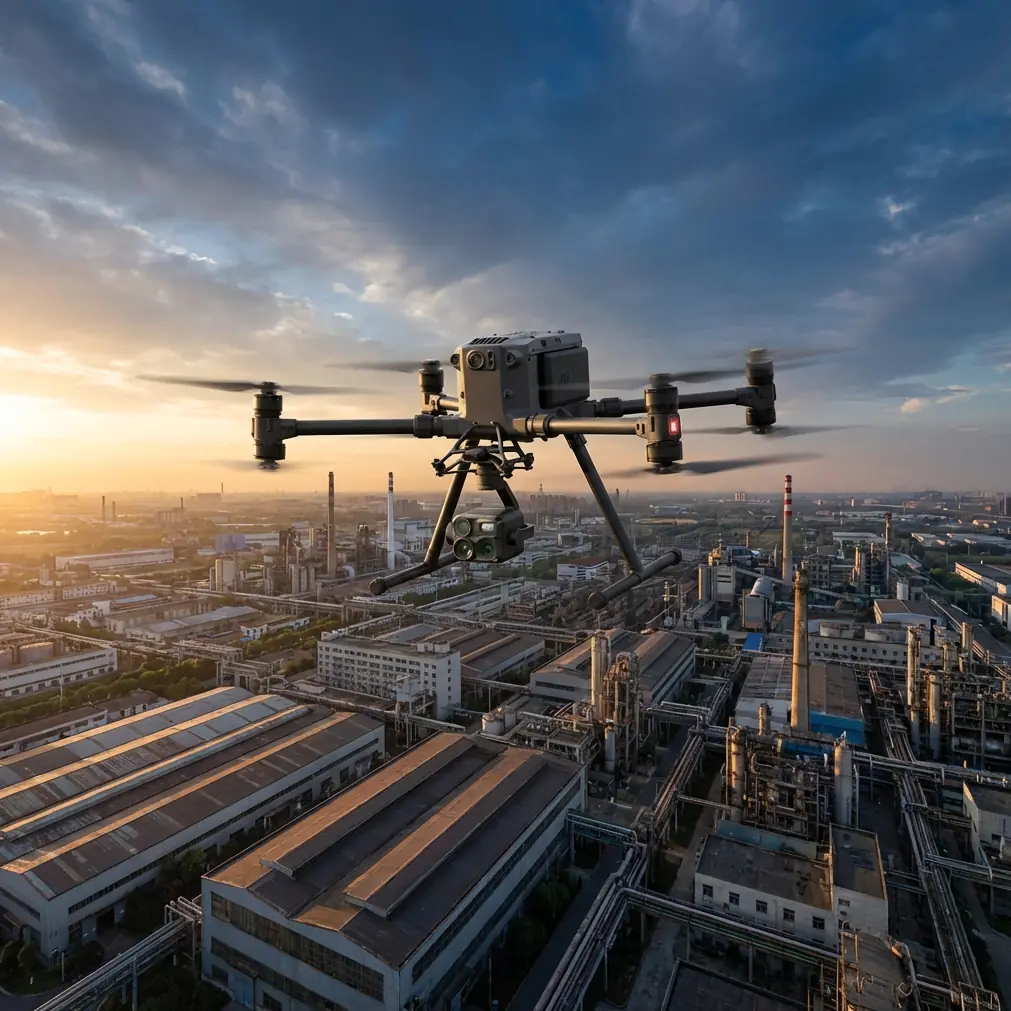
Matrice 4T in Mountain Forest Work: What a Real Flight Reveals About Stability, Sensing, and Structural Logic
META: A field-based Matrice 4T case study on mountain forest capture, thermal signature detection, transmission stability, flight control behavior, and why aircraft design principles matter in changing weather.
By James Mitchell
Mountain forest missions look straightforward on a screen. Draw an area, set altitude, launch, collect imagery. In practice, steep terrain, uneven canopy, moving air, shifting light, and inconsistent GPS visibility turn that neat plan into a systems test. Not just of the pilot, but of the aircraft’s structure, sensing stack, and control logic.
That is why the most useful way to talk about the Matrice 4T is not as a spec sheet item. It is better understood through a mission.
Recently, I worked through a forest capture scenario in mountainous terrain where the brief was mixed: create usable visual documentation for land managers, identify thermal anomalies under partial canopy breaks, and collect enough overlap for follow-on photogrammetry in difficult topography. Mid-flight, weather changed. Wind picked up along the ridge, cloud cover thickened, and the thermal contrast shifted faster than expected. The aircraft still completed the job, but the interesting part was not that it flew. It was how the underlying design decisions showed up in the field.
The mission profile: forest data, elevation changes, and no margin for sloppy assumptions
The operating area was a sloped forest block with tight valleys and exposed sections near the upper ridgeline. Missions like this punish weak planning. Tree height varies. Terrain relief distorts line-of-sight. Moisture changes thermal behavior. The pilot’s problem is not only image collection. It is consistency.
For mountain forestry work, consistency depends on three things:
- Stable image geometry for mapping and inspection
- Predictable control response when wind and terrain interact
- Reliable transmission as the aircraft moves in and out of partial masking
The Matrice 4T fits this kind of mission because it can cover several data needs in one platform. In this case, the visible payload helped with scene documentation and route verification, while thermal signature checks were used to flag drainage differences and possible stressed vegetation pockets where canopy opened enough to produce interpretable contrast. That matters in forestry because many teams do not have the luxury of separate flights for every sensor objective.
What changed when the weather turned
The mission began in stable conditions. Low-angle light was good for texture in visible imagery, though not ideal everywhere for thermal interpretation. About halfway through the route, the weather shifted. A moving bank of cloud flattened the visual scene and reduced contrast on some slopes. At the same time, ridge airflow became less uniform. Gusts were not constant; they were pulsing. That is the kind of environment that exposes whether an aircraft is merely capable or genuinely composed.
The Matrice 4T held its track well enough to preserve mission usefulness, but the bigger point is why that matters. In forest capture, every control correction can ripple into the data. Small positional disturbances can degrade overlap quality, alter camera angle consistency, and complicate later alignment, especially if you are planning photogrammetry products and tying the output to GCP checks on the ground.
A lot of operators discuss this only in terms of software stabilization or flight controller tuning. That misses half the story. Aircraft behavior starts with structural and control design discipline long before it reaches the mission app.
Why classic aircraft design principles still explain what you see in a modern UAV
Two details from traditional aircraft engineering are surprisingly relevant here.
The first comes from structural design practice: weight reduction only works when it begins at the layout stage, not after the detailed design is already locked. One of the reference design texts puts this plainly: if the “foundation” is poor, meaningful weight reduction later becomes very difficult. That principle matters operationally for a platform like the Matrice 4T because mountain missions reward aircraft that are not carrying avoidable structural penalties. Extra weight is never neutral. It affects endurance, climb behavior, disturbance response, and how much margin remains when conditions deteriorate.
The same structural source also emphasizes something many drone buyers never think about: when engineers automate structural conversion or analysis workflows, they must avoid “losing” the mass of non-load-bearing parts and standard hardware. That sounds abstract, but it has real significance. In small and medium UAVs, hidden weight accounting errors can distort center-of-gravity planning, endurance prediction, and dynamic response estimates. In the field, that can show up as aircraft that technically meet paper expectations but feel less settled than they should. The Matrice 4T’s value in serious work is tied to the opposite outcome: an aircraft that behaves like its design assumptions were not casually rounded away.
The second detail comes from flight control system modeling. A classic actuator-to-control-surface physical model reduces the system to equivalent mass, stiffness, damping, and aerodynamic loading terms. In the cited control reference, the relative structural damping ratio is generally taken as 0.05 to 0.1. That number matters because it describes the zone where a controlled mechanical system can absorb disturbance without becoming either twitchy or sluggish. In practical drone terms, that is the difference between a platform that “hunts” in gusty air and one that settles quickly enough to preserve useful image capture.
You do not need to derive equations in the field to feel the effect. When the mountain wind shifted, what I was watching was the UAV equivalent of a well-balanced actuator-structure-response chain. The aircraft corrected without dramatic oscillation. It did not behave like a machine chasing its own errors.
Thermal signature work in forests is never just about the thermal camera
People often treat thermal signature capture as if the sensor alone decides the result. In mountain forest operations, platform behavior is just as important as the thermal payload.
Once clouds rolled in, the thermal scene changed. Sun-driven heating patterns dropped off on some exposed surfaces, while damp pockets in shadowed gullies began to separate more clearly from their surroundings. That sounds helpful, and sometimes it is, but rapid environmental change can also create interpretation traps. If the aircraft is not maintaining stable geometry and predictable positioning, thermal comparisons from one pass to the next become less trustworthy.
This is where a disciplined airframe and control response earn their keep. If you are surveying canopy gaps, identifying drainage patterns, checking trail infrastructure, or documenting possible tree stress indicators, thermal data only becomes operationally useful when you trust the relationship between the sensor and the aircraft’s movement.
The Matrice 4T handled that transition cleanly enough that we could adjust the capture sequence rather than abandon it. We shortened one segment, changed the order of two ridge passes, and prioritized the slopes where the fresh cloud cover actually improved thermal readability. That kind of mid-flight adaptation is common in serious fieldwork. The best aircraft are the ones that still leave room for judgment after conditions deteriorate.
Transmission in mountain terrain: line-of-sight is the theory, terrain masking is the reality
The reader scenario here is forests in mountains, which means transmission quality deserves more attention than it gets in flat-land marketing material.
In this mission, the aircraft repeatedly moved near terrain features that can compromise signal quality even when the map says the distance is modest. Tree cover, slope angle, and shoulder ridges all affect real-world link stability. O3 transmission matters in exactly this sort of environment because the issue is not only range. It is continuity. A forestry operator needs a link that stays usable when the aircraft’s path and the ground station’s line-of-sight relationship are constantly changing.
Transmission reliability also connects to data security and workflow discipline. If your operation includes sensitive forestry assessments, land-use documentation, or infrastructure notes attached to mapped outputs, encrypted links matter. AES-256 is not an academic checkbox in that context. It is part of a professional operating posture, especially when multiple stakeholders are reviewing route plans, thermal findings, and georeferenced imagery.
That said, no link technology removes the need for mission discipline. BVLOS discussions often become too casual online. In mountain environments, any BVLOS-style concept must be built around local rules, terrain analysis, communication planning, and risk controls. The technology can support the operation, but it does not replace operational responsibility.
Photogrammetry in forests: where the Matrice 4T helps, and where the terrain still wins arguments
A forest capture mission in steep ground is not a clean photogrammetry problem. Dense canopy reduces visible ground features. Shadows introduce mismatch. Relief displacement increases processing complexity. If you need accurate terrain or stockpile-style surface outputs under these conditions, GCP strategy becomes more important, not less.
In our case, the aircraft’s role was to provide a dependable base layer of imagery and thermal context, while GCP placement handled the hard truth that mountainous forests do not forgive weak control networks. When operators skip that and assume software will solve everything, they usually end up with attractive but unreliable models.
The Matrice 4T is useful here because it gives the team flexibility. You can document access routes, monitor thermal differences, and collect visual imagery in one coordinated operation. That reduces re-entry time into difficult terrain. In mountain work, fewer separate deployments often mean better safety and cleaner logistics.
Endurance is not just flight time; it is decision time
Hot-swap batteries deserve more respect than they usually get. In forest work, battery management is not merely about keeping the aircraft airborne. It is about preserving mission continuity when the site is remote, landing zones are imperfect, and weather windows are narrow.
On this job, the weather shift changed our priorities. Because turnaround planning was already built around efficient battery replacement, we were able to relaunch quickly and revisit a section while the new cloud pattern still favored thermal interpretation. That is what battery workflow really buys you: decision time. The more friction in your battery cycle, the fewer tactical adjustments you can make before the site conditions move on.
A small engineering detail with big field meaning
One of the more revealing details in the control-system reference is the use of a simplified physical model to relate actuator output, equivalent mass, stiffness, damping, and aerodynamic force. It includes translated parameters such as equivalent stiffness and damping at the actuator output, not just raw control surface motion. That is exactly how mature aircraft are made manageable: not by pretending the system is simple, but by reducing complexity into something engineers can predict and tune.
For a field operator, the significance is direct. If the aircraft remains coherent when wind loads change, camera geometry stays more usable. If damping is sensible, the sensor platform does not waste energy correcting itself. If mass and structural assumptions were handled correctly from the beginning, battery performance and control feel both become more credible.
That is why the old engineering references still matter when discussing a modern drone like the Matrice 4T. They explain why one aircraft feels composed and another feels merely clever.
What I would do differently next time
No platform removes the need for better planning. On the next mountain forest mission of this type, I would make three refinements.
First, I would pre-build alternate route blocks for changing cloud conditions rather than editing priorities live. Second, I would place GCPs more aggressively near transition zones between open slope and dense canopy. Third, I would schedule thermal-specific passes around expected moisture behavior instead of treating them as a secondary layer to the visible mission.
Those are not criticisms of the aircraft. They are the adjustments a capable platform makes possible. Weak tools force compromise. Better ones expose where the operator can improve.
The real takeaway from this Matrice 4T forest mission
The Matrice 4T performed well in mountain forest capture not because one feature carried the day, but because several layers of design held together under changing conditions. Structural discipline matters. Control-system damping matters. Correct weight prediction matters. Stable transmission matters. Thermal signature interpretation depends on all of them.
That is the difference between a drone that collects files and one that supports decisions.
If you are planning similar forestry operations and want to compare route structure, payload use, or mountain-flight workflow, you can message our field team here.
Ready for your own Matrice 4T? Contact our team for expert consultation.