
Matrice 4T Guide for Urban Highway Capture
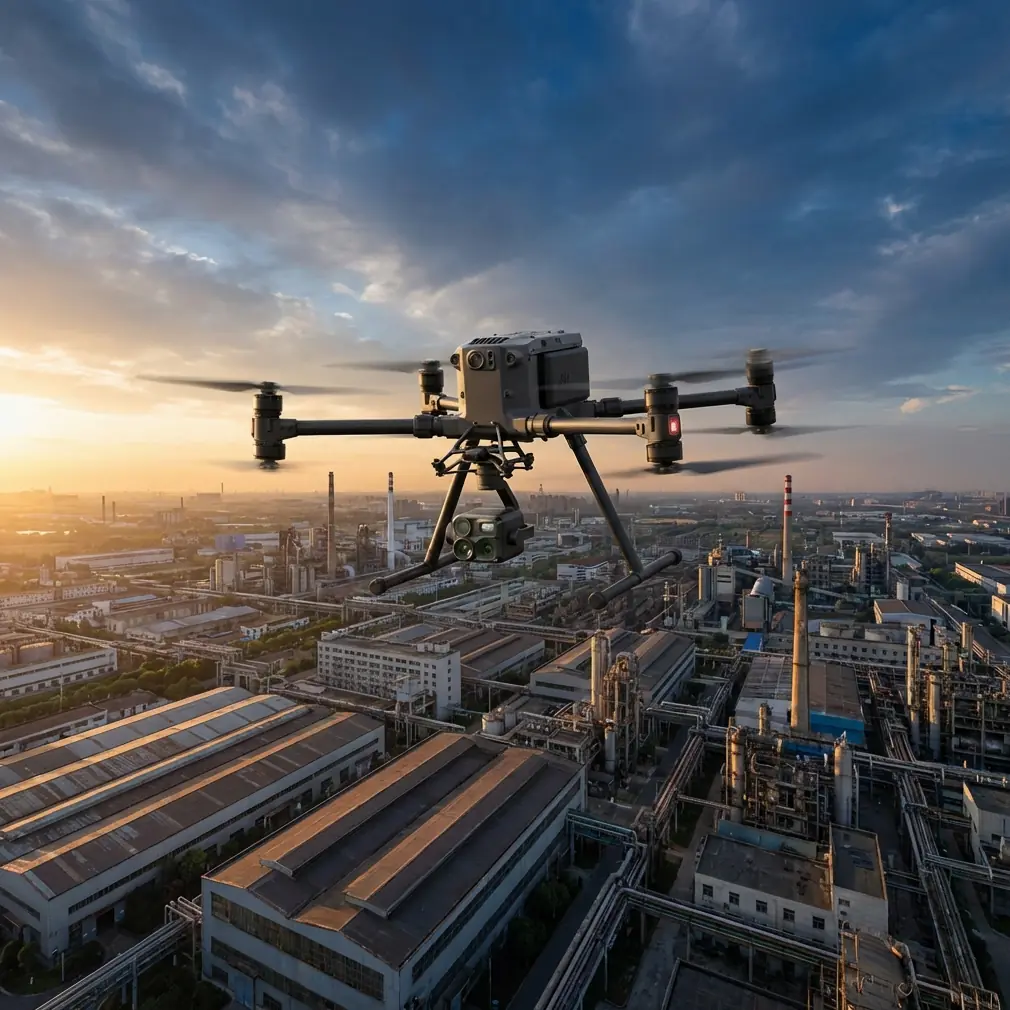
Matrice 4T Guide for Urban Highway Capture: Reliable Workflows, Cleaner Data, Fewer Surprises
META: Expert tutorial on using the DJI Matrice 4T for urban highway capture, covering thermal signature control, EMI handling, O3 transmission stability, GCP strategy, and safe field workflow.
Urban highway capture looks straightforward until you actually deploy. Long linear corridors, reflective vehicles, concrete heat soak, radio noise from dense infrastructure, and a narrow margin for safe positioning make it one of the more technical jobs you can ask of a compact enterprise drone. If your platform of choice is the Matrice 4T, the aircraft can absolutely handle the assignment—but only if the mission is built around the conditions highways create.
This guide is written for crews using the Matrice 4T in real city environments, where overpasses, steel barriers, power lines, active traffic, and interference-prone rooftops can degrade both image quality and command confidence. The goal is not to provide a generic overview of the aircraft. It is to show how to use its thermal payload, mapping capability, encrypted link, and field battery workflow in a way that actually produces usable highway data.
The two details that matter most in this environment are transmission resilience and temperature interpretation. The Matrice 4T’s O3 transmission architecture gives operators a strong link foundation in cluttered RF conditions, while AES-256 encryption is relevant when the captured corridor includes sensitive infrastructure, critical intersections, or government-adjacent road assets. Pair that with disciplined photogrammetry planning and careful management of thermal signature distortion, and the aircraft becomes more than a camera in the sky. It becomes a practical inspection and documentation tool for one of the hardest urban subjects to capture well.
Why highways are different from other urban jobs
A highway is not one object. It is a moving system stretched across distance. You are often trying to document pavement condition, lane geometry, signage placement, retaining walls, drainage issues, bridge transitions, shoulder encroachment, and thermal anomalies from electrical or mechanical infrastructure nearby—all while traffic keeps moving and the site keeps radiating heat.
That changes how the Matrice 4T should be flown.
The first challenge is lineal mission design. Unlike a rooftop survey or a compact construction site, a highway corridor forces repeated repositioning and extended movement along a narrow capture strip. That increases the chance of transient signal blockage and angle-dependent interference. The second challenge is thermal instability. Asphalt, vehicles, concrete medians, and metal guardrails do not heat and cool at the same rate. A thermal image taken at the wrong time can make a harmless hot surface look like a fault zone. The third challenge is control discipline. Urban highways often sit inside noisy electromagnetic environments, especially near utility corridors, cellular infrastructure, rail crossings, and elevated steel structures.
This is where the Matrice 4T’s mission design flexibility matters more than headline specs.
Start with the end product, not the takeoff point
Before powering on, define what the final deliverable actually is. Urban highway capture generally falls into three categories:
- corridor orthomosaic for planning or documentation
- thermal review for anomaly detection
- mixed visual and thermal evidence for infrastructure assessment
Each outcome requires a slightly different setup.
If your target is a clean orthomosaic, photogrammetry discipline comes first. That means stable overlap, consistent altitude, and a GCP strategy that respects the length and repetitive texture of highway scenes. Highways are full of visual repetition: lane markings, barriers, expansion joints, and repetitive signage. Without enough reliable control, that repetition can confuse alignment and degrade positional trust. Ground control points are not optional on corridor work if the end user needs dependable measurements. Even a very capable airframe cannot fix weak control geometry after the fact.
If your target is thermal review, timing becomes your biggest decision. The phrase “thermal signature” sounds precise, but in highway operations it often includes heat retained from vehicles, solar loading on dark asphalt, reflective artifacts from nearby surfaces, and residual warmth from utility cabinets or lighting systems. The Matrice 4T gives you the ability to see these differences, but operationally the value comes from separating persistent anomalies from temporary heat noise. Early morning and late evening windows are often more revealing than midday because the background thermal field is less saturated.
If your target is both, do not try to improvise in the field. Plan separate passes or clearly segmented flight tasks. Mixing mapping logic and thermal logic into one rushed mission usually creates mediocre results in both datasets.
The practical role of O3 transmission in city corridors
People often treat transmission as a background spec. On urban highway missions, it becomes a frontline operational factor.
The Matrice 4T’s O3 transmission system matters because corridor capture rarely keeps the aircraft in ideal geometric relation to the pilot. Overpasses, sign gantries, sound barriers, and roadside structures constantly change the signal path. Add city RF congestion and the link can degrade in ways that look random unless the operator is watching both aircraft orientation and the local environment.
One of the simplest field habits is also one of the most effective: adjust the controller antenna orientation deliberately rather than leaving it fixed for the whole mission. When flying a corridor, the aircraft may move from a forward-oblique position to a side-offset leg and then to a near-overhead pass. That changes the best antenna relationship. If interference starts creeping in—video breakup, delayed telemetry refresh, or a link quality dip—small antenna corrections can stabilize the connection without forcing an unnecessary abort.
This matters most near electromagnetic trouble spots. Elevated roadways with steel structure, utility-rich intersections, cellular equipment on nearby buildings, and rail-adjacent transport corridors can all introduce enough noise to make a lazy antenna setup costly. The operator who notices the RF pattern early has an advantage. The one who treats the controller as “set and forget” usually burns time repositioning.
The lesson is simple: O3 gives you a strong platform, but not a free pass. In urban work, transmission quality is still an active flying responsibility.
AES-256 is not a checkbox when highways touch sensitive infrastructure
A lot of operators skip over link security until a client asks. That is a mistake on public infrastructure work.
The Matrice 4T’s AES-256 encryption has operational significance when your imagery includes sensitive road assets, traffic control systems, municipal facilities, or locations with elevated security expectations. Highway capture in an urban setting often intersects with police-managed routes, transit hubs, tunnels, utility crossings, and emergency access corridors. Even when the mission itself is routine, the data context may not be.
Why does this matter in practice? Because inspection and planning teams increasingly want assurance that live feeds and transmitted mission data are protected, especially when flights occur over infrastructure that cannot be casually documented and redistributed. Secure transmission will not replace your own data handling policy, but it strengthens the chain of trust from aircraft to operator. For municipal contractors and engineering teams, that can be the difference between a drone being seen as a convenience and being accepted as a credible field instrument.
Building a better highway photogrammetry workflow
If you want the Matrice 4T to produce highway mapping data that stakeholders can actually use, corridor logic has to drive every setting.
Start by breaking the route into manageable segments. Long continuous flights may look efficient on paper, but city conditions rarely stay constant enough to justify them. Segmenting the route helps with battery planning, keeps overlap predictable, and reduces the chance that one interference event disrupts the entire dataset.
Next, place GCPs where the geometry needs help, not just where access is easy. Straight highway sections can lull crews into a false sense of confidence. The real weak points are often transitions: merge lanes, ramps, bridge approaches, medians with repeating texture, and areas where shadows or reflective surfaces obscure distinct features. Control placed near those sections improves alignment stability and gives downstream users more confidence in measurements.
Pay attention to altitude consistency as the road elevation changes. Urban highways climb, descend, cross waterways, pass under structures, and widen unpredictably. A mission that ignores those changes can produce uneven ground sampling and distorted side features. The Matrice 4T can handle structured route execution well, but the operator still needs to respect the physical shape of the corridor.
Finally, think about traffic as moving contamination in the dataset. If the objective is geometric road documentation, peak traffic periods introduce unnecessary complexity. Cars and trucks obscure markings, create thermal noise, and complicate feature matching. Whenever operationally possible, capture during lower traffic windows.
Getting useful thermal data instead of dramatic images
Thermal imagery is easy to collect and hard to interpret well. Urban highways amplify that problem.
With the Matrice 4T, thermal capture can help identify drainage-related moisture patterns, pavement inconsistencies, overheated electrical components near roadside systems, or heat irregularities around bridge joints and utility interfaces. But a useful thermal workflow depends on understanding what the camera sees in context.
Dark asphalt can hold solar energy for hours. Metal guardrails and signs can spike or cool rapidly. Recently parked or slow-moving vehicles leave local heat influence that can look meaningful until you cross-check with the visual feed. Even concrete barriers create differential heat retention that shifts through the day.
That is why thermal significance must always be tied to persistence and pattern. One isolated hotspot on a busy highway may mean almost nothing. A repeatable linear anomaly along a seam, drainage path, or junction zone is more interesting. The Matrice 4T gives you the ability to overlay observational logic onto those signatures, but only if the mission timing supports interpretation.
If you are documenting thermal conditions for engineering review, repeat passes matter. A second pass after a short interval can help distinguish a transient thermal effect from a stable anomaly. In practical terms, that saves time later because your analysts spend less effort sorting false positives from real findings.
Battery discipline is part of data quality
On corridor jobs, power management is not just about staying airborne. It affects dataset continuity.
Hot-swap batteries are operationally valuable because they reduce turnaround between highway segments. That matters in cities where access windows are tight, traffic conditions change fast, and lighting can shift before you finish a route. Faster battery replacement means less drift between adjacent captures and less temptation to stretch a flight farther than conditions justify.
The common mistake is planning the mission around maximum theoretical endurance. On a real urban highway capture, reserve power needs to account for repositioning, hover time while checking the scene, and contingencies around signal quality or unexpected restrictions. Segment your route assuming you will land earlier than the brochure suggests. That produces calmer operations and better data.
It also helps keep pilot judgment sharp. Fatigue compounds quickly when you are supervising repeated takeoff points along an active road network.
BVLOS thinking without pretending the environment is simple
BVLOS is one of those terms that gets thrown around too casually. In urban highway operations, it should trigger a more serious planning conversation.
The corridor format naturally tempts teams to think beyond visual line of sight because the road extends far beyond any single launch position. The Matrice 4T may fit well into programs that are moving toward more advanced corridor workflows, but dense city highways are not forgiving environments. Structures interrupt visibility, signal conditions vary block by block, and emergency contingencies need to be credible before distance increases.
Even if your mission remains within visual line of sight, adopting BVLOS-style discipline improves outcomes. That means pre-identifying recovery points, mapping interference zones, documenting alternate launch locations, and briefing on who owns airspace awareness, traffic awareness, and observer coordination. You do not need formal BVLOS operations to benefit from BVLOS-level planning habits.
A field example: handling EMI near an elevated interchange
Let’s make this real.
Imagine you are capturing an elevated urban interchange with steel reinforcement, overhead signage, nearby commercial rooftops, and telecom equipment mounted on adjacent structures. You launch with a clean feed, then midway through the second corridor leg the downlink starts showing intermittent breakup. Telemetry remains present, but video confidence drops.
The wrong reaction is to assume the aircraft has become unreliable.
The better response is procedural. First, pause any nonessential maneuvering and evaluate aircraft orientation relative to the controller. Second, adjust the controller antennas deliberately rather than broadly waving them around. Small directional corrections often restore stability faster than a large body reposition. Third, note whether the issue appears at the same physical location on repeated headings. If it does, you may be looking at a localized EMI pocket created by surrounding infrastructure.
At that point, adapt the mission. Shift your pilot position if the site permits. Change the pass direction to improve line geometry. Break the route into shorter legs rather than forcing a continuous run through a noisy segment. O3 transmission gives you a durable link architecture, but smart antenna handling and route adjustment are what turn that capability into mission reliability.
That combination—technical system plus disciplined operator behavior—is what separates a smooth highway capture from a stressful one.
A simple capture checklist for Matrice 4T highway work
Before deployment, confirm the mission objective: mapping, thermal inspection, or mixed evidence collection. Then build the route around that objective.
Check the likely interference landscape. Look for power infrastructure, rail lines, rooftop telecom clusters, major steel structures, and elevated roadway geometry.
Use GCPs where alignment risk is highest, especially at ramps, transitions, and visually repetitive surfaces.
Time thermal work for interpretability, not convenience. Background heating matters.
Watch the live link actively. In corridor operations, antenna adjustment is a normal part of flying, not an emergency measure.
Use hot-swap efficiency to preserve mission rhythm between segments.
Protect the data chain, especially when flights touch sensitive infrastructure. AES-256 matters more here than in casual site work.
If your team needs help designing a corridor workflow, staging an urban capture plan, or pressure-testing your EMI mitigation approach, you can message our flight planning desk for a practical discussion.
What makes the Matrice 4T a strong fit here
The Matrice 4T is effective on urban highways not because it eliminates complexity, but because it gives professional operators the tools to manage complexity properly. Its thermal capability is useful when interpreted against real-world heat behavior. Its O3 transmission architecture supports corridor missions where signal path quality changes constantly. AES-256 encryption strengthens operational trust when public infrastructure is involved. Hot-swap battery workflow helps maintain tempo across segmented routes. And with disciplined GCP placement, it can support photogrammetry that holds up beyond a quick visual review.
That is the real story for this aircraft in highway capture. Not “can it fly the job,” but “can it deliver data you would stand behind after the field team packs up.”
For urban corridor work, that distinction matters.
Ready for your own Matrice 4T? Contact our team for expert consultation.