
Matrice 4T on Highways After Dark: A Field Report on Flight
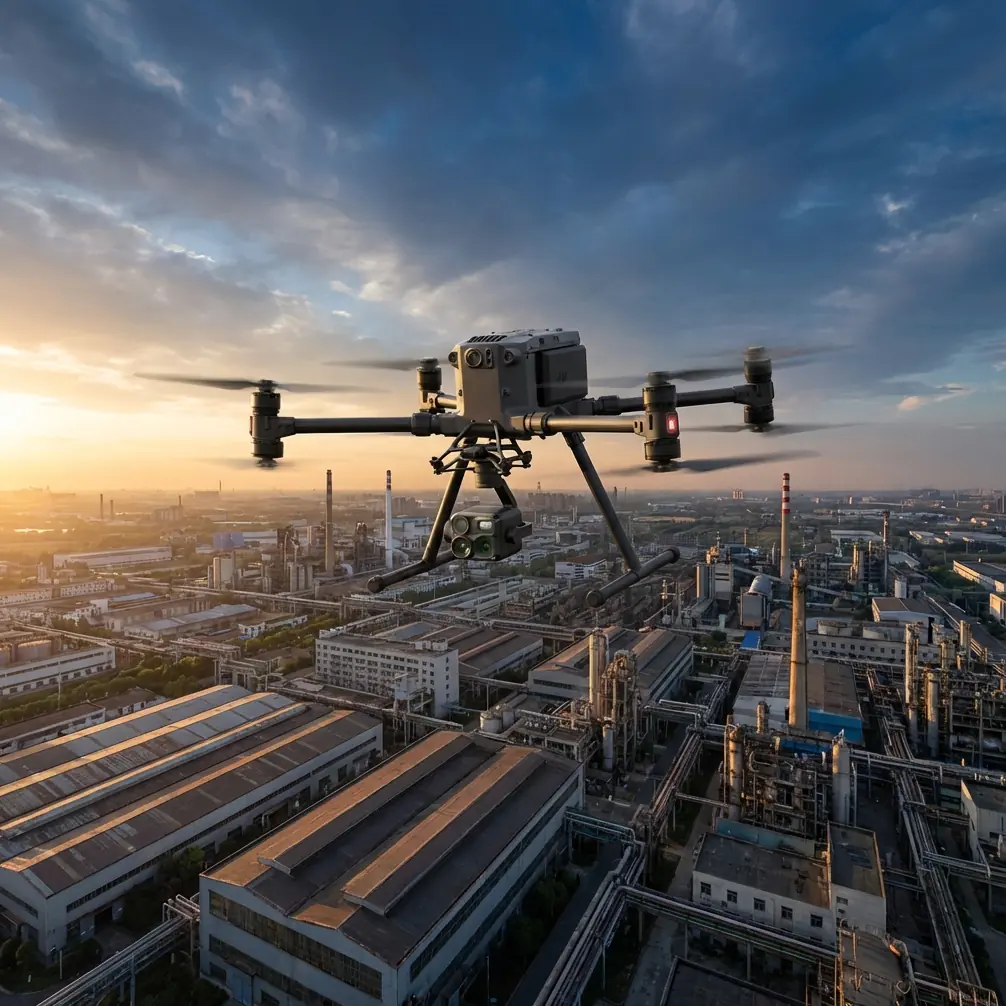
Matrice 4T on Highways After Dark: A Field Report on Flight Discipline, Wind Logic, and Battery Timing
META: Expert field report on using the DJI Matrice 4T for low-light highway capture, with practical insight on wind-layer checks, flight-path control, thermal signature workflow, and battery management.
I’ve spent enough nights around highway corridors to know that low-light drone work is rarely limited by the camera. The real constraint is whether the aircraft, control workflow, and crew discipline can keep the mission stable when the visual environment gets thin and the road never stops moving.
That’s where the Matrice 4T becomes interesting.
Not because of hype. Because this class of aircraft fits a very specific job: documenting long transport corridors in poor light while keeping the pilot, observer, and data team aligned around a live map, a reliable link, and a repeatable battery rhythm. If you’re capturing highways at night or near dawn, those three things matter more than spec-sheet theater.
For this piece, I want to stay close to what actually governs successful operations in the field: flight-path visibility, climb behavior across altitude layers, wind-aware control, onboard recording discipline, and the management habits that keep a highway mission from slipping in hour two.
Why highway capture in low light is not a normal drone job
A highway is a moving scene with fixed geometry. That sounds simple until you fly it.
You’re often trying to capture lane conditions, thermal signature differences on pavement or structures, lighting failures, drainage patterns, vehicle flow references, construction staging, or post-maintenance verification. In daylight, photogrammetry can carry much of that burden. After dark, the mission shifts. You lean harder on thermal interpretation, oblique angles, corridor awareness, and precise repeatability.
The Matrice 4T suits that environment because a highway mission is not just about seeing. It is about knowing where the aircraft is relative to a planned route at every moment, and being able to compare the planned path with the real path in real time.
That operational priority lines up directly with one of the most meaningful details in the reference standard: the control station is expected to support real-time map display of the live flight track and the planned flight track together, while also handling map auto-panning, navigation control, coordinate conversion, map database management, and video overlay. That sounds bureaucratic on paper. In practice, it’s the difference between a clean corridor dataset and a messy one.
On a highway job, the aircraft can look stable to the pilot while still drifting enough to degrade the capture geometry. A live map with both intended and actual path visible gives the team instant context. If you’re running a repeat inspection on the same stretch of road week after week, that matters even more. You’re not just flying safely; you’re trying to preserve comparability.
The hidden problem: wind changes with height, even when the launch point feels calm
One of the smartest pieces in the multirotor standard is also one of the easiest to overlook. The flight performance checks are not based only on what the aircraft does at one comfortable altitude. The procedure calls for monitoring horizontal and vertical wind speed from the surface up to higher airspace, recording wind direction, and then testing the aircraft at selected heights. For climb performance, the method specifically uses 3 to 7 altitude layers, measures the time interval between them, and calculates the maximum climb rate for each layer.
That is highly relevant to low-light highway work with the Matrice 4T.
At roadside launch, conditions can feel tame. Street-level airflow may be partially shielded by barriers, tree lines, embankments, sound walls, or overpasses. Climb fifty or a hundred feet, and the air can be completely different. Climb again near lighting structures, sign gantries, or elevated interchanges, and your aircraft may start working much harder to hold the planned line.
When I brief a crew for a night highway mission, I don’t care only about the surface forecast. I want to know whether the aircraft is likely to encounter a different wind layer during the ascent and whether the pilot has enough margin to maintain capture consistency when transitioning to working altitude. The standard’s insistence on evaluating performance across multiple height bands is a reminder that “the wind” is never one number.
For Matrice 4T operators, the practical takeaway is simple: treat the climb as part of the mission, not just the prelude to it.
If your corridor pass begins at a set relative height above the road, you should already be evaluating how the aircraft behaves while climbing through those layers. Does the heading stay clean? Does the live track begin to bow off line? Does the aircraft settle quickly at the intended altitude? Small answers here often predict bigger issues later, especially when you’re trying to hold thermal framing over long linear infrastructure.
Real-time track display is not just nice to have
The standard also emphasizes something crews often underuse: map-based validation of both the preset route and the real-time route, along with coordinate calculation and conversion. That matters a lot more on highways than on compact site inspections.
A warehouse roof, substation yard, or bridge pier usually gives you local visual references. A highway corridor at night can become visually repetitive fast. Long straight runs, repeating lights, similar interchanges, sparse roadside landmarks—those conditions make it easier for the pilot and visual observer to lose a sense of exact progression along the route.
With the Matrice 4T, the operational win is not merely that the aircraft can transmit video well through O3 transmission. It’s that the crew can fuse video with map intelligence and maintain route awareness even when visual texture drops off. If your thermal feed shows a heat anomaly near a shoulder or drainage path, the map-linked track helps you tie that anomaly to a precise point in the corridor, rather than “somewhere near the third overpass.”
That precision becomes even more valuable when your deliverable includes follow-up ground checks, engineering review, or a repeat thermal pass later. Good flight-path discipline reduces ambiguity downstream.
Low light changes how you should think about thermal
Thermal on highways is often misunderstood by teams coming from daytime RGB mapping.
A thermal signature on a road corridor is not just about hot and cold. It’s about difference and context. Fresh patch repairs may cool differently than surrounding pavement. Standing water or moisture retention may present unusual contrast. Electrical cabinets, lighting bases, expansion joints near structures, and drainage outlets can all present thermal patterns worth documenting. In low light, the thermal view can reveal issues that are visually flat or hidden in headlight glare.
But thermal is only useful if your aircraft position and speed are controlled well enough to make the image interpretable.
This is where stable height hold, smooth flat-flight behavior, and hover performance under allowable wind load become more than test criteria. The reference standard calls for three trials under maximum permitted wind-load conditions for altitude hold, level-flight speed, and hover, while also requiring the full system to remain stable, with remote control, telemetry, and image transmission functioning normally. That bundle of checks is exactly what a highway crew depends on at night.
Why? Because highway thermal capture often includes short pauses, re-angles, and verification hovers near a point of interest. If the aircraft can’t hold position cleanly, your thermal frame starts to blur in meaning even if the sensor itself is good. The issue is not camera quality. It’s platform behavior under real atmospheric load.
My battery rule for corridor work
Here’s the field tip I wish more operators took seriously: never plan your battery swaps around percentage alone on a low-light highway mission. Plan them around segment boundaries.
The reason is practical. Corridor jobs create a strong temptation to “just finish this stretch” when the aircraft is already deep into a pass. That habit produces rushed returns, uneven coverage, and sometimes poor decision-making when wind aloft is stronger than expected.
With the Matrice 4T, especially when using hot-swap batteries as part of an efficient field rhythm, I prefer to define natural stopping points before takeoff: interchange to interchange, bridge group to bridge group, lighting zone to lighting zone. If a battery is approaching the change threshold before the next clean segment boundary, I end the pass early and reset.
This saves more time than it appears to cost.
A clean swap and a deliberate relaunch are usually faster than salvaging a broken route and trying to reconstruct continuity in post. It also keeps thermal and RGB references more consistent. On long shifts, this discipline helps the whole crew stay sharp.
The standard’s mention of a mission profile that performs work at the operating height for 0.5 hour before landing, while keeping flight data storage use under 1/100 of onboard storage, is a useful reminder that endurance is not the same thing as data efficiency. You can stay up a long time and still produce fragmented work if your battery logic is sloppy. Long missions reward planning, not bravado.
Data trust matters as much as image quality
Night highway work tends to generate operationally sensitive material: transport patterns, infrastructure condition, route geometry, maintenance activity. If you’re moving those files through multiple stakeholders, data handling can’t be an afterthought.
That’s why operators looking at the Matrice 4T for corridor work should care about secure transmission and structured recordkeeping. AES-256-level protection on the link side is not just a compliance bullet. It helps maintain trust when projects involve contractors, civil engineers, utility coordinators, and transport owners who expect a controlled data chain.
The reference standard is also clear that the control station should have a flight parameter recording function and a display system capable of showing altitude, speed, heading, flight-track coordinates, attitude, remaining power, and flight time. For post-mission review, these parameters are gold. They let you explain why a pass deviated, why a thermal frame needs caution, or why a repeated segment was necessary.
That sort of traceability is often what separates a professional survey operation from a simple drone flight.
Photogrammetry, GCPs, and the highway edge case
Most low-light highway capture with the Matrice 4T won’t be classic high-accuracy photogrammetry in the pure daytime sense. Still, photogrammetry thinking helps.
If part of your mission includes dawn crossover work or corridor documentation that later needs spatial alignment, you should think early about GCP placement, route consistency, and coordinate conversion. Again, this is where the standard’s emphasis on coordinate calculation and conversion inside the control station becomes operationally useful, not merely technical.
Highways are deceptively challenging for geospatial consistency. Long linear scenes amplify small alignment errors. If you’re blending nighttime thermal observations with daytime mapping outputs, the value of disciplined route planning climbs quickly.
The Matrice 4T is at its best in that mixed workflow—not because it replaces dedicated mapping systems in every case, but because it can become the night-shift intelligence layer that tells you where the more detailed daytime survey should focus.
A note on BVLOS-minded planning without crossing the line
For many infrastructure teams, the long-term goal is corridor efficiency over greater distances. Even when a specific mission remains within the crew’s approved visual and procedural limits, it helps to adopt a BVLOS-style mindset in planning: clear route logic, segmenting, communication discipline, battery thresholds, fallback landing points, and strong map-based awareness.
That approach makes low-light work better immediately. It reduces improvisation and improves repeatability. The Matrice 4T rewards that kind of structure because it is built for organized operations, not casual wandering.
What the Matrice 4T really gives a highway team
After enough night missions, my view is straightforward.
The Matrice 4T is valuable for highways in low light when the team uses it as a system, not a camera drone. The aircraft, the map display, the track logic, the telemetry, the secure link, the battery rhythm, and the altitude discipline all work together. Break any one of those habits and the mission quality drops faster than most crews expect.
The reference materials underline this better than any brochure could. Real-time display of planned and actual flight paths matters because highway scenes are linear and repetitive. Testing climb performance across 3 to 7 height layers matters because air behavior changes with altitude, especially around transport structures. Requiring stable operation under maximum allowable wind load over three trials matters because a low-light corridor mission depends on more than just sharp imagery. It depends on the aircraft holding its line while the environment tries to pull it off.
If you’re building a workflow around the Matrice 4T for after-dark road capture, start there.
And if you want to compare route-planning approaches or battery segmentation methods for your own corridor jobs, you can message James Mitchell here.
Ready for your own Matrice 4T? Contact our team for expert consultation.