
Matrice 4T for Solar Farms in Extreme Temperatures
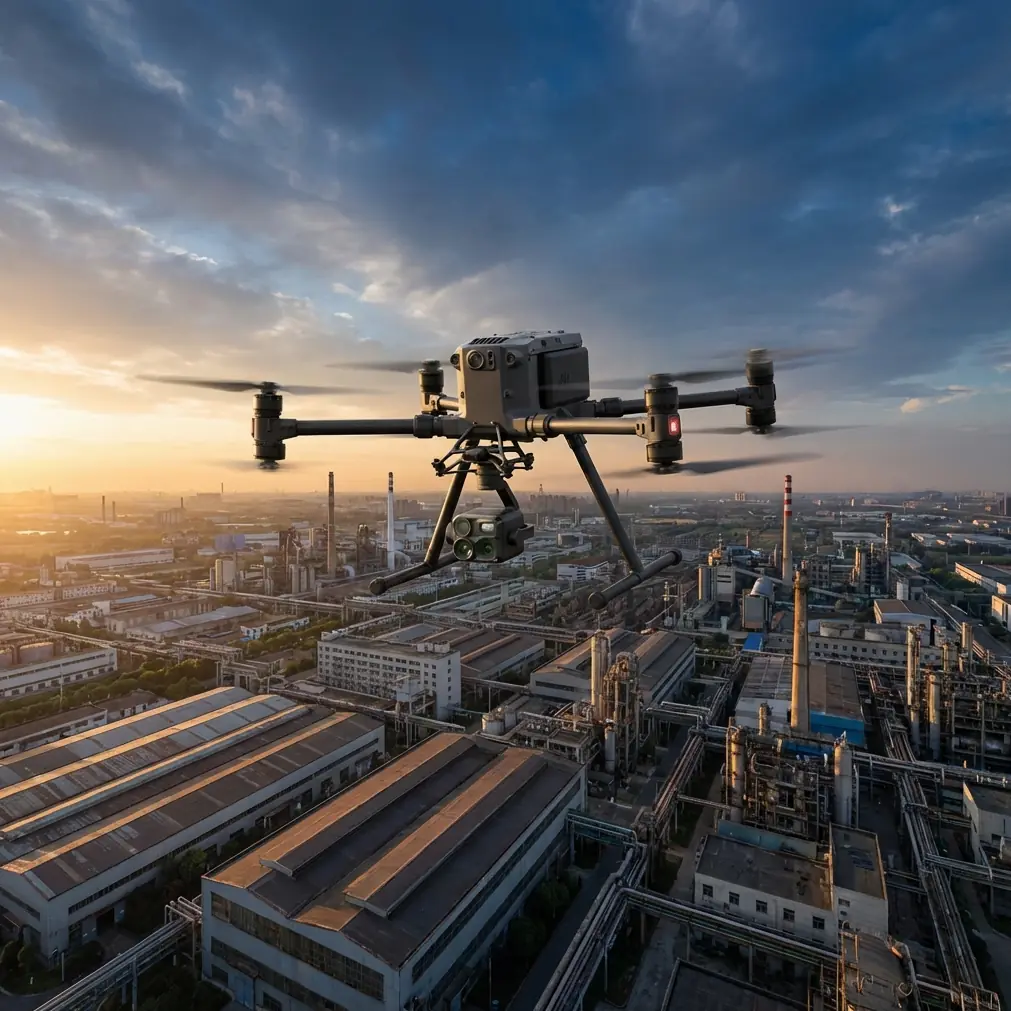
Matrice 4T for Solar Farms in Extreme Temperatures: What Actually Matters in the Field
META: Expert technical review of the Matrice 4T for solar farm inspections in extreme heat and cold, covering thermal signature accuracy, photogrammetry, O3 transmission, AES-256 security, hot-swap batteries, and field workflow.
Solar farm inspections sound straightforward until the site starts fighting back.
Heat shimmer bends the air above dark panels. Winter wind turns battery management into a planning exercise. Reflection off glass pushes sensors harder than many operators expect. And if you are working a utility-scale site, distance is never theoretical. It affects link stability, sortie planning, data integrity, and how much confidence you can place in an anomaly before you send a technician into the field.
That is where the Matrice 4T becomes interesting. Not because it is simply a “thermal drone,” but because it sits at the intersection of thermal inspection, visual documentation, mapping discipline, and operational resilience. For solar farms in extreme temperatures, that combination matters more than any single headline feature.
I have spent enough time around energy infrastructure to know that panel defects rarely announce themselves cleanly. A hotspot can be a failed bypass diode, a cracked cell, a connector issue, debris, or a transient condition caused by load and weather. Good aircraft do not remove the need for technical judgment. They reduce the noise around it. The Matrice 4T is strongest when it helps the pilot separate actual thermal events from environmental confusion.
The first reason is obvious: thermal signature interpretation. On solar sites, thermal is only useful when it is captured consistently enough to be trusted. In very high ambient temperatures, you are not just detecting heat. You are distinguishing abnormal heat from already elevated background conditions. In cold weather, the challenge flips. Contrast may improve, but wind and changing irradiance can distort what a module is really doing. The Matrice 4T’s thermal payload gives operators a way to scan large arrays quickly, but its operational value comes from disciplined deployment rather than just turning on the infrared feed and looking for bright spots.
Altitude, angle, time of day, and panel load state all shape the result. That sounds basic, yet it is where many inspection datasets start drifting into ambiguity. On a site with strong midday heating, for example, flying too high can flatten subtle anomalies into broad warm patches. Flying too low may improve detail but reduce area coverage so much that the mission becomes inefficient. The Matrice 4T gives enough flexibility to tune that balance for the site, and that is one of its biggest advantages for solar work in punishing temperatures.
The second major strength is that it does not force a choice between inspection and documentation. Solar operators increasingly want both thermal findings and spatially organized visual records. That is where photogrammetry enters the conversation. Strictly speaking, a dedicated mapping payload may still be preferable for the highest-end survey deliverables, but the Matrice 4T is highly practical when inspection teams need actionable thermal data and supporting visual context from the same field deployment.
This matters most on large sites where maintenance teams need to revisit defects accurately. A thermal image alone may show a suspect panel string. It does not always make localization easy once the crew is standing in a sea of repeating geometry. Tying findings to a mapped visual layer, especially with proper GCP discipline when the project requires tighter positional confidence, shortens the path from detection to repair. That is operational significance, not marketing fluff. Every unnecessary minute spent searching for a fault in extreme heat is a productivity hit and a safety concern.
GCPs deserve more attention than they usually get in drone discussions. On expansive solar farms, repeatability matters almost as much as raw image quality. If you are comparing defect progression over time, or reconciling drone findings with asset management software, tighter geospatial control can make your inspection outputs more useful to engineers and O&M teams. The Matrice 4T is not defined by ground control, of course, but in a serious inspection workflow, GCP-backed photogrammetric context can turn a good flight into a reliable maintenance record.
Transmission is another area where the aircraft’s design has real field consequences. O3 transmission is not just a spec-sheet bullet. On sprawling energy sites, it affects how comfortably an operator can maintain video quality and command confidence across long rows of reflective infrastructure. Solar farms are deceptively difficult RF environments. You have distance, repetitive structures, intermittent interference sources, and harsh lighting that already taxes situational awareness. A stable link gives the pilot room to focus on mission quality instead of babysitting signal anxiety.
That becomes even more relevant when discussions move toward BVLOS operations. Regulations remain the deciding factor, and no aircraft feature replaces legal authorization or a proper safety case. Still, platform capability matters. A system built for robust transmission and enterprise workflows is simply more credible in long-corridor or wide-area inspection planning than one designed mainly for short-range visual capture. Even when flying within current line-of-sight constraints, the practical benefit is clear: stronger link confidence supports smoother, more methodical inspections.
Security should also be treated as part of mission quality, not an afterthought. Solar infrastructure is critical infrastructure. Inspection imagery can reveal site layout, equipment condition, and maintenance priorities. AES-256 support is significant because it addresses a very real concern for operators and asset owners who need confidence that captured data and transmission workflows are aligned with modern enterprise expectations. In this market, secure handling is not a luxury feature. It is part of the baseline for trust.
That may sound abstract until you are dealing with third-party inspection contracts, utility clients, or facilities with stricter compliance requirements. When drone teams can point to secure transmission and data protection standards, they remove friction from deployment approvals. The Matrice 4T’s alignment with AES-256-level security is not something the pilot sees in the air, but it can absolutely shape whether the mission gets approved in the first place.
Then there is battery management, which becomes brutally practical in extreme environments. Hot-swap batteries are one of those features people underestimate until they are working under a narrow weather window or racing daylight at a remote site. On a large solar farm, every interruption adds up. If the aircraft has to cool down the workflow every time power changes hands, throughput suffers. Hot-swap support keeps the operation moving, which is especially valuable when ambient conditions are already reducing margins.
In summer, that means less wasted time standing on reflective gravel while panel surfaces and surrounding air radiate heat back at the crew. In winter, it means fewer long pauses exposing batteries and personnel to cold while trying to maintain inspection cadence. The point is not convenience. The point is preserving mission continuity when the environment is trying to steal it from you.
One field example sticks with me because it shows why sensor integration matters beyond pure inspection targets. During a dawn pass over a perimeter row near scrubland, a fox moved between inverter pads and emerged near the service track just as the aircraft was transitioning to the next segment. It was not dramatic, but it was exactly the sort of moment that tests whether a platform supports calm decision-making. The live visual feed picked up the movement quickly, while the thermal view made the animal’s position much easier to confirm against the cool ground around it. The result was simple: pause, adjust route, maintain separation, continue without rushing the aircraft or losing the inspection sequence.
That kind of wildlife encounter is not rare on solar sites. Birds, foxes, deer, and smaller mammals use the land in ways site planners cannot fully control. For pilots, the lesson is straightforward. A drone that gives clear situational awareness across thermal and visual channels is not only better at finding electrical anomalies. It is better at operating responsibly in real environments where infrastructure and habitat overlap.
So how does the Matrice 4T perform as a technical tool for capturing solar farms in extreme temperatures?
It performs best when the operator respects what thermal data can and cannot say on its own. If your objective is identifying hotspots, checking string-level irregularities, documenting module condition, and building a usable record for maintenance teams, the platform is extremely well suited. Its value increases when flights are standardized: similar irradiance windows, consistent angles, planned overlap for visual context, and clear post-processing rules for triaging thermal events. The aircraft helps. The workflow decides whether the dataset becomes evidence or just imagery.
A practical mission profile often starts with a broader thermal sweep to identify suspect rows, followed by lower, more deliberate passes for confirmation and context capture. If the site owner needs stronger spatial traceability, that can be reinforced with photogrammetric outputs and GCP-supported checkpoints. If the asset is large enough to push communication confidence into focus, O3 transmission starts pulling its weight. If the owner is security-conscious, AES-256 helps clear internal objections. If the weather is punishing and the schedule is tight, hot-swap batteries keep the rhythm intact.
That stack of capabilities is why the Matrice 4T deserves attention in the solar segment. Not because each individual feature is novel in isolation, but because the platform brings them together in a way that matches how utility inspections actually happen.
There are also limits worth stating plainly. Thermal anomalies still require interpretation in context. Reflections, temporary soiling, shifting cloud cover, low irradiance, and module operating conditions can all produce misleading signatures. Extreme heat can reduce contrast between healthy and unhealthy components if the mission timing is poor. Extreme cold can improve contrast while introducing battery and wind-management complications. None of this is a failure of the aircraft. It is the normal reality of thermographic inspection. Skilled operators plan around those variables rather than blaming the sensor after the fact.
For teams building repeatable solar workflows, the Matrice 4T is most compelling as a platform that compresses several field needs into one deployable system: thermal diagnostics, visible confirmation, location-aware documentation, secure operations, and sustained sortie pace. That is the real story. It is not a gadget story. It is a workflow story.
If I were advising a team using the Matrice 4T specifically for solar farms in severe heat or cold, I would emphasize five things. First, standardize mission timing around panel operating conditions instead of convenience. Second, treat thermal findings as engineering leads that need visual and positional context. Third, use GCP-backed practices when repeatability and maintenance coordination matter. Fourth, plan battery handling as part of inspection design, not an afterthought. Fifth, protect the data chain with the same seriousness you bring to flight safety.
For operators refining that workflow or comparing mission setups, it helps to discuss site specifics with people who understand both the aircraft and the inspection objective; one simple way to do that is to message a drone specialist here.
The Matrice 4T is not magic. That is exactly why it is useful. On solar farms in extreme temperatures, the winning platform is the one that keeps data trustworthy, operations steady, and decision-making clear when conditions are messy. This one makes a strong case because it addresses the work as it is actually done: long distances, high consequence assets, variable weather, security demands, and the stubborn fact that a bright hotspot on a screen is only valuable if a maintenance crew can find it, verify it, and fix it efficiently.
Ready for your own Matrice 4T? Contact our team for expert consultation.