
Matrice 4T Mountain Venue Capture: Field Tips That Actually
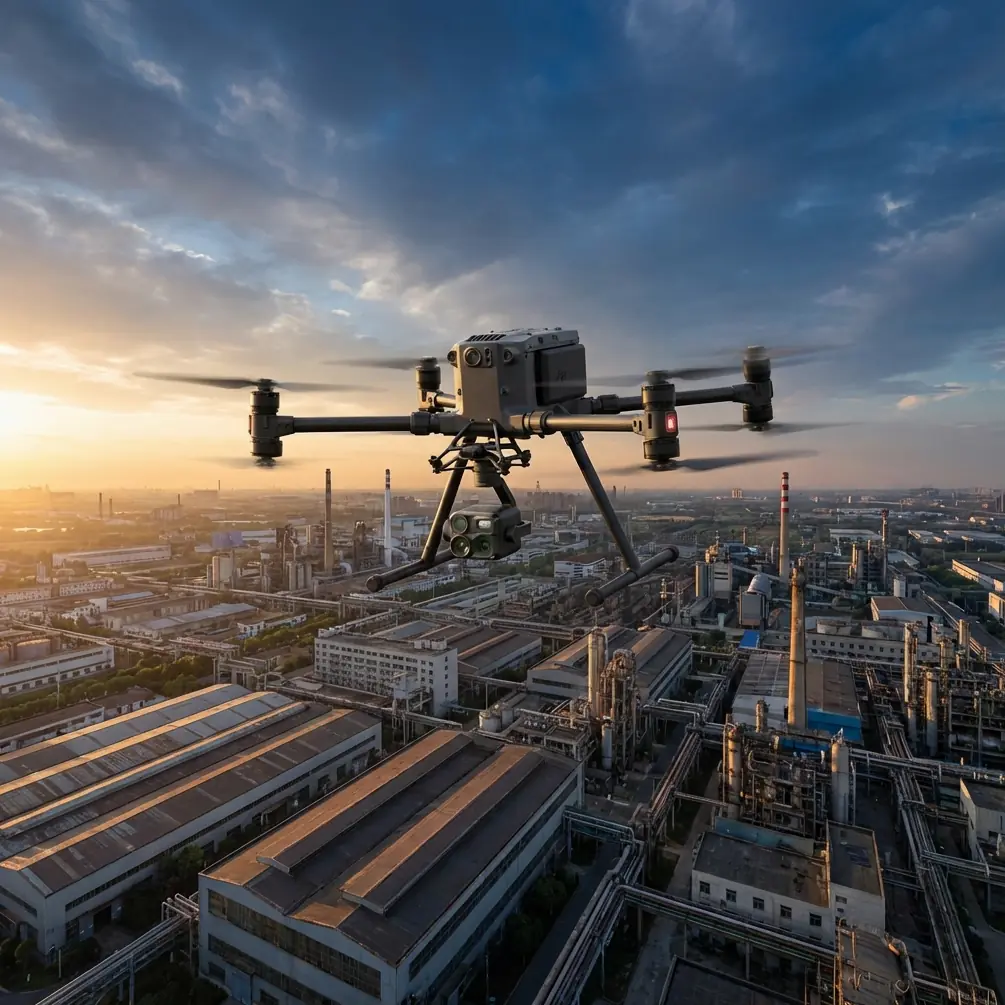
Matrice 4T Mountain Venue Capture: Field Tips That Actually Matter
META: Practical Matrice 4T tips for capturing mountain venues with thermal awareness, stable power planning, secure transmission, and cleaner data collection in demanding terrain.
I’m often asked the same question by venue operators, resort planners, and production teams scouting mountain sites: how do you capture a place that is visually dramatic, operationally awkward, and full of variables you cannot control?
With the Matrice 4T, the answer is not just “fly higher” or “use thermal.” Mountain venues punish lazy workflow. Wind shifts around ridgelines. Lighting flips in minutes. Power interruptions and hurried battery changes create avoidable mistakes. Even a beautiful site can turn into unusable survey data or inconsistent media if the mission plan ignores what the aircraft is really dealing with.
This guide is built around that reality. Not a broad overview. Not a spec-sheet rewrite. A field-minded approach to using the Matrice 4T for mountain venue capture, where the terrain itself is part of the challenge.
Start with the mission, not the drone
“Capturing venues” can mean several different outputs:
- promotional imagery for hospitality or event marketing
- photogrammetry for planning roads, decks, utilities, or access paths
- thermal signature checks for roof lines, power rooms, kitchens, or heat leakage
- seasonal condition records for operators managing snow, fog, moisture, or slope stability
- repeatable progress capture during construction or renovation
The Matrice 4T is useful here because it bridges visual inspection and thermal interpretation in one platform. That matters in mountains. A site visit that requires another team, another sensor package, or another weather window quickly becomes expensive in time even if no one talks about the cost directly.
The real advantage is decision speed. You can move from scenic overview to thermal signature check without rebuilding the workflow from scratch.
The mountain venue problem most teams underestimate
A mountain venue is rarely a single flat subject. It is a stack of elevation changes, access bottlenecks, reflective surfaces, shadow pockets, and inconsistent takeoff positions. Those conditions affect three things more than people expect:
- Image consistency
- Transmission confidence
- Electrical stability during repeated operations
The third point deserves more attention than it usually gets. In aviation electrical design, transient disturbances are treated seriously because they are normal, not rare. One reference case shows a switching event in an aircraft power system producing a voltage spike with a peak amplitude of 460 and a duration of 60 microseconds, while another side of the disconnected contact saw a transient around 240. The operational lesson is straightforward: short electrical disturbances may be brief, but brief does not mean harmless.
Why mention that in a Matrice 4T field article? Because mountain venue work tends to involve repeated charging, mobile power setups, generator support, field monitors, relays, and constant connect-disconnect cycles. If your support equipment is messy, your capture day gets unstable. Sensitive electronics do not care whether the site is a lodge, amphitheater, or cliffside wedding platform.
So before the first flight, treat your ground power setup as part of the mission system. Stable charging, clean cable management, and disciplined battery sequencing are not admin tasks. They protect your output.
Build your route around terrain layering
For venue capture in mountains, I recommend a three-layer mission design.
Layer 1: Establish the venue in terrain context
Begin with wide-angle passes that show how the venue sits in the slope, ridge, forest edge, or valley basin. This is where O3 transmission reliability becomes strategically important. In mountain environments, line-of-sight can degrade fast as the aircraft slips behind contour changes or structures. Even when you remain within legal operational limits, ridgelines and dense vegetation can interrupt confidence long before they fully break signal.
That means your opening passes should not be random beauty shots. Use them to identify:
- likely RF shadow zones
- sun angle effects across seating, lodges, decks, and pathways
- airflow changes near cliff edges and saddles
- alternate approach lines for later close work
If the end use includes stakeholder review, these first passes also establish a visual reference map for everyone else on the project.
Layer 2: Capture geometry for planning and documentation
If the venue needs measurement-ready outputs, switch into a more disciplined photogrammetry pattern. In mountain settings, elevation variance can distort expectations quickly, so GCP placement becomes more valuable, not less. Ground control points help anchor the model when terrain drops away unevenly or where built surfaces meet natural slope transitions.
A common mistake is placing GCPs only where access is easy. That creates a comfortable setup but a weak model edge. Instead, distribute control so it represents the venue’s true topographic spread: upper terraces, lower approach roads, retaining structures, and transition zones between developed and natural ground.
The Matrice 4T is often discussed for inspection and thermal work, but mountain venue teams should not overlook its role in fast site intelligence. If a planner needs to understand drainage direction, guest circulation, parking expansion options, or where to stage temporary infrastructure, a clean photogrammetry workflow turns the aircraft from camera platform into planning instrument.
Use thermal for more than “finding hot spots”
Thermal is only useful when you understand what question you are asking.
At mountain venues, thermal signature data can reveal:
- roof heat loss patterns on lodges or hospitality buildings
- overloaded utility zones
- kitchen exhaust anomalies
- moisture-related irregularities after cold nights
- foot traffic contrast in early morning event spaces
- habitat sensitivity around undeveloped venue edges
That last point matters more than many operators admit. On one mountain venue survey, we were tracing utility access behind a timber event structure just after sunrise when thermal picked up a compact warm mass near a rock line above the service path. Visually, it blended into the terrain. On thermal, it was obvious enough to prompt a route adjustment. We held position, widened off, and confirmed it was a small deer sheltering in the lee of the slope.
That is not a dramatic wildlife story. That is exactly why it matters. Good sensors let you avoid turning an efficient commercial mission into a disturbance event. In mountain environments, thermal is not only about buildings. It can help pilots and site teams notice what the eye misses in brush, shadow, or broken terrain.
Battery discipline matters more at altitude and in cold swings
The Matrice 4T platform supports efficient field rotation, and hot-swap batteries can keep momentum on sites where daylight windows are tight. But hot-swap capability should not become an excuse for rushed turnover.
Mountain mornings can be cold, then warm rapidly once the sun clears the ridge. That swing changes battery behavior, crew tempo, and pilot judgment. Create a rotation protocol:
- pre-stage battery pairs in a controlled temperature range
- log cycle order and expected mission role
- assign one crew member to battery confirmation, not just “whoever is free”
- avoid stacking the most power-demanding route segments onto the least temperature-stable packs
The electrical reference data on transient events is useful here conceptually too. Systems experience unavoidable spikes and surges during switching. In practice, this means field charging and battery swaps should be treated as controlled transitions. Every rushed transition increases the chance of incomplete seating, connector contamination, incorrect pack pairing, or a support device reboot at the wrong time.
Those are not rare edge cases. They are ordinary field failures.
Don’t let security become the weak link in venue capture
Venue work often involves unfinished infrastructure, private client layouts, utility paths, access roads, or guest-sensitive locations. If you are handling pre-opening resorts, private estates, or event spaces under development, transmission and data handling are not background details.
This is where AES-256 matters operationally. Secure handling is not just about compliance language. It reduces exposure when the captured material includes construction sequencing, access routes, high-value structures, or internal facility layouts. For hospitality groups and developers, secure workflows help preserve trust across architects, operations managers, and ownership teams.
If your team needs a practical setup discussion before a mountain shoot, I usually suggest starting the conversation here via direct field coordination on WhatsApp.
Compose for venue decisions, not just pretty footage
A strong Matrice 4T mountain capture mission should answer business questions. Can guests move safely from parking to ceremony deck? Where does snowmelt cross the path? Which roofs lose heat first? Does the hillside seating line maintain visibility? Are support buildings visually hidden from the primary event area? Are there thermal anomalies around utility cabinets or service corridors?
That means your shot list should include:
- access road approach sequences
- entrance reveal from guest perspective
- overhead relation between venue core and support buildings
- thermal passes on utility-heavy structures
- slope transition views for future construction teams
- repeatable reference frames for seasonal comparison
The best operators I know do not separate visual beauty from operational value. They get both in one visit.
Thread selection and hardware thinking still matter in the background
One reference source may seem far removed from drones: aircraft thread standards. But the principle is highly relevant. The source details UN and UNR thread series dimensions, including an example nominal size of 1.5000 inches with associated dimensional relationships and stress area values in the table. Why should a Matrice 4T operator care?
Because mountain operations shake systems. Cases, mounts, antennas, charging racks, tripods, landing pads, mobile stations, and vehicle-installed accessories all depend on mechanical reliability. Precision fastening is not glamorous, but it is what keeps support infrastructure from loosening over repeated transport on rough access roads. If your field kit uses mixed hardware standards carelessly, you create maintenance drift. Over time that shows up as vibration, misalignment, or equipment instability exactly where you need consistency.
Operationally, the lesson is simple: treat your drone ecosystem like an aviation-adjacent toolchain, not a pile of accessories. Mechanical standards and electrical discipline both shape data quality even when the aircraft itself performs flawlessly.
BVLOS thinking can improve even visual-line missions
Where regulations permit, BVLOS planning may be relevant for large mountain properties, infrastructure corridors, or resort-scale inspection programs. But even if you are not conducting BVLOS operations, thinking in that framework improves your mission design.
It forces you to consider:
- communication continuity
- terrain masking
- contingency landing logic
- battery reserve discipline
- route segmentation
- handoff between visual and sensor-based awareness
For Matrice 4T users, this mindset is useful because mountain venues often behave like fragmented environments. A single property can include open lawn, tree line, rock face, service lane, and roof cluster in one operation. Planning each segment as if it has its own risk profile makes the mission cleaner and the deliverables stronger.
A practical capture sequence for mountain venues
If I were deploying the Matrice 4T on a first-time mountain venue job tomorrow, the sequence would look like this:
1. Ground recon before powering up
Walk the takeoff zone, identify reflective surfaces, confirm cable paths, and note wildlife indicators.
2. Short visual context flight
Establish terrain shape, wind behavior, and transmission confidence using conservative lines.
3. Structured mapping pass
Capture photogrammetry with GCP-backed geometry where planning accuracy matters.
4. Targeted thermal session
Focus on buildings, utilities, shaded moisture-prone zones, and undeveloped edges where thermal signature can reveal hidden conditions.
5. Venue storytelling pass
Collect cinematic but still useful perspectives: approach road, arrival sequence, main gathering area, support structures, and terrain backdrop.
6. Repeatable reference frames
Save a small set of exact viewpoints for future comparison after construction, seasonal weather, or operational changes.
That sequence sounds simple because it should be. Complexity belongs in preparation, not in cockpit improvisation.
What separates good Matrice 4T work from forgettable work
Not the drone itself. Not a dramatic mountain location. Not a single thermal screenshot.
The difference is whether the operator can merge sensing, power discipline, terrain logic, and client intent into one coherent field workflow.
The Matrice 4T is especially effective for mountain venues when you use it as a decision platform. Visual capture tells the story of the place. Thermal adds what the eye cannot read. Photogrammetry gives structure to future planning. Secure transmission and sensible battery handling protect the process. Attention to electrical and mechanical fundamentals reduces the stupid failures that waste the best weather window of the week.
That is how mountain venue capture becomes reliable instead of lucky.
Ready for your own Matrice 4T? Contact our team for expert consultation.