
Matrice 4T at Altitude: A Field Report on Capturing
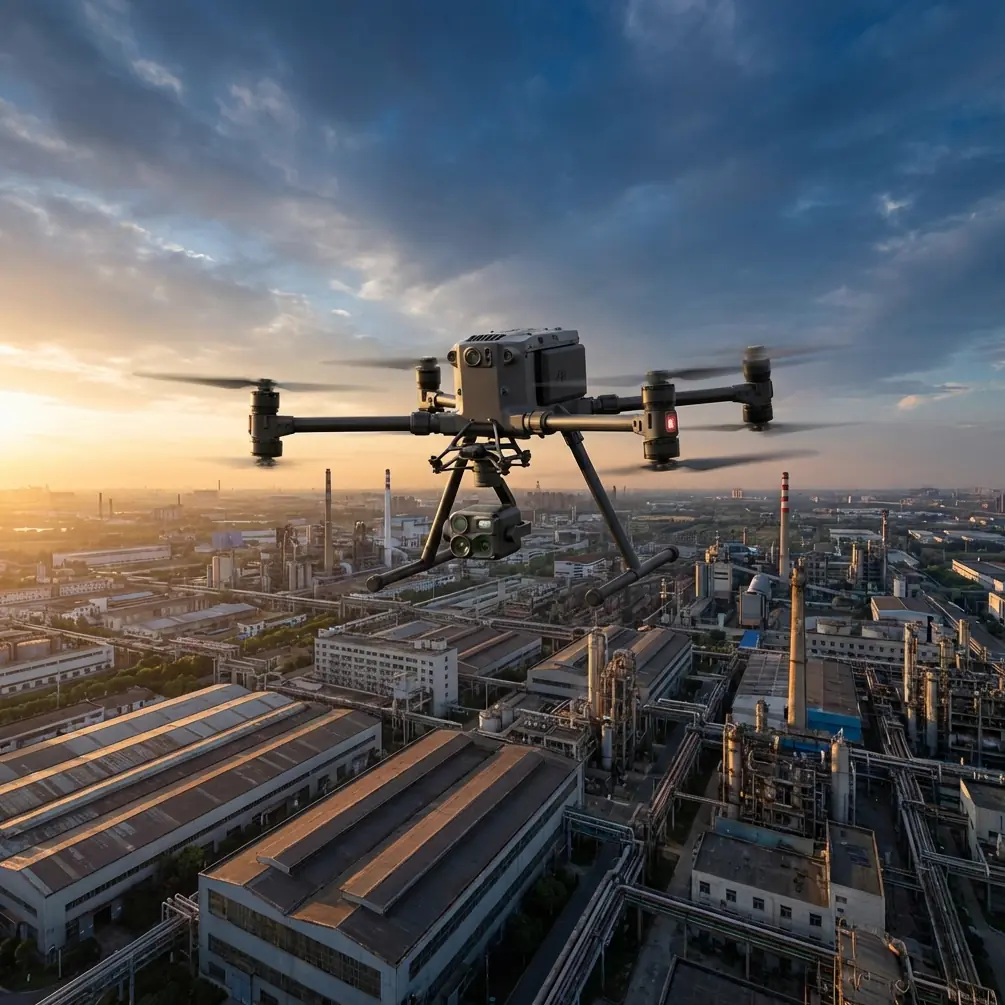
Matrice 4T at Altitude: A Field Report on Capturing Mountain Venues Without Losing Link, Power, or Precision
META: Expert field report on using the DJI Matrice 4T for high-altitude venue capture, with practical advice on antenna positioning, power continuity, transmission stability, thermal use, and mapping accuracy.
High-altitude venue work exposes every weakness in a drone operation. Thin air reduces margin. Complex terrain interferes with signal. Cold-soaked batteries behave differently from what they do at sea level. And when the assignment involves a resort, amphitheater, mountain lodge, or remote event site, there is rarely patience for a second pass because the first one came back with gaps, drift, or unstable transmission.
That is where the Matrice 4T becomes interesting—not as a spec-sheet trophy, but as a working aircraft for teams that need clean visual data, dependable thermal context, and stable control in places where radio and power discipline matter more than marketing claims.
This field report focuses on one scenario: capturing venues in high altitude. Not generic aerial photography. Not abstract enterprise theory. Actual operational decisions that matter when you are standing on uneven ground with changing weather, terrain reflections, and a client expecting usable results from the first sortie.
What changes when the venue is high up
At elevation, venue capture becomes a systems problem. The aircraft, payload, controller, battery behavior, radio link, and mission planning all interact. If one part is handled casually, the rest of the stack has to compensate.
Most pilots think first about flight performance, and they should. But in practice, the harder issues often show up elsewhere:
- transmission instability caused by terrain masking
- rushed battery swaps in cold conditions
- inconsistent image overlap on sloped sites
- poor antenna orientation from the pilot position
- interruptions that force partial remapping
- weak georeferencing when GCP placement is limited
The Matrice 4T is well suited to this kind of work because it can collect both visible and thermal data while maintaining enterprise-grade link security through AES-256 and long-range control through O3 transmission. Those are not side notes. In mountain venues, they directly affect whether a team can complete a survey efficiently and whether the resulting data is trusted by engineers, site managers, and event planners.
The first mistake: treating radio link as background noise
If you want maximum useful range in high terrain, antenna positioning is not a minor detail. It is operationally decisive.
Pilots often stand where the takeoff area is convenient rather than where the link geometry is best. That works on flat land. It fails around ridgelines, terraces, steep parking structures, and venues tucked below the operator’s elevation. O3 transmission is robust, but mountains still obey physics. Rock faces, buildings, steel roofs, and tree lines can all degrade the path.
My rule for the Matrice 4T in these environments is simple: build the pilot station around line-of-sight before you think about composition.
A few field habits make a measurable difference:
Antenna positioning advice for maximum range
Keep the controller facing the aircraft’s expected working sector, not the launch pad.
Too many pilots launch, rotate their body casually, and let the antennas drift off-axis during the mission. In a high-altitude venue capture, the aircraft often spends long periods orbiting one side of the site. Your posture should match that geometry.Avoid pointing the antenna tips directly at the aircraft.
With most controller antenna designs, the strongest radiation pattern is broadside, not off the tip. In plain language: present the face or side of the antenna pattern toward the aircraft’s direction of travel.Gain height for the ground station when possible.
A two-meter improvement in operator position can matter more than a hundred meters of horizontal relocation. If a safe, stable terrace or platform improves line-of-sight over a roofline or berm, use it.Do not let vehicles become your RF blind.
Pilots love the shelter of a van or SUV in cold mountain air. Metal body panels can hurt link quality, especially when you fly low behind a venue structure.Commit to one control zone.
Wandering while watching the screen sounds harmless. On stepped terrain, moving a few meters can place a railing, retaining wall, or generator trailer into the signal path.
These are small decisions, yet they often decide whether O3 transmission remains clean enough for precise framing and safe mission execution near complex infrastructure.
Why power continuity matters more than battery capacity alone
High-altitude venue work is rarely completed in a single battery cycle, especially if the deliverables include photogrammetry, façade inspection, thermal context, and promotional visuals. That is why hot-swap batteries matter. Not because swapping is novel, but because continuity preserves the structure of the mission.
There is an overlooked parallel here with a principle from aircraft electrical system design: critical systems are built to change power sources while keeping interruption within a strict tolerance. One reference point from electrical design literature sets a maximum supply interruption of 20 ms during power transfer. Drone operations are obviously different from crewed aircraft power architecture, but the underlying lesson is useful: transitions are where systems fail.
In field terms, every battery change is a mission transition. If you handle it poorly, you introduce the aerial equivalent of a power interruption into your data workflow. The aircraft may be fine, but your mapping consistency, overlap strategy, and ground notes can fragment.
For the Matrice 4T, disciplined hot-swap procedure has three advantages on mountain venues:
- it reduces turnaround time in cold, windy conditions
- it helps preserve mission rhythm for repeated grid or orbit passes
- it lowers the chance of introducing data gaps between sorties
That matters most when the venue includes layered elevations—main building, parking deck, access road, staging area, and surrounding slope. If one segment is flown before a break and the next after an unstructured reset, your overlap logic often degrades. Even strong photogrammetry software cannot fully rescue inconsistent capture geometry.
A surprising lesson from old transmitter manuals
One of the source references is an older radio-control manual, but its core advice still applies: even “smart” control systems do not replace careful reading and procedural understanding. The manual emphasizes that users should read all instructions for safer operation, and it highlights programmable functions such as model selection and data reset. That may sound primitive next to an enterprise drone like the Matrice 4T, yet the operational lesson is timeless.
High-altitude venue missions punish assumptions.
If your aircraft profile, return-to-home altitude, payload settings, image mode, or waypoint template were copied from a prior job without deliberate review, you are setting yourself up for preventable errors. “Model selection” in the old RC context translates today into mission profile discipline. “Data reset” translates into clearing stale assumptions before a flight.
For Matrice 4T teams, that means:
- verify terrain-relative RTH logic before takeoff
- confirm thermal palette and temperature settings before inspection work
- reset camera capture assumptions if switching from cinematic venue shots to photogrammetry grids
- review gimbal behavior when alternating between oblique imagery and nadir mapping
The point is not nostalgia. It is this: sophisticated aircraft still reward operators who think like system managers rather than screen tappers.
Thermal signature is not just for finding heat
At mountain venues, thermal work is often treated as an add-on. It should be integrated into the plan from the start.
The value of thermal signature in this scenario goes beyond locating warm HVAC exhaust or identifying occupied areas during an event setup. At altitude, thermal data helps interpret the site itself. Roof sections that receive uneven sun exposure, retaining walls holding moisture, pathways icing earlier than expected, and mechanical service zones hidden behind structures can all reveal patterns that standard RGB capture may understate.
For venue operators, this has practical uses:
- identifying heat loss from guest facilities
- checking rooftop mechanical uniformity
- monitoring drainage and moisture retention on slopes
- evaluating temporary structure placement in cold conditions
On the Matrice 4T, the advantage is not simply that thermal exists. It is that the same aircraft can pair thermal context with visible capture in one coordinated operation. That reduces the disconnect that often happens when thermal data is gathered later under different environmental conditions.
In high-altitude work, conditions shift fast. Sun angle, surface temperature, and wind exposure can change enough within an hour to make separate missions less comparable. One platform, one controlled mission window, one unified dataset—that is where efficiency turns into better interpretation.
Photogrammetry at venues: where most teams leave accuracy on the table
Venue capture sounds simple until you need measurable outputs. The moment the client wants drainage planning, expansion modeling, roof dimensions, access analysis, or event layout verification, pretty pictures are no longer enough. You need photogrammetry that survives scrutiny.
The challenge at altitude is that venues are rarely flat. They step, curve, climb, and disappear behind structures. That creates weak spots in the model if the team relies on a basic nadir-only pattern.
For the Matrice 4T, the best results usually come from combining:
- a clean nadir map for overall geometry
- lower oblique passes on building faces
- targeted orbits for complex structures
- carefully planned GCP placement where access allows
GCP strategy is especially important on mountain sites because GNSS alone may not give the repeatable confidence some projects require. If the venue sits near walls, overhangs, steel canopies, or steep terrain, a small number of well-placed control points can improve alignment discipline far more than simply capturing more photos.
The operational significance is straightforward: a better control framework means fewer surprises when the orthomosaic or 3D mesh is compared against real construction or facilities conditions.
Security and client confidence are part of the workflow
Not every venue client asks about transmission security, but the better ones do. Resorts, private estates, event facilities, and infrastructure-connected properties increasingly want to know how their imagery is handled in the field.
That is where AES-256 matters. It is not just a compliance buzzword. In commercial operations, especially around hospitality properties or private venues, encrypted transmission helps reassure clients that live feeds and operational data are being protected during collection.
Pair that with O3 transmission and you get a more complete story: secure link architecture is only half useful if the link itself is unstable in the environment where you are flying. At altitude, the combination matters. A secure, long-reach connection supports both operational continuity and stakeholder trust.
BVLOS talk is easy. Discipline is harder.
Some operators casually mention BVLOS whenever mountain terrain makes the aircraft visually small. That is not the right mindset. For venue capture, the smarter approach is to design the mission so the link remains strong, the geometry remains predictable, and the observation structure remains defensible within the applicable operating framework.
In practical terms, that means planning with range margin rather than bragging rights. O3 can support ambitious stand-off positions, but terrain can erase theoretical range quickly. If you need to push farther around a ridge or below a terrace edge, improve the operator position first. Do not treat transmission strength as an invitation to become lazy about visibility, mapping consistency, or recovery planning.
A real-world workflow that holds up
For a high-altitude venue capture with the Matrice 4T, my preferred sequence looks like this:
Walk the site with transmission in mind first.
Choose the pilot station based on line-of-sight, not comfort.Plan two mission layers, not one.
One for mapping geometry, one for interpretive capture such as thermal and façades.Place GCPs where elevation breaks are most likely to distort the model.
Corners, terrace transitions, access road changes, and building edges matter more than random open ground.Use thermal early if solar loading will rise fast.
Morning often gives cleaner contrast for diagnostics.Manage battery swaps like a continuity event.
Log where the mission stopped and resume with overlap discipline, not memory.Maintain antenna awareness during every leg.
The aircraft moves; your body orientation should too.
If you are planning a mountain venue project and want a second set of eyes on link layout or payload strategy, you can send the site basics here: message James directly on WhatsApp.
What the Matrice 4T actually does well in this niche
The Matrice 4T fits high-altitude venue capture because it balances three things that are often separated across multiple tools: visual documentation, thermal interpretation, and enterprise-grade mission handling. That balance matters more than any single feature.
Its role is strongest when the venue owner or project team needs answers across several layers:
- What does the property look like?
- How does the terrain interact with access and structures?
- Where are the heat, moisture, or system anomalies?
- Can this dataset support planning rather than just marketing?
That is a sharper use case than generic drone photography, and it is exactly where careful operators pull ahead.
The real takeaway from the references behind this article is not technological nostalgia or electrical theory for its own sake. It is the enduring value of disciplined transitions and informed control. An older RC manual warns users to read the system carefully before operating. Aircraft electrical design insists that source changes be managed within strict limits, including a 20 ms interruption threshold in one power-transfer context. Translated to Matrice 4T fieldwork, the message is clear: reliable outcomes come from respecting the moments where systems change state—profile changes, battery swaps, signal geometry shifts, and mission resets.
On a mountain venue, those moments are where jobs are either saved or quietly compromised.
Ready for your own Matrice 4T? Contact our team for expert consultation.