
M4T Wildlife Capture Tips for High-Altitude Terrain
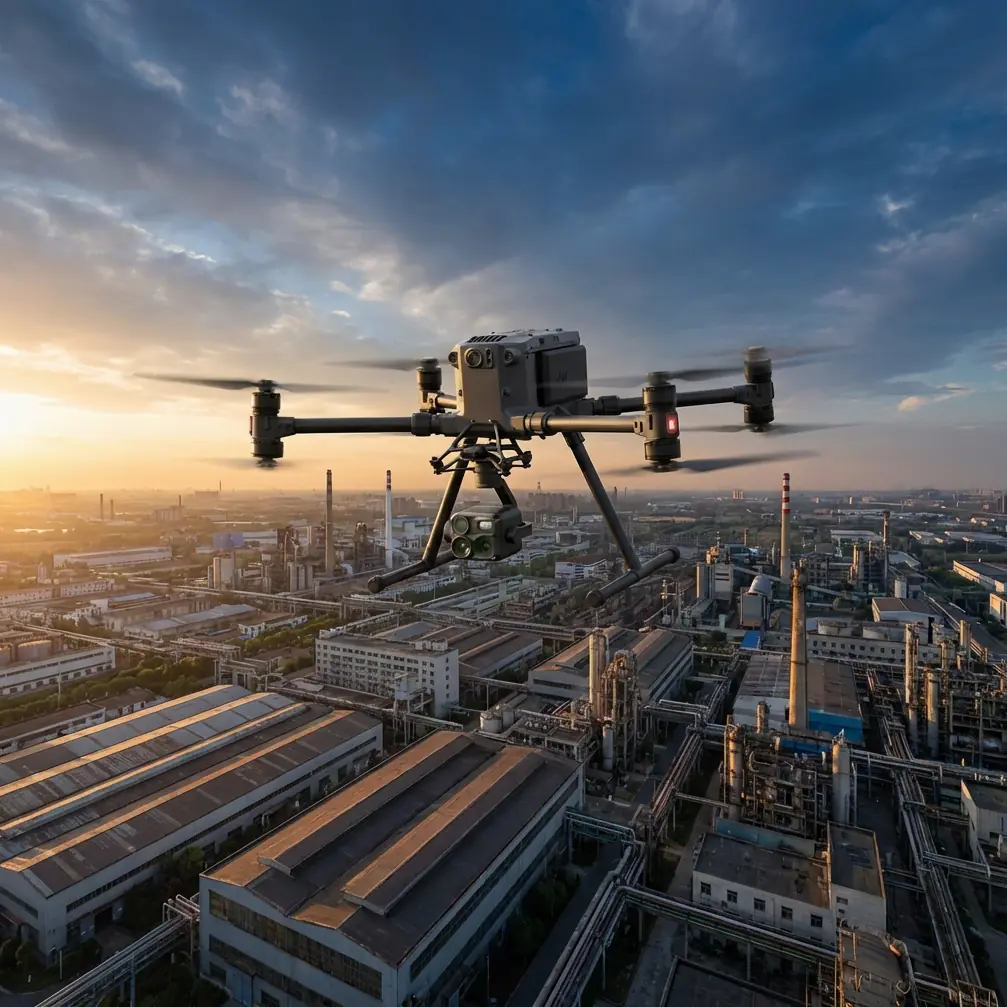
M4T Wildlife Capture Tips for High-Altitude Terrain
META: Master high-altitude wildlife capture with Matrice 4T. Expert tips on thermal tracking, battery management, and camera settings for stunning results.
TL;DR
- Thermal signature detection enables wildlife tracking through dense canopy and low-light conditions at elevations above 4,000 meters
- Pre-warm batteries to 25°C minimum before launch to prevent mid-flight power drops in cold alpine environments
- Use O3 transmission to maintain stable video feeds across mountain valleys with 20km range capability
- Combine wide-angle and zoom sensors for species identification without disturbing natural behavior
High-altitude wildlife documentation presents unique challenges that ground-based photography simply cannot solve. The Matrice 4T transforms how researchers and filmmakers capture elusive species in mountain ecosystems—delivering broadcast-quality footage while maintaining safe distances from sensitive habitats.
This guide shares field-tested techniques for maximizing your M4T's capabilities in thin air, extreme temperatures, and unpredictable terrain.
Why High-Altitude Wildlife Work Demands Specialized Equipment
Mountain ecosystems host some of Earth's most endangered species. Snow leopards, Himalayan wolves, and alpine ibex inhabit terrain that's nearly impossible to access on foot.
Traditional observation methods require weeks of acclimatization, expensive expedition logistics, and often result in disturbed animals fleeing before documentation occurs.
The M4T changes this equation entirely. Its 45-minute flight time at sea level translates to approximately 32-35 minutes at 5,000 meters elevation—still enough for comprehensive survey work across multiple valleys.
The Thin Air Challenge
Air density at 4,500 meters drops to roughly 60% of sea-level values. This affects drone performance in three critical ways:
- Propellers generate less lift, requiring higher RPM and increased power draw
- Cooling efficiency decreases, raising motor and battery temperatures
- GPS accuracy can fluctuate due to atmospheric interference
The M4T's intelligent flight systems compensate automatically, but understanding these factors helps you plan realistic mission parameters.
Battery Management: The Make-or-Break Factor
Expert Insight: During a three-week snow leopard survey in Ladakh, I lost an entire morning's work because batteries stored overnight in an unheated tent dropped to -8°C. The M4T refused to arm—a safety feature that saved the aircraft but cost us critical dawn footage. Now I sleep with batteries in my sleeping bag. Unconventional? Yes. Effective? Absolutely.
Cold temperatures devastate lithium-polymer performance. Here's the protocol that maximizes flight time in alpine conditions:
Pre-Flight Battery Protocol
- Store batteries above 15°C overnight using insulated cases with chemical warmers
- Check cell voltage balance before each flight—variance exceeding 0.1V between cells indicates problems
- Activate the M4T's self-heating function 20 minutes before planned launch
- Verify battery temperature reads 25°C minimum on the DJI Pilot 2 app before takeoff
Hot-Swap Strategy for Extended Operations
The M4T supports hot-swap batteries when used with compatible power stations. This capability proves invaluable for wildlife work requiring extended observation periods.
Position your ground station strategically:
- Within 500 meters of primary observation zones
- Protected from wind by natural terrain features
- Accessible for rapid battery exchanges without disturbing wildlife
A single operator can maintain nearly continuous coverage by rotating three battery sets through a charging station while one powers the aircraft.
Thermal Signature Detection Techniques
Wildlife thermal imaging differs fundamentally from industrial inspection work. Animals move, hide, and regulate body temperature in ways that demand adaptive scanning strategies.
Optimal Thermal Settings for Wildlife
| Parameter | Recommended Setting | Rationale |
|---|---|---|
| Palette | White Hot | Best contrast against cold backgrounds |
| Gain Mode | High | Detects subtle temperature variations |
| Isotherm Range | 32-40°C | Isolates mammalian body temperatures |
| FFC Interval | Manual | Prevents image disruption during tracking |
The M4T's 640×512 thermal resolution resolves individual animals at distances exceeding 800 meters—far enough to avoid triggering flight responses in most species.
Reading Thermal Signatures in Mountain Terrain
Rock faces absorb solar radiation and retain heat for hours after sunset. This creates false positives that confuse inexperienced operators.
Learn to distinguish:
- Animal signatures: Irregular shapes with consistent temperature, often moving
- Thermal rocks: Geometric patterns matching visible terrain features
- Vegetation heat: Diffuse warmth from decomposing organic matter
Pro Tip: Schedule thermal surveys during the two hours before dawn when rock temperatures drop closest to ambient. Animal signatures stand out dramatically against uniformly cold backgrounds during this window.
Photogrammetry Applications for Habitat Mapping
Beyond direct wildlife observation, the M4T enables detailed habitat documentation through photogrammetry workflows.
Understanding where animals live proves as valuable as observing the animals themselves. Researchers use 3D terrain models to:
- Identify potential denning sites based on slope and aspect
- Map vegetation corridors connecting fragmented habitats
- Quantify habitat loss over time through repeat surveys
GCP Placement in Remote Terrain
Ground Control Points dramatically improve photogrammetric accuracy, but placing them in mountain environments requires careful planning.
Effective GCP strategies for wildlife habitat mapping:
- Use natural features (distinctive rocks, trail intersections) as pseudo-GCPs when traditional markers aren't feasible
- Deploy lightweight fabric targets that can be packed in and removed without trace
- Record RTK coordinates for each point using the M4T's integrated positioning system
- Minimum 5 GCPs distributed across the survey area, with at least one near each corner
Maintaining Signal Integrity Across Mountain Valleys
The M4T's O3 transmission system handles challenging terrain better than previous generations, but mountains still create coverage gaps.
Radio signals don't bend around rock faces. Planning flight paths that maintain line-of-sight to your controller prevents signal loss during critical moments.
BVLOS Considerations
Beyond Visual Line of Sight operations multiply wildlife survey efficiency but require additional precautions:
- File appropriate airspace notifications with local aviation authorities
- Deploy visual observers at intermediate positions when terrain blocks direct sightlines
- Configure automatic return-to-home triggers for signal degradation below -85 dBm
- Enable AES-256 encryption to prevent interference from other operators in the area
The M4T's transmission system maintains 1080p/60fps video quality at distances up to 20 kilometers under ideal conditions. Mountain terrain typically reduces this to 8-12 kilometers of reliable coverage.
Camera Configuration for Wildlife Documentation
The M4T's multi-sensor payload offers flexibility that single-camera systems cannot match.
Sensor Selection by Situation
Wide-angle camera: Use for establishing shots, habitat context, and initial animal detection. The broad field of view covers more terrain per pass.
Zoom camera: Switch to telephoto once animals are located. The 56× hybrid zoom enables species identification and behavioral documentation without closing distance.
Thermal sensor: Primary tool for detection in low-visibility conditions. Overlay thermal data on visible imagery for precise location marking.
Exposure Settings for Mountain Light
High-altitude sunlight contains more UV radiation and creates extreme contrast between shadowed and illuminated areas.
Recommended approach:
- Set exposure compensation to -0.7 EV to preserve highlight detail
- Use auto ISO with upper limit of 800 to minimize noise
- Enable D-Log color profile for maximum post-production flexibility
- Shoot at 4K/30fps minimum for adequate detail in moving subjects
Common Mistakes to Avoid
Launching without acclimatization checks: The M4T's sensors need time to stabilize at altitude. Allow 5 minutes of powered-on ground time before takeoff.
Ignoring wind patterns: Mountain thermals shift dramatically throughout the day. Morning flights typically offer calmer conditions than afternoon operations.
Flying too close, too fast: Wildlife habituates to distant drones but flees from rapid approaches. Maintain 100+ meter distances and approach slowly.
Neglecting backup power: Solar charging becomes unreliable when clouds roll in. Carry sufficient batteries for your entire planned operation plus 50% reserve.
Skipping pre-flight compass calibration: Magnetic anomalies in mountain rock formations cause navigation errors. Calibrate before each session, not just each day.
Frequently Asked Questions
How does altitude affect the M4T's maximum flight time?
Expect approximately 20-25% reduction in flight time at 4,500 meters compared to sea-level performance. The thinner air requires propellers to work harder, drawing more power. Cold temperatures compound this effect by reducing battery capacity. Plan missions assuming 30-32 minutes of usable flight time under typical high-altitude conditions.
Can the M4T's thermal camera detect animals through forest canopy?
Thermal detection through vegetation depends on canopy density and animal size. The 640×512 sensor reliably identifies large mammals (deer-sized and above) through moderate tree cover. Dense coniferous forests block most thermal radiation. Position the aircraft to capture oblique angles through gaps rather than attempting direct overhead detection in heavily forested areas.
What's the minimum temperature for safe M4T operations?
DJI rates the M4T for operation down to -20°C, but practical limits depend on battery management. Below -10°C, expect significantly reduced flight times even with pre-warmed batteries. The aircraft's motors and electronics handle cold well; batteries remain the limiting factor. Use the self-heating function aggressively and keep spare batteries warm until needed.
High-altitude wildlife documentation rewards patience, preparation, and respect for both the environment and your equipment. The Matrice 4T provides capabilities that seemed impossible just a few years ago—but technology alone doesn't guarantee results.
Success comes from understanding how thin air, cold temperatures, and rugged terrain affect every aspect of your operation. Apply these techniques consistently, and you'll capture footage that advances conservation while inspiring audiences worldwide.
Ready for your own Matrice 4T? Contact our team for expert consultation.