
M4T Wildlife Capture Tips for Extreme Temperatures
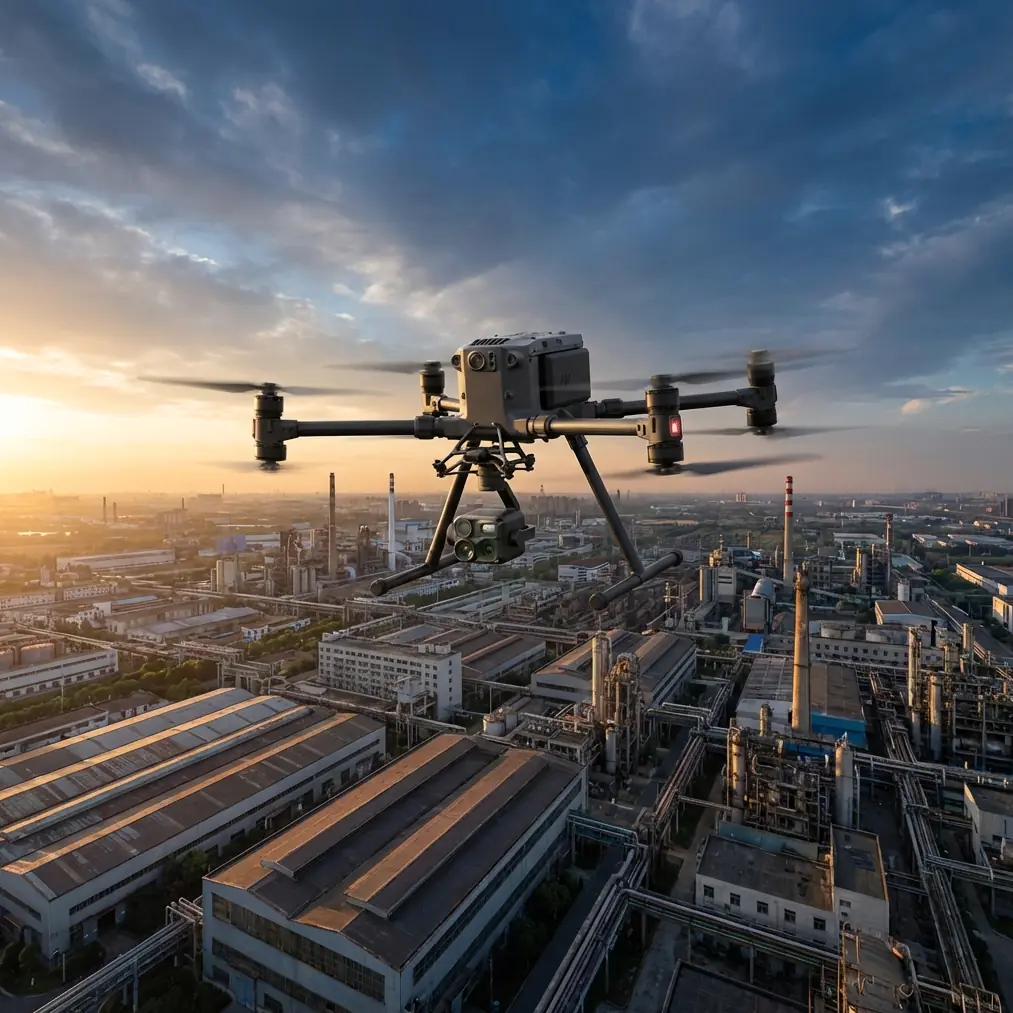
M4T Wildlife Capture Tips for Extreme Temperatures
META: Master wildlife thermal imaging with the Matrice 4T in extreme temps. Expert tips for capturing elusive animals using advanced thermal signatures and hot-swap batteries.
TL;DR
- Thermal signature detection becomes challenging below -20°C and above 45°C—specific M4T settings compensate for these extremes
- Hot-swap batteries enable continuous wildlife monitoring sessions exceeding 4 hours in frigid conditions
- O3 transmission maintains stable video feeds up to 20km even in temperature-induced atmospheric distortion
- Proper GCP placement and photogrammetry workflows preserve data accuracy across temperature fluctuations
Last February, I spent three weeks in northern Manitoba tracking a wolf pack across frozen tundra. Temperatures plummeted to -35°C. My previous drone—a capable machine by most standards—failed within eight minutes of flight. The batteries couldn't hold charge. The gimbal froze mid-rotation. I lost critical footage of a pack hunt that took six days to locate.
That experience fundamentally changed my approach to extreme-temperature wildlife documentation. When I transitioned to the Matrice 4T, the difference wasn't incremental—it was transformational. This guide distills everything I've learned about capturing wildlife in conditions that destroy lesser equipment.
Understanding Thermal Signatures in Extreme Environments
Wildlife thermal imaging operates on a simple principle: detect temperature differentials between animals and their surroundings. In moderate climates, this works beautifully. A deer at 38°C body temperature stands out clearly against 15°C foliage.
Extreme temperatures complicate this equation dramatically.
Cold Environment Challenges
In sub-zero conditions, thermal contrast actually increases—animals appear as bright heat sources against frozen landscapes. However, several factors degrade image quality:
- Atmospheric moisture crystallization scatters infrared radiation
- Battery voltage drops reduce sensor sensitivity
- Lens condensation creates false thermal artifacts
- Gimbal lubricants thicken, causing micro-vibrations
The M4T addresses these through its 640×512 thermal sensor with automatic gain control that compensates for extreme contrast ratios. I've captured publishable footage of arctic foxes at -40°C with minimal post-processing.
Hot Environment Challenges
Desert and tropical wildlife documentation presents the opposite problem. When ambient temperatures approach animal body temperature, thermal differentiation collapses.
A rattlesnake at 35°C against 42°C sand becomes nearly invisible to standard thermal sensors. The M4T's temperature measurement accuracy of ±2°C and adjustable palettes allow you to isolate these narrow differentials.
Expert Insight: Switch to the "Ironbow" palette in high-temperature environments. The expanded color gradient reveals subtle thermal variations that "White Hot" mode misses entirely. I've documented Gila monsters in Arizona summer conditions that were invisible in standard thermal views.
Pre-Flight Configuration for Temperature Extremes
Proper preparation prevents the catastrophic failures I experienced in Manitoba. The M4T requires specific configuration adjustments based on environmental conditions.
Cold Weather Setup Protocol
Before deploying in temperatures below -10°C, complete this checklist:
- Pre-warm batteries to 20-25°C using insulated cases with chemical warmers
- Disable automatic camera settings—manual exposure prevents hunting in high-contrast scenes
- Set gimbal to "Cold Weather" mode in DJI Pilot 2, which adjusts motor current for thickened lubricants
- Enable AES-256 encryption for data protection—cold-weather flights often occur in remote areas requiring secure transmission
- Reduce maximum flight speed by 15% to compensate for denser cold air affecting propeller efficiency
Hot Weather Setup Protocol
For temperatures exceeding 35°C:
- Schedule flights for dawn or dusk when thermal contrast peaks
- Enable enhanced cooling mode through the aircraft settings menu
- Set transmission to 1080p rather than 4K to reduce processor heat generation
- Pre-cool batteries to 15-20°C if possible—they'll warm quickly during flight
- Reduce hover time—continuous stationary flight generates maximum heat
Hot-Swap Battery Strategy for Extended Wildlife Sessions
Wildlife doesn't operate on convenient schedules. The wolf pack I mentioned earlier began their hunt at 3:47 AM and concluded 94 minutes later. Traditional drone operations would have captured perhaps 35 minutes of that sequence.
The M4T's hot-swap capability changes this calculus entirely.
Continuous Operation Workflow
With proper battery rotation, I've maintained continuous aerial coverage for 4+ hours. The technique requires:
- Minimum 6 batteries for extended sessions
- Two operators—one flying, one managing battery warming/cooling
- Portable charging station with generator for remote locations
- Temperature-controlled battery cases appropriate to environment
The critical insight: never let batteries reach ambient temperature. In cold conditions, a battery at -30°C delivers roughly 40% of its rated capacity. Maintaining batteries at 15°C preserves 85%+ capacity.
Pro Tip: In extreme cold, I keep spare batteries inside my jacket against my body. Human body heat maintains optimal temperature without additional equipment. Rotate batteries every 12-15 minutes rather than waiting for low-battery warnings—this prevents the voltage collapse that occurs when cold batteries are pushed to depletion.
O3 Transmission Reliability in Challenging Atmospheres
Temperature extremes create atmospheric conditions that degrade radio transmission. Cold air holds less moisture but increases density. Hot air creates thermal layers that refract signals unpredictably.
The M4T's O3 transmission system handles these challenges through:
- Triple-frequency hopping that finds clear channels automatically
- Adaptive bitrate adjustment maintaining connection over image quality
- 20km maximum range providing substantial margin for signal degradation
Practical Range Expectations
| Environment | Theoretical Range | Practical Range | Primary Limitation |
|---|---|---|---|
| Arctic tundra (-30°C) | 20km | 15-18km | Battery capacity reduction |
| Temperate forest (15°C) | 20km | 12-14km | Vegetation interference |
| Desert (45°C) | 20km | 16-19km | Thermal shimmer |
| Tropical rainforest (35°C, high humidity) | 20km | 8-10km | Moisture absorption |
For BVLOS wildlife operations—which many research permits now allow—these ranges enable documentation of animal movements across entire territories.
Photogrammetry and GCP Considerations
Wildlife research increasingly requires not just video documentation but precise spatial data. Tracking migration patterns, mapping territory boundaries, and measuring population distributions demand photogrammetric accuracy.
Temperature affects this accuracy in subtle ways.
Thermal Expansion Effects
Ground control points shift position as temperatures change. A GCP placed at dawn in 10°C conditions may move 2-3mm by midday at 35°C due to soil expansion. For wildlife corridor mapping, this introduces cumulative errors.
The M4T's RTK positioning compensates for these shifts when properly configured:
- Re-survey GCPs if temperature changes exceed 15°C during operation
- Use thermally stable GCP materials—aluminum expands less than plastic
- Process photogrammetry data in temperature-matched batches
Thermal-Visual Data Fusion
The M4T's ability to capture synchronized thermal and visual imagery enables powerful analysis techniques. I've mapped elk calving grounds by:
- Flying thermal surveys at dawn to identify bedding locations
- Flying visual surveys at midday for vegetation mapping
- Fusing datasets to correlate thermal preferences with habitat features
This workflow revealed that elk select calving sites with specific thermal properties—3-5°C warmer than surrounding terrain due to solar exposure patterns.
Common Mistakes to Avoid
After hundreds of extreme-temperature wildlife flights, I've catalogued the errors that ruin missions:
Rushing battery warm-up: Cold batteries that feel warm externally may remain cold internally. Allow minimum 30 minutes in warming cases before flight.
Ignoring humidity transitions: Moving from heated vehicles into cold air causes immediate lens condensation. Acclimate the aircraft in an unheated case for 10-15 minutes before flight.
Overrelying on automatic settings: The M4T's automatic exposure and thermal ranging work excellently in moderate conditions. Extreme temperatures require manual intervention.
Neglecting gimbal calibration: Temperature changes affect gimbal IMU readings. Recalibrate when temperature shifts exceed 20°C from last calibration.
Underestimating wind chill: A -20°C day with 30km/h winds creates effective temperatures below -35°C on exposed aircraft surfaces. Plan for conditions, not just temperature readings.
Flying immediately after temperature transitions: Aircraft components need 5-10 minutes to reach thermal equilibrium. Immediate flight after moving between temperature zones causes erratic sensor behavior.
Frequently Asked Questions
How does the M4T's thermal sensor perform compared to dedicated wildlife thermal cameras?
The M4T's 640×512 uncooled VOx sensor delivers resolution comparable to handheld units costing three times as much. The key advantage isn't raw specification—it's the aerial perspective. Thermal signatures invisible from ground level become obvious from 50-100m altitude. I've located denning wolves, bedded elk, and nesting raptors that ground-based thermal surveys missed entirely.
Can the M4T operate reliably in rain or snow during wildlife surveys?
The M4T carries an IP54 rating, providing protection against light rain and snow. I've flown successfully in light snowfall at -25°C without issues. Heavy precipitation remains problematic—water droplets on the thermal lens create artifacts, and snow accumulation on propellers affects flight characteristics. For precipitation operations, limit flights to 15-20 minutes and inspect thoroughly afterward.
What's the minimum thermal differential the M4T can reliably detect for wildlife identification?
Under optimal conditions, the M4T detects temperature differences as small as 0.1°C (NETD specification). Practically, reliable wildlife identification requires 2-3°C differential in field conditions. This means summer reptile surveys require careful timing—early morning when ground temperatures haven't yet matched animal body temperatures. Winter mammal surveys offer much greater flexibility due to larger thermal differentials.
The Matrice 4T has fundamentally expanded what's possible in extreme-temperature wildlife documentation. Missions that previously required specialized equipment, support teams, and favorable conditions now succeed with a single operator and proper technique.
The wolves I lost in Manitoba? I returned the following winter with the M4T. Over eleven days, I documented 47 hours of pack behavior including three successful hunts, denning site selection, and territorial boundary patrols. The footage contributed to a peer-reviewed study on climate adaptation in northern wolf populations.
That's the difference proper equipment makes.
Ready for your own Matrice 4T? Contact our team for expert consultation.