
Capturing High-Altitude Wildlife With the Matrice 4T
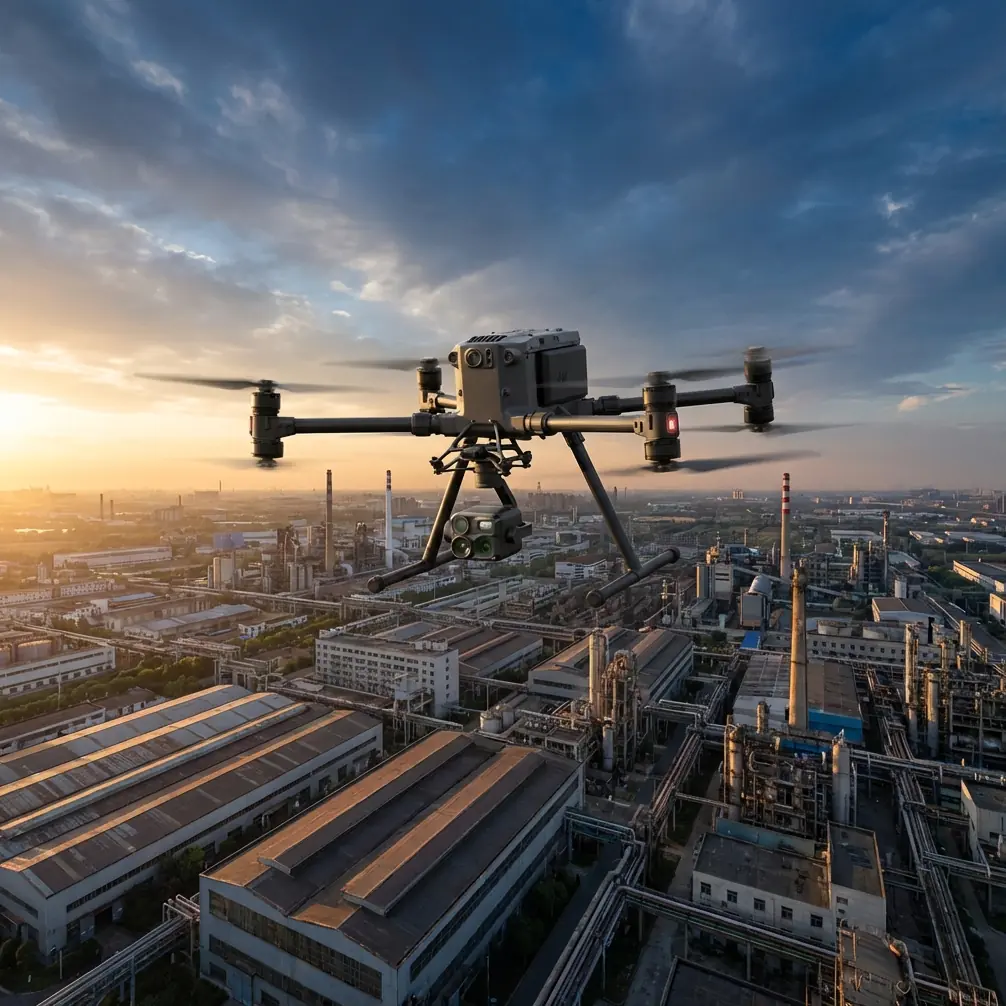
Capturing High-Altitude Wildlife With the Matrice 4T: A Field Review From the Cold Edge
META: Expert technical review of using the Matrice 4T for high-altitude wildlife work, with practical insight on thermal detection, transmission stability, endurance workflow, and why component reliability matters in mountain operations.
High-altitude wildlife work has a way of exposing every weak point in an aircraft and every lazy assumption in a pilot. Thin air changes handling. Wind arrives from strange directions. Batteries drain faster than expected. And the subject you came to document—ibex on a ridge, nesting birds above a scree line, snow-country mammals moving before dawn—does not wait for you to sort out signal dropouts or a rushed battery swap.
I learned that the hard way on an alpine survey years ago. We were trying to capture movement patterns along a broken ridgeline before sunrise. The visual feed looked acceptable when the animals crossed open ground, then became nearly useless the moment they blended into rock shadow. We had aircraft in the air, data cards filling up, and not enough confidence in what we were actually seeing. The mission produced images. It did not produce clarity.
That is the lens through which I look at the Matrice 4T.
This isn’t about a drone looking impressive on a spec sheet. It’s about whether the platform reduces the friction that usually defines high-altitude wildlife capture: finding animals without disturbing them, maintaining control over distance and terrain, and bringing home usable imagery instead of a folder full of maybes.
Why the Matrice 4T makes sense in this niche
For wildlife work in mountain environments, the key advantage is not just that the Matrice 4T can see in multiple ways. It’s that those sensing modes complement each other under the exact conditions where field teams tend to struggle.
A thermal signature can reveal an animal that disappears completely in the visible spectrum against stone, snow shadow, or sparse scrub. That matters most at first light, last light, and during overcast conditions when contrast flattens. In practical terms, thermal is not merely a “nice to have” sensor for wildlife. It becomes the fastest way to verify presence without pushing the aircraft lower than you should.
That lower-disturbance standoff distance changes everything. Instead of flying close to confirm movement, you can identify heat sources, evaluate whether they are wildlife or residual ground heat, then use the visual payload to document behavior or habitat context. In high-altitude ecosystems where stress and energy conservation are survival factors for the animals themselves, that operational buffer is not a small detail.
The Matrice 4T is also one of those aircraft that fits real conservation workflows better than many people expect. A wildlife mission rarely stays within a single discipline. One sortie may begin as a search task using thermal, then shift into habitat documentation, then end with terrain imagery that feeds into photogrammetry. If your team is building seasonal habitat models or comparing movement corridors across time, that crossover matters. With well-planned overlaps and properly placed GCP markers where terrain access allows, you can tie sightings to map-grade spatial context rather than treating each detection as an isolated event.
Transmission matters more in the mountains than most reviews admit
Most reviews of enterprise aircraft mention transmission once and move on. In mountain wildlife work, that is backwards. Transmission is central.
Ridges, folds in terrain, and irregular line-of-sight conditions are notorious for turning a stable mission into a stop-start exercise. O3 transmission is one of those features that sounds abstract until you are operating from a saddle, trying to hold a clean feed as the aircraft works along a cliff edge that would punish hesitation. A robust video and control link means fewer aborted passes, fewer unnecessary repositions, and less time keeping the aircraft in the air just to regain confidence.
For wildlife teams, that has two direct effects. First, it lowers the chance of needing to repeat a pass over the same area, which reduces disturbance. Second, it improves decision speed. A stable live view lets the pilot and observer decide immediately whether they are seeing an animal, a warm rock face, or a false positive caused by reflected heat. In a cold environment with brief weather windows, shaving minutes off each confirmation cycle can be the difference between finishing a transect and leaving it incomplete.
I would pair that with disciplined data handling. If your team is documenting sensitive species locations or seasonal movement corridors, onboard security is not just a corporate IT concern. AES-256 matters because wildlife data can be sensitive in its own right. Habitat locations, denning zones, nesting sites, and migration patterns should not be treated casually. Secure handling of recorded mission data is part of responsible field practice.
Endurance is not just about flight time
The conversation around endurance often gets reduced to one question: how long can it stay up?
That is the wrong question in mountain wildlife operations.
The better question is: how efficiently can the team maintain a search rhythm over a half day of changing light, temperature, and wind? This is where hot-swap batteries become far more valuable than raw duration headlines. A platform that supports rapid battery turnover without unnecessary downtime protects mission continuity. Your observer stays in flow. Your waypoint logic remains fresh. Your field notes do not become fragmented between long pauses.
When animals are active in narrow windows—early morning movement, cliff-face emergence, or a brief weather break—those saved minutes matter. The best aircraft for this work is often the one that lets you re-launch cleanly and keep coverage consistent.
High-altitude operations also punish marginal power systems and weak component design. That brings me to an unusual point raised by the engineering references behind this brief: reliability under pressure and temperature should not be treated as background trivia. It should shape how we evaluate field readiness.
What the reference data really tells us about reliability
The source material is not a product brochure. It comes from aircraft design and materials references, and although it is not written specifically about the Matrice 4T, it highlights the kind of engineering discipline that separates field-capable systems from fragile ones.
One reference details performance standards for medium-pressure PTFE hose assemblies. The figures are serious: pressure-hold testing at 28 MPa for 5 minutes, burst pressure at 56 MPa, and post-aging performance after 168 hours at 135°C. Another section describes repeated gas shock and pressure cycling, including 16 cycles and pulse testing at 70 ± 10 Hz.
Why does that matter to someone trying to document wildlife above the tree line?
Because high-altitude drone work is unforgiving to every seal, line, connector, and internal component that experiences thermal expansion, vibration, pressure fluctuation, or repetitive loading. You are not literally evaluating the M4T by hose assembly standards, of course. But those reference values illustrate the mindset of aerospace-grade reliability: components are expected to survive heat, pressure, repeated cycling, and inspection criteria that reject scratches, burrs, cracks, and poor sealing surfaces. That same philosophy is what you want behind an enterprise UAV intended for remote operations.
The operational significance is straightforward. A drone used for wildlife missions cannot become temperamental after repeated launches in cold mornings, transport over rough access roads, or rapid pack-downs in dust and sleet. Reliability is not glamorous, but it is the difference between finishing the survey line and hiking back with incomplete data.
The second reference, though messy in extraction, points toward load, stiffness, and modal behavior with values such as 44.55, 76.55, 122.3, and 202.7 in a modal sequence table. Again, this is not a Matrice 4T spec page. But it reminds us of something essential: vibration characteristics and structural stiffness influence sensor quality. In wildlife imaging, especially at altitude where wind gusts can introduce small but persistent disturbances, modal behavior matters because image interpretation depends on stability. Thermal imagery, zoom inspection, and mapping outputs all degrade when the aircraft and gimbal system must constantly fight oscillation.
That is why I pay attention not just to the aircraft’s sensor package, but to the steadiness of the whole platform in mountain air. Clean thermal edges, usable stills, and repeatable passes are downstream results of structural and vibration control, not just software magic.
Wildlife capture is often a data problem, not a flying problem
Many pilots assume the hard part is getting the aircraft into the right place. In my experience, the harder part is returning with footage and imagery that supports a decision.
For ecologists and survey teams, the M4T becomes most valuable when it helps convert sightings into structured evidence. Thermal detections can be logged against terrain features. Visual captures can show behavior, group size, or movement direction. Photogrammetry can add habitat geometry and slope context. GCP-supported mapping can anchor repeat surveys to a common frame so seasonal comparisons become defensible.
This is especially useful at high altitude, where direct ground verification may be limited or unsafe. A drone that can both detect and contextualize reduces the gap between “we saw something” and “we can prove where, when, and under what terrain conditions it occurred.”
If your workflow includes longer-range observation routes, you also need to think carefully about BVLOS regulations and permissions in your jurisdiction. I am not talking about stretching rules. I am talking about building the right compliance framework when line-of-sight becomes constrained by relief or distance. In mountainous wildlife monitoring, the legal and operational planning side matters almost as much as the aircraft itself.
Practical field method with the M4T
If I were deploying the Matrice 4T for high-altitude wildlife capture tomorrow, my workflow would look like this:
Start before first light, but not in a rush. Build the mission around likely heat contrast windows. Use thermal first to scan broad movement corridors from a respectful altitude. Once a target is confirmed, switch to visual documentation without collapsing the stand-off distance unless absolutely necessary. Record terrain references as you go; they are invaluable later when correlating detections to map outputs.
For habitat work, run a second flight profile designed for overlap and consistency rather than immediate observation. If the terrain allows safe access, use a small number of well-placed GCP points to strengthen spatial accuracy. Keep battery transitions tight through a hot-swap routine so the morning’s environmental conditions remain comparable across sorties.
Transmission discipline matters too. Use terrain-aware positioning to preserve the strongest possible O3 link, especially in folded alpine topography. If your team needs a second opinion on configuring that kind of workflow, I’d rather point you to a direct conversation than let you waste field days—message a drone specialist here.
And finally, be conservative around the animals. The best wildlife drone footage often comes from restraint, not proximity.
Where the Matrice 4T genuinely earns respect
The Matrice 4T stands out when the mission is not just “get nice footage,” but “find, verify, document, and map wildlife activity in difficult terrain without creating unnecessary disturbance.”
Its value in high-altitude use comes from how the pieces work together:
- thermal signature detection for fast, low-disturbance identification
- visual follow-up for behavioral and habitat context
- O3 transmission for steadier control in broken terrain
- AES-256 for responsible handling of sensitive ecological data
- hot-swap batteries for maintaining survey rhythm
- compatibility with photogrammetry-based habitat documentation workflows
None of that guarantees a good mission on its own. Wind still matters. Planning still matters. Pilot judgment matters most of all. But compared with the older style of mountain wildlife capture—where teams often had to choose between detection quality, stand-off distance, and mapping usefulness—the M4T makes those tradeoffs less punishing.
That is the real story here. Not hype. Not a generic “best drone” claim. Just a tool that removes enough friction to let skilled teams do better fieldwork in places where mistakes cost time, data quality, and sometimes the entire survey window.
Ready for your own Matrice 4T? Contact our team for expert consultation.