
Matrice 4T on an Urban Coastline: What Actually Matters
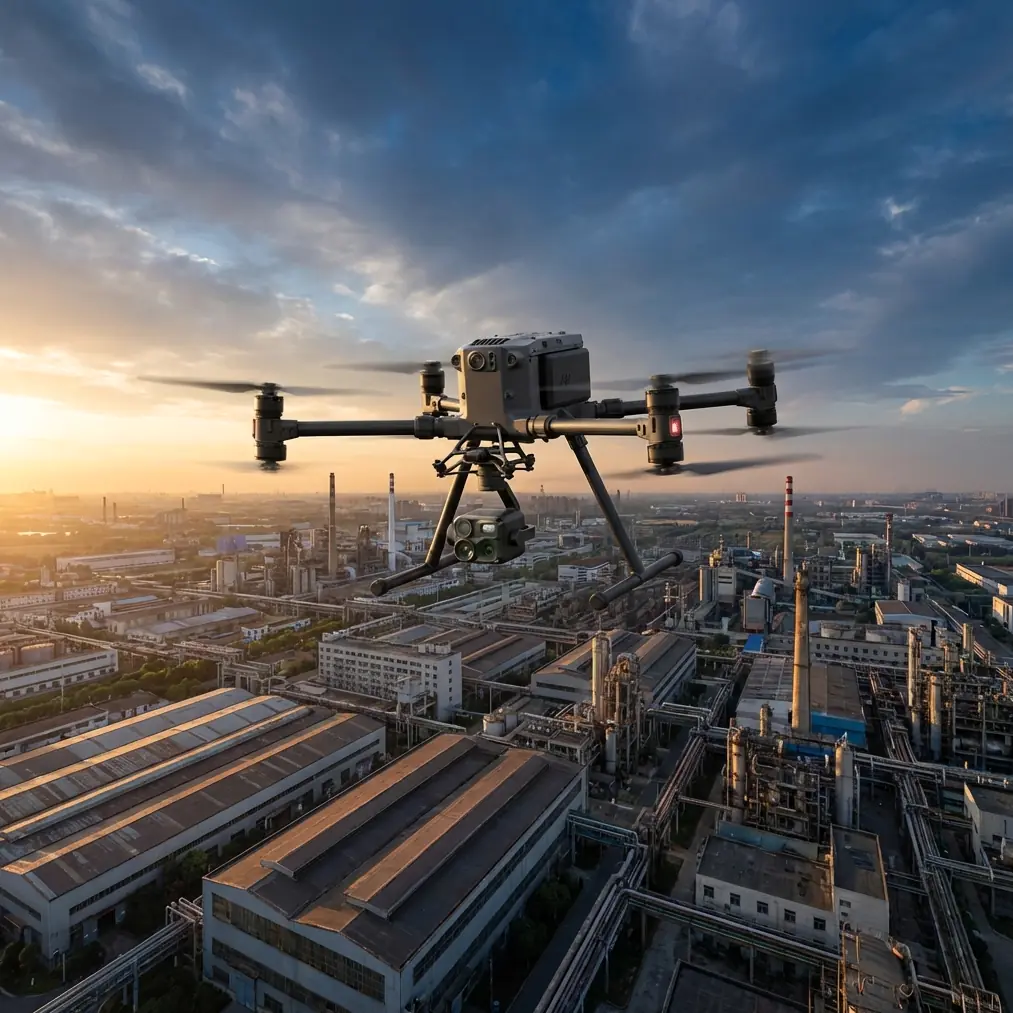
Matrice 4T on an Urban Coastline: What Actually Matters in the Field
META: A field-driven Matrice 4T case study for urban coastline operations, covering thermal use, antenna positioning, O3 transmission, AES-256 security, hot-swap batteries, GCP-backed mapping, and practical delivery planning.
By James Mitchell
The Matrice 4T makes the most sense when the environment is working against you.
An urban coastline does that better than almost anywhere else. You have reflective glass, shifting wind, sea spray, RF noise from dense infrastructure, moving vessels, tight launch areas, and long linear routes that tempt operators to push too far in the wrong direction. Add a delivery or site-support scenario along the waterfront, and the job stops being about headline specs. It becomes about link stability, thermal usefulness, battery turnover, and whether the aircraft can keep producing reliable data when the edge of land and water is constantly changing the picture.
That is where the Matrice 4T earns its place.
This isn’t a generic product summary. It’s a practical look at how the platform behaves in a coastline mission profile inside a city, and why a few technical details matter more than they first appear.
The scenario: a narrow operating corridor with too many variables
Picture a contractor supporting time-sensitive deliveries between municipal waterfront assets, rooftop staging points, and temporary shoreline work zones. The route is not a wide open rural flight path. It runs beside mid-rise buildings, crane booms, promenades, piers, and service roads. The aircraft may need to verify landing or drop zones, scan for heat leaks from utility assets nearby, and maintain stable situational awareness over water where visual contrast drops fast.
The mistake many teams make is assuming a drone that performs well inland will behave the same over a coastal strip. It often won’t.
Water changes how scenes look to both optical and thermal sensors. Urban structures bend and block radio paths. Wind can roll around corners and through gaps between towers. If the mission includes repeated sorties, battery workflow quickly becomes the limiting factor rather than airframe capability.
The Matrice 4T is strong in this environment because its value is not tied to one sensor or one mission mode. It is the combination that matters: thermal payload utility, stable enterprise transmission, secure signal handling, and operational continuity through hot-swap batteries.
Why the thermal side matters on the coast
The “T” in Matrice 4T is not a checkbox feature. In a coastal city mission, thermal signature interpretation can save time when the visible scene becomes messy.
Over water, visible cameras can struggle with glare, haze, and flattened contrast, especially when the sun angle is wrong. Thermal gives the operator another layer of truth. It can help distinguish active equipment from inactive structures, identify heat-emitting utility components on shoreline infrastructure, and support safer visual confirmation around rooftop handoff areas where standard video may be cluttered by background reflections.
That said, urban coastline thermal work requires restraint. Warm seawalls, sun-loaded rooftops, HVAC exhaust, and wet surfaces can all distort assumptions. The best operators do not treat thermal as magic vision. They use it as a comparative tool.
A practical example: if your route passes a waterfront pumping station and a temporary delivery point on a roof near the harbor, thermal can help verify whether the access zone has unexpected heat sources, active machinery, or recently occupied areas that deserve a second visual pass. The significance is operational, not theoretical. It reduces guesswork when conditions make standard imagery less trustworthy.
This becomes even more useful during dawn, dusk, or after a weather change, when thermal separation often improves and the coastline scene simplifies.
O3 transmission is more than a range talking point
People love to talk about transmission in broad terms, but urban coastal work exposes what really matters: consistency, not just distance.
The Matrice 4T’s O3 transmission capability matters because waterfront routes are full of partial obstructions and interference pockets. Buildings don’t need to completely block your path to degrade link quality. Sometimes a glass facade, a moving vehicle cluster, or a slight change in aircraft heading is enough to reduce confidence at the worst moment.
In this environment, antenna positioning advice is not optional. It is part of mission planning.
Here is the field rule I give teams: don’t point the antenna tips at the drone. The broad face of the antennas should be oriented toward the aircraft’s operating corridor. That sounds basic, but many range complaints come from controllers being held incorrectly while the pilot focuses on the screen instead of body position.
On an urban coastline, this gets even more specific:
- If your route runs parallel to the waterfront, stand where the aircraft can maintain the longest clean lateral line, not simply the closest launch point.
- Avoid placing yourself directly beside metal railings, utility cabinets, vehicles, or glazed building corners that can complicate RF behavior.
- If the route bends around a pier or marina structure, reposition early rather than trying to “hold link” from a compromised angle.
- Keep your torso from blocking the controller path. Operators often unintentionally shield the antennas when turning with the aircraft.
That is the operational significance of O3 in real work: it gives you a strong transmission foundation, but only if your ground posture supports it. A solid radio system does not excuse poor pilot positioning.
AES-256 matters when the job involves infrastructure and delivery data
Security often gets discussed in vague marketing language. For enterprise operations, that is not enough.
AES-256 support is relevant because urban coastline flights can involve sensitive commercial information even when the mission is entirely civilian. You may be transmitting visuals of utility corridors, rooftop service entries, construction logistics, marina assets, or delivery endpoints connected to critical business activity. The point is not secrecy for its own sake. It is responsible handling of operational data.
When you are flying in dense public environments, encrypted transmission helps reduce risk around intercepted feeds or mishandled workflows. This becomes especially relevant for contractors working with ports, shoreline property managers, infrastructure operators, and engineering firms that have strict data governance requirements.
The Matrice 4T fits that enterprise expectation well. Not because encryption is flashy, but because it supports a professional chain of custody for imagery and live video in places where a casual workflow is no longer acceptable.
Hot-swap batteries change the tempo of the mission
The most underrated feature in repeated shoreline operations is often battery management.
Hot-swap batteries matter because coastline jobs rarely end after one launch. You may need one sortie for route verification, another for thermal review, a third for a photogrammetry capture over adjacent assets, and additional flights as conditions shift with tide, traffic, or weather.
Without hot-swap support, every battery change introduces more downtime and more opportunities for workflow drift. With hot-swap capability, the Matrice 4T keeps the operation moving. That changes the tempo of the day.
In practical terms, it means a team can rotate batteries while preserving readiness, especially when the aircraft is supporting a live waterfront operation that can’t wait through long reset periods. For urban coastal projects, that continuity has a direct value: less idle time on site, fewer missed environmental windows, and a better chance of finishing the work before wind or visibility worsens.
It also improves discipline. Teams that know they can swap quickly tend to plan battery cycles more intelligently. Teams that can’t often squeeze flights too long because restarting feels costly.
A coastline case study: combining delivery support with mapping discipline
Let’s make this concrete.
A facilities contractor is supporting operations across an urban waterfront redevelopment zone. The brief sounds simple: maintain a dependable drone presence for shoreline inspections, confirm safe access around temporary rooftop receiving points, and create updated map outputs of staging areas as the project changes week to week.
This is where many companies split into separate workflows. One drone for visuals. Another for thermal. A separate mission set for mapping. More handoffs, more complexity.
The Matrice 4T is especially useful when one aircraft needs to bridge those tasks without turning the operation into a juggling act.
The thermal payload helps identify active equipment and heat anomalies around waterfront mechanical infrastructure. The visual system supports situational checks for access and landing conditions. Then the same operational program can be extended into photogrammetry for selected shoreline assets or construction zones.
Photogrammetry on the coast requires discipline, though. Water surfaces are poor subjects for reconstruction, and urban edge geometry can introduce matching problems. That is where GCP strategy still matters. Ground control points placed on stable, high-contrast surfaces away from repetitive glare can improve spatial confidence in the final model. If you’re mapping a pier approach, a utility yard, or a promenade reconstruction area, GCP-backed processing remains one of the simplest ways to improve reliability.
This is a good example of operational significance: the drone is not just “doing mapping.” It is producing outputs that project managers can compare over time with fewer location errors. On a waterfront build, that matters when temporary works move frequently and site layouts change after weather events.
What BVLOS discussions get wrong in urban coastal work
BVLOS is often treated as the big future-facing keyword, but on a city coastline, the real conversation is readiness.
The Matrice 4T sits in a category where operators naturally think about extended corridor work and beyond visual line of sight possibilities. That makes sense. Shoreline routes are linear, repetitive, and often operationally suited to expanded flight profiles under the right regulatory structure.
Still, the practical value today is not simply “this platform could support BVLOS workflows.” It’s that the aircraft helps teams build the habits needed for them: disciplined communications, route segmentation, battery rotation planning, link-awareness, and tighter data handling. Those habits matter whether the mission remains VLOS or develops into a more advanced operational model later.
Too many teams jump to the acronym and skip the groundwork. Along a coastline, that usually shows up as poor antenna management, weak contingency planning, and overconfidence in automated return behavior near complex structures.
Where the Matrice 4T feels strongest
After seeing enterprise aircraft used in difficult shoreline environments, I’d say the Matrice 4T is at its best when the mission requires multiple forms of confidence at once.
Not just image quality. Confidence in the link. Confidence in what the thermal image is really showing. Confidence that the battery workflow can support repeated launches. Confidence that your mapping output will align with project needs if supported with proper GCP placement. Confidence that encrypted transmission is matching the sensitivity of the job.
Those layers add up.
If your urban coastline operation is limited to a single short visual pass, you may never notice the difference between a good aircraft and a truly useful one. But once the mission expands into repeatable delivery support, infrastructure checks, thermal interpretation, and corridor-style planning, the value of the Matrice 4T becomes easier to see.
One final field note on communication setup
If your team is trying to refine a waterfront deployment, start with controller handling before blaming the environment. I’ve seen major improvements just from correcting antenna orientation and moving the pilot ten or fifteen meters to a cleaner position with a better line along the operating corridor.
That small change can matter more than people expect.
If you want to compare notes on shoreline setup, antenna positioning, or mission planning details for your own operation, you can message me directly here.
The Matrice 4T is a serious tool. Urban coastal work is a serious environment. Put the two together properly, and you get more than a flight. You get a workflow that holds up when the surroundings are trying to break it.
Ready for your own Matrice 4T? Contact our team for expert consultation.