
Matrice 4T for Mountain Coastline Work: What Actually
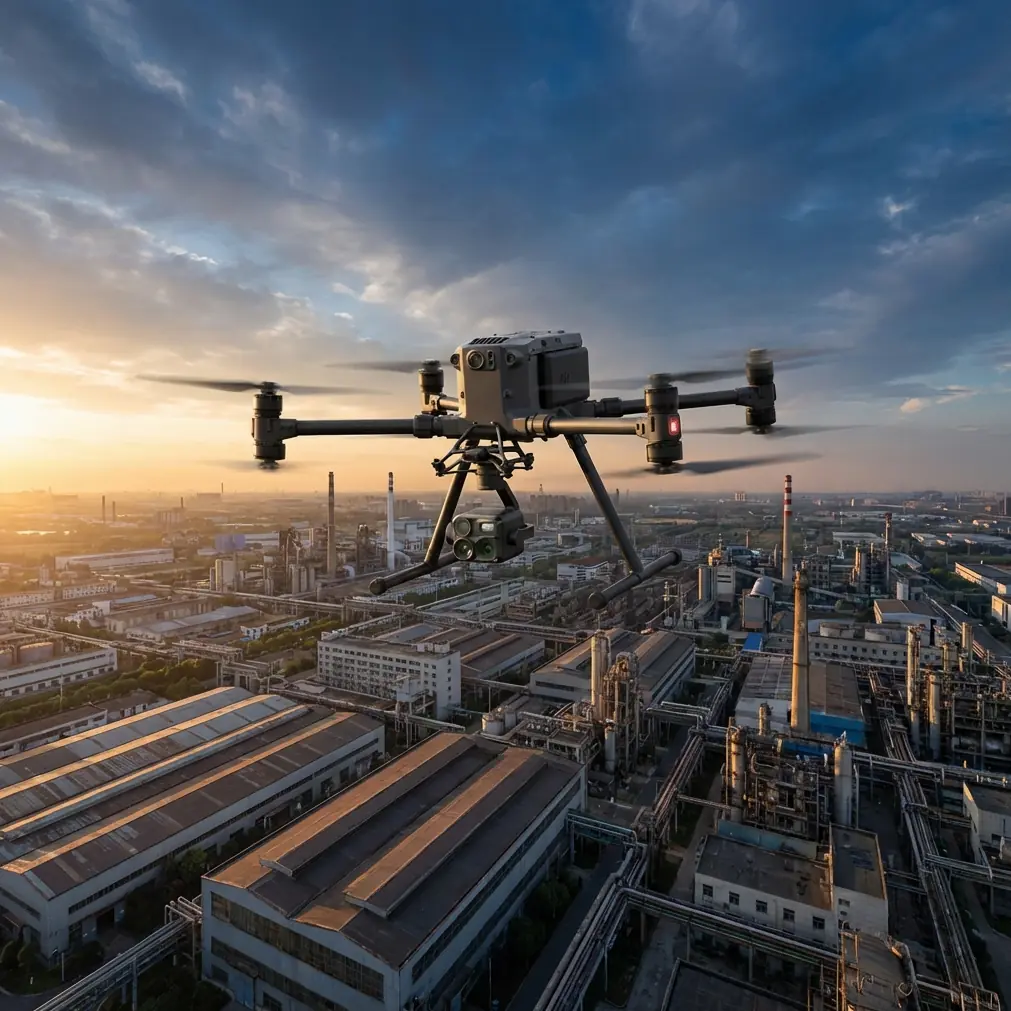
Matrice 4T for Mountain Coastline Work: What Actually Matters in the Air
META: A field-focused look at using the DJI Matrice 4T for mountain coastline operations, with practical insight on thermal imaging, transmission reliability, payload workflow, and why airflow logic still matters.
Mountain coastlines expose every weakness in a drone operation.
You are rarely dealing with one clean environment. You are dealing with cliffs that break GNSS geometry, salt-heavy air that shortens maintenance intervals, wind that wraps around ridgelines instead of flowing predictably, and landing zones that feel temporary even when they are planned. Add long approach paths, mixed thermal conditions over rock and water, and the need to document assets or terrain with repeatable accuracy, and the aircraft choice becomes less about headline specs and more about operational tolerance.
That is why the Matrice 4T deserves to be discussed as a working platform, not as a brochure object.
For teams delivering coastline missions in mountain terrain—inspection crews, infrastructure surveyors, environmental monitors, and search support contractors operating in civilian contexts—the value of the Matrice 4T is not just that it combines thermal and visual capture. The deeper question is whether it stays useful when the environment begins to interfere with airflow, communications, and mission pacing.
The real problem: mountain coastlines punish weak integration
A coastline in flat country is one thing. A mountain coastline is another category entirely.
A typical task might start with an ascent from a cramped launch point, then push laterally along a cliff edge to document erosion, drainage outlets, retaining structures, or utility assets. Mid-mission, the aircraft may transition from shaded rock faces into sunlit water glare, then back into cold pockets where thermal contrast changes sharply. If photogrammetry is part of the job, the route must be flown with enough consistency for stitching, while any GCP workflow has to account for terrain access that may be slow or unsafe on foot.
In those conditions, operators usually discover that the bottleneck is not one feature. It is interaction between systems.
Thermal data matters only if the platform can hold position cleanly enough to make interpretation meaningful. Zoom capability matters only if transmission remains stable when the aircraft is offset by terrain. Battery strategy matters only if swap time does not break tide-dependent windows or weather gaps. Security matters more too, especially when project data includes sensitive infrastructure imagery and remote coordination over shared networks.
This is where the Matrice 4T starts to make sense as a mountain-coastline aircraft: it is not just a sensor carrier. It is a workflow tool.
Why airflow and control design still matter, even for a modern UAV
Most drone buyers never read old aircraft design literature. They should at least respect it.
One of the reference engineering texts behind this discussion examines intake and suction design in aircraft propulsion systems. One detail stands out: to reduce suction drag, the suction chamber pressure should be kept as high as possible, and the system is ideally operated near the turning point of the flow characteristic curve. Another result is even more striking: at a local Mach number of 1.8, a suction hole angle of 90° produced a resistance coefficient about 80% higher than a 20° hole.
That is not a drone spec sheet detail. It is a reminder that geometry changes performance far more than many operators assume.
Why does that matter for a Matrice 4T article focused on mountain coastline work? Because the same engineering instinct applies in the field. Air does not care whether your platform is a large crewed aircraft or a compact enterprise UAV. Angle, pressure, flow separation, and drag penalties still show up in the form of hover stability, cooling efficiency, endurance losses, and payload behavior in crosswinds.
On a mountain shoreline, the aircraft is constantly crossing disturbed airflow zones. Ridge lift, rotor wash recirculation during takeoff from confined pads, and abrupt lateral gusts near rock walls all increase the value of a well-integrated airframe. A drone that looks good on paper but loses composure in ugly air will degrade the one thing coastline teams need most: trust in the data.
The lesson from that intake-system reference is simple. Small design choices can create big resistance penalties. In UAV operations, that same principle shows up when teams add accessories, mounts, strobes, loud shapes, or poorly considered field modifications that disturb the aircraft more than expected.
The Matrice 4T advantage is not one sensor. It is sensor continuity.
For mountain coastline delivery, the Matrice 4T earns its place because it supports continuity across mission types.
A morning inspection run can start as a visual documentation mission. Then the same aircraft can be used to compare thermal signature differences along seawalls, drainage points, rooftop infrastructure, or exposed utility hardware embedded in steep coastal terrain. Later that day, a mapping team may use overlapping visual acquisition to support photogrammetry, tying results back to GCPs placed where access is practical rather than ideal.
That matters because field conditions rarely justify separate aircraft for every task. Tide windows close. Wind builds. Light changes. Teams want fewer handoffs.
The thermal channel is especially useful in mountain-coastline work because rock, vegetation, water, and man-made materials all heat and cool at different rates. That creates usable contrast, but only for operators who understand timing. Before sunrise, seepage paths in slopes may present differently than at midday. At dusk, thermal lag in retaining walls or coastal structures can reveal anomalies that the RGB feed barely suggests. The Matrice 4T gives crews a platform where thermal does not feel like an afterthought bolted onto a visual workflow.
That is operationally significant. Thermal signature interpretation is stronger when the same aircraft can immediately cross-check from another viewing angle or move from broad-area scan to close visual confirmation without changing platforms.
Transmission is not a luxury feature on a cliff line
Anyone who has worked a mountain coastline knows that signal confidence affects decision quality.
Even on legal, planned routes, the terrain itself can make radio performance feel inconsistent. You can have line of sight to the aircraft and still be operating in a geometry that is hostile to clean link quality. That is why O3 transmission matters in practice, not just in marketing language. A stronger and more resilient downlink helps the crew maintain situational awareness when the airframe tracks along a ridgeline, crosses a rocky spur, or works below the operator’s elevation.
And when project owners care about data security—as they often do when the job involves ports, utilities, private coastal estates, or critical civilian infrastructure—AES-256 becomes part of the conversation as well. Encryption is not a checkbox for enterprise operators; it is one more layer in responsible image handling and remote mission governance.
In plain terms: if you are collecting sensitive coastal imagery in a difficult RF environment, stable transmission and secure transmission are both operational features.
Endurance is not only about minutes. It is about rhythm.
Drone teams love to talk about flight time. The better question is what happens between flights.
Hot-swap batteries change the rhythm of a coastline job because they reduce the penalty of unavoidable recovery cycles. On a mountain route, a battery change is often not performed on a perfect flat bench with a truck parked beside you. It may happen at a lookout, a service path, or a narrow cleared area above surf exposure. Anything that shortens ground interruption helps preserve route continuity, crew focus, and weather opportunity.
This is one of the less glamorous strengths of a mature enterprise platform. Good missions are often lost on the ground rather than in the air. Fast battery turnover preserves tempo, especially when the task involves repeated passes for thermal comparison, overlapping image capture for photogrammetry, or staggered runs timed around wind shifts.
For BVLOS-oriented planning—where regulations, waivers, and local rules must of course be followed—the same endurance rhythm matters even more. You need predictable energy management and minimal reset friction. A platform that returns, swaps, and launches efficiently supports disciplined mission structure.
A third-party accessory made a bigger difference than expected
One of the smartest upgrades I have seen on a mountain coastline crew was not exotic. It was a rugged third-party landing pad and equipment mat system designed for uneven, dusty, salt-exposed surfaces.
That may sound minor until you operate from crushed stone, scrubland, or damp concrete above breaking surf.
The accessory improved turnaround speed, reduced contamination during battery changes, and gave the crew a repeatable staging footprint even when the launch site was awkward. With the Matrice 4T, that kind of support gear matters because the platform is capable enough that field discipline becomes the limiting factor. Clean handling protects connectors, sensors, and optics. Stable setup supports faster relaunch. Over multiple sorties, the difference compounds.
If your team is planning a similar configuration and wants to compare field-ready accessories rather than generic add-ons, this practical setup discussion is the kind of conversation worth having before deployment.
Lessons from helicopter system design apply here too
The second reference document, focused on helicopter design, offers another useful engineering parallel. It notes that increasing bend angle in exhaust mixing improves mixing performance but also increases flow loss and reduces entrainment efficiency, with a typical bend angle around 45° used as a compromise. It also warns that oversized diffuser expansion ratios can cause flow separation, added losses, and unnecessary weight or size, while a practical area ratio often falls around 1.2 to 1.4.
Again, this is not about copying crewed-aircraft hardware onto a drone. It is about respecting tradeoffs.
For Matrice 4T users, the takeaway is that every field adaptation sits inside a compromise curve. Add shielding, mounts, external lights, payload protectors, or transport modifications without thinking through airflow and mass distribution, and you can make the aircraft less efficient in exactly the places mountain coastline work is already unforgiving. Better cooling or better protection in one phase can lead to added drag, poorer balance, or weaker handling in another.
The best operators act more like aircraft integrators than gadget collectors.
Mapping and inspection on the same day: where the 4T becomes economical in practice
A common pattern on coastal mountain projects is mixed deliverables.
The client may ask for broad terrain documentation, orthomosaic-ready image sets for photogrammetry, thermal review of selected structures, and close visual confirmation of suspect locations. Traditionally, that can force a split between mapping and inspection workflows. The Matrice 4T narrows that gap enough that a skilled team can keep more of the task inside one aircraft ecosystem.
That does not mean every mission should be flown as a compromise. It means the platform reduces logistical friction. You can document the ridgeline path, capture visual structure detail, and inspect temperature variation patterns without a major platform reset. Where access is limited and weather windows are narrow, that consolidation has real value.
GCP strategy still matters, of course. Mountain coastline mapping can punish sloppy ground control because elevation change and inaccessible terrain invite shortcuts. But with disciplined GCP placement and a well-planned capture geometry, the aircraft can support outputs that are far more useful than ad hoc visual fly-throughs.
Who should actually care about this setup
The Matrice 4T is particularly well suited to civilian teams dealing with:
- coastal erosion and slope monitoring
- utility and telecom inspection on cliffside routes
- harbor-adjacent infrastructure surveys
- environmental observation and drainage assessment
- facility inspections where thermal and visual correlation matter
- training programs that need an enterprise platform with realistic multi-sensor workflow exposure
What ties those use cases together is not just the coast. It is the combination of terrain complexity, changing surface temperatures, limited staging space, and the need to leave the site with usable data rather than interesting footage.
The bottom line
Mountain coastline work is where weak assumptions get exposed.
The Matrice 4T performs well in this environment not because it promises perfection, but because it aligns with the realities of the job: mixed-sensor tasks, difficult airflow, signal-challenged terrain, repeated launches, and the need for secure, repeatable operations. The older aircraft design references behind this discussion sharpen that point. A small geometry change can create an 80% drag penalty. A bend angle near 45° may improve one behavior while hurting another. Those are not abstract engineering footnotes. They are reminders that aircraft performance is always a balance.
Used well, the Matrice 4T gives mountain coastline teams a balanced platform. Not a magic one. A practical one.
And in this kind of terrain, practical wins.
Ready for your own Matrice 4T? Contact our team for expert consultation.