
Matrice 4T in Low-Light Field Delivery: A Practical Case
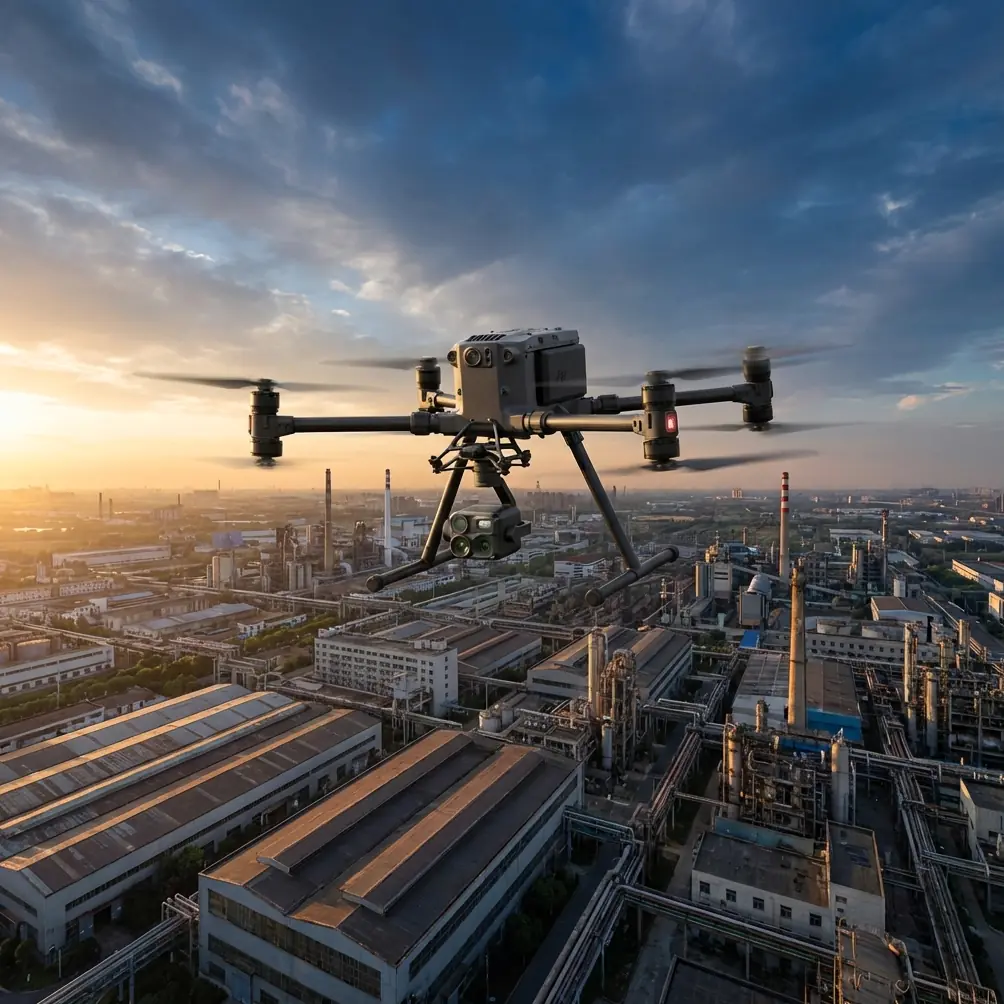
Matrice 4T in Low-Light Field Delivery: A Practical Case Study from the Pre-Flight Table to the Last Drop Point
META: A field-tested expert case study on using the Matrice 4T for low-light agricultural delivery, with practical insight on thermal signature, transmission reliability, pre-flight cleaning, and system-level risk control.
By Dr. Lisa Wang, Specialist
The interesting part about low-light field delivery is not the darkness itself. It is what darkness exposes.
In daylight, crews can hide weak habits behind visibility. At dusk or before sunrise, the aircraft, sensors, links, and procedures all have to stand on their own. That is where the Matrice 4T becomes more than a platform name on a specification sheet. In real field work, especially around dispersed agricultural plots, orchards, irrigation lanes, and uneven access tracks, the aircraft only performs as well as the operator’s understanding of system integrity.
This case study centers on a simple scenario: delivering urgently needed small agricultural supplies across fields in low light, while using the Matrice 4T’s imaging stack and data link discipline to reduce operational friction and avoid small failures that become expensive ones.
The most valuable lesson did not begin in the air. It started with cleaning.
The pre-flight step crews skip too often
Before a low-light sortie, I insist on a sensor-face and airframe-edge cleaning pass. Not cosmetic cleaning. Functional cleaning.
On a Matrice 4T mission, that means wiping the visible imaging window, checking the thermal lens surface for residue, and inspecting any exposed surfaces near obstacle sensing elements, landing sensors, and air inlets. Dust, moisture film, fertilizer mist, and fine organic debris all behave differently after sunset. What looks minor under ambient daylight can scatter light, reduce contrast, distort a thermal signature, or interfere with safety features that depend on consistent sensor input.
For field delivery, this matters because low-light operations are built on confidence in imperfect information. The aircraft may still fly with a slightly hazed lens, but the operator’s decision quality degrades. If you are trying to identify the exact handoff zone near crop rows, assess whether a worker vehicle is still present, or confirm that livestock is clear of a landing or hover-drop area, dirty sensor surfaces create uncertainty at the exact moment you need clarity.
That is not theory. It is operational math.
A tiny reduction in image reliability tends to produce overcorrection from the pilot: slower progress, more hover time, more battery burn, and less margin for return. In repetitive delivery work across fields, those minutes accumulate quickly.
Why low-light field delivery is a systems problem, not a piloting problem
Operators often frame these missions as “night flying with a better camera.” That is too simplistic.
Low-light agricultural delivery combines navigation, target recognition, transmission integrity, thermal interpretation, route discipline, and battery management. The Matrice 4T is useful here because it can merge visual and thermal awareness in a way that is practical for commercial work, not just impressive in a demo.
In field conditions, thermal is rarely about dramatic heat contrast. It is often about subtle differentiation. Footpaths retain heat differently than irrigated soil. Recently used utility vehicles show up differently from stationary equipment. People near a delivery point can stand out from cooler background vegetation depending on timing and weather. Those differences help confirm whether a drop or hover handoff zone is genuinely clear.
That is where thermal signature analysis becomes operationally significant. You are not using thermal because it looks sophisticated. You are using it because low-light delivery requires a second form of evidence when visual cues become unreliable.
This is also where route design intersects with communication reliability.
A lesson borrowed from manned aviation system design
One of the reference engineering details worth paying attention to comes from airborne interface logic rather than drones directly: digital tuning and control data in avionics is required to maintain a minimum repeat rate of 5 s-1. If the rate falls below that threshold in the cited system logic, the receiving equipment can treat the input as invalid, trigger fallback behavior, or hold the last valid state.
On paper, that sounds far removed from a Matrice 4T working over fields.
In practice, the principle is extremely relevant.
For low-light delivery, the aircraft, controller, payload view, and operator workflow must maintain continuously valid information flow. The specific drone architecture is different from legacy radio navigation equipment, but the operational lesson is the same: once data continuity degrades, systems do not always fail gracefully in a way the user immediately notices. Sometimes they freeze, revert, or continue using the last trustworthy state.
That is why I emphasize O3 transmission discipline rather than just transmission range. A stable link is not only about keeping control bars high on the display. It is about preserving confidence that the image, telemetry, and command loop still reflect reality now, not three seconds ago. In low-light field delivery, stale situational awareness is dangerous because terrain edges, wires, service vehicles, and people appear with little margin.
The aviation reference also highlights another useful idea: dual-source logic with A/B input ports and explicit source selection. Again, the Matrice 4T is not using those exact subsystems for your field mission, but the design philosophy matters. Critical operations benefit from clearly defined primary and backup paths.
For drone teams, the equivalent is straightforward:
- primary route with known visual landmarks
- backup return path if signal quality shifts
- primary landing or transfer point
- alternate safe hover or recovery area
- primary battery plan
- reserve threshold that is not negotiated in the moment
Strong crews think in layers, because layered thinking survives low-light ambiguity.
The airframe lesson hidden in manufacturing tolerances
The second reference item looks unrelated at first glance. It discusses machined tubular components and states that when selecting tube dimensions for a part blank, the key factors are the part’s inner and outer diameter, surface roughness, and overall length. It also notes total machining allowances of 3 for the inner diameter and 4 for the outer diameter in the cited example.
Why bring that into a Matrice 4T field delivery discussion?
Because precision at the manufacturing stage explains why professional UAV platforms behave differently under repeated commercial loading. Structural design is not just about strength. It is about predictable fit, finish, vibration behavior, and tolerance control over time.
In low-light operations, that predictability matters more than many crews realize.
If an aircraft’s structural elements, mounting interfaces, or sensor alignments drift outside intended tolerances, you may not see a dramatic failure. You may see a softer symptom:
- slightly less stable imagery
- small vibration artifacts during hover
- less consistent sensor fusion
- mounting wear after repeated battery swaps or transport
- reduced confidence in fine inspection or delivery positioning
The reference emphasis on inner/outer diameter, roughness, and total length is a reminder that precision hardware starts with controlled geometry. For a platform like the Matrice 4T, the practical takeaway is this: treat handling, transport, and maintenance with the same seriousness the original designers treated tolerances. Good systems stay good because operators avoid introducing slop into a tightly integrated machine.
That includes battery changes.
Hot-swap discipline is about tempo, not convenience
Teams love to talk about hot-swap batteries because they accelerate deployment. True. But in low-light field delivery, the real advantage is not speed alone. It is rhythm.
When you can cycle power systems efficiently, you preserve mission continuity. The crew stays mentally locked on route logic, payload handling, and field hazards instead of mentally resetting between flights. That continuity reduces mistakes.
The trap is rushing the swap. A fast battery exchange without a physical latch check, contact inspection, and status confirmation defeats the whole purpose. If the aircraft is a precision delivery and sensing platform, every battery event is also a structural and electrical interface event.
I tell crews to treat hot-swap moments like handoffs in a hospital: brief, repeatable, verbalized, and never assumed.
Building a low-light field workflow around the Matrice 4T
In one farm-adjacent delivery exercise, the mission profile was simple: cross several separated plots, avoid active irrigation lines, verify that the receiving crew had cleared machinery from the handoff area, and deliver before full dark. What changed the mission from routine to demanding was ground contrast. Freshly watered soil, reflective plastic row covers, and lingering heat from utility carts made the visual scene busy.
The Matrice 4T’s advantage in that kind of environment is not merely that it “sees at night.” It lets the crew cross-check what they think they see. Visual feed suggests a clear lane; thermal reveals a warm vehicle just beyond a row edge. Thermal highlights a human presence; zoom clarifies that the worker has stepped outside the intended hover corridor. This kind of two-layer confirmation is exactly what keeps a delivery mission from becoming a near miss.
I would add one more workflow point for field teams already using mapping tools: maintain a lightweight photogrammetry baseline of the delivery area during good daylight conditions. You do not need to overbuild this. Even a practical reference model tied to a few well-placed GCPs can help crews understand field edges, drainage cuts, utility crossings, and staging areas before low-light deployment begins.
That matters because night operations punish guesswork. If you know the geometry of the site in advance, the live mission becomes a confirmation exercise rather than a discovery exercise.
BVLOS thinking without pretending every mission is BVLOS
BVLOS is often used too loosely in marketing discussions. For field operations, the more useful approach is to build BVLOS-grade habits even when the mission remains within your approved visual framework.
That means:
- route segmentation
- communication checkpoints
- battery-go/no-go gates
- pre-identified lost-link behavior
- terrain and obstacle review before launch
- disciplined handoff procedures at delivery points
The Matrice 4T is well suited to this kind of structured operation because its sensor package and transmission ecosystem support more informed decisions than a basic visual-only aircraft. But platform capability does not replace procedure. It only rewards it.
For teams trying to formalize these workflows, I usually recommend documenting a low-light checklist that begins with sensor cleaning and ends with post-flight review of thermal and visual anomalies. If you need help comparing field-delivery setup options or refining a practical checklist, this is a useful place to start: message a specialist directly.
Security and trust in agricultural operations
One topic that deserves more attention is data stewardship. Agricultural operators may be flying over contracted land, high-value crops, storage areas, or proprietary trial plots. That makes transmission and stored mission data more sensitive than many assume.
This is why features such as AES-256 matter in professional operations. Not because encryption sounds advanced, but because field imagery, route logs, and operational timing can reveal patterns about production activity. Commercial drone programs mature when they treat data with the same seriousness as airworthiness and pilot proficiency.
What actually makes the Matrice 4T useful here
After enough low-light field missions, the answer becomes very plain.
The Matrice 4T is not valuable because it turns darkness into daylight. It is valuable because it reduces uncertainty in places where uncertainty normally expands: around field edges, changing ground temperatures, crew coordination, and time-limited deliveries.
The operational significance of the references supports that same conclusion from two different directions.
The avionics reference shows how professional systems depend on valid, continuously refreshed control information, with a cited minimum repeat rate of 5 s-1 and defined fallback behavior when data integrity drops. For Matrice 4T operators, that translates into treating transmission quality and command continuity as mission-critical, especially in low-light work.
The structural manufacturing reference shows that dependable hardware begins with dimensional discipline, including attention to inner and outer diameters, surface finish, total length, and machining allowances such as 3 and 4 in the cited example. For drone crews, that translates into respect for the physical platform: clean interfaces, careful handling, proper battery installation, and maintenance habits that preserve the precision the aircraft was built with.
That is the real story. Not hype. Not abstract capability.
A low-light field delivery mission succeeds because dozens of small truths are respected before the props ever start spinning.
Ready for your own Matrice 4T? Contact our team for expert consultation.