
Matrice 4T in Urban Forest Delivery: What DJI’s Matrice 400
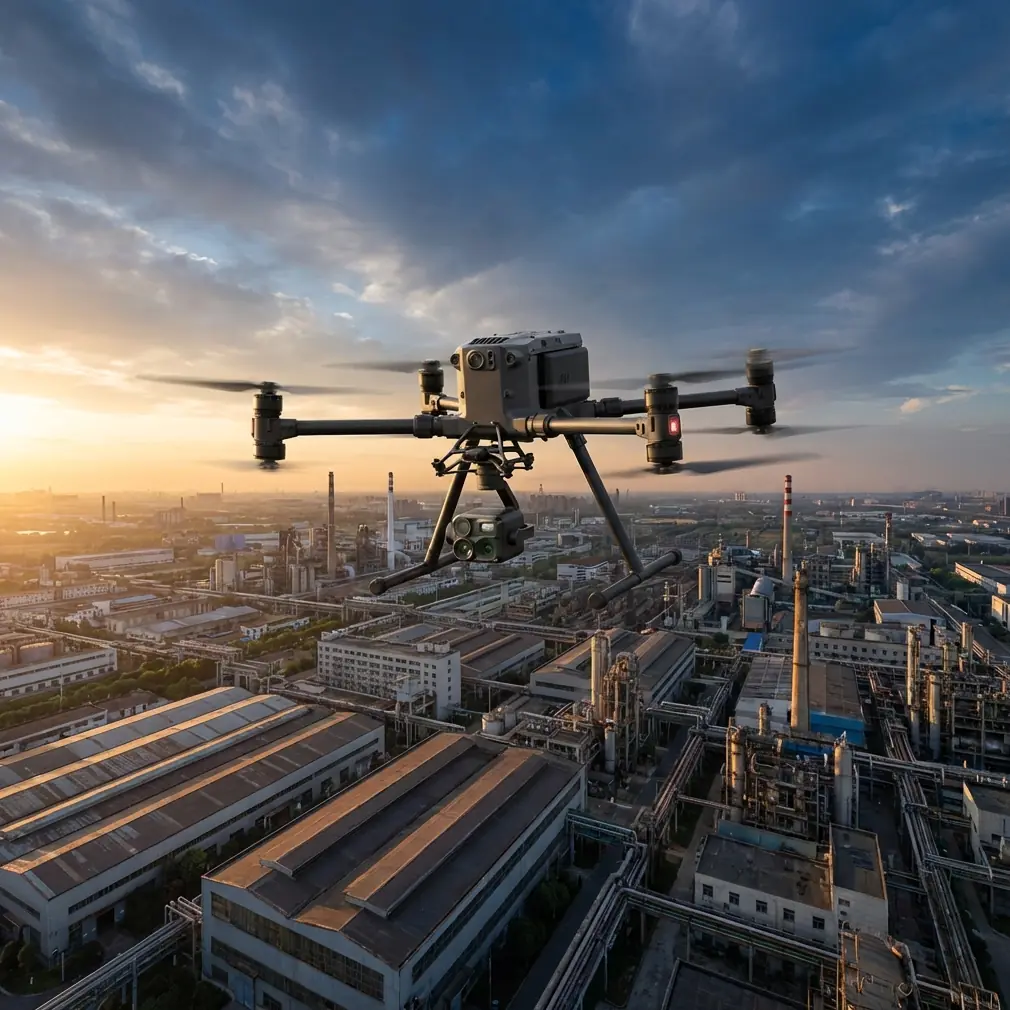
Matrice 4T in Urban Forest Delivery: What DJI’s Matrice 400 Reveal Means for Real-World Operations
META: An expert analysis of what DJI Matrice 400’s long-endurance, multi-angle data mission focus signals for Matrice 4T operators handling urban forest delivery, thermal workflows, BVLOS planning, and antenna range discipline.
If you run a Matrice 4T in dense urban green corridors, the latest DJI enterprise messaging around the Matrice 400 is worth more attention than a routine product headline would suggest.
On June 10, 2025, DJI positioned the Matrice 400 as a new benchmark for intelligent, efficient, long-endurance aerial missions. The wording was spare, but revealing. Two phrases stood out: “gather data from multiple angles” and “for roads less traveled.” Those are not decorative taglines. They point directly to the kinds of missions where aircraft are asked to do more than fly a route and come home. They need to work around broken sightlines, variable terrain access, patchy road infrastructure, and incomplete ground intelligence.
That matters to Matrice 4T operators because urban forest delivery sits right inside that problem set.
I do not mean parcel delivery in the broad consumer sense. I mean professional UAV deployment in mixed environments where tree canopy, utility corridors, footpaths, service roads, embankments, park edges, and built-up neighborhoods all overlap. These missions often begin as logistics or inspection tasks and quickly become intelligence problems. Can the aircraft maintain a clean control link near a tree-lined boulevard? Can the payload confirm a thermal signature near shaded infrastructure? Can the pilot collect oblique imagery useful for photogrammetry after the primary delivery leg? Can the team safely plan a BVLOS extension if the route crosses areas with poor vehicle access?
The Matrice 400 announcement does not change what the Matrice 4T is. But it does clarify where DJI believes enterprise flight operations are heading: longer persistence, more layered data capture, and more value extracted from a single sortie. For Matrice 4T crews, that is the real story.
Why the Matrice 400 News Matters to Matrice 4T Users
A lot of operators make the mistake of reading top-end platform news as if it only concerns buyers of that exact airframe. In practice, flagship positioning often tells you how the manufacturer expects the rest of its enterprise ecosystem to be used.
DJI’s emphasis on long-endurance missions signals a shift from single-purpose flight planning toward mission stacking. Instead of sending one aircraft to verify access, another to map, and a third to inspect heat anomalies, operators are being nudged toward integrated workflows. That is highly relevant for the Matrice 4T, which already sits at the intersection of visible imaging, thermal awareness, and operational reconnaissance.
The phrase “gather data from multiple angles” is especially important. In urban forest delivery work, a straight-down view is rarely enough. Tree canopies distort perception of clearance. Building setbacks hide landing zones. Service alleys and park infrastructure create dead ground. Oblique capture from several angles improves route confidence before the aircraft ever reaches the drop point. It also supports better post-flight reconstruction if your team is using photogrammetry to model approach corridors, canopy gaps, fence lines, or emergency alternates.
Then there is “for roads less traveled.” That line reads like a nod to missions in places where ground transport is inconvenient, delayed, or operationally expensive. In urban forestry and green infrastructure contexts, that can mean exactly the areas between formal roads: trail networks, embankments, retention ponds, river edges, maintenance strips, and wooded margins behind commercial blocks. These are the places where a Matrice 4T earns its keep.
The Urban Forest Delivery Problem Is Not Distance Alone
Operators often talk about range as if it were the core challenge. Usually it is not.
The real difficulty is environmental complexity compressed into short distances. A route may be only a few kilometers, yet contain every factor that degrades mission quality: reflective glass, intermittent canopy closure, multipath interference, localized wind shear around high-rises, and visual confusion at the landing site. In these conditions, the Matrice 4T’s value comes from information discipline, not just airframe capability.
Thermal data is one of the most underused tools in delivery-adjacent operations. Most crews think of thermal as a night or search function. In urban forest work, thermal signature analysis can help identify active equipment near the drop zone, detect recently occupied maintenance areas, and distinguish heat-retaining hardscape from surrounding vegetation. That changes risk planning. A shaded clearing may look suitable in RGB imagery but reveal unexpected human or machine activity in thermal.
Photogrammetry is equally relevant, even when the mission is not branded as mapping. Repeated capture of critical corridors allows the team to compare seasonal changes in canopy density, confirm whether prior access assumptions still hold, and refine approach geometry. If you use GCP-supported survey logic for selected sites, you can improve positional confidence in recurring delivery operations, especially where exact touchdown or hover-release positioning matters around narrow clearings.
This is where the Matrice 400 messaging becomes operationally meaningful. Long-endurance and multi-angle intelligence are not abstract aspirations. They describe the exact response to cluttered, access-poor environments.
A Smarter Matrice 4T Workflow for Forest-Edge Urban Missions
For most professional teams, the strongest Matrice 4T workflow in this category has four phases.
First comes corridor reconnaissance. Before committing to a repeated route, capture visible and thermal reference data at different times of day. Morning and late afternoon often reveal route constraints that disappear at noon. Shadows stretch. Heat retention changes. Human activity patterns shift.
Second comes approach modeling. Do not rely on a single centerline path. Build alternate inbound headings. Multi-angle capture is useful here because it exposes how the same gap in the canopy behaves from different approach vectors. A route that looks open from the south may be unusable from the west because a stand of tall trees masks a utility span.
Third comes communications planning. O3 transmission reliability depends heavily on antenna discipline and pilot position in mixed environments. The best crews treat antenna orientation as part of the mission design, not an afterthought.
Fourth comes on-site execution with contingency logic already defined. This includes thermal confirmation of the target area, battery swap timing, and return-route assumptions if the original path becomes unsuitable.
The Matrice 4T is particularly effective in this kind of structured workflow because it supports rapid situational assessment without requiring separate sensor platforms. That reduces time between problem identification and action.
Antenna Positioning Advice for Maximum Range
This is the practical point many teams overlook, and it directly affects whether the mission feels routine or stressful.
For maximum control link stability, point the flat faces of the controller antennas toward the aircraft’s general operating sector, not the antenna tips. Many pilots instinctively “aim” the ends of the antennas at the drone, which is backward for most controller designs. You want the broadside radiation pattern working for you.
In urban forest routes, the goal is not merely raw distance. It is preserving a clean path through clutter. Stand where you have the fewest immediate obstructions between controller and aircraft. That may mean moving a few meters out from a vehicle, fence, or wall rather than launching from the most convenient patch of ground. Even a small shift can improve link quality if it clears nearby reflective or absorptive obstacles.
Keep the controller above waist level and avoid letting your body block the signal when the aircraft transitions laterally across your position. If the route bends around dense canopy or building edges, rotate your torso with the aircraft rather than keeping the controller fixed. In tree-lined urban corridors, this simple habit often does more for practical range than pilots expect.
If you are planning repeat missions and want route-specific setup advice, I’d suggest sharing the corridor geometry and launch constraints through this field ops chat: send over your route layout here. A quick review of launch position, canopy profile, and expected turn points can save a lot of trial-and-error in the field.
Security and Continuity Matter More as Missions Get Longer
The DJI Matrice 400 announcement highlights intelligent and efficient long-duration work. That naturally raises the bar for data handling and operational continuity on platforms like the Matrice 4T.
For teams flying in municipal, utility, environmental, or contractor roles, AES-256-grade data protection is not a marketing side note. It matters because urban forest routes often pass over or near sensitive infrastructure, private property edges, and public gathering spaces. Any captured thermal or visual dataset may carry operational sensitivity far beyond the original delivery objective.
Battery handling is equally strategic. Hot-swap batteries are not just a convenience in enterprise operations; they are a schedule stabilizer. If your workflow includes route verification, delivery execution, and a secondary inspection pass, fast turnaround at the staging point preserves mission tempo and reduces the temptation to overextend a single battery cycle. That directly improves safety margins.
This becomes even more critical when a team is moving toward BVLOS authorization logic. BVLOS is not just about aircraft capability. It is about repeatability, predictability, communications confidence, and documented route behavior. The more disciplined your handoff between batteries, site checks, and link management, the stronger your operational case becomes.
What the Broader UAV News Cycle Is Telling Us
The other news items in the current feed reinforce the same trend from a different angle.
One report describes eVTOL display operations across 5 cities, from Yinchuan to Shenzhen, proving that low-altitude aviation is becoming more visible in dense public settings. Another shows drone imaging used to present changing light and landscape conditions in Wushan from morning to dusk. On the surface, those stories are unrelated to Matrice 4T delivery work. In practice, they show a market getting comfortable with drones as both practical infrastructure and a normal part of the visual environment.
That shift matters. As low-altitude operations spread across public events, media capture, city branding, and regional air mobility experiments, professional Matrice 4T teams will face higher expectations. The aircraft is no longer judged only on whether it flies well. It is judged on whether the mission is quiet, controlled, explainable, and useful.
That is why DJI’s Matrice 400 positioning deserves attention even for operators staying with the Matrice 4T. The center of gravity is moving toward richer mission intelligence per flight hour. Long-endurance matters because it gives operators more choices. Multi-angle capture matters because it reduces uncertainty. “Roads less traveled” matters because enterprise drones increasingly prove their value where ground access is inefficient or incomplete.
Urban forest delivery is exactly that kind of work.
The Expert Take
If I were advising a municipal contractor, environmental response team, or infrastructure operator building around the Matrice 4T today, I would not frame the aircraft as a simple delivery platform. I would frame it as a route intelligence tool that can also deliver.
That distinction changes everything.
It pushes crews to collect thermal signature data before committing to approach paths. It encourages photogrammetry on recurring corridors instead of relying on memory and line-of-sight impressions. It makes GCP-backed site references worth the effort at the most demanding nodes. It forces better antenna posture and launch-point discipline to get the most from O3 transmission. It makes hot-swap planning part of standard operating procedure rather than a convenience item. And it aligns the operation with the logic behind BVLOS maturation: repeatability over improvisation.
The June 10 Matrice 400 message was brief, but the implications are not. DJI is signaling that enterprise UAV work is becoming less about isolated flights and more about information-rich mission systems. For Matrice 4T operators in urban forest delivery, that is not a distant future. It is the next standard of competence.
Ready for your own Matrice 4T? Contact our team for expert consultation.