
How I’d Use the Matrice 4T for Forest Delivery Missions in E
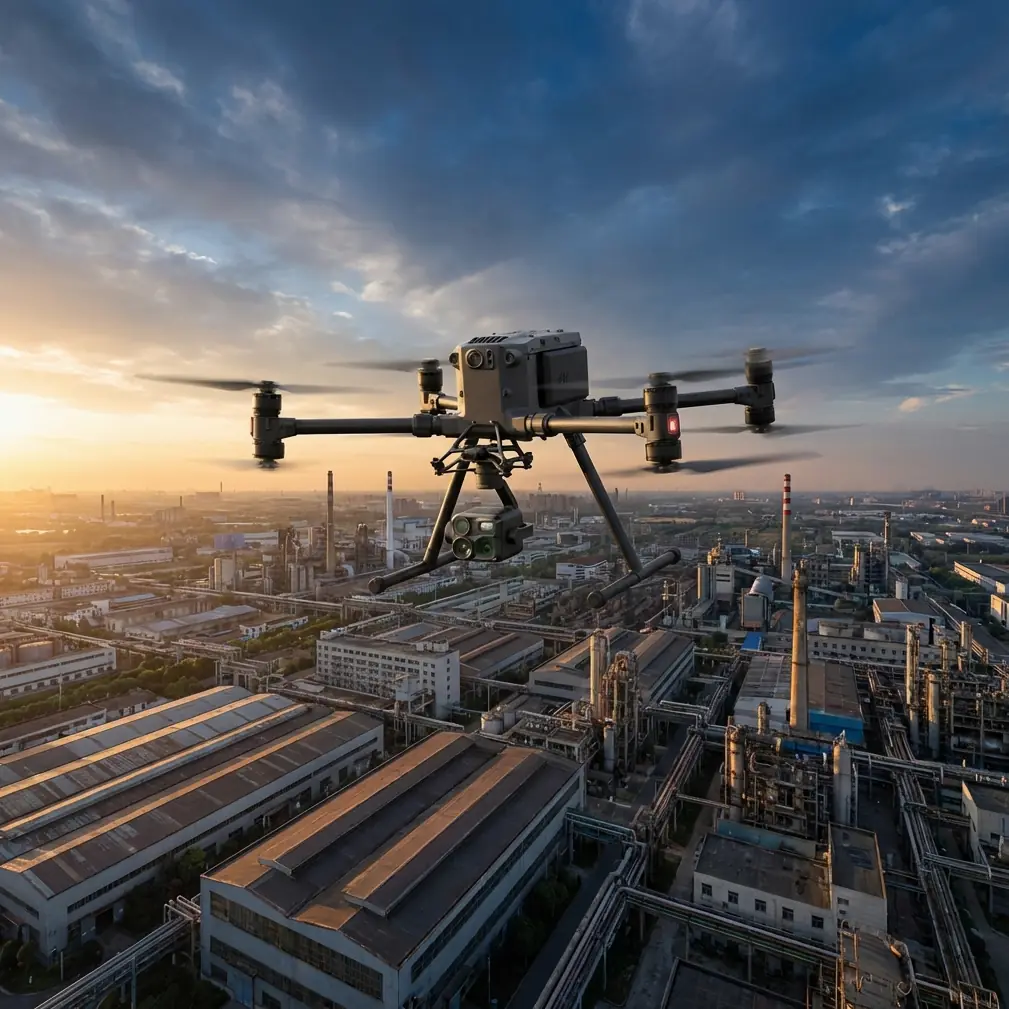
How I’d Use the Matrice 4T for Forest Delivery Missions in Extreme Temperatures
META: Expert tutorial on using the DJI Matrice 4T for forest delivery operations in extreme heat and cold, with setup advice for thermal imaging, antenna positioning, batteries, range, and mission reliability.
Forest delivery work is unforgiving. Dense canopy blocks visibility, temperatures punish batteries, wind moves unpredictably through ridgelines, and radio performance changes the moment the aircraft drops behind a tree line. If you are planning to use a Matrice 4T in this environment, the real challenge is not simply getting payload from point A to point B. The challenge is building a repeatable mission profile that still works when the forest is cold-soaked at dawn, baking by mid-afternoon, and obstructed almost everywhere.
That is where the Matrice 4T earns its place. Not because it is magically immune to bad conditions, but because it combines thermal signature awareness, robust transmission, secure data handling, and practical field features like hot-swap batteries in a way that maps well to remote woodland operations. Used correctly, it can support delivery-style missions, overwatch, route validation, and landing-zone confirmation without forcing the pilot to guess what is happening below the canopy edge.
I’ll walk through how I would approach this kind of mission as an operator, with one specific emphasis the marketing pages usually skip: antenna positioning. Range in forests is rarely limited by the aircraft alone. It is often limited by how the crew handles the controller, where they stand, and whether they understand how O3 transmission behaves in cluttered terrain.
Start with the mission, not the aircraft
When people say “delivering forests,” they often mean one of three things:
- Moving small critical items into a remote forestry worksite
- Supporting conservation or fire-response teams with urgent drop-offs
- Reaching inaccessible points where ground transport is slow or unsafe
Those are very different jobs. The Matrice 4T should be used only after you define which of those missions you are actually flying, what the forest density looks like, and whether your route requires line-of-sight or a BVLOS framework. That last point matters more than most pilots admit. A route that works visually across a harvested corridor may fail completely once you move into mature woodland with layered canopy and moisture-heavy air.
Before I even power up, I want four things pinned down:
- Launch point elevation relative to the route
- Tree height along the path
- Temperature band for the entire mission window
- Communications fallback plan if the aircraft drops behind terrain
If you skip that planning, the rest of the technology is just expensive optimism.
Extreme temperatures change everything first at the battery
In forest operations, temperature is rarely a side variable. It is a primary operational constraint.
In cold conditions, battery chemistry becomes sluggish. Voltage sag shows up earlier, and what looks like a comfortable reserve on the screen can disappear fast during climb, braking, or a long return leg. In hot conditions, the problem is different. Cells may start warm, internal temperatures climb faster under load, and the margin for repeated sorties narrows.
This is where hot-swap batteries matter in practical terms. They are not just a convenience for a long day. They let the crew rotate power packs intelligently, keeping the aircraft moving while also preventing rushed field decisions. In winter, I want spare batteries kept within a controlled temperature range before flight. In summer, I want used packs shaded, logged, and rotated so I am not sending an already heat-stressed set back into the air because the team is behind schedule.
For forest delivery work, battery discipline should look like this:
- Warm packs before winter launches, but do not overheat them artificially
- Shorten your acceptable return threshold in cold weather
- Add reserve margin for every altitude change and hover event
- Reduce back-to-back sorties in extreme heat without cooling intervals
The Matrice 4T gives you the platform stability for this kind of work, but no aircraft can rescue poor battery planning in extreme temperatures.
Thermal is not just for search work
A lot of operators treat the thermal payload as if it belongs only to public safety. In forests, that is too narrow a view.
Thermal signature data can make delivery operations safer even when the mission has nothing to do with finding people. In cold weather, thermal helps you verify whether a landing or drop zone is occupied by machinery, wildlife, or personnel partly obscured by brush. In hot weather, it can reveal sun-heated surfaces that create misleading visual contrast, especially on rocky clearings or logging tracks.
That matters because forest delivery often ends at improvised receiving points rather than tidy pads. A visually acceptable landing area may contain a recently running vehicle, hot equipment, or a person standing under partial cover. Thermal gives you a second layer of confirmation before descent.
There is also a route-planning benefit. Early morning temperature differences can help identify wet patches, streams, or unstable ground at likely staging points. That information is useful even if the mission is strictly logistical. It reduces guesswork for both the aircraft crew and the receiving team.
In practical terms, I use thermal before the drop or landing decision, not after. The question is not “Can the camera see heat?” The question is “What hidden risk does the thermal image remove from this mission?”
Photogrammetry and GCPs are underrated for repeat routes
If you are flying one-off deliveries, you can get by with rough route familiarization. If you are servicing the same forest corridor repeatedly, that is not enough.
Photogrammetry becomes valuable once you want consistency. A mapped corridor gives you better terrain awareness, cleaner approach planning, and more confidence in alternate paths when a primary route is blocked by smoke, logging activity, or weather. Add GCPs where feasible, and your spatial accuracy improves enough to make repeat staging areas and handoff zones much easier to manage.
This is one of the less glamorous uses of the Matrice 4T ecosystem, but it pays off quickly. A good map of a forest worksite does three things:
- Reduces uncertainty in approach geometry
- Helps identify safer emergency holding or diversion areas
- Improves coordination between flight crew and ground teams
That is especially relevant in extreme temperatures, because weather pushes crews toward faster decisions. Accurate terrain products reduce the chance of improvising under pressure.
O3 transmission is strong, but the forest still wins if you get lazy
Let’s talk about the part that usually decides whether a forest mission feels smooth or fragile: signal management.
O3 transmission is a major advantage for long-range, interference-sensitive operations, but woodland is a hostile radio environment. Trees contain moisture. Terrain blocks line-of-sight. Valleys and ridges change the geometry continuously. Even when the link budget looks solid on paper, your actual performance can drop sharply once the aircraft moves laterally behind canopy or descends along a slope.
That is why antenna positioning deserves deliberate attention.
Here is the core rule: do not point the antenna tips directly at the aircraft. For most directional controller antenna designs, the strongest radiation pattern projects outward from the broad face, not the end. In the field, I see pilots make this mistake constantly. They “aim” the controller at the drone like a flashlight, then wonder why the signal weakens the moment the aircraft moves out over the trees.
Instead:
- Keep the flat faces of the antennas oriented toward the aircraft’s expected position
- Maintain your chest and controller facing the route, not turned sideways while watching a second screen
- Raise the controller to reduce body shielding
- Avoid standing under vehicles, near metal structures, or tight against tree trunks
- If possible, launch from a slight elevation that preserves line-of-sight above the first canopy layer
The operational significance is huge. In a forest, gaining even a modest improvement in link quality can be the difference between a confident outbound leg and an early turnaround. Better antenna orientation does not just extend range. It stabilizes control and video in the segments where terrain is trying to break both.
If your team wants route-specific help, send the mission profile to us through this field ops chat and we can look at likely signal choke points.
Your position on the ground matters as much as the route in the air
Pilots often obsess over the aircraft’s path and ignore the geometry of the control point. That is a mistake in wooded environments.
If I am setting up a Matrice 4T mission for maximum range and reliability, I choose the pilot location with the same care as the flight path. A mediocre route from a strong launch point often outperforms a theoretically better route from a poor one.
I look for:
- Clear sky exposure in the direction of travel
- Separation from wet foliage and dense trunks
- Enough standoff from vehicles and portable generators
- Elevation that preserves line-of-sight over the near canopy
- A safe working footprint for the pilot, visual observer, and battery manager
Even a few meters of elevation can matter. In forests, radio degradation often begins close to the launch site because the near canopy blocks the low-angle portion of the path. If you can launch from a ridge shoulder, open track, or cut line rather than a hollow or dense stand, your link usually stays cleaner for longer.
AES-256 matters more than many forestry teams realize
Not every forest delivery operation is routine. Some involve sensitive cargo, critical infrastructure support, conservation work, or incident-response logistics. In those cases, data protection is not a nice extra.
AES-256 matters because the mission is generating more than flight telemetry. It can include thermal imagery, route patterns, staging-point data, and operational timings. In remote operations, those details can reveal vulnerable infrastructure locations, responder movements, or environmentally sensitive sites.
For a Matrice 4T workflow, secure handling should be treated as part of the operational design:
- Control access to captured data after each sortie
- Separate mission planning devices from general-use field hardware
- Define who can export thermal and mapping outputs
- Keep route archives organized by project and authorization level
The aircraft’s security stack helps, but teams still need discipline around it. Security is procedural long before it is technical.
BVLOS thinking improves even VLOS missions
Even if your regulatory framework keeps you inside visual line-of-sight, borrowing BVLOS planning habits improves forest delivery operations immediately.
That means:
- Building route checkpoints instead of flying “freehand”
- Defining lost-link behavior before launch
- Establishing communication triggers with the receiving team
- Identifying alternate landing or recovery points
- Assigning clear abort criteria tied to battery, weather, and signal quality
Forest work punishes vague planning. If the route enters a valley and the signal begins to soften, you should already know whether the aircraft climbs, holds, returns, or diverts. You should not be inventing those rules after the warning appears.
This is where the Matrice 4T becomes a serious tool rather than a hopeful experiment. Not because it can do everything, but because it supports disciplined operations well. Thermal awareness, mapping support, O3 transmission, secure data practices, and fast battery rotation all reinforce each other when the crew builds a procedure around them.
A practical field workflow for the Matrice 4T in forest temperature extremes
If I were training a team for this exact use case, I would standardize the mission like this:
First, map the corridor and receiving zone. Use photogrammetry where repeat missions justify it, and improve control with GCPs when accuracy matters. Second, choose the pilot location for radio performance, not convenience. Third, manage batteries as temperature-sensitive mission assets, not interchangeable consumables. Fourth, use thermal before committing to final approach. Fifth, brief antenna orientation every single sortie until it becomes automatic.
That sounds basic. It is not. Most failures in forest operations come from small, repeated oversights rather than one dramatic mistake.
The Matrice 4T is particularly well suited to this kind of work because its features line up with real field problems:
- Thermal signature analysis reduces uncertainty at the landing zone
- O3 transmission helps maintain a cleaner link in obstructed environments
- Hot-swap batteries support sustained sortie tempo
- AES-256 supports more secure handling of sensitive mission data
- Mapping and GCP-supported workflows improve repeatability
None of that removes the need for good piloting. But it does give a capable crew a stronger operating margin in exactly the places where forest missions usually go wrong.
If your mission is to move critical items through wooded terrain in severe heat or cold, that margin is what counts. The aircraft matters, yes. The payload matters too. But the real performance comes from how deliberately you combine them with route design, temperature management, and radio discipline on the ground.
That is the difference between an impressive specification sheet and a mission that actually comes home clean.
Ready for your own Matrice 4T? Contact our team for expert consultation.