
Matrice 4T on Urban Highway Delivery Corridors
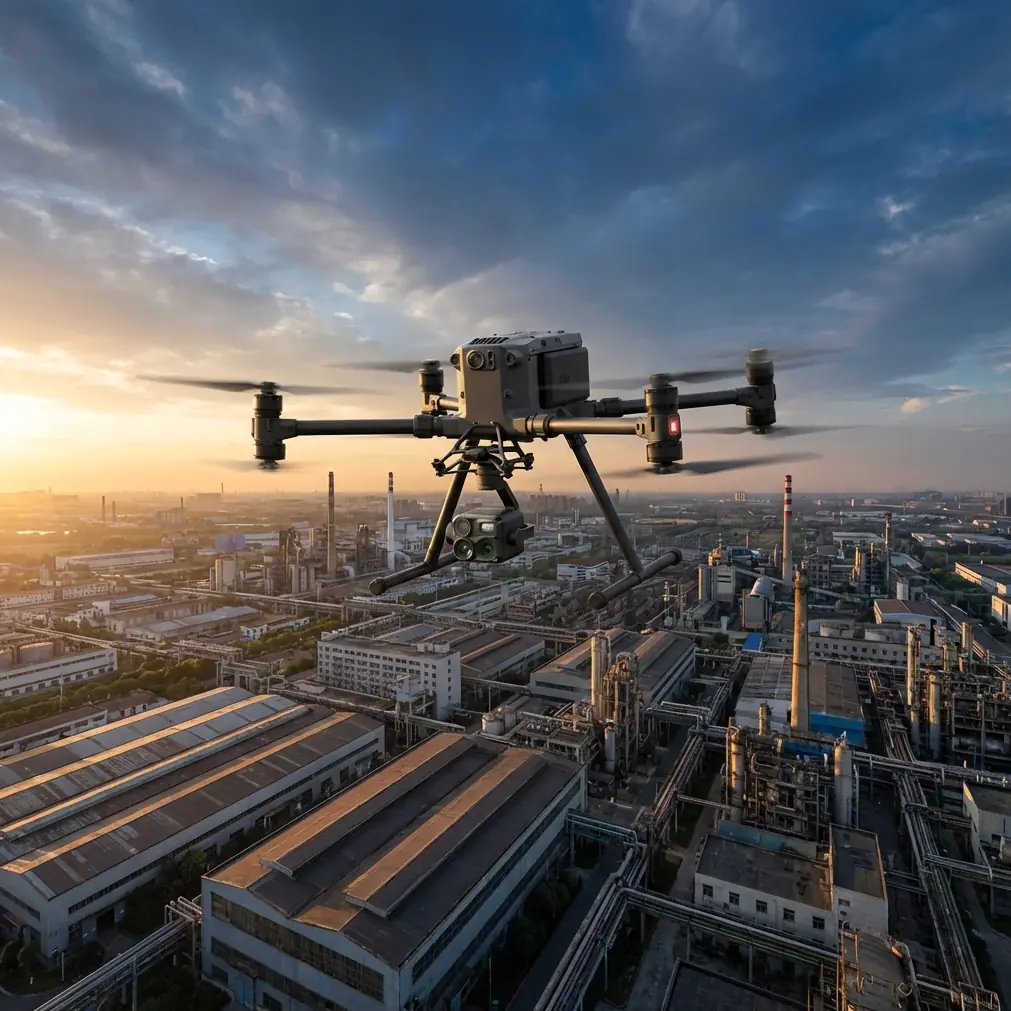
Matrice 4T on Urban Highway Delivery Corridors: A Case Study in Reliability, Pre-Flight Discipline, and Data Confidence
META: A field-led case study on using the Matrice 4T for urban highway delivery support, covering pre-flight cleaning, reliability thinking, thermal workflow, O3 transmission, AES-256 security, hot-swap batteries, BVLOS planning, and photogrammetry.
Urban highway delivery work looks simple from a distance. Vehicles move. Routes stack up. Timetables tighten. Then reality shows up: heat shimmer over concrete, signal reflections off glass towers, tight launch areas, and pressure to keep operations moving without introducing risk.
That is where the Matrice 4T becomes interesting.
Not because it is just another multirole enterprise drone, but because it sits at the intersection of three demands that urban logistics teams rarely get to separate: rapid dispatch, dependable sensing, and repeatable safety. In a city highway environment, a platform is only as useful as its weakest routine. Often, that weak point is not the aircraft spec sheet. It is the process around it.
This case study looks at how a Matrice 4T can support urban highway delivery operations through corridor checks, landing zone verification, traffic bottleneck assessment, thermal anomaly spotting, and route documentation. The real story, though, is reliability discipline. That starts with something many crews rush past: pre-flight cleaning.
Why pre-flight cleaning matters more than people admit
Before any takeoff in a highway corridor operation, the aircraft’s safety-critical surfaces and sensors need attention. A quick wipe-down is not housekeeping. It is risk control.
On the Matrice 4T, that means checking the vision sensors, thermal lens window, primary optical lenses, aircraft arms, landing gear contact points, battery terminals, and cooling paths. Dust, oily road residue, brake particulate, and fine construction grit are common in highway environments. Left alone, they can degrade obstacle sensing, reduce image clarity, skew thermal interpretation, and interfere with stable battery seating.
That sounds minor until you connect it to aviation reliability logic.
One of the reference sources in the aircraft design literature highlights a stark statistic from FAA Advisory Circular AC20-340: among 1002 aircraft involved in landing accidents, 106 cases, or 10.5%, were related to landing gear issues. Within those 106 events, 63% were attributed to human factors and 37% to mechanical or technical causes. The original context is retractable landing gear reliability in manned aircraft, but the operational lesson transfers cleanly to enterprise UAV work. Failures do not emerge only from broken components. They also come from the way humans prepare, inspect, and maintain systems.
For a Matrice 4T crew working around urban highways, pre-flight cleaning sits exactly in that overlap between human factors and technical reliability. A dirty downward sensor can feed bad data. A contaminated connector can create intermittent power behavior. A smudged thermal window can flatten contrast and hide a hotspot that should have stood out. Cleaning is not cosmetic. It preserves functional truth.
The mission profile: urban highway delivery support, not parcel drop theatrics
Let’s define the use case clearly.
This is not a fantasy scenario where a drone replaces every van on a city motorway. The smarter application is support infrastructure around delivery operations. A Matrice 4T can help teams:
- verify access routes before dispatch waves
- inspect choke points along highway interchanges
- assess loading and staging areas near urban depots
- monitor temporary works zones that affect delivery timing
- identify heat signatures from stressed equipment or vehicles in support yards
- capture photogrammetry data for site updates and route planning
- document changing traffic geometry after roadworks or lane shifts
That mix matters because urban delivery performance depends on conditions around the route, not just the route itself.
A logistics manager may care about whether a last-mile handoff point is blocked by construction barriers. A safety supervisor may need to confirm that a rooftop or enclosed receiving area is clear of hazards. An operations team may need current orthomosaic or 3D context for a staging site redesign. The Matrice 4T supports those decisions by combining visual and thermal awareness in a package that can be launched quickly and rotated through repeat missions.
Reliability is a systems problem, not a component problem
The same reference on landing gear reliability makes another point that is easy to miss: even though aircraft landing gear arrangements vary widely in layout and motion path, the core mechanism types are broadly similar. What changes is packaging, detail design, and how the parts work together under operational constraints.
That principle maps neatly onto enterprise drone fleets.
Every urban drone operation has different takeoff points, interference patterns, site hazards, weather windows, and compliance limits. Yet the mission system is built from familiar pieces: aircraft, batteries, data link, camera payload, pilot workflow, maintenance routines, and data handling. The difference between a dependable Matrice 4T program and an erratic one is usually not one dramatic hardware issue. It is how well those familiar pieces are made to work together.
In practice, for highway delivery support, that means:
- cleaning before flight, not after the issue
- confirming battery fit and terminal cleanliness
- validating payload glass clarity before thermal interpretation
- checking O3 transmission quality where overpasses, towers, and reflective surfaces can create signal complexity
- confirming AES-256-secured data handling requirements for sensitive logistics imagery
- planning hot-swap battery rotations so mission continuity does not pressure crews into rushed relaunches
- building BVLOS procedures only where regulation, training, and risk controls support them
The drone is capable. The operation must be equally capable.
A day in the field: where the Matrice 4T earns its place
On a recent-style urban corridor scenario, the mission objective was simple on paper: support a delivery network serving multiple highway-adjacent transfer points across a dense city zone during a period of lane reconfiguration and heavy construction activity.
The morning started at a compact staging area beside a logistics hub. Before power-up, the crew completed a cleaning and inspection sequence. Optical surfaces were checked for film from overnight moisture and dust. The thermal sensor window was cleaned with lens-safe materials. Battery contacts were inspected. Landing gear and arm joints were checked for grime buildup. Cooling vents were cleared.
That routine took minutes. It likely saved the mission from data ambiguity later.
The first sortie focused on route verification. Using the Matrice 4T’s visual payload, the crew checked an elevated access ramp feeding delivery vehicles into a constrained urban loading zone. Fresh lane barriers had narrowed entry width. A simple visual pass gave dispatchers current, same-day confirmation that larger support vehicles should be rerouted before the first wave of arrivals.
The second sortie shifted to thermal work. Midday heat over concrete often turns thermal imagery into a mess for inexperienced teams, but that is exactly why interpretation discipline matters. Instead of scanning randomly, the crew compared known surfaces, vehicle dwell zones, and equipment pads to isolate abnormal thermal signatures. One support unit in a service yard showed elevated heat compared with surrounding vehicles in similar conditions. That did not diagnose a fault on its own, but it gave the maintenance team a useful early flag before the vehicle was assigned into a time-critical route.
This is where thermal signature work becomes operationally relevant. It is not about dramatic imagery. It is about filtering a complex heat environment into decisions that reduce interruption.
Photogrammetry and GCPs: less glamorous, often more valuable
Most logistics managers do not ask for photogrammetry first. They ask why trucks are delayed, why the yard layout no longer works, or why a temporary detour keeps failing. Photogrammetry answers those questions after the fact with evidence.
The Matrice 4T can play a practical role here when teams need current site context. Repeated flights over a depot perimeter, highway approach, or staging zone can be processed into mapping products that show how traffic flow and ground access are actually functioning. When paired with GCPs, those outputs become more reliable for planning changes in yard layout, signage placement, temporary fencing, or access sequencing.
Operationally, GCP use matters because urban sites are full of visual clutter and GPS complications. If a delivery support team is making layout decisions from aerial mapping, better ground control reduces the chance of planning around misaligned geometry. That is not academic accuracy for its own sake. It affects whether a redesigned vehicle queue actually fits, whether a loading apron clears turning space, and whether temporary structures are shown where they truly sit.
A thermal-capable aircraft used for photogrammetry might seem like overkill, but in real field work, having one platform that can both document geometry and flag heat-related anomalies reduces deployment friction.
O3 transmission in dense city corridors
Urban highways are ugly RF environments. Concrete, steel, glass, moving vehicles, and layered infrastructure all stress the link between pilot and aircraft. In that setting, O3 transmission is not a brochure feature to admire. It is what helps maintain stable situational awareness when the drone is working around overpasses, ramps, frontage roads, and vertical building faces.
A stable transmission link improves more than video comfort. It supports cleaner decision-making. If a dispatcher is waiting to know whether a receiving area is accessible, or a site supervisor needs immediate confirmation that a route is blocked by equipment, latency and signal instability become operational costs.
Still, crews should avoid treating robust transmission as permission to get casual. Highway work demands conservative positioning, route design that minimizes signal masking, and clear abort logic. Strong links help. Good mission design matters more.
AES-256 and why logistics teams should care
A Matrice 4T mission over urban delivery corridors can collect more than traffic visuals. It may capture depot layouts, contractor activity, vehicle patterns, rooftop access points, and operational timing rhythms. That is commercially sensitive information.
AES-256 support matters here because security is not just an IT box to tick after the flight. It is part of operational trust. If a logistics operator is integrating UAV intelligence into dispatch planning, yard redesign, or partner coordination, they need confidence that the data path is being handled responsibly.
This is especially relevant when multiple stakeholders are involved: delivery operators, site contractors, property managers, and infrastructure teams. Secure handling makes adoption easier because the drone stops looking like a floating camera and starts functioning as a governed data tool.
Hot-swap batteries and tempo without shortcuts
Highway support work rarely arrives as one neat mission. Conditions change by the hour. A blocked access road gets cleared. A queue forms unexpectedly. Construction crews move barriers. A receiving point overheats under afternoon sun. The aircraft may need to relaunch several times.
That is where hot-swap batteries become operationally useful. They allow crews to maintain mission tempo without powering down for every turnaround. But speed should never cancel procedure. Each swap is another moment for connection checks, cleanliness checks, and quick sensor confirmation.
This loops back to the reliability lesson from the aircraft reference. The design world has long understood that safety depends on both inherent reliability and maintenance-use reliability. In other words, the machine and the routine have equal votes. If your battery swap process is rushed, dirty, or inconsistent, the capability advantage disappears.
BVLOS potential, with discipline
For larger urban corridor programs, BVLOS planning is naturally attractive. Highway-linked logistics routes are linear, repeatable, and often benefit from beyond-visual-line-of-sight coverage. But the right approach is restraint first, ambition second.
The second reference source, though heavily fragmented, points to another aviation truth: mission planning is inseparable from reserve thinking. In the manned world, fuel rules are built around not just reaching the destination but preserving enough margin afterward. One cited rule set includes the need to continue flying for 45 minutes under certain IFR reserve conditions. The direct numbers are from crewed aircraft regulation, not drone operations, yet the mindset is highly relevant.
For Matrice 4T BVLOS concepts in urban delivery support, reserve thinking should govern battery planning, contingency routing, alternate recovery areas, and communication fallback. The point is not to copy crewed fuel rules literally. The point is to adopt the same discipline: never plan only for the successful path. Plan for the interrupted one.
The expert takeaway
If you strip away the marketing gloss, the Matrice 4T becomes most valuable in urban highway delivery support when teams treat it like a professional aviation system, not a flying accessory.
The references behind this discussion may come from traditional aircraft design texts, including landing gear reliability analysis and mission reserve logic, but they illuminate a very current truth for UAV programs. Reliability is procedural. Safety margins are planned, not hoped for. Human factors remain a major source of failure. Small checks prevent expensive ambiguity.
That is why the pre-flight cleaning step deserves more respect than it gets. On a Matrice 4T, cleaning the thermal window, confirming unobstructed sensors, checking battery contacts, and verifying physical readiness before launch can directly affect thermal interpretation, obstacle awareness, mission continuity, and crew confidence. In a dusty urban highway corridor, that is not a minor ritual. It is the first layer of airworthiness.
And once that layer is solid, the rest of the platform starts to show its real strengths: visual verification, thermal signature analysis, photogrammetry with GCP-backed mapping, secure data handling through AES-256, stable O3-linked situational awareness, and practical tempo support through hot-swap batteries.
If your team is planning a corridor workflow and wants to discuss how that setup looks in the field, you can message an enterprise UAV specialist here.
Ready for your own Matrice 4T? Contact our team for expert consultation.