
Matrice 4T for Dusty Solar Farms: What Actually Matters
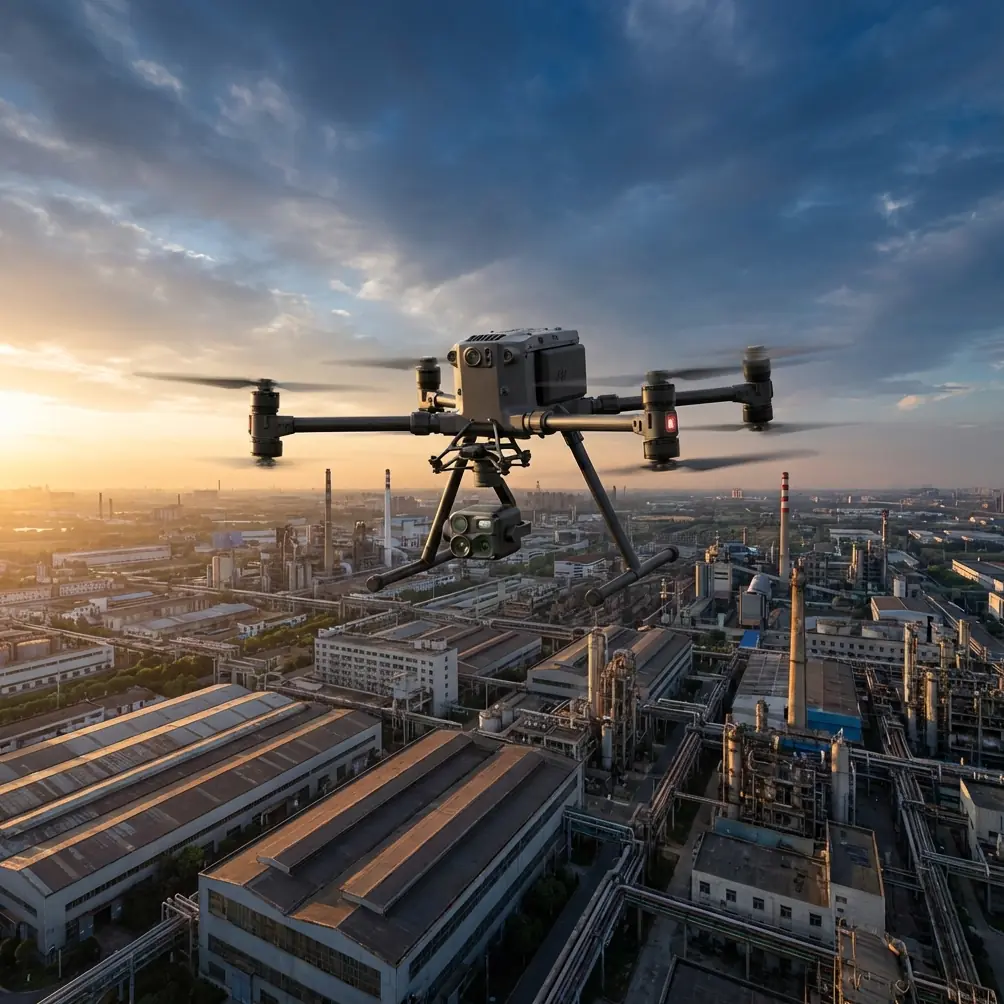
Matrice 4T for Dusty Solar Farms: What Actually Matters in the Field
META: A field-focused Matrice 4T article for dusty solar farm operations, covering wind profile effects, thermal workflows, battery planning, data integrity, and practical deployment choices.
Dust changes everything on a solar site.
Not in theory. In real operations. It settles on modules, blunts image clarity, exaggerates hot spots, and turns a routine drone sortie into a planning exercise around wind, altitude, and visibility. If you are deploying the Matrice 4T on utility-scale solar farms in dry conditions, the headline features only tell part of the story. The drone may carry the right thermal payload and deliver reliable transmission, but what separates clean, useful data from expensive re-flights is how you manage the environment around the aircraft.
That is where the Matrice 4T becomes interesting.
For solar inspection teams, this platform sits in the overlap between thermal diagnostics, visual verification, and site logistics. A single flight can help you find abnormal thermal signature patterns across long module rows, document visible soiling or physical damage, and create records that fit into larger maintenance workflows. Yet dusty sites expose a hard truth: performance is not only about the drone. It is about the relationship between aircraft behavior, wind structure near the ground, route design, and data confidence.
The real problem on solar farms is not just heat, it is contaminated certainty
A solar farm in a dusty region usually presents two competing inspection priorities.
First, you need thermal data sharp enough to isolate faults that matter: hotspots, mismatched strings, connector issues, diode-related anomalies, and panel-level irregularities. Second, you need visual context that explains whether that heat pattern points to an electrical issue, surface contamination, shading artifact, or a maintenance condition created by the site itself.
Dust interferes with both. It can create apparent temperature differences that look operationally significant until you compare them against visible imagery and layout context. It also reduces confidence in repetitive survey work. If one flight is conducted in calm conditions and another in stronger low-level wind, the quality gap can be larger than many teams expect.
That is not speculation. One of the most useful reference points from classical flight environment data is that, inside the atmospheric boundary layer, wind speed increases with height, often up to around 1000 m. For drone operators working close to the ground over wide solar arrays, that matters operationally because your aircraft can experience meaningfully different air behavior between a low pass over module rows and a slightly higher transit segment. The result is familiar to experienced crews: the same route can produce different hover stability, different dust disturbance, and different image consistency depending on altitude discipline.
On a solar farm, small changes in airspeed over the surface can kick up loose dust from access roads and bare ground between sections. A pilot who understands that vertical wind profile will make better altitude choices, especially when moving from inspection legs to repositioning legs. With the Matrice 4T, that translates into more reliable thermal capture and fewer compromised frames.
Why the Matrice 4T fits this job better than a generic drone workflow
The Matrice 4T earns its place on solar sites because the mission is not purely thermal and not purely mapping. It is mixed evidence collection.
Thermal identifies suspect assets quickly. Visual zoom and wide imagery help confirm what you are seeing. Secure link performance matters because large sites often force operators to work across long, repetitive corridors where signal stability and clean handoffs are not optional. This is where features like O3 transmission and AES-256 matter less as brochure talking points and more as workflow protection. O3 supports operational continuity across complex layouts, while AES-256 matters for owners and EPC teams who treat inspection data, plant layouts, and fault documentation as sensitive operational records.
On paper that sounds straightforward. In practice, it changes how confidently teams can centralize review, especially for multi-contractor environments or utility clients with strict data policies. If your Matrice 4T flight logs, thermal captures, and defect imagery are feeding into a wider asset management process, secure transmission and controlled data handling are part of the inspection value, not an afterthought.
Battery strategy matters more on solar farms than many teams admit
Large solar sites create a deceptive kind of fatigue. Distances are long, the rows look similar, and crews often assume mission planning can be solved by drawing bigger grids. That usually leads to inefficient turnarounds, higher dust exposure during takeoff and landing cycles, and avoidable downtime between sorties.
This is where hot-swap batteries become a practical advantage rather than a convenience feature. On a dusty solar farm, every extra minute spent on the ground with equipment exposed to fine particulate raises maintenance burden. A battery system that allows faster turnover helps reduce idle time, protects daily sortie count, and keeps inspection windows aligned with the thermal conditions you actually want.
That timing point is easy to overlook. Thermal inspection quality depends heavily on when the site is flown relative to irradiance and module heating conditions. If battery changes are slow and your team misses the best diagnostic window, you are not just losing time. You are losing defect clarity.
The helicopter performance data in the reference material reinforces a broader lesson here: flight profile changes have an energy consequence. In one table, a higher-speed cruise segment at V=240 km/h is associated with a time ratio of 23.2385%, while lower-speed and turning phases show very different power patterns. The Matrice 4T is obviously not a helicopter and should not be compared directly on raw numbers, but the operational principle carries over cleanly: different phases of flight consume energy differently, and the mission profile matters as much as the aircraft spec sheet.
For a solar operator, that means this: do not judge endurance only by nominal flight time. Count the cost of climbs, repetitive turns at row ends, hover confirmations over anomalies, and extra transits between array blocks. If your route design is poor, no battery system will save the day.
Route design: the overlooked difference between useful thermography and pretty pictures
Most solar drone errors begin before takeoff.
The mission gets drawn too high, too fast, or too neatly. The route looks efficient on-screen but ignores site dust, row orientation, inverter placement, and terrain transitions. Then the thermal dataset comes back inconsistent, with odd gaps in contrast or verification images that do not line up cleanly with thermal detections.
A stronger Matrice 4T workflow starts with a simple principle: separate discovery from confirmation.
Use systematic passes to identify abnormal thermal signature patterns across the field. Then use targeted revisit legs or stand-off observations to confirm likely root causes. This reduces the temptation to hover too often over every suspect panel during the first pass, which can slow the sortie and stir more dust in exposed areas.
If the site also requires orthomosaic outputs or layout documentation, bring photogrammetry into the plan deliberately rather than forcing one flight to do everything badly. Solar owners sometimes ask for inspection imagery, as-built verification, and maintenance-grade site records in the same mobilization. That is possible, but only if your control method is sound. GCP placement remains relevant whenever you need dependable geospatial consistency, especially on large uniform sites where row repetition can create downstream alignment headaches.
The Matrice 4T is best treated as a flexible evidence-gathering platform, not a magic one-pass answer.
Wind profile is not academic on a dusty site
The environmental reference provided one detail many drone teams intuitively know but rarely operationalize well: within the lower atmospheric friction layer, wind speed increases with height. That sounds basic until you apply it to solar operations.
Imagine a dusty facility with exposed service roads and open ground between tracker rows. If you launch into a calm-looking morning and climb into a slightly stronger layer, the aircraft may still fly fine, but the inspection output can shift. Transit sections become less stable. Yaw corrections rise. Dust movement near the surface becomes less predictable during lower repositioning legs. Thermal and visible consistency can suffer in subtle ways that are easy to miss until the office review.
This is why mature teams build altitude rules into the Matrice 4T workflow. Not arbitrary rules. Site-specific ones. Keep low-level inspection passes consistent. Avoid unnecessary altitude changes between blocks. Use higher transits only when they truly improve efficiency. And if you are planning BVLOS operations where regulations and approvals permit, environmental characterization becomes even more critical. Long-range work amplifies every weakness in route design and every assumption about local airflow.
A third-party accessory can make the Matrice 4T noticeably more useful
One of the smartest upgrades I have seen on dusty solar deployments was not a flashy payload. It was a well-chosen third-party landing solution that lifted the aircraft away from loose surface dust during takeoff and recovery.
That sounds minor until you spend a week on a dry utility site.
A raised portable landing pad or elevated launch platform can reduce dust ingestion risk, keep the camera system cleaner between sorties, and improve turnaround speed because crews spend less time wiping surfaces and checking for contamination after each landing. In field terms, that means more usable flights before maintenance interruption and more consistent thermal clarity across the day.
This is the kind of accessory decision that never gets enough attention in spec comparisons. Yet on dusty solar farms, it can do more for inspection reliability than chasing marginal feature differences on paper.
If you are comparing accessory options or need a field setup that suits your site conditions, this direct operations chat is a practical place to start.
What good Matrice 4T deployment looks like on a solar farm
A strong operation usually has five characteristics.
First, the crew defines the primary inspection objective before launch. Is the mission looking for thermally abnormal modules, validating cleaning effectiveness, documenting storm-related damage, or building a maintenance baseline? Each objective changes altitude, speed, overlap, and revisit logic.
Second, the team respects environmental structure. That includes not just surface dust, but the way wind changes with height in the lower boundary layer. The reference material’s reminder that this layer can extend to around 1000 m is a useful anchor, even though solar work is done much lower. The point is operational: the air at one working height is not identical to the air a little above it.
Third, battery planning is tied to route geometry, not just time estimates. Turning phases and repeated confirmation hovers add real cost. The helicopter reference table highlights how flight segments with turns and speed changes carry different power implications. Again, not as a direct aircraft comparison, but as a warning against simplistic endurance math.
Fourth, thermal findings are paired with visual evidence fast. A hotspot without context can send a maintenance crew to the wrong row or the wrong conclusion. The Matrice 4T’s value is in collapsing that gap.
Fifth, data security is treated as part of asset management. On utility-scale energy infrastructure, secure transmission and controlled handling are now standard expectations. O3 transmission stability and AES-256 support belong in the conversation because inspection is no longer just image capture. It is operational documentation.
The Matrice 4T is strongest when used like a system, not a drone
That is the real takeaway for solar operators.
If you view the Matrice 4T as a thermal camera in the sky, you will get some results. If you treat it as a system that combines sensor evidence, route logic, altitude discipline, secure communications, and fast battery turnover, you get something much more valuable: consistent decisions.
On dusty solar farms, consistency is the prize. Not just a successful flight. Not just a sharp thermal image. Consistent detection quality across blocks, days, and maintenance cycles. That is what allows site teams to compare cleaning programs, prioritize repairs, validate contractor work, and build a trustworthy inspection history.
The raw references behind this discussion may come from older flight design and atmospheric data, but the lesson translates remarkably well to today’s drone operations. Power demand changes with flight regime. Wind changes with height. Those two truths alone explain a large share of why one Matrice 4T deployment feels smooth and another feels fragile.
The aircraft is capable. The site is the variable.
If your solar workflows account for dust, vertical wind behavior, battery cadence, and evidence verification from the beginning, the Matrice 4T becomes more than a convenient platform. It becomes a dependable inspection tool built for real field conditions, not idealized demos.
Ready for your own Matrice 4T? Contact our team for expert consultation.