
Matrice 4T in Windy Solar Farms: A Field Report on Range
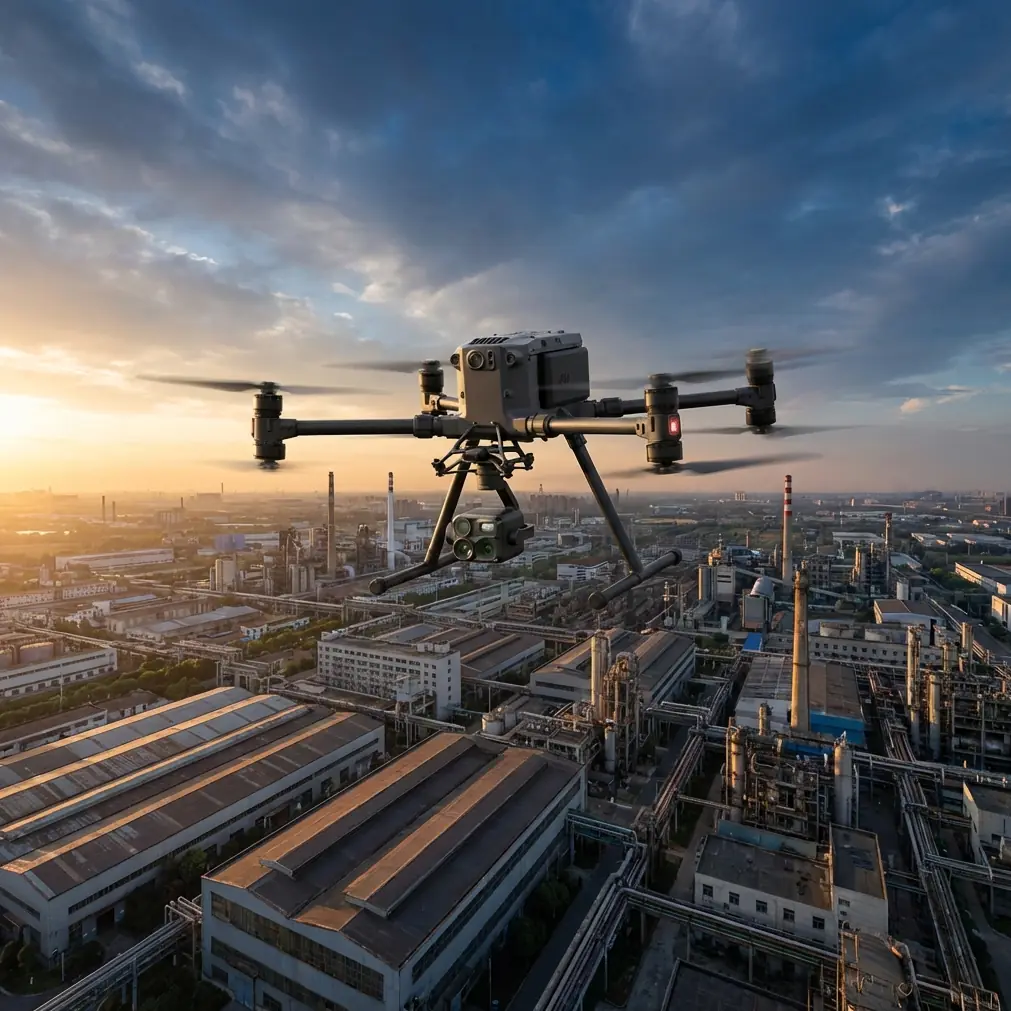
Matrice 4T in Windy Solar Farms: A Field Report on Range, Reliability, and Inspection Discipline
META: Expert field report on using Matrice 4T for windy solar farm inspections, with practical advice on antenna positioning, thermal workflows, reliability thinking, and tolerance-driven maintenance.
Wind changes everything on a solar site.
Not in theory. In practice.
A drone that feels perfectly composed over a warehouse roof can behave very differently when it is crossing long inverter rows, skimming over panel arrays that throw heat back into the air, and fighting lateral gusts across open terrain. That is where the Matrice 4T becomes less of a brochure item and more of a system you either understand deeply or you do not.
This piece is built around that reality: delivering inspection work on windy solar farms, where thermal findings need to be trusted, range must be managed intelligently, and small mechanical issues can quietly become mission problems.
The most useful way to think about the Matrice 4T in this environment is not as a single aircraft, but as a chain of dependencies. Airframe stability, gimbal behavior, antenna orientation, battery swaps, image consistency, transmission discipline, pilot workflow, and post-flight data confidence all stack on top of each other. If one weak link slips, the mission quality drops faster than most teams expect.
That systems view is not just good operational common sense. It mirrors a hard engineering truth found in classic aircraft design literature: system reliability is not some abstract score detached from the real machine. It is shaped by the combined reliability of all required parts and processes, and in practice the final result is often dominated by the component with the highest expected failure rate. That idea came from a discussion of aircraft drag parachute systems, but the lesson translates neatly to civilian drone operations. On a solar farm, your limiting factor is rarely the headline specification. It is the weakest repeated step.
Why windy solar farms expose weak habits
A solar farm is an unforgiving place to hide poor operating discipline.
The terrain is open. Wind has room to build. Visual references can become repetitive. Thermal interpretation is sensitive to timing and angle. Distance compounds small mistakes. If you are flying beyond the easy comfort zone of a short-range roof survey, you need your Matrice 4T workflow to be methodical.
That starts with transmission.
The pilot error I see most often is bad antenna positioning. Operators talk about range as if it is a fixed number. It is not. On large sites, usable range is heavily affected by how well you maintain the geometry between the aircraft and the controller antennas. O3 transmission is robust, but robust does not mean magical. If you let the antenna faces drift out of alignment or you stand in the wrong place relative to terrain undulations, parked service vehicles, or metal site infrastructure, your link margin shrinks before you notice.
My field rule is simple: don’t aim the antenna tips at the aircraft. Present the flat radiating face properly, and keep re-checking your body orientation as the drone moves down long array corridors. On windy solar sites, pilots tend to focus on aircraft attitude and forget their own. That is backward. If the drone is compensating for gusts while you are also degrading your transmission geometry, you are creating two variables at once.
This matters operationally because a degraded link is not only a control issue. It affects live decision-making. Thermal signature review, framing, reshoot calls, and defect confirmation all depend on confidence in what you are seeing in the moment. If your stream quality dips at the exact point you are crossing a suspicious string, you may lose the chance to verify the anomaly cleanly on that pass.
Thermal work only matters if the flight is repeatable
A lot of people use the phrase thermal signature too loosely.
On a solar farm, the useful question is not whether a module looks hot. The useful question is whether your capture conditions allow you to distinguish true electrical or structural anomalies from noise caused by angle, irradiance shifts, wind cooling, or inconsistent altitude. The Matrice 4T is capable, but capability is not the same as validity.
Repeatability is what turns thermal imaging into decision-grade data.
That means flying stable lines, holding predictable overlap when needed, and keeping your inspection logic consistent from block to block. If one section is flown lower, slower, or later in changing conditions, the resulting thermal set may still look sharp while being less comparable. That is where teams overpromise and asset managers become skeptical.
A windy environment makes this harder because gust compensation can subtly alter your pass quality. The aircraft may remain controllable, yet the mission consistency can still degrade. This is why battery strategy matters more than many operators admit. Hot-swap batteries are not just a convenience. They help you preserve the inspection window. Instead of burning time on a drawn-out reset between sorties, you can keep the aircraft cycling while solar loading conditions remain close to the baseline you established at the start of the mission.
That continuity pays off when you are trying to compare one block against the next or validate whether a hotspot pattern is isolated or systemic.
Reliability thinking belongs in drone operations
One of the more overlooked ideas in legacy aerospace engineering is that reliability analysis becomes most useful when it helps you identify the parts most likely to fail, then focus improvement there. Again, the old aircraft handbook framed this in terms of a drag parachute system and stressed that the highest expected failure-rate components tend to dominate overall system reliability. That applies surprisingly well to Matrice 4T field work.
For solar inspections, the weak points are usually not glamorous.
They are preflight omissions, rushed packaging, contamination on optics, inconsistent battery tracking, loose mounting checks, poor SD card discipline, forgotten firmware verification, and human-factor mistakes during setup. The handbook also emphasized that human errors in processing and packaging must be estimated because they are often central to understanding why a system fails. That sounds familiar to anyone who has seen a perfectly capable drone mission ruined by something as basic as a misconfigured payload setting or an avoidable launch sequence error.
The practical takeaway is to audit your workflow by failure likelihood, not by what looks advanced on paper.
If a pilot team spends all morning discussing BVLOS policy scenarios but does not standardize how they confirm lens cleanliness before every sortie, they are solving the wrong problem first. If they obsess over encrypted data handling but cannot produce consistent GCP strategy for any photogrammetry segment that supports the thermal survey, they are missing the reliability bottleneck.
AES-256 data security has its place. O3 transmission has its place. So does a disciplined chain of custody for inspection files. But on a windy solar farm, the mission often succeeds or fails on ordinary repeatable behavior.
The hidden role of tolerances in field readiness
This is where the manufacturing reference becomes unexpectedly relevant.
A section from an aircraft standards handbook lists casting dimensional tolerance grades and shows just how quickly allowable variation expands with size. In one table, dimensions in the 100 to 160 mm range are associated with tolerance values such as 0.30, 0.44, 0.62, and 0.88 mm across different grades. By the time you move to larger classes like 400 to 630 mm, the listed values increase to 0.64, 0.90, 1.20, 1.8, 2.6, 3.6, and 28 in the broader grade progression shown. The exact grade selection depends on process and application, but the operational lesson is clear: physical systems are built around tolerances, not perfection.
Why does that matter to a Matrice 4T operator on a solar farm?
Because drones live in the real world of accumulated deviation. Mounting interfaces wear. Protective housings pick up knocks. Landing gear sees repeated loads. Cases are packed and unpacked. Gimbals experience transport vibration. Nothing catastrophic has to happen for performance to drift. Small dimensional changes and assembly variation can alter how precisely the platform behaves over time.
The same source also includes a note that for certain coarse tolerance grades, when a basic cast dimension is less than or equal to 16 mm, the tolerance value must be specially marked and tightened by 2 to 3 grades. That is a manufacturing detail with a broader message: small features often deserve stricter attention, not less. In drone maintenance, tiny interfaces are exactly where preventable trouble starts. Fasteners, connector fit, latch seating, cable routing, and small protective elements do not look dramatic, but they deserve close inspection because small geometries can have outsized consequences.
On a windy solar site, those small imperfections show up quickly. Slight looseness that seems harmless on a calm launch pad may turn into image inconsistency aloft. A connector that is merely “good enough” in light duty can become intermittent after repeated battery cycling in dust and heat. You do not need a visible failure to lose mission quality.
Combining thermal inspection with photogrammetry the right way
The Matrice 4T is often brought in for thermal discovery first, with visible imagery and mapping work added afterward. That can work well, especially on large utility sites where maintenance teams need both defect confirmation and spatial context.
The mistake is treating these as separate jobs with separate standards.
If you plan to use photogrammetry to support defect localization, remediation planning, or repeat-comparison surveys, then your geometry has to be controlled from the start. GCP placement, line planning, and altitude consistency should not be afterthoughts. Even if the thermal payload is driving the mission, the mapping logic has to be built into the workflow.
Wind complicates that because it encourages pilots to improvise route changes on the fly. Sometimes that is necessary. Often it simply introduces inconsistency. Better practice is to define which segments are thermal-priority and which are geometry-priority, then fly each segment with the correct discipline. If site conditions force compromise, record that compromise clearly so downstream analysts understand what confidence level to assign to each data layer.
This is also where transmission discipline circles back. Reliable live link quality helps the pilot make cleaner decisions about whether a block needs to be reflown before the aircraft returns. If you want a second opinion on a field setup or antenna orientation before a long corridor mission, a quick message to a specialist can save a wasted half day; I’ve seen crews use direct WhatsApp support for site planning exactly for that reason.
Battery rhythm, not battery duration
People ask how long the aircraft can stay up. The better question is how long your inspection window stays coherent.
On solar farms, battery management is less about squeezing every final minute from a pack and more about preserving operational rhythm. Hot-swap capability helps maintain pace without resetting the whole workflow. That matters because wind often shifts through the day, and thermal conditions can drift faster than teams expect. A smooth battery change can be the difference between finishing a comparable block set and coming back with mixed-condition data that is harder to trust.
Track pack history carefully. Rotate predictably. Avoid the temptation to build your route around best-case endurance numbers. In wind, your return reserve deserves more respect than on sheltered sites.
What good Matrice 4T operation looks like on a real solar job
A strong team on a windy solar farm usually does five things well.
First, it selects launch position with transmission geometry in mind, not just convenience.
Second, it manages antenna orientation actively throughout the mission.
Third, it treats thermal inspection as a repeatability problem, not a screenshot problem.
Fourth, it monitors small mechanical and procedural weak points because system reliability is usually limited by the weakest repeated element.
Fifth, it builds photogrammetry, GCP logic, and data security into the plan from the start instead of layering them on afterward.
That is what separates useful inspection output from pretty aerial content.
The Matrice 4T is a serious tool for solar work, particularly where wind and distance expose every shortcut. If you fly it as an integrated system, respect the small details, and maintain transmission discipline, it can produce thermal and visual datasets that maintenance teams can actually act on. If you treat it like a self-solving platform, the site will expose that assumption quickly.
Ready for your own Matrice 4T? Contact our team for expert consultation.