
Matrice 4T in Windy Delivery Venues: What Rotor Stability
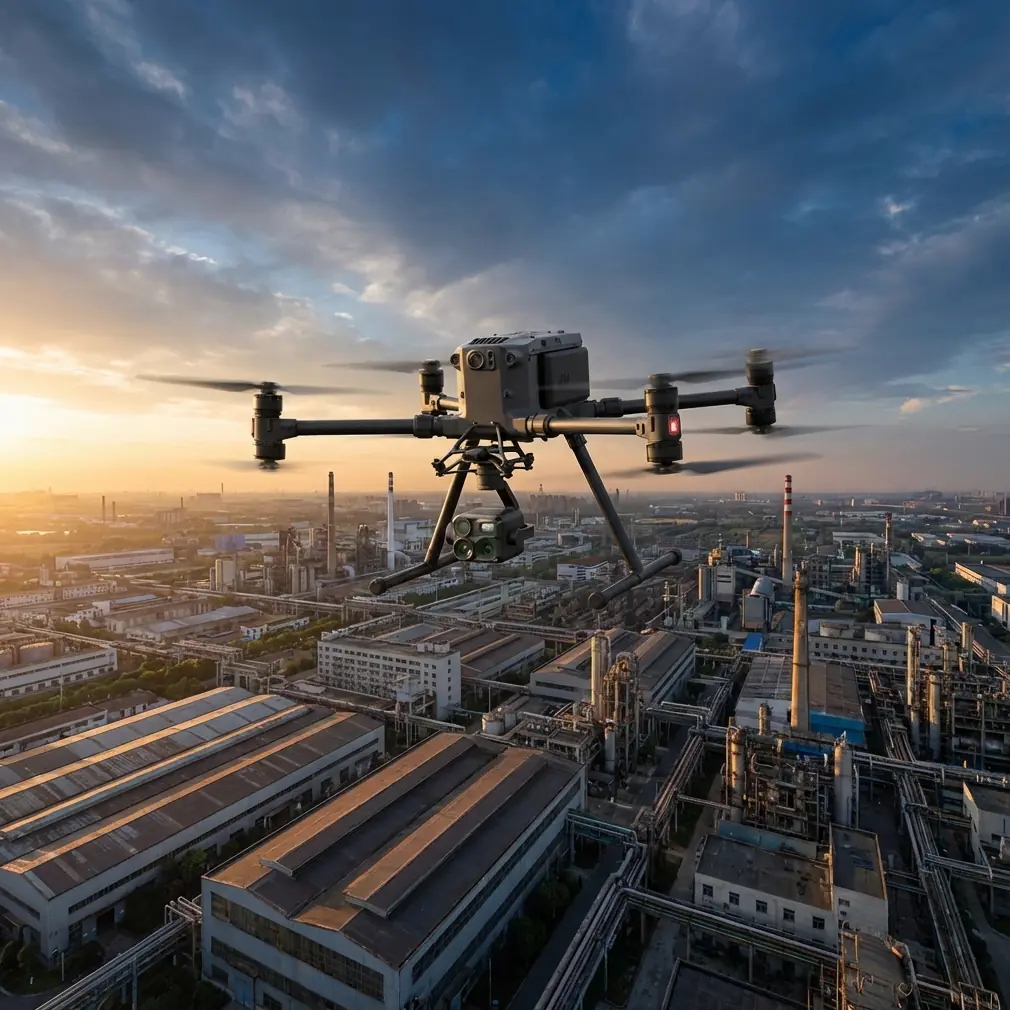
Matrice 4T in Windy Delivery Venues: What Rotor Stability and Ground Handling Really Mean
META: Expert analysis of Matrice 4T operations in windy delivery venues, with practical guidance on stability, vibration, antenna positioning, and safer launch-recovery workflows.
Wind changes the entire character of a delivery mission. Not just in the air, where gusts push the aircraft off line, but on the ground, where launch, recovery, and repositioning become less predictable. If you are evaluating the Matrice 4T for venue deliveries in exposed sites—stadiums, campuses, industrial parks, waterfront event spaces—the real question is not whether the aircraft can fly in wind. The harder question is whether your operation can stay stable when wind, vibration, control inputs, and ground handling all start interacting at once.
That is where the reference material behind this discussion becomes useful. At first glance, a helicopter dynamics manual and a nose-wheel steering system handbook seem far removed from a modern DJI enterprise platform. They are not. Both point to the same operational truth: stability is never a single variable. It is always a system problem.
For a Matrice 4T delivery scenario, especially in windy venues, that systems view matters more than any spec-sheet headline.
The real problem: wind is not just a “flight condition”
One of the most valuable ideas in the helicopter design reference is that dynamic stability is shaped by the interaction of elastic forces, damping forces, inertial forces, and aerodynamic effects—and those aerodynamic effects are often unsteady. That phrase matters. Unsteady aerodynamics means the aircraft is not simply pushing against a constant flow. It is dealing with changing pressure fields, turbulence, vortices around buildings, and short-duration disturbances that can amplify motion in ways that are hard to predict from a calm-day test flight.
For a Matrice 4T operating around delivery venues, this translates directly into practical mission planning.
A broad, open venue may look simple on a map, yet wind around grandstands, loading bays, roofs, temporary stages, and container stacks can create localized gust fronts. The aircraft may be stable over one section of the route and then experience rapid attitude corrections near the drop area. Pilots who underestimate this usually focus only on headline wind speed. Experienced operators focus on variability: where the air changes direction, where it accelerates, and where the aircraft may need to absorb repeated correction cycles.
That repeated correction cycle is where dynamic behavior becomes operationally significant. The helicopter reference emphasizes that excessive vibration amplitude must be avoided because it degrades both structural conditions and the vibration environment. On a multirotor like the Matrice 4T, the same logic applies in a civilian commercial context: persistent oscillation can reduce image quality, complicate thermal interpretation, affect photogrammetry consistency, and increase pilot workload during precision delivery or inspection work conducted in the same mission window.
This is why windy venue delivery is not merely a transport problem. It is an airframe management problem, a sensor reliability problem, and a control discipline problem.
Why this matters specifically for the Matrice 4T
The Matrice 4T is often discussed for its sensor package, thermal signature detection, and enterprise mission flexibility. Those strengths are real. But in windy venues, the value of the platform depends on whether it can keep those systems useful under disturbance.
Take thermal work. If your delivery operation also includes verification tasks—checking rooftop HVAC hotspots, scanning crowd infrastructure, or monitoring equipment zones before or after a drop—wind-induced aircraft movement can distort how quickly you acquire and confirm a thermal signature. That does not mean the thermal sensor stops being effective. It means your workflow has to account for the fact that stable hover performance and precise repositioning are what make the thermal payload operationally credible.
The same is true for photogrammetry. A venue operator may want a short mapping run before a delivery window opens, perhaps to verify temporary barriers, update logistics paths, or compare traffic flow changes against a prior model. In wind, clean overlap becomes harder to maintain, especially at lower altitudes near structures. If you are using GCP-backed mapping control for accuracy, the aircraft still needs a predictable track and disciplined speed profile. Good ground control points cannot fully compensate for poor aerial consistency.
In other words, the Matrice 4T’s capabilities become more—not less—dependent on disciplined stability management when the weather gets difficult.
The overlooked phase: launch and recovery in gusty sites
The second source document, focused on aircraft nose-wheel steering and shimmy damping, offers a surprisingly relevant lesson. It describes a system where 21 MPa hydraulic pressure drives steering actuators, while one-way flow restriction helps prevent pressure pulses from disturbing control and also contributes to damping behavior when the aircraft is not actively being steered.
The aircraft category is different, but the engineering principle carries over cleanly: disturbance control is not only about active input. It is also about preventing sudden system reactions and smoothing what happens when the operator is not commanding a maneuver.
That is exactly the weak point in many windy drone delivery operations. Teams spend time thinking about cruise stability but not enough time thinking about launch pad behavior, handoff area turbulence, and touchdown discipline.
At a venue, the Matrice 4T may launch from a service road, a rooftop corner, a fenced logistics pocket, or a temporary operations mat beside vehicles and structures. Gusts that would be manageable in forward flight can become awkward during the first few seconds after liftoff because the aircraft is near obstacles, near people, and still transitioning from ground effect. On return, the same site may produce a different airflow pattern due to wind angle changes or vehicle movement.
This is where you should borrow the mindset of damping and pulse isolation from the ground steering reference. For drone operations, the equivalent is procedural rather than hydraulic:
- avoid abrupt throttle and stick corrections at liftoff
- use a brief stabilized hover to assess drift before committing to the route
- maintain a clean recovery corridor with no loose materials or vertical obstructions
- do not treat touchdown as the “easy” part of the mission in gusty conditions
Windy venue deliveries are often lost operationally in the margins, not in the middle.
A better problem-solution model for windy venue delivery
The usual advice is too generic: check weather, maintain line of sight, fly carefully. That is not enough for a professional Matrice 4T workflow. A stronger model looks like this.
Problem 1: unsteady air near structures creates control noise
The helicopter source explains that aerodynamic stability problems become more complex because the airflow itself is nonsteady. For a venue delivery route, this means a pilot cannot assume that a smooth outbound leg guarantees a smooth inbound leg, even over the same path.
Solution: build route segmentation into the mission plan. Mark the route by airflow behavior, not just by distance. Open transit, roof-edge crossing, descent corridor, and drop zone approach should each have their own speed and altitude expectations. The Matrice 4T performs best when the pilot has already decided where the aircraft may need more conservative handling.
Problem 2: vibration and repeated correction can degrade data confidence
The helicopter manual is explicit that excessive vibration amplitude should be avoided because it worsens both loading and the surrounding vibration environment. In Matrice 4T terms, this can affect image sharpness, thermal target confirmation, and mapping repeatability.
Solution: if the mission includes thermal or photogrammetry tasks, do them where the air is most stable, not simply where the route is shortest. For mapping, maintain enough altitude and overlap margin so that gust-based lateral corrections do not ruin coverage. For thermal work, pause longer at observation points than you would on a calm day so the payload has time to settle and the operator has time to validate the thermal signature.
Problem 3: launch and landing become the hidden instability points
The ground steering source shows how damping logic is used to reduce unwanted response and pressure-pulse effects. The drone equivalent is to reduce procedural shock.
Solution: standardize a wind launch protocol. Keep the staging area uncluttered. Face the aircraft in a consistent orientation relative to the prevailing wind when practical. Brief the team on abort criteria before takeoff, not after drift appears. Recovery should use the same discipline. If venue operations are tight, a secondary landing spot is often more valuable than squeezing into the primary one.
Antenna positioning advice for maximum range
The prompt asked for one practical point, and this is the one I wish more teams got right. In windy venue delivery work, lost performance is often blamed on weather when the real issue is poor link geometry.
For the Matrice 4T, antenna positioning should be treated as part of flight control, not an afterthought. The goal is not to point the antenna tips directly at the aircraft. It is to present the broadside of the antenna pattern toward the aircraft’s expected position. In practice, that means:
- keep the controller antennas properly oriented based on the aircraft’s altitude and distance, not randomly splayed
- avoid shielding the controller with your body, vehicles, metal barriers, or roof equipment
- if you are operating from behind glass, near scaffold, or under a canopy edge, relocate before launch
- in venues with tiered seating or steel infrastructure, move for line quality rather than convenience
This is especially relevant if you rely on O3 transmission performance in complex sites. Signal robustness in urban or event-style environments is rarely about raw distance alone. Reflection, partial blockage, and poor operator positioning can reduce link confidence long before you reach the practical edge of the route. If your venue delivery concept may later expand toward BVLOS-ready workflows where regulations allow, then disciplined antenna handling becomes even more foundational.
And yes, security matters too. Enterprise teams increasingly care about encrypted workflows, and AES-256 is part of that conversation. But secure transmission only helps if the link itself remains stable. Reliability starts with physical positioning.
If your team needs a field checklist for controller setup and antenna alignment in venue operations, you can ask for one here: message Dr. Lisa Wang’s team directly.
Payload planning in wind: do less at once, better
A common operational mistake is trying to stack too many objectives into a single windy sortie. Deliver the package, capture thermal imagery, run a quick map, inspect a rooftop unit, and return on one battery cycle. The Matrice 4T is versatile enough to tempt that behavior. Wind is what punishes it.
A better approach is role separation by air quality and timing. If the venue has a known afternoon crosswind, schedule photogrammetry when the atmosphere is calmer, then preserve the delivery window for the more dynamic period. If thermal confirmation is mission-critical, avoid doing it immediately after an aggressive reposition or descent through a turbulent corridor. Let the aircraft settle first.
Hot-swap batteries help here because they support mission continuity without forcing rushed turnaround behavior. The operational win is not speed for its own sake. It is the ability to preserve aircraft readiness while keeping each sortie focused and clean.
What professionals should take from the two references
The helicopter design text gives us the big warning: dynamic stability is shaped by coupled forces, and unsteady airflow makes the problem harder. That is not abstract theory. It explains why windy venue deliveries can feel manageable one moment and messy the next.
The ground steering text contributes a second, more subtle lesson: systems stay controllable when they are designed—or operated—to resist sudden disturbance and suppress unwanted reaction. Its mention of one-way flow restriction and retained pressure under fault conditions is a reminder that good control is often about smoothing transitions and isolating noise before it becomes a directional problem.
Transferred into Matrice 4T operations, those lessons become practical:
- expect wind behavior to change with location and altitude
- treat vibration control as mission quality control
- engineer your launch and landing procedures with as much care as the cruise segment
- position antennas deliberately to protect range and link stability
- split mission objectives when wind would otherwise compromise sensor output
That is the difference between merely flying a Matrice 4T in wind and running a delivery operation that remains dependable when the venue environment stops cooperating.
Ready for your own Matrice 4T? Contact our team for expert consultation.