
Delivering in Windy Venues with the Matrice 4T
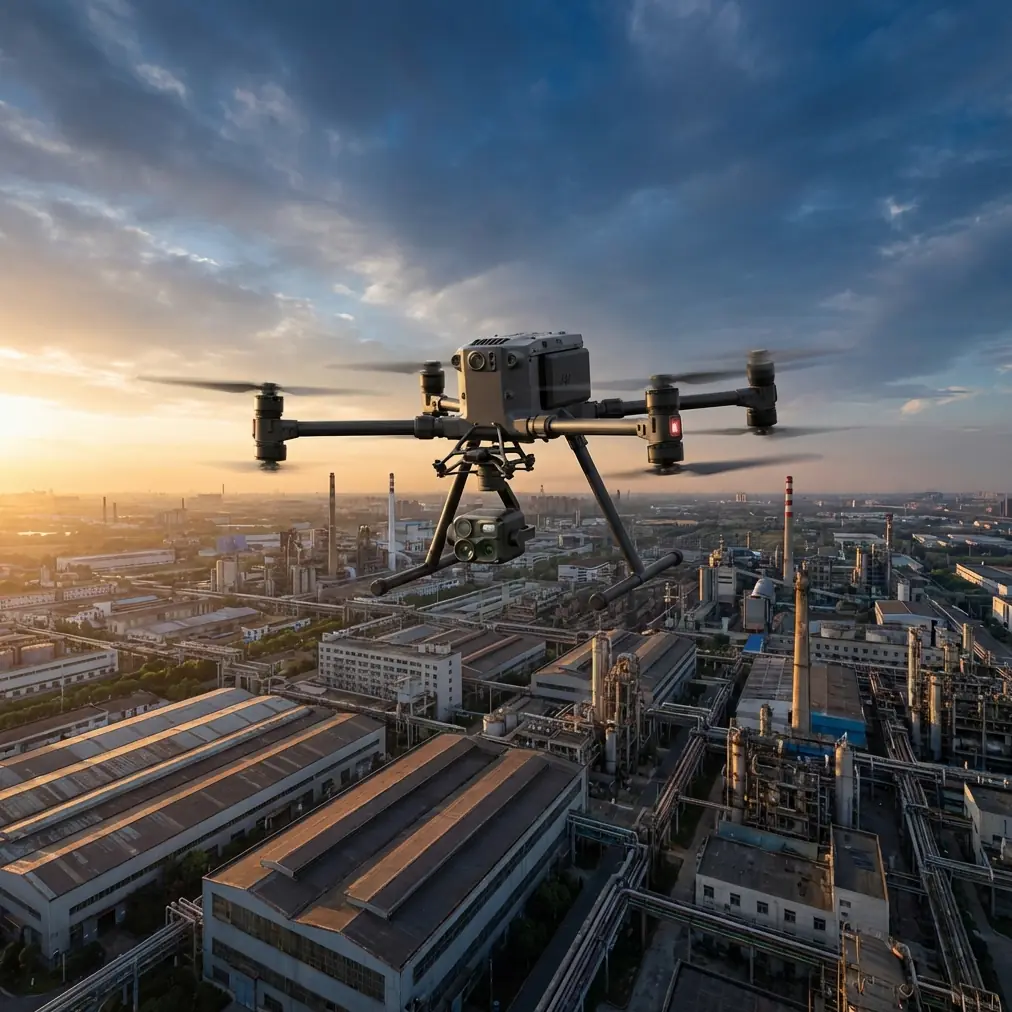
Delivering in Windy Venues with the Matrice 4T: A Field Report on Reliability, Heat, and Structural Margin
META: Expert field report on using the Matrice 4T in windy venue operations, with practical battery management advice, thermal workflow insights, and engineering lessons from sealing and fatigue design.
Wind changes everything at a venue.
On paper, a delivery, inspection, or site-support mission can look straightforward: short route, clear staging area, known landing point, decent visibility. Then the venue starts behaving like a wind tunnel. Air spills around grandstands, wraps around temporary structures, accelerates down service corridors, and turns a stable approach into a constant series of micro-corrections. That is where the Matrice 4T stops being just a spec sheet and starts being a work tool.
I’ve spent enough time around commercial UAV operations to know that people often focus on the obvious headline features first: thermal signature detection, zoom capability, transmission stability, and battery endurance. Those matter. But on windy venue work, the real story is operational consistency. Not just whether the aircraft can fly, but whether it can keep flying predictably through repeated cycles, temperature changes, and stop-start tasking without developing small reliability problems that snowball into downtime.
That is the lens I want to use here for the Matrice 4T.
This is not a generic overview. It is a field-minded look at how to think about the aircraft when your job involves venue deliveries or support runs in turbulent air, and why some older engineering principles about sealing, pressure, and fatigue still matter when you are planning modern UAV missions.
Windy venues punish weak systems
A venue is rarely aerodynamically clean. Even when the wider forecast looks manageable, local conditions can be messy. Open gates create funnels. Tall facades kick vortices back into the flight path. Roof edges generate rolling turbulence. Temporary event infrastructure makes it worse because it changes the airflow map from one week to the next.
For the Matrice 4T operator, that means three practical pressures hit at once:
- more aggressive attitude corrections in flight
- more energy consumed during hover, approach, and station-keeping
- more heat cycling in batteries and subsystems because sorties become less steady
That third point deserves more attention than it gets.
Most crews talk about flight time in wind. Fewer talk seriously about what repeated warm-up, cooldown, recharge, and relaunch cycles do to operational rhythm. The reason I bring it up is simple: venue missions often look short, but they stack up fast. A support team may launch repeatedly for perimeter checks, roofline reviews, thermal scans of equipment areas, rapid photogrammetry passes, or lightweight logistics coordination. The aircraft may not be in the air for very long each time, yet it can still accumulate stress through repetition.
The Matrice 4T is well suited to this kind of mixed-task environment because it can pivot between visible imaging, thermal work, and situational overwatch without changing platforms. In venue operations, that flexibility matters more than people realize. One aircraft can help verify roof drainage after a squall, inspect temporary power installations for heat anomalies, document staging zones for planners, and support delivery-route validation around crowd-free service corridors.
But flexibility only pays off if your aircraft stays stable from sortie one to sortie ten.
A battery management tip that actually helps in the field
Here’s the battery habit I push hardest with windy venue teams: do not top off every pack to the same schedule and leave them baking in the same environment while you wait for tasking.
That sounds minor. It isn’t.
When venue work is intermittent, crews often charge everything early, line the batteries up, and then launch as requests come in. If the day is warm, or if packs are sitting in a vehicle, under a tent, or near hard surfaces radiating heat, you start the mission with avoidable temperature loading before the aircraft even lifts off. Then wind forces higher draw on the climb and on hover, and now your power system is dealing with heat from both ambient conditions and mission demand.
A better approach is staggered readiness. Keep a near-term pair ready, keep the next set conditioned rather than sitting hot and full for too long, and rotate based on actual launch probability, not optimistic planning. If your operation uses hot-swap batteries to minimize turnaround, this matters even more. Hot-swapping is useful because it protects tempo, but it can tempt crews into treating batteries like identical fuel cans. They are not. Their recent thermal history changes how they behave under load.
In windy venue work, I also tell teams to note battery performance by mission type, not only by total cycle count. A pack that repeatedly supports gusty hover-heavy inspection flights can age differently from one used for smoother transit runs. You do not need a complex lab model to benefit from this. A simple flight log with wind context, landing reserve, and pack temperature trends will show you patterns within a few weeks.
That kind of discipline is what keeps the Matrice 4T dependable when the mission profile is irregular.
Why old sealing rules still matter to modern UAV thinking
One of the more interesting reference points in aircraft design literature deals with a problem that sounds very small until it causes a failure: pressure trapped between multiple O-ring seals.
The guidance is blunt. If two or more O-rings are used and fluid becomes trapped between them, rising temperature can cause thermal expansion of hydraulic or lubricating fluid. That pressure buildup can lead to parts binding during operation. The recommended mitigation is equally practical: provide a relief path, such as a drain or vent feature between seals, to prevent pressure lock.
Even though the Matrice 4T is not a traditional hydraulic aircraft system in the way legacy manned platforms are, the engineering lesson translates cleanly to commercial drone operations: trapped energy plus temperature variation creates hidden reliability risk.
Operationally, that matters for venue work because windy missions create repeated transient loads and thermal swings. Components heat under active correction, cool while staged, then heat again on relaunch. Any design philosophy that respects expansion, pressure management, and tolerance control tends to age better in real field conditions than one that only looks good in ideal testing.
A second detail from the same reference is worth highlighting. In thin-wall cylindrical structures under pressure, radial expansion can increase the effective working clearance beyond the intended value. The cited benchmark says that for actuator cylinders with bore diameters under 5 inches, radial bulging caused by pressure at the cylinder midpoint does not exceed 0.0020 inch per inch of bore. That sounds tiny, but aircraft design lives in tiny numbers. Small dimensional changes can alter seal behavior, wear rate, and service life.
For drone operators, the takeaway is not to memorize hydraulic dimensions. It is to appreciate why robust aerial platforms are built around tolerance discipline. In windy venue operations, the aircraft is constantly fighting for positional stability. That means repeated control input, repeated mechanical response, and repeated thermal loading. The platform that holds up over time is the one designed with enough margin for real-world variation, not just nominal conditions.
This is one reason I advise buyers and fleet managers to evaluate the Matrice 4T less like a camera drone and more like a compact mission aircraft. If your use case involves repeated deployments, mixed sensors, variable temperatures, and wind-disturbed approaches, reliability engineering matters as much as optical payload quality.
Structural fatigue is not abstract when your sortie count is high
The second reference set shifts from sealing to structure, and it reinforces the same operational mindset. The material calls out several core fatigue and durability concepts: reducing stress concentration factors, anti-vibration design, acoustic fatigue considerations, and damage-tolerant design goals.
That may sound far removed from venue delivery work. It is not.
Windy venues generate vibration-rich flight profiles. The aircraft rarely gets to settle into a calm, efficient pattern. It is adjusting to lateral gusts, compensating for turbulence near structures, and often landing in disturbed air. Those repeated disturbances do not just consume battery. They drive cumulative stress into airframe joints, fasteners, mounting interfaces, and payload attachment points.
The design principle of reducing stress concentration is especially relevant. In structural engineering, fatigue cracks often begin where geometry or load transfer creates local peaks in stress. For UAV operators, the practical version of that concept is straightforward: watch the places where repeated field handling and vibration intersect. Payload mounts. Landing gear interfaces. Folding mechanisms. Fastener seating. Battery insertion points. Transport cases that encourage hard knocks.
The reference also points to damage tolerance as a technical objective. That is another useful lens for Matrice 4T fleet operations. No serious commercial operator should assume a platform remains airworthy just because it still powers on and passes a quick visual check. A mature operation thinks in terms of early defect detection before the defect becomes mission-limiting. In venue work, where repeated short flights can accumulate quickly, inspection cadence matters.
My recommendation is simple. Build a post-shift check around the specific stresses windy operations produce:
- inspect propellers for fine edge damage, not only obvious chips
- check folding arms and lock points for play
- review payload mounting integrity after transport
- compare battery seating feel across packs
- look for recurring vibration signatures in flight logs
- verify imaging alignment if the aircraft had several hard, gusty landings
That is not overkill. It is how you preserve uptime.
Where the Matrice 4T earns its place at venues
The strongest argument for the Matrice 4T in this environment is not any single sensor. It is the way the platform supports fast task-switching without forcing the team to rebuild the workflow around each job.
A venue operator may need thermal signature review for rooftop HVAC irregularities in the morning, a photogrammetry pass with GCP-backed control for asset documentation later, and a visual route validation before an internal logistics movement in the afternoon. If the aircraft can hold a stable feed over O3 transmission and protect sensitive operational data with AES-256, it becomes easier to integrate into enterprise environments where live coordination and information handling both matter.
That combination is especially relevant for larger sites. Windy venues are often busy venues. Communication quality affects decision speed. A stable transmission link helps remote supervisors confirm conditions without crowding the launch area. Strong data protection matters when the operation includes infrastructure imagery, temporary site layouts, or contractor-sensitive details.
BVLOS is another phrase that gets thrown around loosely, so I’ll keep this grounded. In the right regulatory framework and with proper authorization, extended operational concepts can make sense for large campuses, event infrastructure perimeters, or connected facility zones. But even when you are not flying BVLOS, planning like a disciplined enterprise operator improves safety and efficiency. Defined corridors, conservative reserves, and task-specific battery assignment all contribute to better mission outcomes.
Field workflow: delivery support without forcing the aircraft
If you are using the Matrice 4T around venue delivery or internal logistics support, one mistake I see often is trying to fly the shortest path instead of the cleanest path.
At windy sites, the shortest line on a map may pass through the worst disturbed air. A slightly longer route that stays clear of roof edges, façade rebounds, and choke points often gives better energy performance and more consistent sensor results. This is particularly true when you need clear visual confirmation at delivery points or when thermal imagery is part of the mission package.
The same applies to hover decisions. If you know a handoff zone is turbulent, do not plan a long hover to sort out final details. Set up the route and communication process so the aircraft spends less time fighting for position in dirty air. Small procedural changes reduce mechanical strain and improve battery efficiency.
If you are still building that workflow, I usually suggest teams compare three route styles over several flights:
- shortest geometric path
- path avoiding major structures
- path aligned with the prevailing wind where practical
Then review not only flight time, but battery reserve, hover stability, and image usability. Operators are often surprised by which route is truly more efficient.
One final operator habit that pays back fast
Keep a “wind day” notebook.
Not a generic maintenance log. A dedicated record of what your Matrice 4T does differently when the venue gets turbulent. Note battery swaps, route choices, packs that sag earlier, landing zones that become unreliable, thermal scenes that degrade near reflective roofing, and any changes in gimbal behavior after repetitive gust loading.
This sounds old-school, but it creates the kind of operational memory that software alone does not always capture well. After a month or two, you will know which corners of the venue cost the most energy, which launch pads stay cleanest, and which battery handling habits preserve your margin. That knowledge is where aircraft capability turns into operational advantage.
If you want to compare notes on venue workflows or battery rotation practices for the Matrice 4T, send a quick message here: talk with James Mitchell on WhatsApp
The Matrice 4T is at its best when treated as a serious field platform rather than a flying camera. Windy venue operations expose weak habits fast. They also reward disciplined ones. Respect heat. Respect repeated loading. Respect the invisible effects of pressure, vibration, and fatigue that aviation engineers have been managing for decades. Do that, and the aircraft becomes far more predictable where predictability matters most: in real work, on imperfect days, with changing conditions and no patience for avoidable failure.
Ready for your own Matrice 4T? Contact our team for expert consultation.