
Matrice 4T in Vineyards at Dusk: A Practical Field Tutorial
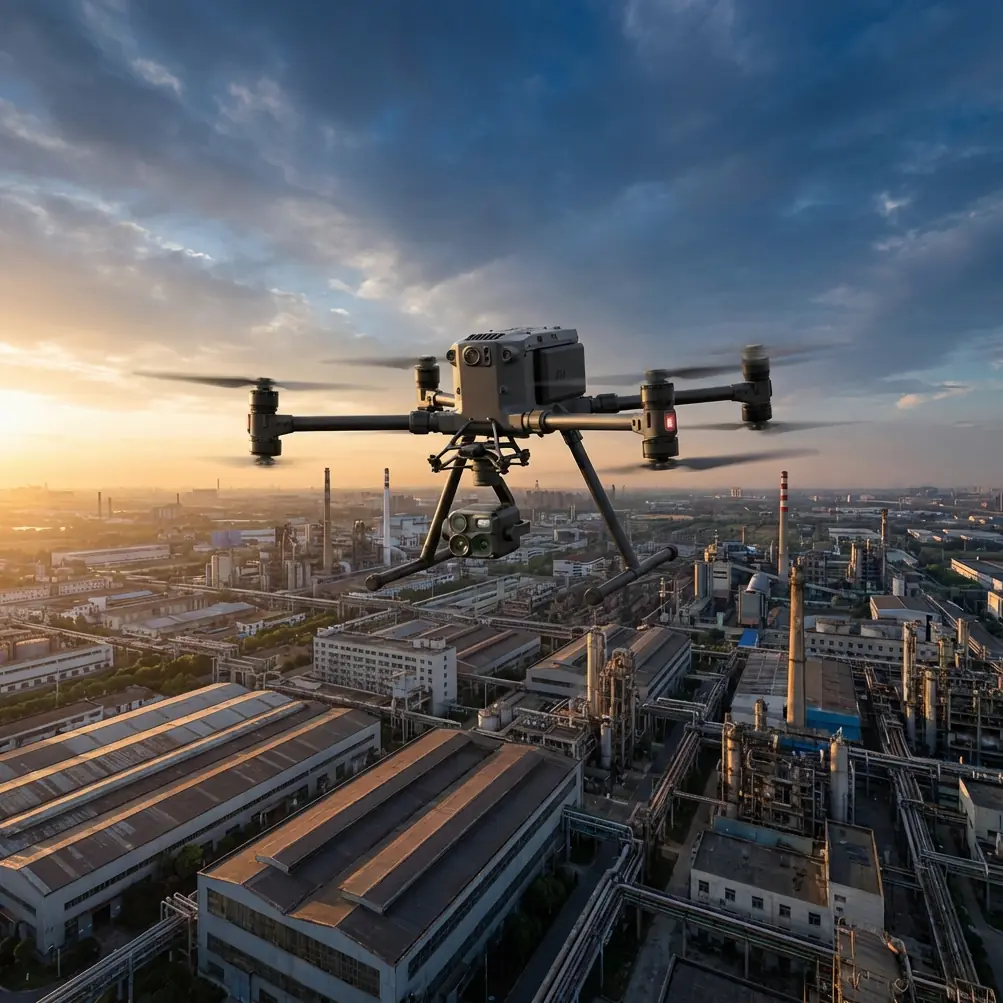
Matrice 4T in Vineyards at Dusk: A Practical Field Tutorial for Safer Low-Light Delivery Flights
META: Expert Matrice 4T tutorial for vineyard delivery in low light, covering thermal workflow, sensor use, curing-inspired maintenance discipline, and precision setup for reliable operations.
I’m Dr. Lisa Wang, and if you’re planning to use the Matrice 4T around vineyards in low light, the aircraft is only half the story. The other half is discipline: how you prepare, how you interpret sensor data when vines confuse depth cues, and how you manage tiny build details that decide whether a delivery flight feels routine or fragile.
Vineyards are deceptive environments at dusk. Rows look orderly from above, but they create repetitive visual patterns that can challenge human observers and camera-only decision-making. Add trellis wires, patchy ground temperature, irrigation hardware, and wildlife movement, and the mission gets more complicated than a straight “point A to point B” run.
The Matrice 4T earns its place here because it is not just a flying camera. In this setting, it becomes a layered sensing platform: visible imaging for route verification, thermal signature checks for living obstacles and warm equipment, and stable transmission for keeping the operator connected when the drone dips behind vegetation lines or terrain undulations. For vineyard logistics, especially in the fading light after work crews leave the block, that combination matters more than headline specs.
Start with the mission reality, not the drone brochure
A vineyard delivery task usually sounds simple. Move a small item from the operations shed to a field team, or drop a tool, sample container, or sensor part near a preplanned point. But low-light operations demand a different planning mindset.
The first decision is whether your route is truly a delivery corridor or just a line on a map. In vineyards, those are not the same thing. A route that looks open during daylight can become visually compressed at dusk. Shadow bands between rows can make spacing harder to judge from an RGB feed alone. This is where the Matrice 4T’s thermal view starts pulling real weight.
I’ve seen this firsthand on a late-evening vineyard run where the aircraft was sent along a service path bordering a block of mature vines. About halfway through the flight, the thermal feed showed a compact warm shape moving across the intended descent area. On the visual camera, it was barely distinguishable from ground clutter. The thermal signature made it obvious enough to hold position and reassess. A few seconds later, the animal emerged clearly: a fox crossing between rows, likely drawn by rodent activity near the irrigation line. That is the kind of moment when a thermal camera is not a nice add-on. It is a risk separator.
For vineyard operators, that same capability can help identify workers who remain in the field, warm pump housings, vehicles recently parked out of sight, or livestock near perimeter sections. Low light reduces visual certainty. Thermal often restores it.
Build your route around sensor strengths
For a Matrice 4T delivery mission, I recommend treating the route in three segments:
- Transit
- Approach
- Drop or handoff zone verification
The transit phase is where O3 transmission reliability matters most. Vineyards often have rolling topography, tall shelterbelts, and infrastructure that intermittently masks line of sight. A robust link does more than preserve video quality. It preserves operator confidence, and confident operators make better decisions. If your organization is preparing for longer-range workflows or future BVLOS programs where regulations permit, link stability and telemetry integrity become foundational rather than optional.
The approach phase is where many pilots make their first real mistake: they descend too early because the receiving zone appears familiar. At dusk, familiar places become visually ambiguous. Use the thermal feed to scan for residual heat sources and movement. Then verify with the visible camera before committing lower.
The handoff zone is where many vineyard operators benefit from importing mapping habits into logistics work. Even if this is not a full photogrammetry mission, a surveyed landing or drop reference can remove a lot of uncertainty. I like using a simple repeatable point framework tied to GCP logic. Not necessarily full survey-grade procedure every time, but a consistent physical marker system anchored to known field coordinates. In practical terms, that means your “drop zone by the fifth row near the pump shed” becomes a repeatable, measurable target instead of a memory-based estimate.
That kind of repeatability pays off in two ways. First, it shortens on-site verification time. Second, it reduces operator workload when flying in low contrast conditions.
Why an aircraft handbook about sealants actually matters here
One of the more overlooked truths in drone operations is that flight reliability is often decided on the bench, not in the air. The source material you provided includes a manual section on aircraft sealant curing conditions. At first glance, that seems far removed from a Matrice 4T flying over vines. It isn’t.
The handbook lists curing schedules with very specific environmental windows, including examples such as 50°C for 48 hours, 15°C for 28 days, 25°C for 14 days, 35°C for 7 days, and humidity ranges like 45% to 55% RH and 30% to 85% RH depending on the material and application. Another entry notes a standard cure of 7 days under defined conditions. Those numbers tell a bigger story: aerospace-grade assemblies are only trustworthy when materials are allowed to stabilize under controlled processes.
Operationally, that matters for anyone running a Matrice 4T in vineyard environments because low-light delivery work often means temperature swings, dew risk, dust, fertilizer exposure, and repeated packing and unpacking of payload interfaces. You may not be curing aircraft sealants in your hangar, but the lesson is still direct. Adhesives, seals, gaskets, protective covers, cable boots, and accessory mounts should never be treated casually.
If a field team installs a third-party mount, replaces a cover, reseals a compartment, or applies a protective adhesive pad, then ignores environmental conditioning, they are importing uncertainty into every subsequent mission. A component that looked fine at noon can loosen, creep, or admit moisture after repeated evening flights in cool vineyard air. The cure-data mindset from the aircraft handbook is useful because it trains operators to ask better questions:
- What temperature was this part bonded at?
- How long has it stabilized?
- What humidity was it exposed to?
- Has it seen repeated heat cycles?
That sounds small until a low-light mission is interrupted by a fitment issue you could have prevented on the ground.
Precision in the air starts with precision in the hardware
The second reference document is a standards table listing dimensional series values. The raw page is not elegant reading, but its significance is easy to translate. It shows tightly stepped engineering dimensions—for example, sequential values around 54, 55, 56, 57, 58, 59, 60, 61, 64 and larger associated dimensions such as 134, 136, 137, 145, 150, 160, 215, 232, 255. This is exactly the kind of standards-driven sizing logic that underpins airframe interfaces, mounting patterns, and structural fit.
Why should a vineyard operator care?
Because repeatable performance comes from standardized tolerances, not visual approximation. If you’re configuring a Matrice 4T for delivery work, any add-on bracket, box, quick-release interface, or landing aid should be designed with the same mindset as aerospace standard hardware: predictable geometry, controlled fit, no “close enough.” A few millimeters of slop in a payload carrier can change vibration behavior, influence sensor stability, or create a subtle yaw bias that becomes more noticeable in slow, low-light approaches.
This matters even more if you’re collecting mapping data during the same shift. Many vineyard teams pair logistics with inspection or row-condition documentation. If you switch between delivery and photogrammetry tasks, hardware repeatability becomes essential. A payload or accessory that seats inconsistently can affect image overlap assumptions, camera alignment confidence, or thermal interpretation across repeated missions.
The lesson from the standards table is not about memorizing dimensions. It is about respecting dimensional discipline. In field operations, improvised hardware usually works right up until the day it doesn’t.
A vineyard low-light workflow that actually holds up
Here is the field sequence I recommend for Matrice 4T delivery work in vineyard blocks after sunset or near dusk.
1. Preflight for environmental drift
Do not just check battery percentage and propellers. Check what changed since the last flight. Vineyard air can shift quickly in the evening. Dust settles. Moisture rises. Surfaces cool at different rates.
Inspect:
- Lens surfaces, especially thermal optics
- Any protective seals or accessory interfaces
- Payload mount security
- Landing gear cleanliness if operating from loose soil
- Battery bay condition
If your operation uses hot-swap batteries, treat each swap as a mini preflight, not a pit stop. Low-light delivery programs often stack multiple short sorties. That increases the chance of small oversights compounding late in the shift.
2. Verify your handoff point with mapping logic
Before the first delivery of the evening, confirm the target zone in daylight or civil twilight. If the location is used repeatedly, assign a fixed marker and document it against your map layer. If your team already uses GCPs for vineyard surveying, borrow that habit. Even a simplified coordinate discipline improves consistency.
3. Use thermal first for conflict detection
Before descent, perform a thermal sweep of the destination area. You are looking for:
- People still working the rows
- Wildlife
- Recently operated vehicles
- Warm machinery
- Animals resting near edge vegetation
In low light, a thermal signature often gives the first reliable clue that the visible image cannot.
4. Use RGB second for object confirmation
Thermal shows presence. Visible imagery clarifies context. The safest flow is usually thermal detect, RGB verify, then proceed.
5. Keep transmission margin, not just battery margin
Operators tend to focus on power reserve. In vineyards, transmission quality deserves equal attention. O3 transmission is especially valuable when terrain, rows, and structures create partial screening. Do not plan every leg at the edge of comfort. Preserve link margin so you still have room to pause, climb, and reassess if the receiving zone changes.
6. Secure your data path
If you’re handling location data, crop condition visuals, or customer delivery logs, secure communications matter. AES-256 is not just a specification line for enterprise drones. It matters when your flights involve proprietary vineyard layouts, infrastructure imagery, or operational timing data that a grower would rather keep private.
Blending delivery and inspection on a single shift
One of the strongest cases for the Matrice 4T in vineyards is flexibility. A single evening deployment can support delivery, thermal checking of equipment areas, and visual inspection of row access conditions for the next morning’s crews.
This is where many operators underuse the platform. They think in isolated missions. The smarter approach is workflow stacking.
For example:
- Deliver a replacement sensor node to a field team.
- On the return leg, scan irrigation manifolds for abnormal heat signatures.
- Capture a short visual record of access lanes for vehicle planning.
- Log any anomalies to support next-day maintenance.
That approach improves aircraft utilization without turning the operation into a rushed multipurpose circus. The trick is planning the mission architecture before takeoff, not improvising after the first drop.
A note on crew communication
Low-light missions fail quietly when operators and ground teams use vague language. “Near the end row” or “by the tank” is not enough. Standardize your terms. Use row numbers, block IDs, and marker references. If your team needs a simple field communication template for vineyard logistics missions, I usually recommend setting one up before the season gets busy. If you want a practical template for that, this quick field line works well: message me here.
What separates reliable operators from lucky ones
Reliable operators build process from small truths. The two reference documents behind this article may look disconnected from a Matrice 4T vineyard mission, but they point to the same standard.
From the sealant handbook, we get a lesson in environmental conditioning: materials only perform as intended when time, temperature, and humidity are respected. Numbers like 50°C for 48 hours or 35°C for 7 days are reminders that build quality is procedural, not accidental.
From the standards table, we get a lesson in dimensional discipline: repeatable systems depend on controlled fit. Engineering values are not administrative clutter. They are the scaffolding behind reliable interfaces.
Transfer both ideas into Matrice 4T field practice and the result is stronger low-light delivery performance:
- Better hardware integrity
- Better route repeatability
- Better descent confidence
- Better risk detection through thermal use
- Better data protection through AES-256
- Better continuity during repeated sorties with hot-swap batteries
- Better future readiness if your vineyard program expands toward regulated BVLOS operations
The aircraft matters, yes. But in vineyards at dusk, the real advantage comes from the operator who notices details before they become events.
Ready for your own Matrice 4T? Contact our team for expert consultation.