
Delivering Wildlife Support in Complex Terrain with Matrice
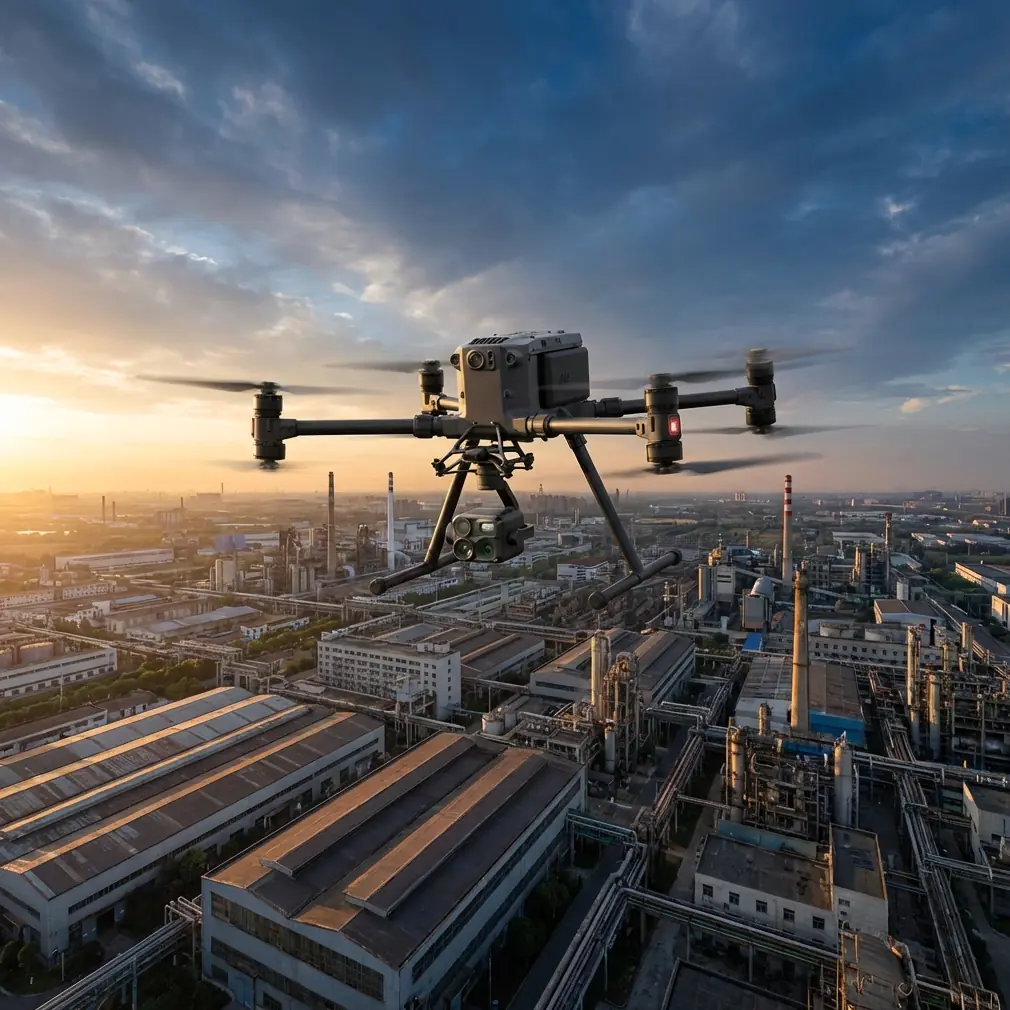
Delivering Wildlife Support in Complex Terrain with Matrice 4T: What Actually Matters in the Field
META: A field-driven Matrice 4T case study on wildlife delivery operations in difficult terrain, with practical insight on thermal signature tracking, link reliability, battery continuity, and workflow design.
When people discuss drones for wildlife missions, the conversation usually starts with cameras and ends with range. In real operations, that is backwards.
For teams trying to deliver wildlife support materials in broken terrain—medical kits, tracking tags, sample containers, or lightweight feed supplements—the first question is whether the aircraft can stay dependable while the environment keeps changing under it. Wind shifts around ridgelines. Landing zones disappear under canopy. A target animal or field team may only be visible through a thermal signature at dawn or after sunset. And if you are operating far from road access, every interruption in power, link quality, or workflow becomes expensive in time and risk.
That is where the Matrice 4T deserves a closer look. Not as a generic “advanced drone,” but as a platform whose value comes from system behavior under pressure.
I have been revisiting two older aviation design references while thinking about this aircraft. At first glance, they are not about UAV wildlife logistics at all. One covers aircraft electrical system design. The other points to avionics detailed design, including interface control documentation, software development flow, integrated testing, acceptance testing, and configuration management. Those topics sound distant from a field-deployed multirotor. They are not. They explain why some aircraft feel merely feature-rich, while others feel operationally mature.
A wildlife delivery case that exposes the real requirements
Consider a mountain-edge conservation operation. A field team needs resupply at a temporary observation point above a river cut, with no vehicle path and limited foot access. The payload is modest, but timing matters. The team also wants to use the same sortie to identify heat signatures near a salt lick, update a terrain model for route safety, and record visual evidence of animal movement without repeated disturbance.
This is exactly the kind of mixed mission where the Matrice 4T stands apart from simpler aircraft. It is not just about carrying a sensor stack. It is about compressing several tasks into one dependable flight cycle:
- detect with thermal,
- verify visually,
- map enough of the terrain for safe repeat routing,
- maintain a resilient control link,
- rotate batteries fast enough to keep the operation moving.
A competitor may match one or two of these pieces on paper. Few platforms make the whole chain feel coherent.
Why electrical architecture still matters, even in a modern drone
One of the most useful details in the aircraft electrical reference is not glamorous at all: older constant-speed constant-frequency power systems were structurally complex, expensive to maintain over their service life, and difficult when uninterrupted power transfer was required. The reference also notes that transitional generator designs used higher synchronous speeds such as 8000 rpm, while integrated generator arrangements commonly operated at 12000 rpm or 24000 rpm to improve weight-to-power performance.
Why bring up fixed-wing aircraft power design in a Matrice 4T discussion?
Because the underlying lesson is timeless: better aircraft are designed around integration, not add-ons. In that reference, the move from separated systems toward combined units reduced weight-to-power penalties and simplified architecture. In drone terms, the same principle shows up in how the Matrice 4T handles mission continuity. It is one thing to have a thermal camera, secure transmission, mapping capability, and battery swaps. It is another thing to make those functions behave like one aircraft rather than four disconnected subsystems.
That distinction matters in wildlife work. If your delivery drone pauses too long between flights, loses mission context after a power event, or makes operators rebuild inspection and mapping settings every time, the airframe may still be technically capable but operationally clumsy. The Matrice 4T’s appeal is that it behaves more like an integrated aviation system than a hobby platform scaled upward.
Hot-swap batteries are the obvious example. Their significance is not convenience alone. In rough terrain, where the aircraft may be cycling repeatedly between a base point and temporary drop or observation sites, continuity becomes the mission. The old aviation reference explicitly called uninterrupted power transfer difficult in more complex legacy architectures. Modern drone operators feel the same pain in miniature every time a battery change forces an awkward restart of workflow, thermal calibration timing, or route confidence. A platform designed for rapid battery exchange with minimal operational disruption is not just faster. It is more useful.
Thermal signature is not a “bonus camera” in wildlife delivery
For this reader scenario, the thermal payload is central.
In wildlife support operations, thermal imagery solves three different problems at once. First, it helps locate the receiving team in low-contrast environments where uniforms, packs, and tents vanish into brush. Second, it helps spot animals near the intended approach corridor so the drone does not create unnecessary disturbance. Third, it allows post-delivery observation from standoff distance, especially during cooler hours when mammal signatures separate more clearly from the surrounding ground.
This is where the Matrice 4T earns its place over more basic delivery-capable platforms. Some competitors can transport a small item or stream standard video adequately. But once the task expands into thermal verification plus route awareness plus repeat sorties, they start forcing compromises. You either give up situational awareness, or you bring additional aircraft and personnel.
With the 4T, the thermal signature becomes part of the decision loop rather than a side feed someone glances at occasionally. That is a major operational difference. You can confirm whether the drop zone is clear, identify warm-bodied wildlife movement along a ridge, and decide whether to hold, reposition, or proceed without sending ground staff to expose themselves on unstable slopes.
O3 transmission is more than a range spec
Complex terrain defeats lazy assumptions about communications. Valleys fold signals. Forest edges scatter them. Rock walls create intermittent occlusion that can make a flight feel stable right up until it does not.
This is why O3 transmission matters in practice. Not because a brochure number is impressive, but because wildlife missions rarely happen in open, ideal airspace. Link resilience determines whether thermal search, visual confirmation, and delivery can happen in a single confident pass or become a stop-start sequence with repeated repositioning.
A platform that holds a cleaner feed through terrain clutter reduces indecision. That translates directly into less hover time, lower battery waste, and less disturbance over sensitive habitat. If the pilot and visual observer can maintain useful real-time interpretation of thermal and EO imagery, they can make earlier route corrections instead of overflying uncertain areas.
In this narrow but important sense, the Matrice 4T outperforms many competing systems that are acceptable on flat industrial sites but begin to feel fragile in canyons, escarpments, and broken uplands.
AES-256 matters for conservation work too
People often associate secure transmission only with sensitive infrastructure or enterprise compliance. Conservation teams should care as well.
Wildlife locations, nesting areas, veterinary interventions, and movement corridors can be sensitive data. If an operation is documenting vulnerable species or temporary care points, video and coordinate security are not abstract concerns. AES-256 support matters because it reduces the risk of exposing location intelligence that should remain tightly controlled.
Again, this connects back to the avionics design reference. That document emphasizes interface control files, integrated software testing, system-level acceptance tests, and configuration management. Those are dry engineering topics until you depend on them. In field terms, they mean the aircraft and its connected ecosystem should behave predictably across updates, payload interactions, transmission paths, and stored mission parameters.
For wildlife teams, predictability is not a luxury. If your drone software stack handles mapping, thermal overlays, payload settings, and route exports inconsistently, you end up spending daylight solving interface problems instead of completing sorties. Good configuration discipline in the underlying platform is one reason professional systems feel calmer to operate.
Photogrammetry and GCPs are not separate from delivery
A lot of operators separate “delivery missions” from “mapping missions” as if they belong to different toolchains. That split makes less sense in difficult wildlife terrain.
If you are serving remote field teams repeatedly, photogrammetry becomes part of operational safety. A fresh surface model can reveal washed-out foot routes, unstable staging shelves, changes in riverbank geometry, or new canopy gaps usable as visual checkpoints. Even modest mapping passes can improve repeat access planning.
Ground control points, or GCPs, become especially valuable when the area is topographically messy and the organization wants reliable change detection over time. You may not place many of them in a fragile habitat, but where permitted and practical, even a small GCP framework can tighten alignment enough to make route planning more trustworthy from one mission cycle to the next.
The Matrice 4T is well suited here because it can move from thermal reconnaissance to visual capture without forcing the team to swap to a different aircraft class. That reduces kit volume and simplifies training. In a conservation operation where crews hike equipment into staging areas, fewer platforms often means better outcomes.
Workflow maturity is the hidden advantage
The second reference document is essentially a reminder that aircraft systems live or die by process: detailed design, software flow, integrated test environments, subsystem acceptance testing, and software configuration management. Those may sound like manufacturer concerns, but operators feel the consequences every day.
A mature drone platform does not just fly well when conditions are easy. It supports repeatable preflight checks, clear interface behavior, stable mission execution, and reliable post-flight data handling. The Matrice 4T fits that expectation better than many alternatives because it feels built for teams, not solo experimentation.
That becomes obvious in multi-role wildlife operations. One person may be watching thermal imagery. Another may need map outputs for the next route. Another may be focused on the payload handoff timing. If the aircraft ecosystem is inconsistent, these roles start tripping over each other. If it is coherent, the team can scale.
This is also why BVLOS discussions around aircraft like the 4T should be framed carefully and professionally. The point is not to chase distance for its own sake. It is to support legal, safe, procedurally sound operations where terrain and access make line-of-sight logistics inefficient or impractical. The aircraft only helps if the surrounding workflow—communications, battery planning, emergency contingencies, mapping confidence, and data security—is equally solid.
Where the Matrice 4T clearly excels over typical competitors
The easiest way to misunderstand the 4T is to compare it only by sensor line items.
Its real advantage is that it combines:
- thermal signature awareness,
- robust transmission through non-ideal terrain,
- secure data handling with AES-256,
- hot-swap battery continuity,
- practical crossover into photogrammetry and route intelligence.
Many competitors can do one of these well. Some can do two. But once a mission includes wildlife-safe delivery, terrain interpretation, and repeated short turnaround cycles, the Matrice 4T starts to separate itself. It wastes less operator attention.
That is not a small point. Operator attention is the scarcest resource in field aviation.
A practical field setup approach
For teams preparing similar missions, my advice is simple:
Start with a thermal recon pass during lower ambient temperatures if animal detection is part of the objective. Use that pass to identify both wildlife presence and the cleanest approach sector for delivery. Then capture enough visual data for a quick terrain model, especially if the route will be reused. If the area justifies it and permissions allow, anchor key surfaces with a minimal GCP layout for better repeatability. Build your battery rotation around the expectation of multiple short sorties rather than one long “hero flight.”
And keep communications disciplined. Before deployment, define who owns payload observation, who confirms drop-zone conditions, and who logs route changes. When teams need help designing that workflow around the 4T, I usually recommend getting mission-specific input rather than relying on generic setup notes—this is where a direct field discussion can save days of trial and error, and a quick message via our Matrice mission planning line is often the fastest way to sort out real constraints.
The bigger lesson
Those two reference documents, despite coming from traditional aircraft design manuals, point to something modern drone buyers sometimes forget. Aircraft performance is never just about the headline feature. It is about how power, cooling, software, interfaces, testing, and operational continuity come together.
One reference highlights how older power architectures became burdened by complexity and maintenance, while more integrated arrangements improved weight-to-power characteristics, including designs running at 12000 or 24000 synchronous speeds. The other underscores the role of detailed software process, interface definition, integrated testing, and acceptance discipline. Bring those lessons into the UAV world, and the Matrice 4T makes sense for what it is: not merely a sensor platform, but a tightly integrated field aircraft.
For wildlife delivery in complex terrain, that difference is decisive. You are not buying isolated capabilities. You are buying fewer interruptions, better visibility, safer route judgment, and a calmer team at the controls.
Ready for your own Matrice 4T? Contact our team for expert consultation.