
Matrice 4T for Low-Light Coastline Filming
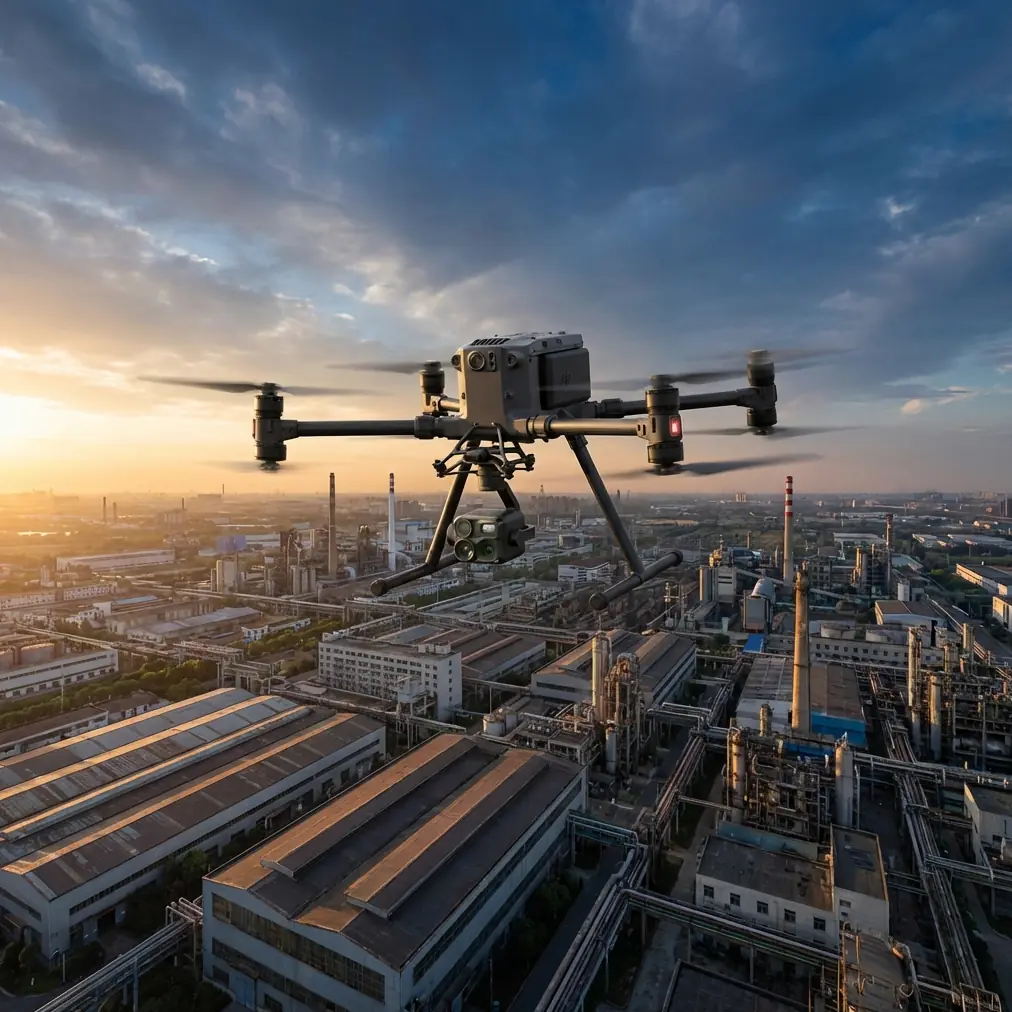
Matrice 4T for Low-Light Coastline Filming: How to Capture More Without Creating Risk
META: A practical expert guide to using the DJI Matrice 4T for low-light coastline filming, with safety lessons from a recent helicopter interference incident and tips on thermal workflows, transmission, and mission planning.
Low-light coastline filming sounds cinematic on paper. In practice, it is one of the easiest environments to get wrong.
You are dealing with fading visual reference, reflective water, shifting wind, cliff faces, unstable GNSS reception in some coastal terrain, and often the presence of other airspace users. Add emergency aircraft to that mix and the margin for error shrinks fast. A recent BBC report described Lake District rescuers condemning a drone pilot who flew close to two emergency service helicopters, with rescuers calling the flight irresponsible because it endangered a rescue. That single fact should shape how any serious operator thinks about coastal drone work after dark or near dark: image quality matters, but airspace discipline matters first.
That is exactly where the Matrice 4T deserves a more careful discussion. Not as a generic “best drone” talking point, but as a practical platform for operators who need to film coastlines in low light while maintaining strong situational awareness, disciplined mission structure, and useful imaging options when visible detail starts to fall away.
I approach this as an operational problem, not a spec-sheet exercise.
Why low-light coastline filming is not just a camera challenge
Most people frame low-light work around sensor performance. That is only part of the story.
Along coastlines, the environment can fool even experienced pilots. Light levels drop unevenly. Wet rock and open water absorb or scatter visual detail. Headlands can hide incoming aircraft noise until the last moment. If you are trying to capture shoreline erosion, harbor infrastructure, sea walls, or environmental conditions near dusk, you need a drone that helps you see more than the naked eye can reliably hold onto.
This is where a platform like the Matrice 4T stands apart from many camera-first drones. It is not just about producing attractive footage. It is about maintaining operational awareness when the scene becomes ambiguous.
The thermal signature side of the workflow matters here. On a coastline in low light, thermal imaging can reveal structural heat contrast, vessel presence, people on rocks, or temperature-defined boundaries that visible cameras may miss. For civilian inspection, environmental observation, and site documentation, that can turn a marginal mission into a controlled one. Competitor platforms often force operators to choose between strong visible imaging and true multi-sensor utility. The Matrice 4T’s advantage is that it lets you work with layered data instead of relying on a single visual feed that becomes less reliable as light fades.
That difference is operational, not cosmetic.
Start with the rule that prevents the worst mistake
Before camera settings, before route planning, before battery prep, lock in the non-negotiable principle:
If emergency aircraft are operating nearby, your mission stops.
The Lake District case is a useful warning because it was not an abstract airspace violation. A drone was reportedly flown close to two emergency service helicopters, and rescuers said that conduct endangered the rescue itself. For anyone filming coastlines, this is highly relevant. Coastal areas can attract search and rescue aviation, medical helicopters, and support aircraft. Even if your purpose is entirely legitimate—inspection, tourism media, harbor documentation, environmental surveying—you do not get to “share” that airspace when rescue aircraft are active.
The significance for Matrice 4T operators is simple: the better your drone is, the greater your responsibility to use its capability to deconflict early, not push closer. A robust transmission system such as O3 transmission helps maintain link stability over complex coastal geometry, but strong link quality is not permission to remain airborne when manned aircraft need uncontested access. It should instead support a more disciplined exit and recovery process.
Good operators think in abort criteria, not just capture goals.
How to set up the Matrice 4T for low-light coastline work
1. Define the mission output before takeoff
Not every coastline mission is really a “filming” mission.
Ask what the deliverable is:
- Visual documentation for infrastructure review
- Environmental change monitoring
- Shoreline condition mapping
- Harbor or marina asset inspection
- Tourism footage captured under controlled conditions
- Thermal-assisted observation for civilian site awareness
If the end use includes mapping or repeatable site comparison, you should plan beyond video alone. The Matrice 4T becomes more valuable when it is integrated into a documentation workflow that includes photogrammetry, GCP alignment where relevant, and thermal-reference captures at consistent intervals. That matters because coastlines change subtly and often. The point is not just to get a dramatic image at dusk. The point is to produce evidence-quality visual records that can be compared over time.
Competitors that are optimized mainly for single-pass cinematic capture often fall short here. The Matrice 4T is stronger when the mission needs both imagery and operational structure.
2. Build a low-light route with escape logic
Coastline flight paths should be simpler than operators think they need to be.
In low light, complexity multiplies risk. Fly with:
- Shorter legs
- Clear return corridors
- Minimal terrain masking
- Conservative stand-off from cliff faces
- Pre-identified emergency landing zones
- Defined “terminate now” triggers for weather or airspace activity
This matters especially in locations where rescue aviation may appear with little warning. The BBC report’s central lesson is not merely “be careful.” It is that a poorly judged drone flight can directly interfere with urgent crewed operations. On a coastline, your route should be built around immediate descent and recovery options if aircraft activity changes.
The Matrice 4T’s mission planning benefits are strongest when used to reduce improvisation. Low-light coastal work rewards discipline more than creativity.
3. Use thermal as a decision layer, not a novelty feed
Thermal imaging is often misunderstood in content workflows. Operators either ignore it or overuse it for dramatic effect.
For coastline filming, thermal should function as a second opinion. It helps answer questions such as:
- Is there a person or vessel in a dark zone near your intended route?
- Are you seeing wave pattern, rock texture, or an actual heat-emitting object?
- Is a structure retaining heat in a way that helps document defects or water ingress patterns?
- Are you maintaining separation from activity areas that may not be obvious on visible video?
That is why thermal integration is one of the Matrice 4T’s real strengths. When the visible scene gets flat and ambiguous, thermal restores contrast in a way many competitor platforms simply cannot. The result is not only better awareness but also better judgment about whether the mission should continue.
4. Protect your link and your data
Coastal operations can be hard on signal quality. Terrain edges, harbor structures, industrial metal surfaces, and atmospheric moisture can all complicate control and transmission.
A reliable O3 transmission architecture matters because it helps maintain a cleaner operational picture when your aircraft is working in mixed line-of-sight conditions. But transmission quality alone is not the whole story. For professional users handling inspection or infrastructure footage, secure workflows matter too. AES-256 is relevant because sensitive site imagery often needs stronger data protection from capture through transfer and storage. That is especially true if you are documenting commercial ports, utilities, private marinas, or critical coastal assets within a civilian industrial context.
In other words, transmission affects safety in the moment; encryption affects trust after landing.
If your team is building a serious workflow and wants to compare setup options for this kind of operation, it may help to message a Matrice 4T specialist directly before finalizing your payload and mission profile.
5. Plan battery strategy around light windows, not maximum endurance
The temptation in low-light work is to push every minute of usable twilight. That is where mistakes happen.
A better method is to use hot-swap batteries to preserve operational momentum while still flying each sortie with a conservative reserve. This is one area where the Matrice 4T is better suited to professional coastal missions than many smaller drones. Instead of stretching a single flight into poor decision territory, you structure several short, predictable flights around the best light and the safest recovery margins.
That has two practical benefits:
- You reduce pilot pressure to “just finish the shot.”
- You maintain enough flexibility to land immediately if another aircraft enters the area.
Against competing platforms that lean heavily on single-battery efficiency but offer less professional continuity, hot-swap workflow is a real field advantage. It protects mission discipline.
A safer low-light coastline workflow with the Matrice 4T
Here is the approach I recommend.
Pre-site
Check the coastline’s terrain profile, local flight restrictions, and any patterns of emergency aviation activity. If the area is associated with rescue access routes, assume your operation may need to stop on short notice.
On site before launch
Observe the area in silence for a few minutes. Not through the controller first—through your own senses. Coastal sound carries strangely. Helicopters may be audible before they are visible, or visible only after terrain masking breaks.
Sensor setup
Configure visible and thermal views for rapid switching. Low-light success is often about confirmation, not artistic experimentation. If you are capturing structured site documentation, define fixed angles and repeated passes.
Flight execution
Keep altitude and route predictable. Avoid drifting offshore just because the signal remains strong. Good BVLOS procedures, where legally permitted and properly authorized, demand far more than technical capability. In coastal low light, uncontrolled distance adds little value unless the mission genuinely requires it and the operator has the approvals, observers, and risk controls to support it.
Abort logic
The moment you detect possible crewed aircraft activity—especially rescue helicopters—descend, clear the area, and recover. The Lake District incident shows why. A drone near emergency helicopters does not merely create annoyance. It can compromise rescue timing and aircrew safety.
Why the Matrice 4T excels here compared with lighter camera drones
For low-light coastline missions, many popular drones are excellent at one thing: making pretty images in forgiving conditions.
The Matrice 4T is better suited when conditions are not forgiving.
Its edge comes from integration:
- visible imaging for documentation,
- thermal signature awareness when visual contrast collapses,
- robust transmission for route control over uneven coastal terrain,
- secure handling via AES-256 for sensitive commercial workflows,
- and hot-swap batteries that support disciplined multi-sortie operations.
That combination matters more than isolated image quality claims. In real field work, the best drone is the one that helps the crew make better decisions as conditions deteriorate. On coastlines at dusk or dawn, that is exactly the test.
The final standard: if the mission conflicts with safety, there is no mission
Low-light filming tends to attract operators who want atmosphere. Fair enough. Coastlines at the edge of daylight can produce remarkable results.
But the strongest professional mindset is not cinematic. It is controlled.
The BBC report about the drone flown close to two emergency service helicopters is a reminder that irresponsible flying does not just break etiquette. It can endanger a real rescue. For Matrice 4T operators, that lesson should sit at the center of every low-light coastal plan. Use the aircraft’s advanced sensing, transmission, and professional workflow features to create margin, not to consume it.
That is the real value of this platform. Not simply that it can see more in low light, but that it gives skilled teams better tools to decide when to proceed, when to adapt, and when to land immediately.
Ready for your own Matrice 4T? Contact our team for expert consultation.