
Matrice 4T Guide: Filming Construction Sites in Dust
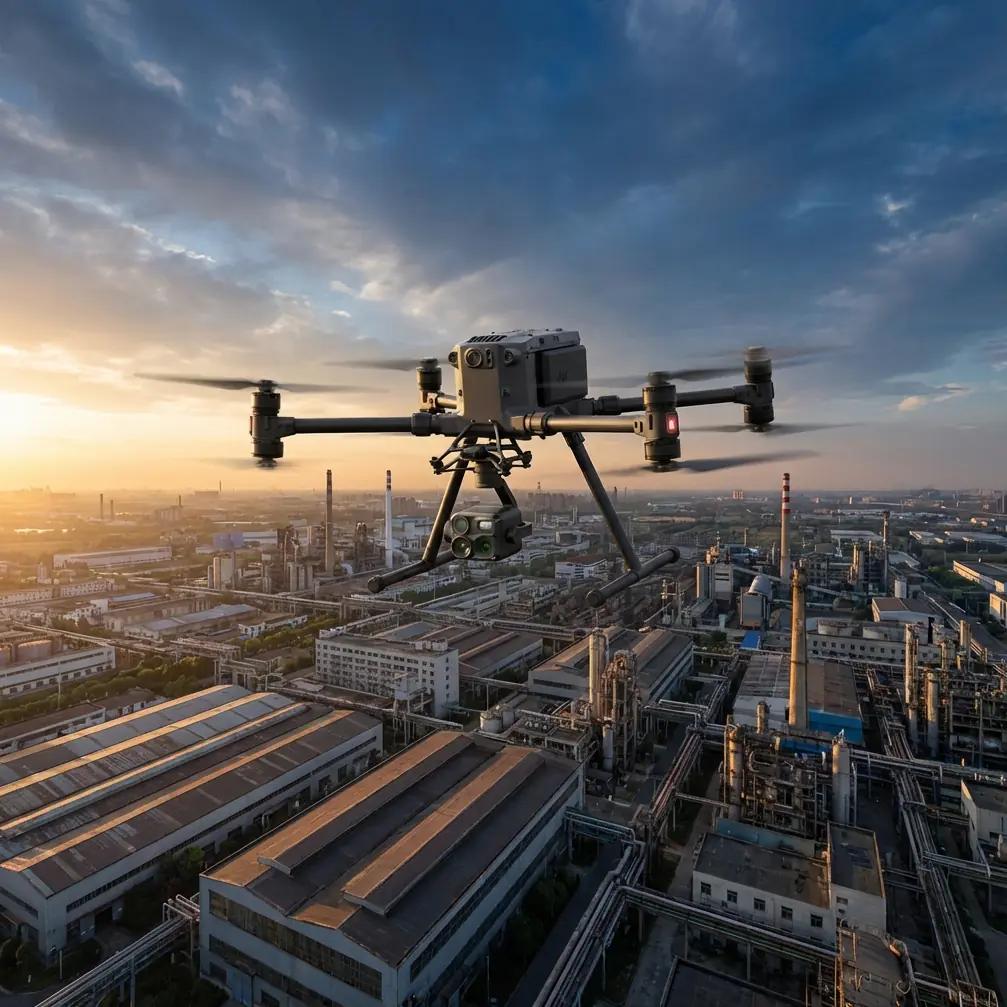
Matrice 4T Guide: Filming Construction Sites in Dust
META: Master construction site filming with the DJI Matrice 4T. Expert tips for dusty environments, thermal imaging, and professional aerial documentation workflows.
TL;DR
- IP55 rating protects the Matrice 4T from dust ingress during construction site operations
- Thermal signature detection identifies equipment heat patterns through airborne particulates
- O3 transmission maintains stable video feed up to 20km even in interference-heavy job sites
- Hot-swap batteries enable continuous filming across 45-minute flight windows per battery set
Construction site documentation requires equipment that survives harsh conditions while delivering broadcast-quality footage. The DJI Matrice 4T combines a wide-angle camera, zoom lens, thermal sensor, and laser rangefinder in a single payload—purpose-built for environments where dust, debris, and electromagnetic interference challenge lesser drones.
This tutorial walks you through configuring, flying, and post-processing construction footage using the Matrice 4T. You'll learn sensor selection strategies, dust mitigation techniques, and photogrammetry workflows that transform raw aerial data into actionable project documentation.
Understanding the Matrice 4T Sensor Array for Construction
The Matrice 4T integrates four distinct sensors into its gimbal assembly. Each serves specific construction documentation purposes.
Wide-Angle Camera Specifications
The 1/1.32-inch CMOS sensor captures 48MP stills and 4K/60fps video. Its 84° field of view covers large excavation areas in single passes, reducing flight time and battery consumption.
For dusty conditions, the wide lens excels at establishing shots taken from higher altitudes—typically 80-120 meters AGL—where particulate density decreases significantly.
Zoom Camera Applications
The 56× hybrid zoom (8× optical) isolates specific construction elements without flying closer to active work zones. This capability proves essential when documenting:
- Crane operations and rigging configurations
- Concrete pour quality from safe distances
- Scaffolding integrity assessments
- Equipment identification across sprawling sites
Thermal Imaging for Construction Monitoring
The 640×512 thermal sensor detects temperature differentials invisible to standard cameras. On construction sites, thermal signature analysis reveals:
- Curing concrete temperature gradients indicating potential cold joints
- Equipment overheating before mechanical failure
- Subsurface moisture intrusion in completed structures
- Electrical system anomalies in temporary power installations
Expert Insight: Schedule thermal flights during early morning hours when ambient temperatures remain stable. The 30°C+ temperature differential between sun-heated materials and shaded areas during midday creates false readings that complicate analysis.
Laser Rangefinder Integration
The integrated rangefinder provides 3-1200m distance measurements with ±0.2m accuracy. This data embeds directly into image metadata, enabling precise photogrammetry calculations without ground control points for preliminary surveys.
Pre-Flight Configuration for Dusty Environments
Dust infiltration remains the primary threat to drone longevity on construction sites. The Matrice 4T's IP55 environmental protection resists particulate ingress, but proper preparation extends component lifespan.
Gimbal and Sensor Preparation
Before each flight session:
- Inspect gimbal seals for debris accumulation around the rubber gaskets
- Clean lens surfaces with microfiber cloths and lens-safe compressed air
- Verify cooling vent clearance—dust buildup restricts airflow and triggers thermal throttling
- Check propeller blade edges for chips that create imbalance vibrations
Firmware and Encryption Settings
Construction documentation often contains proprietary project information. Enable AES-256 encryption for all recorded media through the DJI Pilot 2 application. This military-grade encryption protects footage if the drone or storage media is lost or stolen.
Update firmware before arriving on-site. Construction zones frequently lack reliable cellular connectivity for large downloads.
Flight Planning and Execution Strategies
Effective construction documentation requires systematic flight planning that accounts for site-specific hazards and documentation objectives.
Airspace and Obstacle Assessment
Construction sites present unique airspace challenges:
- Tower cranes with rotating booms create dynamic obstacles
- Temporary structures may not appear on satellite imagery
- Material deliveries introduce unpredictable vehicle movements
- Dust plumes from excavation reduce visual line of sight
Conduct a ground-level site walk before initial flights. Photograph crane positions, note boom swing radiuses, and identify safe launch/recovery zones away from active work areas.
Optimal Flight Altitudes for Dust Mitigation
| Documentation Type | Recommended Altitude | Dust Impact | Sensor Selection |
|---|---|---|---|
| Site overview | 100-150m AGL | Minimal | Wide-angle |
| Progress documentation | 60-80m AGL | Low | Wide-angle + Zoom |
| Detail inspection | 30-50m AGL | Moderate | Zoom + Thermal |
| Equipment monitoring | 20-40m AGL | High | Thermal + Zoom |
| Photogrammetry mapping | 80-120m AGL | Low | Wide-angle |
Pro Tip: When filming during active earthmoving operations, position your flight path upwind of dust sources. The Matrice 4T's forward-facing sensors remain cleaner, and particulates blow away from your recovery zone rather than coating equipment during landing.
Battery Management for Extended Operations
Here's a field-tested approach that maximizes documentation coverage: carry minimum four TB65 batteries for serious construction documentation sessions.
The Matrice 4T's hot-swap capability allows battery replacement without powering down the aircraft. However, the 90-second swap window demands practiced technique. During my first major infrastructure project, I lost critical footage when fumbling a battery change caused an unexpected shutdown.
Optimal battery rotation protocol:
- Fly first battery to 25% remaining (approximately 38 minutes in moderate conditions)
- Land and immediately swap to fresh battery
- Place depleted battery in shaded charging station
- Resume flight within 120 seconds to maintain thermal equilibrium in motors
- Rotate through battery inventory, allowing 45-minute cooling periods between charges
This rotation supports 4+ hours of continuous site coverage with a four-battery kit.
Photogrammetry Workflows for Construction Documentation
The Matrice 4T produces imagery suitable for professional photogrammetry processing when configured correctly.
Camera Settings for Mapping Flights
Configure the wide-angle camera for maximum photogrammetric accuracy:
- Shutter priority mode: 1/1000s minimum to eliminate motion blur
- ISO: Auto with 100-400 range to minimize noise
- Image format: DNG raw for maximum post-processing flexibility
- Interval: 2-second capture for 70% frontal overlap at typical mapping speeds
Ground Control Point Considerations
While the laser rangefinder enables GCP-free preliminary surveys, high-accuracy deliverables require ground control. Place minimum 5 GCPs distributed across the site:
- Four points defining the survey boundary corners
- One central point for scale verification
- Additional points for elevation changes exceeding 10 meters
The Matrice 4T's RTK-compatible positioning achieves 1.5cm horizontal accuracy when connected to base station corrections, reducing GCP requirements for routine progress documentation.
Processing Software Compatibility
Matrice 4T imagery processes successfully in major photogrammetry platforms:
- DJI Terra: Native integration with flight logs and sensor calibration data
- Pix4D: Full thermal and visual processing support
- Agisoft Metashape: Manual lens profile import required
- RealityCapture: Excellent performance with high-overlap datasets
BVLOS Considerations for Large Construction Sites
Sprawling construction projects may require beyond visual line of sight operations. The Matrice 4T's O3 transmission system maintains 1080p/30fps live feed at distances exceeding practical VLOS limits.
Before conducting BVLOS flights:
- Verify regulatory authorization for your jurisdiction
- Establish visual observer positions with radio communication
- Configure automatic return-to-home triggers for signal degradation
- Document obstacle clearance altitudes across the entire flight area
The 20km maximum transmission range far exceeds typical construction site dimensions, providing substantial link margin for interference-heavy environments with active radio equipment.
Common Mistakes to Avoid
Neglecting lens cleaning between flights: Dust accumulation compounds rapidly. A single particle creates expanding scratches when the gimbal moves.
Flying during peak dust generation: Schedule flights during work breaks or shift changes when earthmoving equipment sits idle.
Ignoring thermal calibration: The thermal sensor requires 15-minute warmup for accurate temperature readings. Rushing this process produces unreliable data.
Overcomplicating flight patterns: Simple grid patterns with consistent altitude produce better photogrammetry results than elaborate artistic movements.
Storing batteries fully charged: TB65 batteries degrade faster at 100% charge. Store at 40-60% for periods exceeding one week.
Frequently Asked Questions
How does dust affect the Matrice 4T's thermal sensor accuracy?
Airborne particulates create thermal interference patterns that reduce effective detection range. The 640×512 resolution maintains usable imagery through moderate dust, but heavy particulate concentrations require altitude increases of 20-30 meters to restore thermal signature clarity. The sensor's 40° field of view helps by allowing higher-altitude operation while maintaining subject coverage.
Can the Matrice 4T operate in rain on construction sites?
The IP55 rating protects against water jets from any direction, enabling operation in light rain. However, water droplets on lens surfaces degrade image quality significantly. Thermal imaging remains functional in rain since infrared radiation penetrates water droplets more effectively than visible light. Avoid flying in precipitation exceeding 10mm/hour intensity.
What file sizes should I expect from construction documentation flights?
A typical 45-minute mapping flight generates 15-25GB of raw imagery at 2-second intervals. Thermal data adds approximately 3GB per hour in radiometric format. Plan storage accordingly—the Matrice 4T supports microSD cards up to 256GB, sufficient for full-day operations without card swaps.
Elevating Construction Documentation Standards
The Matrice 4T transforms construction site documentation from basic progress photography into comprehensive project intelligence. Its multi-sensor payload captures visual, thermal, and spatial data simultaneously—eliminating multiple flight requirements and reducing total site disruption.
Mastering dusty environment operations requires attention to equipment maintenance, strategic flight timing, and systematic battery management. The techniques outlined here represent field-tested approaches refined across dozens of infrastructure projects.
Construction documentation demands reliability above all else. The Matrice 4T delivers that reliability through robust environmental protection, redundant transmission systems, and sensor integration that simplifies complex workflows.
Ready for your own Matrice 4T? Contact our team for expert consultation.