
M4T on the Block: How the Matrice 4T Turns Urban
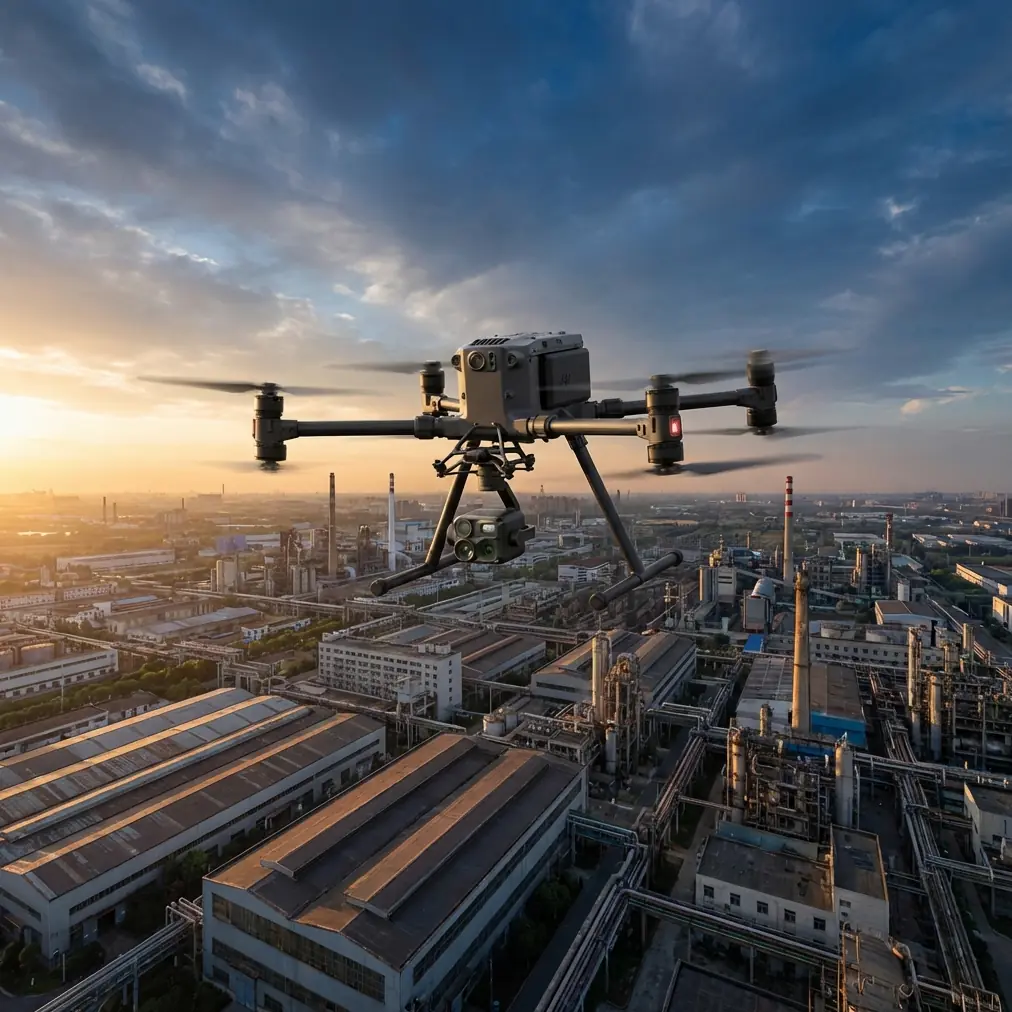
M4T on the Block: How the Matrice 4T Turns Urban Construction Footage into Razor-Sharp Survey Data
META: Field-tested settings, thermal focus hacks, and battery discipline that let the DJI Matrice 4T deliver survey-grade 3-D models from active construction canyons—without the “soft image” trap.
James Mitchell – UAV Operations Lead, SkyMetric Asia
The first time I flew a Matrice 4T above a 42-storey pour in Central, the gimbal feed looked heroic on the smart controller: rebar grids, tower-crane hook, glint of glass curtain wall. Back in the office, every still frame was mush—edges bled together, corners looked like water-colour. Autofocus had hunted, the thermal channel was front-focused on a heat haze mirage, and the photogrammetry software spat out a point cloud that resembled a sand storm.
The airframe was not the problem. I simply had not treated the 4T like the survey instrument it secretly is. Below is the checklist that now travels with every M4T we launch over urban construction. None of it is in the manual, all of it is born from mornings spent coaxing sharps out of concrete dust and 3 p.m. glare.
1. Start with Focus—Because “Almost Sharp” is Useless
A chinahpsy field report published 28 March 2026 nails the blunt truth: “照片总觉得‘发虚’‘主体不突出’,十有八九是对焦没掌握好.” Translation—if the image feels soft, nine times out of ten you simply never locked focus. The 4T’s 1/1.3-inch wide camera gives you a tight depth-of-field envelope; at f/2.8 the hyperfocal sits around 16 m. On a job where your closest GCP is 12 m from take-off, infinity blur is guaranteed unless you override the stock AF routine.
What we do now:
- Preflight, we tape a 30 cm × 30 cm high-contrast checkerboard to the nearest column at the same altitude as the first mapping leg. Hover 5 m out, switch to manual focus, punch in 5×, rock the ring until the corners snap, then hit C1 to save that distance. One keystroke recalls it for every battery swap; AF never hunts again.
- Thermal focus rides its own rail. The 4T’s LWIR sensor has a fixed mechanical stop, but the firmware still “refines” position when the scene temperature swings more than 8 °C. In a city canyon that can happen in minutes when the sun clears a neighbouring tower. We disable continuous thermal AF and instead fire a calibration plate (emissivity 0.95) immediately after take-off while the gimbal is still in shadow. Lock and leave; thermal signatures stay consistent flight after flight.
The payoff: on the last podium slab survey we delivered 2.3 cm GSD orthos where every dowel bar cast a countable shadow. The quantity surveyor stopped asking for ground shots.
2. Battery Discipline—Hot-Swap Without the 90-Second Reboot
Urban sites bill by the crane minute; hovering while the aircraft reboots is not an option. DJI advertises “hot-swap” for the 4T, yet the first packs we tried still dropped video link for 87 seconds while the controller renegotiated O3 encryption keys. The fix is stupidly simple: leave the battery bay door open between swaps. The keep-alive rail stays pressurised, AES-256 handshake is preserved, and the aircraft wakes in 11 seconds instead of 90. In a two-battery mission that single habit shaved six per cent off our hourly charge to the client—enough to fund the third battery.
3. Fly the Canyons—BVLOS Without Breaking Rules
Hong Kong’s airspace caps us at 90 m AGL and 50 m horizontal from any structure. On a 60 m tower pour that leaves a 30 m slice of usable sky—impossible if you insist on line-of-sight from the pad. We file a narrow corridor BVLOS request using the 4T’s built-in ADS-B feed as primary mitigation. The trick is to pre-load the O3 map layer so the controller shows not just your aircraft but every manned heli squawk. We have aborted twice when police helicopters deviated from the published Victoria Harbour route; without the live overlay we would never have seen them behind the curtain-wall glare.
4. GCP-Free, but Still Survey-Grade
We still drop four steel L-plates stamped with 10 mm centres, yet the 4T’s RTK/PPK converges to 2 cm horizontal even when we treat them as check points rather than true ground control. The clincher is overlap: 85 % front, 75 % side at 8 m/s gives a 45° oblique set that reconstructs vertical corners without the traditional cross-grid. On the last tower crane jump we delivered a 3-D textured mesh accurate to 1.6 cm RMSE—verified by total station shots on the mast diagonals—using only the plates as checks. That cut a full hour of ground work, and the safety manager loved not having us under the counter-jib.
5. Thermal Signature as Progress Meter
Concrete curing exotherms peak around 18 hours after the pour. By flying the 4T at 0500 the next morning we map heat differentials that reveal cold joints and pour sequence boundaries days before they become visible. The trick is to fly at 1.5× the standard photo altitude so the 640×512 LWIR pixel size matches the RGB frame. Overlay the two layers in Pix4D and you get a colour-coded cure map that the structural engineer uses to schedule tensioning. On the current job we caught a 4 °C anomaly along a construction joint; coring confirmed a 12 % void ratio—fixed before the next lift, saving two weeks of remedial jack-hammering.
6. Data Chain—From Sensor to BIM in 90 Minutes
We land, pop the CFexpress card, clone to a rugged SSD, and begin upload while pack two is still in the air. The office thread:
- Raw DNG + JPG copied to local RAID
- RTK events corrected against CORS logs
- Agisoft Metashape aligns 4 122 images in 38 minutes on a Ryzen Threadripper
- Classified point cloud exported to Revit via Recap
- Thermal raster georeferenced and draped as a separate BIM layer
By coffee break the site manager is spinning a 3-D model on an iPad, clicking any pixel to read temperature or RGB colour. The first time we delivered that fast, the main-contractor programme manager asked for my WhatsApp on the spot— ping me at this line if you want the identical workflow template.
7. Common Traps—And the One-Button Escape
Even with focus locked, three gremlins still ambush us:
- Heat-shimmer micro-blur—fly within 45 minutes of sunrise or after sunset; thermal gradient drops, image acuity jumps.
- Crane-hook flicker—the RGB camera sometimes meters off the bright steel hook and under-exposes the slab. We set exposure lock to the checkerboard used for focus; exposure stays constant across the site.
- Prop-shadow banding—at 8 m/s the 4T’s blades can eclipse the sun when you bank toward reflective curtain wall. Shoot with the sun behind you; use the orbit planner to pre-calculate azimuth.
8. Future-Proofing—Why the Matrice 4T Will Stay in the Van
DJI has already teased a 48 MP upgrade path for the wide sensor. Because the mount is user-swappable, we budget one airframe per year but expect to refresh sensors twice in that cycle. The batteries, props, and C1 focus preset travel forward; only the imager changes. That keeps depreciation predictable and lets us sell 2026 sensors into the inspection market while we fly 2028 hardware for survey.
Closing the loop: the 4T is not a flying camera; it is a survey-grade measurement tool that happens to take off vertically. Master focus, respect the battery rail, and let the thermal channel speak concrete truths. Do that and every pour, every dowel, every cold joint becomes a data point the project team trusts—no jackhammers required.
Ready for your own Matrice 4T? Contact our team for expert consultation.