
Matrice 4T for Mountain Field Work: A Practical Guide
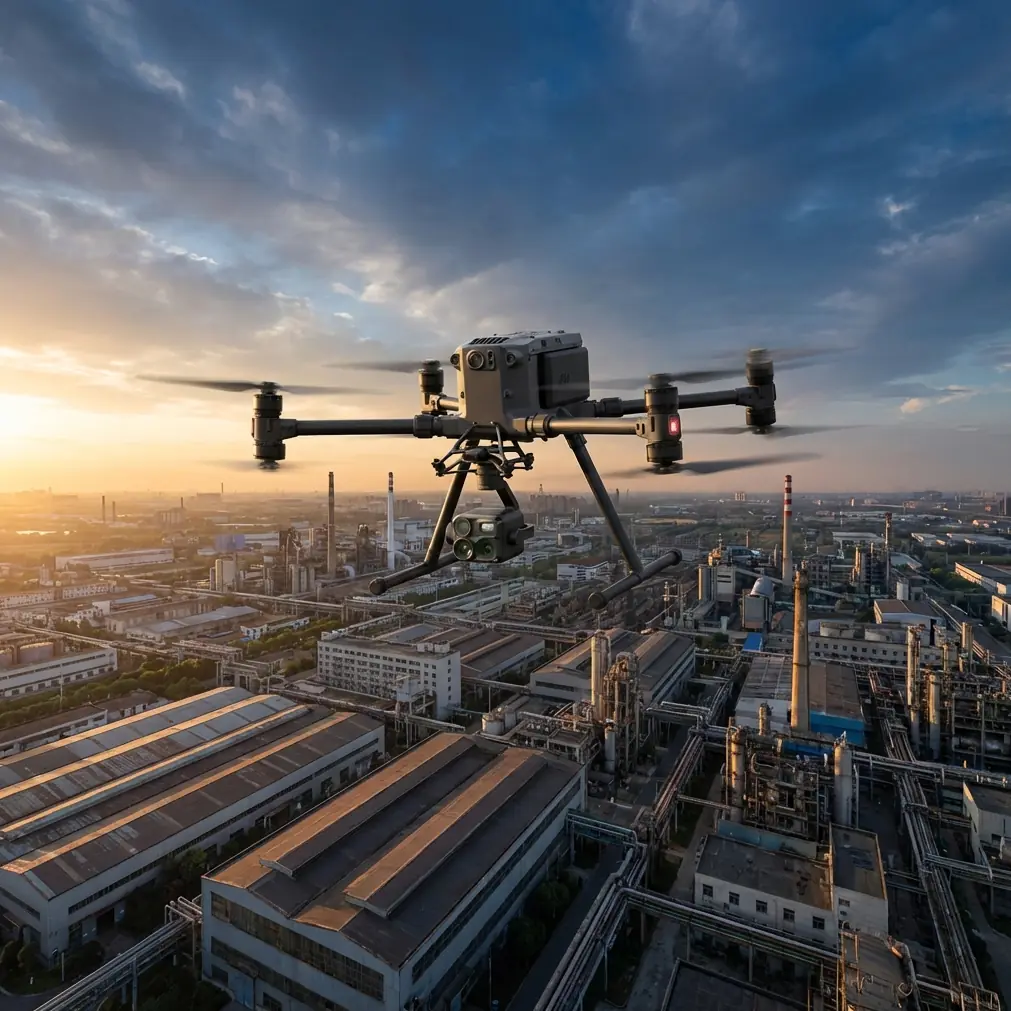
Matrice 4T for Mountain Field Work: A Practical Guide to Cleaner Data, Safer Flights, and Better Thermal Results
META: Expert how-to guide for using the Matrice 4T in mountain field filming, covering thermal workflow, interference handling, flight environment factors, and mission planning for reliable commercial results.
By Dr. Lisa Wang, Specialist
Mountain field work looks easy from the launch point. It rarely stays that way once the aircraft is in the air.
Terraced farmland, tree lines, exposed ridges, irrigation cuts, and fast-changing winds create a flight environment that punishes sloppy setup. If you are using the Matrice 4T to film fields in mountain terrain, the difference between usable output and a wasted day often comes down to details that operators tend to rush: launch profile, antenna orientation, environmental interpretation, and battery strategy.
This guide is built around two technical reference points that matter more than they first appear.
The first is a helicopter design load table showing how structural loads shift sharply between vertical takeoff, accelerated flight, and forward flight at different speeds such as 130 km/h and 180 km/h. One entry shows a tail-related load value reaching 6213 in a vertical takeoff condition, while forward-flight cases show different load distributions and a nonzero lateral component. The second reference is an atmospheric data table showing how temperature, pressure, density, viscosity, and thermal conductivity change with altitude. For example, one row lists a temperature of 269.684 K at a high-altitude condition, alongside lower air density than sea-level assumptions would suggest.
Why bring those references into a Matrice 4T article?
Because mountain field filming is not really about a camera in the sky. It is about managing changing loads and changing air. The Matrice 4T rewards operators who understand both.
Start with the mission, not the aircraft
When people say they want to “film fields,” that can mean very different deliverables:
- thermal scans for irrigation anomalies
- RGB overviews for crop progress
- orthomosaic support for photogrammetry
- slope and drainage documentation
- repeatable visual records for seasonal comparison
The Matrice 4T can cover these roles well, especially when thermal signature and visible imagery both matter. But mountain farmland adds constraints. Slopes reduce your margin for line-of-sight visibility. Valleys create multipath interference. Ridge crossings change apparent wind instantly. A flight plan that works on flat land can become inefficient or unstable in terrain.
So the first step is to define the output before launch. If the deliverable is thermal analysis, the flight geometry should be optimized for consistency, not cinematic movement. If the goal is photogrammetry, overlap, speed discipline, and GCP placement matter more than dramatic perspective.
That sounds obvious. In practice, many failed field missions start because the operator launches “to get a look” and only later decides to collect structured data.
Why mountain launches deserve more respect
One of the most useful ideas hidden in the helicopter load reference is simple: takeoff mode changes the load picture significantly.
In the table, vertical takeoff and forward-flight states are not just variations of the same thing. The force and moment distribution changes in measurable ways. One vertical takeoff case shows major load values including 1485 and 985 at defined positions, with a larger moment-related figure of 6213 elsewhere in the system. By the time the aircraft is in forward flight at 130 km/h or 180 km/h, the loading pattern shifts and additional asymmetries appear.
You are not flying a helicopter, but the operational lesson carries over directly to the Matrice 4T: transition phases deserve special discipline.
On a mountain field mission, that means:
Do not rush the lift-off.
A careful vertical climb to a clean hover gives you time to verify control stability, satellite quality, image feed, and wind behavior above local obstacles.Avoid aggressive acceleration immediately after takeoff.
Mountain terrain can hide rotor wash recirculation, edge turbulence, and abrupt crosswind effects. The load table reminds us that the aircraft’s stress picture changes when you transition into speed. Even a stable hover does not guarantee a clean acceleration path.Use a hover check before committing to the route.
Hold long enough to confirm that the Matrice 4T is not fighting for position due to local gusts or electromagnetic noise.
For field teams under time pressure, this can feel slow. It is still faster than re-flying a mission because the first leg was compromised.
The air itself changes your results
The atmospheric reference is equally relevant. It lists environmental variables such as temperature, density, viscosity, and thermal conductivity at altitude. One sample row shows 269.684 K, which is roughly -3.466°C, in a higher-altitude condition. Another pattern across the table is more important than any single number: as altitude increases, air density drops while other properties shift with it.
That affects a Matrice 4T mission in at least four ways.
1. Lift margin changes
Lower air density means the propulsion system works harder for the same control authority. In mountain environments, this can show up as:
- longer climb times
- less crisp braking
- higher battery draw on exposed ridges
- reduced confidence margin during gusts
If you are filming fields on stepped terrain, resist the temptation to fly every leg at the same speed you would use near sea level.
2. Thermal interpretation changes
Thermal work is never just about the camera. It is about the environment the camera is measuring through. Air temperature, ground heating, and heat transfer conditions all shape the thermal signature you see. The reference table’s inclusion of thermal conductivity and temperature reminds us that mountain thermal surveys can shift fast between shaded slope, sunlit terrace, and rocky boundary.
That matters operationally because a “hot” patch in one field may be a genuine irrigation issue, while an equally bright area on a neighboring slope may reflect exposure timing or surface composition. The Matrice 4T gives you the thermal view, but your mission timing determines whether that view is diagnostic or misleading.
3. Endurance planning gets tighter
Battery expectations built on flatland test flights are unreliable in mountain terrain. Colder air, altitude, repeated climbs, and holding against wind all eat into reserve. Hot-swap batteries help the Matrice 4T fit long inspection days, but they are not a substitute for conservative route design.
4. Return path assumptions break
A mission leg with a tailwind outbound can become an energy-heavy crawl on the way back from behind a ridge. That is why I advise setting decision points by battery reserve and terrain position, not by “one more pass.”
Handling electromagnetic interference with antenna adjustment
This is the issue operators often underestimate until they lose confidence in the link.
Mountain field work creates strange RF behavior. High-voltage lines near pumping stations, metal-roofed storage sheds, telecom masts on ridges, and even steep rock faces can cause reflections or intermittent interference. In valleys, the problem is not always raw signal weakness. Sometimes it is unstable signal geometry.
If you are relying on O3 transmission for clean monitoring and command continuity, antenna discipline matters.
Here is the practical method I teach:
Step 1: Establish the aircraft’s real position relative to you
Do not point the controller by habit. In mountain terrain, elevation differences can trick your sense of direction. Confirm whether the aircraft is above, below, or offset laterally from your launch point.
Step 2: Present the antenna faces, not the antenna tips
Many link problems come from operators aiming the ends of the antennas at the drone. For the strongest pattern, the broadside orientation usually matters more. Adjust so the effective antenna surfaces face the aircraft’s position in space.
Step 3: Re-orient after ridge crossings
Antenna angle that worked at takeoff may be wrong two minutes later if the aircraft has dropped behind a contour line or climbed above your original horizon.
Step 4: Watch for image-feed clues
Interference often appears first as brief video instability or control latency before a serious warning. Treat those small symptoms as actionable.
Step 5: Move your body, not just the controller
Sometimes one or two steps to the side can clear a reflection path or improve line of sight. This is particularly useful near farm vehicles, corrugated structures, or steel fencing.
Step 6: Preserve encryption while improving geometry
If your workflow requires secure data handling, maintain AES-256 transmission settings and fix the path quality physically through orientation and operator position rather than making unnecessary compromises in communications setup.
If your team wants a field-ready checklist for interference troubleshooting, I can share one directly through this quick Matrice mission support chat: https://wa.me/85255379740
Build the route around terrain, not around the map rectangle
A lot of operators still plan mountain field flights as if every site were a flat polygon. That approach creates uneven ground sample distance, inconsistent overlap, and unreliable thermal comparison.
For photogrammetry, I recommend breaking the mission into terrain-coherent blocks:
- upper terraces
- mid-slope cultivation bands
- lower drainage zones
- isolated field pockets behind ridges
This improves overlap consistency and reduces unnecessary climbs. It also simplifies GCP strategy. In mountain farmland, GCP placement should favor stable, visible points distributed by elevation, not just spread horizontally across the property. A mathematically neat GCP layout on a flat map can underperform when vertical relief is the real source of distortion.
The Matrice 4T is often selected because operators want both inspection-grade awareness and mapping utility. To get that value, the route has to respect terrain logic.
Speed discipline matters more than most pilots admit
The helicopter reference includes forward-flight conditions at 130 km/h and 180 km/h, showing that changing speed changes the load state rather than merely compressing the timetable. For a multirotor field mission, the direct lesson is not to chase speed unless the data need it.
When filming fields in mountain areas:
- fly slower on thermal passes to stabilize interpretation
- use moderate speed on terrain-following mapping legs
- reserve faster transit for deadhead repositioning in clean, open air
- reduce speed before crossing ridge edges, treelines, or temperature boundaries
A rushed mission usually creates one of two problems: blurred or inconsistent data, or extra battery consumption with no real gain.
Use thermal and RGB together, not as separate jobs
The strongest Matrice 4T field workflows are not thermal-only or visible-only. They are integrated.
A suspicious thermal signature in a mountain field might indicate:
- irrigation imbalance
- standing water in a terrace corner
- compacted access track retaining heat differently
- exposed rock under thin vegetation
- damaged drainage path
By checking thermal anomalies against RGB structure in the same mission, you can avoid false interpretation. This is especially useful when shadow movement changes the visual scene across steep terrain.
The result is not just better analysis. It is a better conversation with the grower, site manager, agronomist, or engineering consultant who has to act on the findings.
Battery rotation and launch-site choice are part of data quality
Hot-swap batteries make the Matrice 4T practical for multi-block missions, but battery changes in mountain environments should be tied to terrain segmentation, not just percentage thresholds.
A smart pattern is:
- one battery set per slope zone or field cluster
- relaunch from a location that improves line of sight when needed
- avoid stretching a single sortie across too many contour changes
Also consider whether your launch point is convenient or merely familiar. The best launch point for a mountain field mission is often the one with the cleanest visibility and lowest interference, not the one closest to the vehicle.
A note on BVLOS planning
Some operators working large agricultural valleys ask about BVLOS concepts because the field network extends beyond easy visual coverage. The real takeaway here is procedural: even if your workflow is being developed for extended-range operations, mountain terrain demands communication reliability, route segmentation, and contingency planning first. Advanced range capability means little if ridges, reflections, and altitude shifts are degrading your link quality or image confidence.
What a strong Matrice 4T mountain mission looks like
A well-run mission usually has these traits:
- a calm hover verification right after takeoff
- measured acceleration rather than an immediate sprint
- antenna adjustments made actively as the aircraft changes elevation and aspect
- route blocks matched to the terrain
- thermal captures scheduled for meaningful surface conditions
- GCPs placed with elevation awareness for photogrammetry
- battery swaps aligned to terrain sections
- conservative reserve margins for the return leg
None of that is glamorous. All of it improves results.
The core lesson from the references is that mountain operations are governed by two realities: load changes and air changes. The load table shows that different flight states produce different structural demands; the atmospheric table shows that altitude changes the working fluid your aircraft depends on. Put those together, and you get a better way to operate the Matrice 4T in the real world: fly transitions carefully, respect environmental variation, and actively manage the link.
That is how you turn a mountain field flight from a good-looking sortie into a dependable data mission.
Ready for your own Matrice 4T? Contact our team for expert consultation.