
Matrice 4T in Low-Light Forest Filming: A Field Tutorial
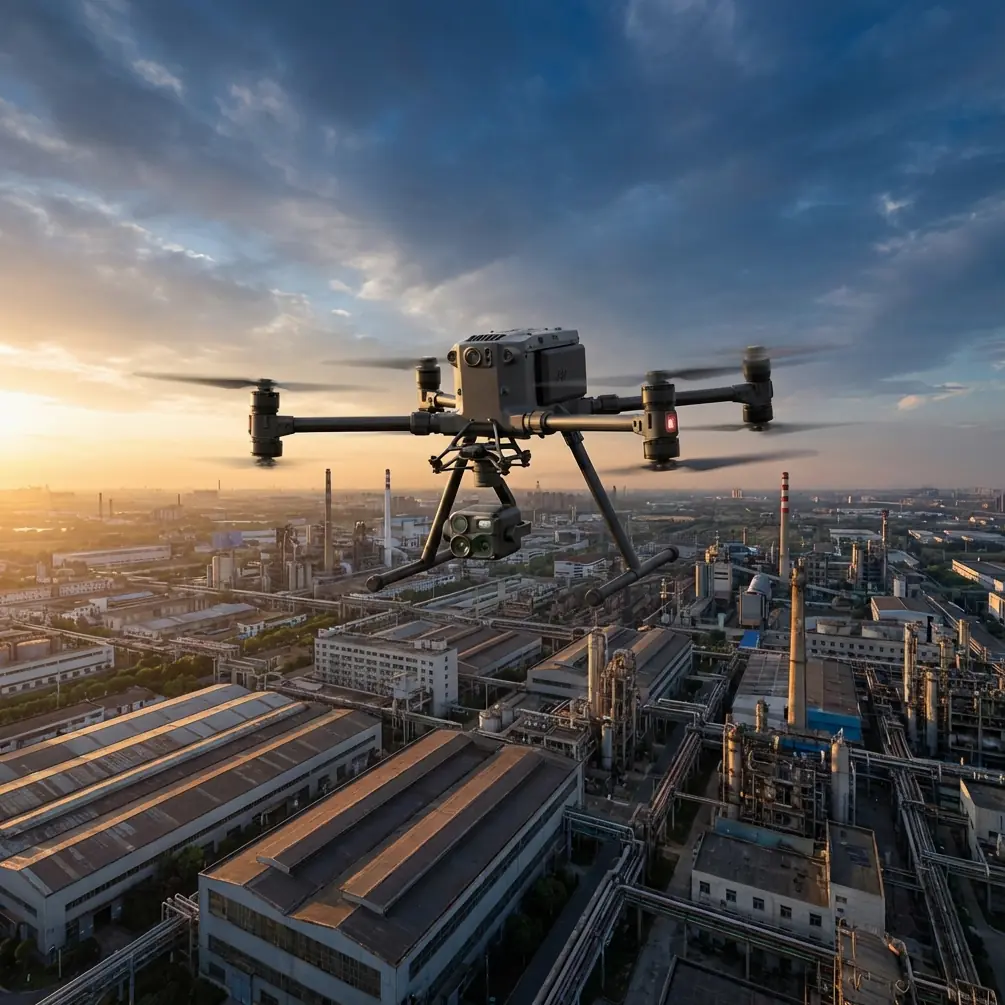
Matrice 4T in Low-Light Forest Filming: A Field Tutorial from the Tree Line
META: A practical, expert tutorial on using the Matrice 4T for low-light forest filming, with thermal workflows, O3 transmission, hot-swap battery planning, and sensor strategy for safer, cleaner results.
Forests punish weak camera decisions.
Light falls fast under a canopy. Contrast collapses. Branches hide depth cues. Moisture, mist, and moving wildlife create the kind of visual confusion that looks cinematic in finished footage and deeply inconvenient in real operations. If your brief is to film forests in low light with the Matrice 4T, the mission is not just “get usable video.” It is to build a sensor-led workflow that stays stable when the scene stops being easy.
I’ve seen crews treat low-light woodland work as if it were simply daytime flying with higher ISO. That usually ends with noisy footage, broken continuity, and missed moments. The Matrice 4T becomes much more effective when you stop thinking of it as a single camera drone and start treating it as a layered sensing platform. In forest work, that distinction matters.
This tutorial is built for that exact scenario: civilian filming in wooded terrain near dusk, dawn, or under heavy canopy, where visible light is poor and the environment is changing minute by minute.
Why the Matrice 4T fits low-light forest work
The Matrice 4T earns its place here for one reason above all: it gives you more than one way to understand the scene.
In low-light forests, a normal visual feed can fail before the mission does. A thermal signature often remains readable long after color and contrast start to flatten. That is operationally significant. It means you can continue identifying warm-bodied wildlife, recently sun-warmed ground patches, damp ravines, or human crew positions even when the visible image becomes ambiguous.
Just as important, the aircraft’s O3 transmission system helps preserve confidence when the drone is deeper into the tree line or working near terrain clutter. In forest filming, transmission quality is not just about convenience. It affects framing decisions, safety margins, and whether your pilot can hold a slow tracking line without unnecessary corrections. When signal stability degrades, footage quality usually degrades right behind it.
Security matters too, especially when filming ecological surveys, land documentation, or sensitive commercial forestry sites. AES-256 transmission protection is one of those details many teams ignore until they are flying near proprietary work zones or handling location-sensitive environmental data. If your footage and thermal overlays are part of a professional deliverable, secure transmission is not a box-tick. It is part of the chain of custody.
Start with the mission, not the camera settings
Before launch, define which of these three jobs your flight is really doing:
- Cinematic documentation — smooth visual storytelling with environmental atmosphere.
- Wildlife observation — locating and tracking animal movement without disturbing it.
- Survey-support capture — combining imagery that may later support photogrammetry, habitat mapping, or planning.
The Matrice 4T can contribute to all three, but not equally in the same pass. Trying to get everything at once is how operators end up with footage that is artistically weak and operationally messy.
If your priority is filming, your route should be designed around clean sightlines, stable lateral motion, and predictable exposure changes. If your priority is wildlife spotting, thermal becomes your lead sensor and the visual feed confirms context. If you expect to extract mapping value later, you need disciplined overlaps, consistent altitude, and if accuracy matters, a GCP plan before the first battery leaves the case.
That last point deserves emphasis. People hear “photogrammetry” and think it only belongs to full daylight mapping missions. In reality, many forest projects blend documentation and terrain interpretation. Low-light visual footage may not be ideal for precision reconstruction, but a properly planned companion pass, tied to GCP markers gathered earlier, can make your film mission far more useful to ecologists, foresters, and land managers.
Sensor strategy under canopy
Low-light filming in forests is not just hard because it is dark. It is hard because the scene contains mixed temperature zones, layered vegetation, and interrupted lines of sight.
Here is the workflow I recommend.
1. Use the visual camera to establish composition
Your visible-light view still tells the story. Start there when you can. Look for edge definition on trunks, reflective wet leaves, stream lines, or footpaths that can guide motion.
Keep your flight path simpler than you think it needs to be. Forests create visual complexity for free. A straight creeping reveal can look stronger than an elaborate move because the environment is already doing the work.
2. Use thermal to solve ambiguity
Thermal is not only for search tasks. In low-light forest filming, it functions as a decision-support layer.
If the visual feed shows a dark interruption near the understory, thermal can tell you whether it is a cold void, a rock, pooled water, or an animal. That distinction matters both for the footage and for flight judgment. It changes whether you hold position, climb, or keep the move.
A thermal signature can also reveal life in scenes that appear visually still. This is especially valuable if your project includes wildlife-sensitive storytelling.
3. Switch, don’t blend mentally
Operators often make a subtle mistake: they half-watch both feeds and commit fully to neither. Don’t do that. Make the visible feed your storytelling reference and thermal your confirmation layer, or reverse it for wildlife observation. Clear hierarchy makes better decisions.
A real forest example: the deer at the creek edge
One of the most useful low-light sessions I’ve supervised involved a reforestation site bordered by a narrow creek and dense secondary growth. The team wanted atmospheric twilight footage for an environmental update. Nothing dramatic. Just the site, the canopy, and the water.
On the visual feed, the creek bend looked empty except for a dark cluster near the bank that could easily have been fallen brush. Thermal told a different story. There was a distinct warm-bodied shape standing just inside the cover, then a second one several meters behind it. Two deer had moved into the opening.
That changed the entire flight.
Without thermal, a pilot might have continued a lower lateral move toward the bank to improve composition. With thermal confirmation, the crew widened the stand-off distance, climbed slightly, and shifted to a gentler orbit that kept the animals in frame without pressing them. The result was stronger footage and less disturbance.
This is where the Matrice 4T is at its best in civilian field work. The thermal signature did not just “spot wildlife.” It directly informed safe framing, ethical spacing, and narrative value.
Transmission discipline matters more in forests than in open ground
Tree trunks, moisture, elevation changes, and canopy density are all enemies of clean control links. In open farmland, you can often get away with sloppy antenna orientation and casual route planning. In woodland, not so much.
The Matrice 4T’s O3 transmission is a meaningful advantage here because forest filming often involves partial masking of the aircraft by terrain or vegetation. A stronger, cleaner link means fewer micro-pauses in your decision-making. Those pauses are expensive. They create overcorrections, broken camera movement, and hesitation at exactly the wrong time.
Practical advice:
- Position your takeoff point on the best available rise, not the easiest flat patch.
- Keep your route shaped around likely signal lanes, such as creek corridors, service tracks, or canopy breaks.
- Do not push distance simply because the aircraft can. Forests punish optimism.
If your project planning includes complex terrain or extended route segments, discuss your operational setup with an experienced team before flying; a quick field planning exchange via this WhatsApp line can save a wasted shoot day.
Battery planning: why hot-swap changes the way you cover a forest
Low-light windows are short. Twilight color can improve for ten minutes, then collapse. Wildlife activity can appear suddenly, then vanish. You do not want to be rebuilding your entire mission rhythm every time you land.
That is why hot-swap batteries matter operationally. They shorten turnaround and let you preserve continuity across a sequence of short, deliberate sorties. In forest filming, that usually produces better results than trying to stretch one oversized flight plan.
I prefer dividing the mission into three battery blocks:
- Block 1: recon and thermal scouting
- Block 2: primary visual capture
- Block 3: corrective pickup shots and alternate angles
That structure keeps your decision-making clean. By the time Block 2 begins, you already know where wildlife is moving, where mist is forming, and which sections of canopy are swallowing detail. Hot-swap capability supports that rhythm by reducing dead time between those phases.
Can you use the Matrice 4T for BVLOS-style planning?
For regulated operators, BVLOS may be part of the broader planning language, especially in commercial forestry or environmental monitoring. But even when you are flying within your local visual rules, thinking in a BVLOS-style way improves the mission.
What do I mean by that?
It means planning communications, contingency landing zones, battery reserves, terrain masking risks, and route logic as if the environment will become less forgiving than expected. Forests often do. Mist thickens. Bird movement changes. The visual scene becomes flatter than the forecast suggested.
A disciplined forest mission should include:
- a pre-identified return corridor
- alternate climb-out directions
- a signal recovery plan
- conservative reserve margins
- crew communication roles if observer support is used
This is less glamorous than talking about “cinematic forest footage,” but it is what preserves the mission when light and terrain start removing options.
When photogrammetry belongs in a filming mission
Not every low-light forest shoot needs photogrammetry. But some should prepare for it.
If your client may later want erosion tracking, tree-line comparisons, trail documentation, or habitat change records, gather enough structured imagery to support future reconstruction or at least comparative analysis. Pair that with GCP measurements if positional reliability matters.
GCP use is especially significant in forest environments because tree cover and uneven ground can complicate geospatial confidence. Even if your twilight filming pass is primarily artistic, a properly designed companion capture can turn the same field deployment into a far more valuable dataset.
That is one of the smartest ways to use a Matrice 4T in professional practice: not as a single-purpose camera platform, but as a field asset that can support visual storytelling, thermal interpretation, and survey-adjacent documentation in one coordinated operation.
Practical camera and flight habits that actually help
Some habits matter more than menu diving.
Fly slower than the forest looks
A forest scene contains dense visual information. Slow movement improves readability and reduces the risk of drift corrections entering the shot.
Climb before you commit
If you are uncertain about branch spacing, hidden terrain, or wildlife presence, gain a little altitude first. Thermal and visual interpretation both improve when you are not forcing a low line too early.
Rehearse one hero move
Do not improvise your most important shot at the best light moment. Use an earlier pass to test it while conditions are still forgiving.
Let thermal inform ethics
If you detect animals through thermal, do not treat that as permission to push in. Treat it as a cue to back off intelligently and work from a respectful stand-off.
Protect your data
AES-256-secured transmission is not just a technical spec on paper. If your project involves protected habitats, client-sensitive land use, or proprietary forestry work, secure signal handling is part of professionalism.
The Matrice 4T is strongest when you let each system do its job
The operators who struggle with low-light forest filming usually want one sensor to solve everything. It won’t.
Visible imaging gives you mood, structure, color, and narrative. Thermal gives you certainty when the scene turns deceptive. O3 transmission protects your confidence in cluttered terrain. AES-256 supports secure professional workflows. Hot-swap batteries keep your timing intact when the best light window is brief. And if the mission has a survey dimension, photogrammetry planning and GCP control can extend the value of the entire deployment.
That combination is what makes the Matrice 4T so effective in woodland work. Not because it magically eliminates the challenges of low light, but because it gives a skilled crew multiple ways to read the forest when one channel is no longer enough.
If you’re preparing for your first serious dusk canopy mission, remember this: the best forest footage often comes from restraint. Slow routes. Clear priorities. Sensor discipline. Respect for what may be moving below the trees, even when the eye cannot see it yet.
Ready for your own Matrice 4T? Contact our team for expert consultation.