
Matrice 4T in Low-Light Highway Filming: A Field Report
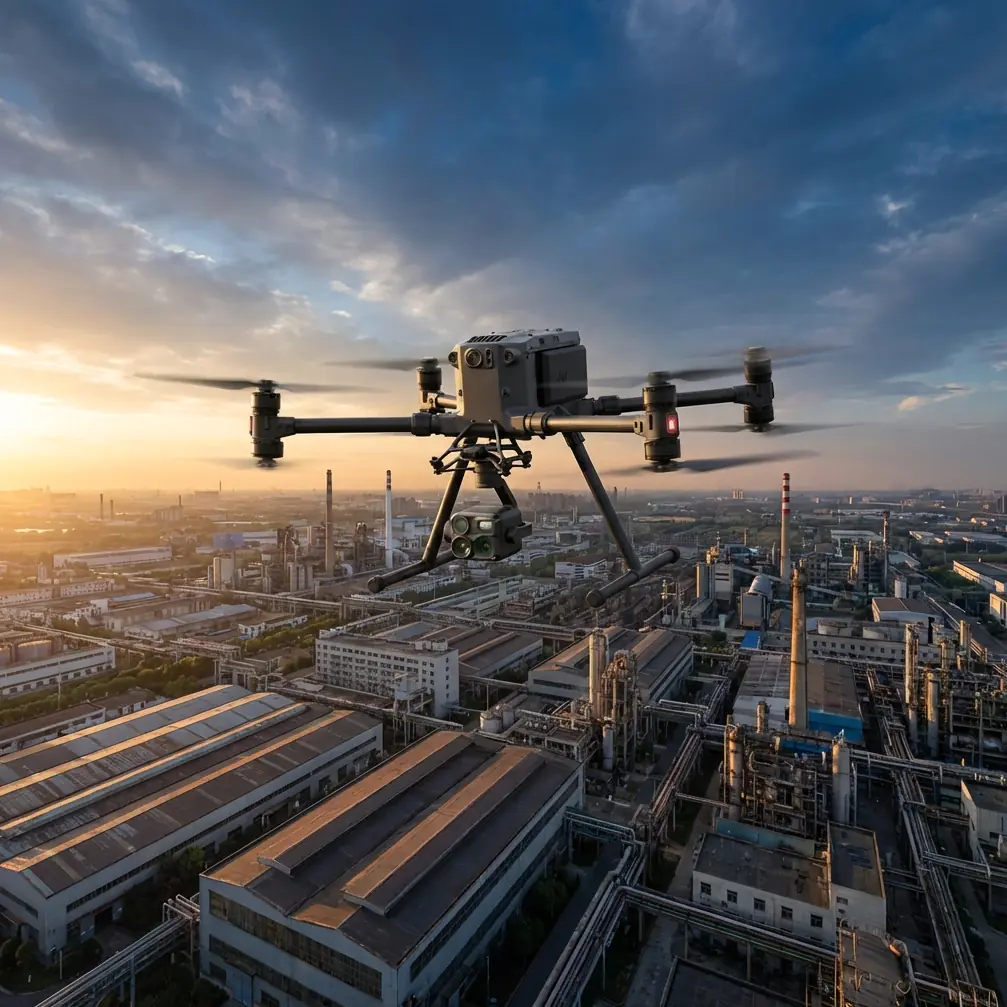
Matrice 4T in Low-Light Highway Filming: A Field Report from the Edge of Visibility
META: Expert field report on using the Matrice 4T for low-light highway filming, with practical insight on thermal detection, transmission reliability, flight discipline, and why fatigue-aware operations matter.
I learned the hard way that filming highways after sunset is not really a camera problem. It is a decision problem.
A few years ago, on a long transport corridor shoot, our team had the aircraft, the lenses, the permits, and a clean creative brief. What we did not fully respect was how quickly low-light conditions turn every small uncertainty into an operational drag. Vehicle flow becomes harder to read. Surface defects disappear until headlights strike them at the right angle. The pilot starts compensating for visibility loss. The observer works harder. The margin for error shrinks.
That is the context in which the Matrice 4T makes sense.
Not because it magically solves everything. It does not. What it does is reduce the number of guesses you need to make when the road, the environment, and the available light stop cooperating.
For teams filming highways in low light, that matters more than headline specs.
Where the Matrice 4T changes the job
The first shift is obvious once you fly it over a roadway at dusk: you stop relying on a single visual interpretation of the scene.
A highway at night is deceptive. A standard optical feed can make lane lines, shoulders, barriers, standing water, and stopped vehicles blend into one flattened image. Thermal signature changes that. It does not replace visual footage, and it should not. But it gives the crew another layer of truth. Warm vehicles, recently used pavement sections, idling maintenance equipment, and people near the roadside separate themselves from the background in a way RGB alone often cannot deliver.
For filming work, that has two practical effects.
First, it improves shot planning. You can identify active zones before pushing into a tighter pass or adjusting altitude for a cleaner angle. Second, it improves crew coordination. The pilot, payload operator, and visual observer are not debating what they think they saw. They have more evidence in real time.
On roads, especially in low light, that lowers friction in the cockpit and on the ground.
Why display behavior still matters in a modern drone workflow
This is where older aviation thinking still has value.
One of the reference materials I reviewed comes from a Chinese aircraft design handbook on avionics and instruments. It describes attitude and directional display parameters with some striking figures: heading, pitch, and bank indication ranges reaching 360°, and tracking response rates such as pitch not less than 90°/s and bank not less than 360°/s. At first glance, that seems far removed from a commercial UAV filming mission.
It is not.
The operational significance is straightforward. In low-visibility work, display systems are not just there to “show data.” They must update fast enough to keep the operator ahead of the aircraft. That old standard of rapid attitude tracking speaks to a discipline that still applies when flying a Matrice 4T near road infrastructure at night: the aircraft-control picture must remain coherent during quick corrections, crosswind compensation, and reframing moves.
If your display lags your maneuver, your workload jumps. If your workload jumps, your shot quality usually falls right before your safety margin does.
Modern UAV interfaces are better than legacy cockpit instruments in many ways, but the principle remains identical. Responsiveness is not cosmetic. It directly affects pilot confidence and the quality of low-light footage.
That is one reason the Matrice 4T feels more usable in difficult scenes than drones that look fine on paper but become mentally expensive to fly once the environment gets complex.
Transmission quality is not a luxury on a highway job
A highway is rarely a clean RF environment. You are dealing with moving metal, roadside structures, light poles, overpasses, electronic clutter, and sometimes long linear distances that tempt operators into stretching link confidence too far.
That is why O3 transmission is not just a brochure bullet in this use case. It changes how aggressively or conservatively you can work. Stable feed quality lets the payload operator judge motion and framing properly instead of interpreting compression artifacts as scene detail. It also helps the pilot maintain smoother movement, which matters when you are trying to produce footage that looks deliberate rather than nervous.
For infrastructure clients, reliability is part of image quality. If your live feed is unstable, your decision-making gets chopped up. You either fly too cautiously and miss the shot, or push too hard based on an incomplete picture. Neither is good field practice.
And if your workflow involves sensitive site footage, AES-256 matters as well. Not in an abstract cybersecurity presentation, but in the practical sense that roadway surveys, concession projects, logistics hubs, and contractor documentation often involve material that should not be casually exposed. Secure transmission belongs in the conversation for commercial operations.
Thermal is not only for detection. It helps narrative clarity.
Most people discuss thermal as if it were purely a utility sensor. For highway filming, that undersells it.
Thermal can add narrative structure to a project. If you are documenting nighttime maintenance, traffic management, pavement heat retention, or emergency lane closures for civil contractors or infrastructure operators, thermal imagery can reveal patterns that standard footage hides. You can show active machinery, vehicle clustering, heat gradients on recently resurfaced sections, or the human footprint around work zones with more clarity.
That does not turn every project into a thermal project. It simply means the Matrice 4T lets you build a more informative story from the same flight window.
For production teams that also need measurable outputs, this opens the door to a hybrid workflow: cinematic clips for presentation, thermal reference for operational interpretation, and photogrammetry where site conditions allow it.
The hidden lesson from helicopter fatigue science
The second reference is from a helicopter design handbook, and it may be the more relevant one.
It focuses on fatigue loading and makes a point that every serious drone team should take seriously: the most damaging loads are often not the frequent, mid-range ones. They are the less frequent high-amplitude loads, and those can distort your understanding if you only average the data. The text also notes that for a given flight state, high-amplitude loads may differ substantially between test runs, to the point that one run causes structural damage while another does not.
That is not just an engineering note for full-size rotorcraft. It has a direct operational lesson for Matrice 4T crews filming highways.
You should not evaluate your mission profile based only on what feels normal on average.
One windy reposition around an overpass. One abrupt stop after spotting an unexpected vehicle movement. One poorly judged low-altitude correction near a barrier. One rushed descent to beat a traffic break.
Those are the moments that matter.
The helicopter text also explains why simple load averaging fell out of favor: fatigue damage is not linearly proportional to load. In practical drone terms, ten easy flights do not cancel out one ugly one. That should shape how you run inspection and filming programs over time, especially if the aircraft is used repeatedly in demanding twilight or night conditions.
The Matrice 4T makes these jobs easier, but it does not repeal physics. Smooth mission design still wins.
What that means in the field
When I brief a low-light highway filming team, I now care less about isolated spec worship and more about load discipline.
With the Matrice 4T, that means:
- avoiding repeated aggressive yaw corrections just to chase moving headlights
- planning lateral movement so the aircraft is not constantly fighting to reacquire composition
- using thermal and zoom intelligently to identify points of interest before maneuvering closer
- taking advantage of hot-swap batteries to reduce rushed turnarounds
Hot-swap batteries are a bigger operational advantage than many crews realize. Battery changes are where teams start cutting corners, especially on night work. If your platform supports efficient swap procedures, you preserve rhythm. The pilot stays composed. The observer can re-check the route. The payload operator can confirm the next sequence. You are less likely to launch into the next sortie carrying the mental clutter of the previous one.
That kind of continuity improves both safety and footage consistency.
Highway filming is drifting toward data capture, not just video capture
Another reason the Matrice 4T fits this environment is that highway projects increasingly ask for more than attractive video.
Clients want measurable context. They may need corridor documentation, earthwork progress references, shoulder condition visuals, drainage pattern review, or tie-ins with earlier survey data. That is where photogrammetry enters the conversation. On some jobs, especially in low-light windows, pure mapping may not be the first task you perform. But having a platform and team mindset that can integrate photogrammetry later is valuable.
If your workflow uses GCPs for tighter alignment, your low-light filming sortie can become the reconnaissance layer that informs the next structured capture period at dawn or overcast daylight. The Matrice 4T therefore becomes part of a broader infrastructure documentation cycle rather than a single-purpose night camera.
That is a smarter way to position the aircraft on real projects.
BVLOS thinking begins before the paperwork
A lot of people use the term BVLOS too casually. For highway corridors, the concept matters because the work often extends linearly and tempts crews into thinking longer-range operations are simply a transmission question.
They are not.
BVLOS readiness is built from route design, communication discipline, observer placement, contingency planning, and a clear understanding of what the aircraft is meant to collect in each segment. A stable link and strong sensor stack help, but they do not make a weak concept strong.
What the Matrice 4T does contribute is confidence in situational awareness. In low light, that matters tremendously. If the aircraft can provide dependable visual and thermal context while maintaining a secure, stable connection, the operational conversation gets better. You spend less time compensating for uncertainty and more time executing the plan you intended to fly.
The real advantage: fewer bad decisions under pressure
That, to me, is the strongest case for this aircraft in low-light highway filming.
The best platforms do not merely expand capability. They reduce the chance of poor decisions when pressure rises.
The old avionics reference emphasized fast attitude tracking and broad display ranges. The helicopter fatigue reference warned against trusting averages and ignoring rare high-load events. Put those two ideas together and you get a very modern field rule for Matrice 4T operations:
Fly with clear, responsive situational awareness, and build mission profiles that avoid unnecessary stress spikes.
That is how you get better footage. That is also how you keep the aircraft healthier over time.
If you are building a night-road workflow and want to compare setup options or payload strategy, you can message our field team directly here.
Final take from the road
The Matrice 4T is especially valuable on highway jobs where low light makes every ambiguity more expensive. Thermal signature gives you separation when the visual scene compresses. O3 transmission helps preserve confidence across cluttered roadside environments. AES-256 supports professional handling of sensitive infrastructure material. Hot-swap batteries help maintain disciplined sortie flow rather than rushed relaunches.
And the deeper lesson from the reference materials holds up remarkably well: responsive flight information and respect for high-stress load events are not old ideas. They are exactly what make modern UAV operations work when conditions are least forgiving.
For teams filming roads after sunset, that is the difference between simply staying airborne and coming back with footage that is actually useful.
Ready for your own Matrice 4T? Contact our team for expert consultation.