
Matrice 4T for High-Altitude Highway Filming
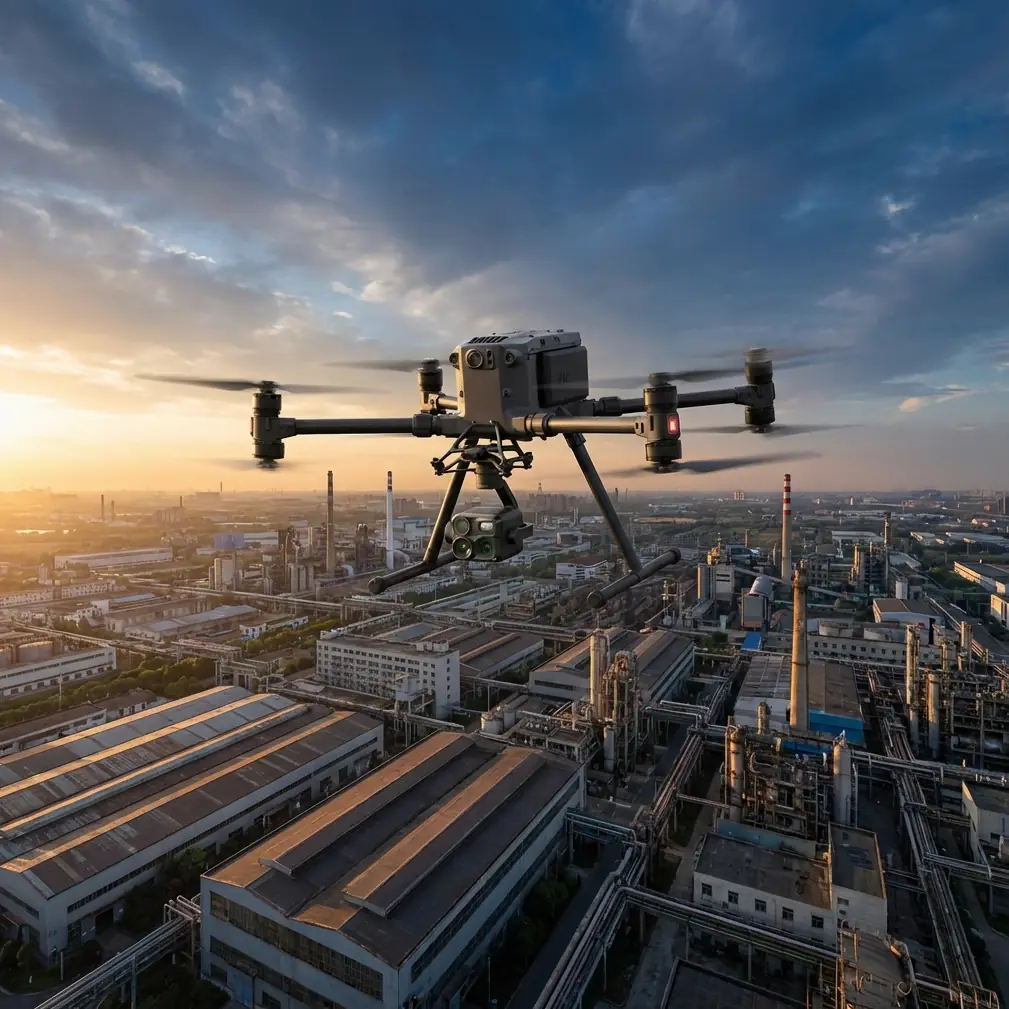
Matrice 4T for High-Altitude Highway Filming: Practical Field Methods That Protect Image Quality and Uptime
META: A field-focused Matrice 4T guide for high-altitude highway filming, covering power stability, interference control, thermal workflows, transmission reliability, and operational best practices.
High-altitude highway filming looks straightforward until the environment starts pushing back. Thin air changes battery behavior. Long linear corridors stress your link budget. Fast-moving vehicles and heated pavement create misleading thermal contrast. Add mountain wind, cold starts, and remote deployment windows, and the gap between a drone that merely flies and one that produces dependable professional footage becomes obvious.
That is exactly where the Matrice 4T earns its place.
This article is not a generic overview. It is a working guide built around two engineering ideas pulled from aircraft system design: power protection under abnormal electrical conditions, and interference testing between onboard systems. Those principles matter more than most operators realize when they are filming highways at elevation, because mountain operations amplify every weak point in a drone workflow. If your aircraft manages power cleanly and resists signal contamination, you get steadier payload performance, more reliable transmission, and fewer interruptions during critical passes.
Why the Matrice 4T fits high-altitude highway work
Highway filming at altitude is rarely just “cinematic.” It usually blends documentation, inspection, progress tracking, and thermal review. One sortie may need visible footage for public works reporting, thermal signature checks for pavement or roadside equipment, and geo-referenced imagery that can later support photogrammetry.
The Matrice 4T is strong in this mixed-mission role because it is designed as a professional sensor platform rather than a camera drone that has been stretched into industrial use. That distinction matters. Competitor platforms often do one of these jobs well. They may offer respectable RGB capture, or decent thermal, or acceptable transmission. On a mountain highway corridor, you need all three to remain stable while the aircraft is repeatedly climbing, turning along a narrow route, and operating far from an easy landing zone.
That is where the broader system design becomes the real story.
Start with the part most pilots underrate: electrical stability
One of the source references discusses aircraft power system design and makes a sharp point: under normal operation, several voltage regulation approaches may perform similarly, so engineers often choose the simpler average-voltage regulation method. But the same text warns that during an asymmetric short-circuit fault, relying only on averaged rectified voltage can drive excitation current higher and push the non-faulted phase well beyond allowable voltage, potentially damaging equipment.
That sounds far removed from drone filming. It is not.
The operational lesson is simple: normal conditions hide weaknesses. Abnormal conditions expose them fast.
When you film a highway at high altitude, “abnormal” does not have to mean a dramatic electrical fault. It can mean a cold battery that suddenly sees a heavy climb demand. It can mean a rapid payload transition from standard visual capture to thermal work while the aircraft is also fighting gusts. It can mean repeated acceleration along a corridor that keeps the power system under uneven transient loads.
The same reference also lists the protection categories that matter in a power system: overvoltage, undervoltage, overfrequency, underfrequency, and oscillation, with over-excitation protection considered in parallel systems. For the Matrice 4T operator, the practical translation is this: your filming plan should treat power quality as part of image quality. If the aircraft is working at the edges of safe electrical behavior, sensor consistency, link integrity, and mission duration can all degrade before the pilot notices a serious warning.
This is one reason the Matrice 4T stands out against lighter competitors in high-altitude work. Smaller airframes can look attractive on a spec sheet, but under mountain load they often give you less margin. Less margin means less confidence in long corridor runs, especially when you need repeatable thermal results instead of one good-looking clip.
A better preflight for mountain highway filming
High-altitude preflight should be more than checking props and battery percentages. Borrowing another idea from the aircraft electrical reference, generator connection logic in larger aircraft depends on conditions being met before the breaker closes: the switch position is correct, external power is cut off, the generator is at normal speed, and excitation control is active so voltage is established.
For Matrice 4T operations, think in the same sequence-based way.
Before launch, confirm:
- Batteries are not just charged, but temperature-ready for climb performance.
- Payload mode is set before takeoff, especially if your first pass is thermal.
- O3 transmission path is understood from the launch point to the first ridge crossing.
- Mapping or filming route is loaded and checked for terrain offsets.
- AES-256 security settings are aligned with the client’s data handling requirements.
- Any RTK, GCP, or photogrammetry workflow steps are decided on the ground, not improvised in the air.
This kind of logic-based preflight is what separates efficient operators from crews that keep relaunching because they forgot one variable.
Interference matters more than people think
The second reference comes from aircraft avionics testing and is even more relevant than it first appears. It describes a test process where a receiver system is measured before and after another system powers on. One example records 400 mV before the potential interference source is energized and 300 mV after, with the difference used to assess impact. It also notes a case where a system does not interfere with itself, which sounds obvious until you start evaluating multi-system aircraft behavior in real conditions.
That testing mindset is gold for Matrice 4T users.
In high-altitude highway filming, interference is not only a lab concept. It shows up as control link instability near infrastructure, screen clutter from poor RF conditions, inconsistent telemetry around roadside installations, and subtle payload behavior changes when multiple functions are active. Long road corridors often run near communications sites, power lines, tunnels, service compounds, and elevated structures that complicate signal behavior.
The avionics lesson is to measure before and after changes, not rely on intuition.
If your O3 transmission quality drops at a certain waypoint, do not just blame distance. Compare conditions:
- Before entering the canyon section vs after.
- With thermal active vs RGB-only.
- At one antenna orientation vs another.
- On one side of the road corridor vs the opposite side.
- Before activating a mapping profile vs after.
That before/after discipline is how professionals isolate causes.
The Matrice 4T handles this better than many alternatives because it is built for enterprise operations where stable transmission is not optional. In practical field use, that means fewer broken passes and less wasted battery time trying to salvage a route after video quality or command responsiveness starts degrading.
Thermal signature work on highways: timing beats theory
If your highway assignment includes thermal signature collection, the Matrice 4T can do more than create visually striking heat maps. It can help distinguish material behavior and operational anomalies along the corridor, but only if you time the mission correctly.
At high altitude, surface temperatures can shift quickly. A roadside retaining wall may hold heat differently than the paved lane. Fresh asphalt patches can present thermal contrast that looks significant but is just residual warming. Vehicles, guardrails, culverts, signage foundations, and drainage points all complicate interpretation.
The best practice is to separate filming goals:
- For visual storytelling or progress records, aim for stable light and low wind.
- For thermal signature review, prioritize repeatable ambient conditions and known heating or cooling windows.
- For photogrammetry, prioritize overlap, consistent speed, and route geometry.
Do not force all three priorities into a single rushed flight if the mission matters.
This is another area where the Matrice 4T outperforms simpler competitors. Cheaper platforms may capture thermal imagery, but their ecosystem often makes it harder to transition smoothly between inspection-grade collection and corridor documentation. On a mountain highway, efficiency matters because your launch windows can be narrow.
Hot-swap discipline can save the day
Hot-swap batteries are not just a convenience feature when you are filming in the mountains. They are a continuity tool.
A highway corridor mission often depends on repeating the same angle or route segment under near-identical conditions. If a battery change forces a full reboot or long downtime, ambient light shifts, traffic patterns change, or wind picks up. That undermines both visual continuity and thermal comparability.
With hot-swap workflow discipline, you preserve momentum:
- Finish the segment with enough reserve to avoid a rushed return.
- Land at a staging point selected for rotor safety and clear antenna line.
- Swap fast, confirm battery temperature and health, then relaunch into the next corridor block.
- Maintain naming consistency for route segments so footage, thermal sets, and mapping outputs remain sortable later.
On long highway projects, this can be the difference between one coherent dataset and a patchwork of partial captures.
BVLOS planning changes the way you film a road
Many highway assignments naturally tempt crews toward extended corridor operations. If the mission framework and local approvals support BVLOS, the Matrice 4T becomes far more useful because highways are linear assets. Linear assets reward efficient route planning, repeatability, and strong link reliability.
Still, even when BVLOS is permitted within the applicable rules and approvals, route design should be conservative in mountainous terrain. Ridge edges, tunnel approaches, overpasses, and service cuttings can all affect command and video paths. O3 transmission helps, but radio performance is always environmental, never magical.
The smart approach is to divide the road into transmission-behavior zones:
- Open valley segments
- Ridge-shadowed segments
- Infrastructure-dense segments
- Curved sections with changing line-of-sight geometry
This is where a little test discipline goes a long way. Borrowing from the avionics reference again, think in measured states. Capture your baseline behavior in one zone, then note what changes when entering another. If you need a field second opinion on route setup or corridor segmentation, you can send your mission outline through our Matrice 4T field support line.
Photogrammetry, GCPs, and when video crews get lazy
A lot of highway filming teams say they are “also getting mapping data,” but what they really mean is they flew over the road with a camera pointed down.
That is not a mapping workflow.
If the deliverable may later feed measurement, progress verification, surface comparison, or design coordination, build the flight like a photogrammetry mission from the start. The Matrice 4T is particularly useful here because one platform can support visual documentation and structured data capture in the same operational package.
Use GCPs when the project demands dependable spatial accuracy. Maintain overlap. Keep altitude and speed consistent over the corridor. Watch oblique angles on embankments and interchanges. In steep terrain, terrain-following logic should be checked carefully so image scale does not drift unpredictably.
The point is not academic accuracy for its own sake. On a highway project, poor geospatial discipline causes practical problems: misaligned progress records, weak volume comparisons, and rework when engineering teams discover the imagery cannot be trusted.
Competitor comparison: where the Matrice 4T clearly pulls ahead
Many drones can film a road on a nice day. Fewer can do it at altitude with thermal, mapping potential, secure data handling, reliable transmission, and battery workflow that supports repeated corridor segments.
That is the real comparison.
Where some competitors struggle:
- Their transmission becomes the limiting factor before the sensor does.
- Thermal is treated as an add-on rather than part of a serious inspection stack.
- Battery swaps interrupt operational rhythm.
- Payload and flight planning workflows feel separate instead of integrated.
- Security expectations for infrastructure clients are less mature.
Where the Matrice 4T excels:
- O3 transmission supports cleaner long-corridor operations.
- AES-256 aligns better with infrastructure and enterprise data expectations.
- Hot-swap batteries preserve mission continuity.
- Thermal signature capture can sit alongside visible documentation without forcing a platform change.
- It adapts well to hybrid missions that combine filming, inspection, and photogrammetry.
For high-altitude highway work, that integration matters more than headline specs.
A field-ready workflow for your next mission
If I were sending a Matrice 4T crew to film a mountain highway tomorrow, the workflow would be straightforward:
First, split the corridor into terrain and signal zones. Second, assign each flight a single priority: cinematic visual capture, thermal signature pass, or mapping collection. Third, standardize battery handling and segment naming so data stays usable. Fourth, record before/after transmission behavior at known trouble points, just like avionics interference testing. Fifth, do not let marginal power conditions become “good enough,” because unstable electrical behavior shows up later as weak mission consistency.
The references behind this article come from aircraft-level thinking, and that is exactly why they are useful. One reminds us that systems that seem fine in ordinary conditions can fail badly under asymmetrical stress. The other shows the value of measuring interference with a simple before-and-after method, down to values like 400 mV and 300 mV. Applied to the Matrice 4T, those ideas become practical habits: protect your power margin, test your signal assumptions, and treat system behavior as part of image production.
That is how you get footage and data you can actually use after the flight.
Ready for your own Matrice 4T? Contact our team for expert consultation.