
Matrice 4T on Coastal Power-Line Jobs: What the Field
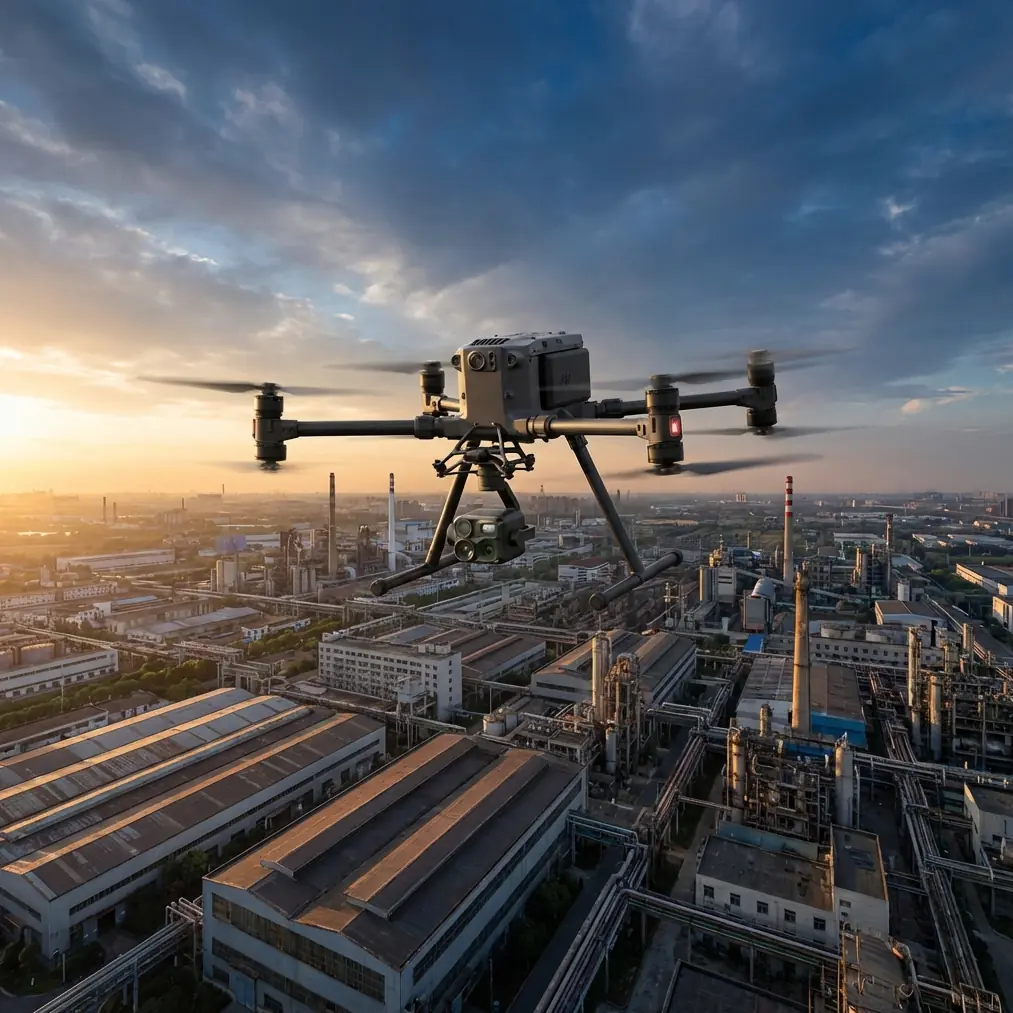
Matrice 4T on Coastal Power-Line Jobs: What the Field Really Demands
META: A field report on using the Matrice 4T for coastal power-line filming, with practical notes on thermal interpretation, antenna positioning, transmission stability, corrosion awareness, and why fuel-and-material standards still matter in UAV planning.
I spent part of this season reviewing a coastal transmission-corridor workflow built around the Matrice 4T, and one thing stood out immediately: most discussions about this aircraft focus on sensors and flight software, while the real bottlenecks in shoreline operations come from environment, materials, and signal discipline.
That matters when your assignment is not a simple scenic capture, but a structured inspection-grade filming mission along power lines exposed to salt air, glare, shifting winds, and long linear flight paths. The Matrice 4T is well suited to this kind of work because it combines visible imaging, thermal signature capture, and stable O3 transmission in one platform. But the aircraft only performs as well as the operator’s understanding of what the coast does to hardware, optics, and planning assumptions.
This field report is built around an unusual but useful pair of reference points: aviation material standards and structural notch-dimension standards from aircraft design manuals. At first glance, neither document mentions the Matrice 4T directly. Yet both reveal something practical for anyone filming infrastructure near the ocean: durability is not abstract, and dimensional precision is not a paperwork exercise. In coastal utility work, both show up in the air.
Why a fuel-material table belongs in a drone conversation
One of the source documents summarizes aviation fuel performance parameters with numbers that are easy to overlook but revealing in context. It lists a net heat value of at least 43.1 MJ/kg, a freezing point of -60°C, and a sulfur content below 0.05%, along with corrosion checks such as copper strip corrosion passing at 50°C for 3 hours.
No, the Matrice 4T does not burn aviation gasoline. That is not the point. The point is what those numbers represent: aircraft systems are designed around tightly controlled material behavior, contamination limits, and corrosion resistance. Coastal drone work should be approached with the same mindset.
Take that sulfur limit and corrosion testing. In manned aviation, those standards exist because small chemical deviations can damage components over time. Coastal drone operators face a parallel problem from the outside rather than the fuel tank: airborne salt, moisture, and conductive residue. A Matrice 4T filming power lines near the shoreline may fly perfectly on day one and still begin accumulating subtle issues in connectors, exposed metal interfaces, payload mounts, and charging hardware if post-flight maintenance is casual.
That is why I tell crews to think like materials engineers, not just pilots. If a fuel spec treats corrosion as mission-critical, your coastal drone SOP should do the same. After every shoreline sortie, inspect contacts, gimbal interface points, battery terminals, landing gear surfaces, and antenna housings. Wipe down with approved procedures, let the aircraft fully dry before casing, and log any visible white residue or tarnish. Salt damage rarely announces itself dramatically. It degrades trust first, then range, then image stability.
The -60°C crystallization figure from the reference is another useful reminder. It shows how tightly aviation standards control fluid behavior across environmental extremes. In drone terms, the lesson is operational stability under variable conditions. On coastal lines, the issue may not be deep cold but rapid humidity swings, morning fog, and sun-heated hardware after low-altitude inspection passes. Thermal cameras can mislead inexperienced crews in these transitions. A hot insulator cap, a warm splice, or a reflective metal fitting may not indicate the same thing at 8:00 AM as it does at noon after prolonged solar loading.
With the Matrice 4T, thermal signature work along power infrastructure should never be reduced to “hot equals fault.” Coastal conditions complicate emissivity and apparent contrast. Use thermal as one layer, not the verdict. Pair it with zoom imagery, angle changes, repeat passes, and if needed, comparison against known normal assets on the same route.
Transmission range is often decided by body position, not aircraft spec
The most common field mistake on linear infrastructure jobs is assuming quoted transmission performance matters more than antenna geometry. It doesn’t.
On the Matrice 4T, O3 transmission gives crews a strong foundation for long corridor work, but coastal routes introduce line-of-sight interruptions from terrain undulation, tower steel, vegetation near easements, and even the operator’s own vehicle placement. Add sea-reflected RF behavior and changing heading angles, and suddenly a mission that looked straightforward on a map starts showing unstable downlink quality in specific sections.
Here is the antenna positioning advice I keep repeating because it solves more problems than people expect:
- Face the aircraft with the broad side of the controller antennas oriented toward the drone, not the antenna tips pointed at it.
- Reposition your body before signal quality degrades, especially on long lateral runs.
- Do not stand tight against a truck, steel fence, or substation-side metal structure if range is your priority.
- In coastal power-line filming, choose a takeoff point with a clear corridor view rather than the closest road shoulder.
- When the route bends, move your pilot station. Do not force the aircraft to carry a compromised RF geometry just because the original launch point was convenient.
That last point matters most for maximum range. People talk about BVLOS as if it begins with regulation. Operationally, it begins with signal stewardship. Even for operations staying within approved visual frameworks, corridor flights become much cleaner when the pilot treats antenna placement as part of route design. The Matrice 4T can hold a stable feed at impressive distance, but only if the operator avoids self-inflicted attenuation.
If your team needs route-specific positioning input before a shoreline mission, I usually recommend sharing a map and terrain snapshot in advance through this field coordination chat. It saves time on site.
Precision dimensions matter more than drone crews think
The second reference document is a table of notch dimensions for T-shaped structural profiles, with values like 32, 36, 46, 56, and 64 mm appearing across different profile configurations. On paper, it is a standardization table from aircraft structural practice. In the field, it points to something drone crews often miss: power-line components and support structures are not random assemblies. They are dimensionally consistent systems, and that consistency can be exploited in image capture planning.
When filming utility infrastructure with the Matrice 4T, repeatability is everything. If a bracket, spacer, clamp, or support profile follows known dimensional logic, your visual inspection footage becomes more valuable when shot at angles and distances that preserve scale relationships. This is where photogrammetry thinking improves even a video-led assignment.
A crew that understands dimensional consistency will:
- capture perpendicular reference passes where possible,
- hold steadier stand-off distances on repeated assets,
- collect oblique views that reveal deformation or corrosion around edges and notch-like transitions,
- and tie selected shots to GCP-referenced site data when a utility client wants measurable follow-up.
You do not need to turn every corridor flight into a full survey. But if the job may later feed an engineering review, fly as though measurements might matter. That means controlling distance, overlap, and viewing angle. The Matrice 4T’s multi-sensor package is especially useful here because thermal anomalies can be correlated against visible geometry without swapping platforms mid-mission.
The notch-dimension table also hints at another practical issue: stress concentration zones. In fabricated or assembled infrastructure, corners, cutouts, and connection transitions are where coating failures, crack initiation, and corrosion often become visually meaningful first. For coastal power-line filming, do not just frame the whole structure elegantly. Push in on transitions. Edges tell the truth.
The coastal factor changes how you read the image
A shoreline utility corridor has its own visual language. Salt haze softens contrast. Bright water can push exposure in the wrong direction. Dark wet hardware can mimic thermal significance. Wind loads can make conductors and fittings move just enough to ruin your consistency between passes.
The Matrice 4T handles this environment well, but the operator has to stop chasing pretty footage and start building interpretable footage.
A few examples from recent coastal reviews:
1. Thermal signatures need environmental context
On a still inland morning, a warm connector may stand out cleanly. Near the coast, the same connector can be influenced by sun angle, reflected heat from adjacent surfaces, and moisture behavior. That means your thermal pass should be matched with a second pass from a slightly changed aspect angle. If the hotspot pattern shifts dramatically with angle, you may be looking at reflective effect rather than a true thermal concern.
2. Zoom and thermal should be sequenced, not alternated randomly
I prefer a repeatable order on power-line structures:
- establish the whole pole or tower,
- isolate the target component with zoom,
- capture thermal from a matched or near-matched angle,
- back out for contextual location framing.
That sequence makes office review faster and reduces ambiguity for engineers who were not on site.
3. Wind is not just a flight variable
In coastal filming, wind affects the asset too. Small oscillations in lines or attached hardware can distort apparent alignment. Before flagging a geometry issue, compare with a second stabilized capture window. The Matrice 4T’s imaging stack is capable; the challenge is interpretation.
Data security and corridor confidence
Utilities increasingly care about how inspection media moves, not just how it is captured. This is one reason the Matrice 4T fits enterprise workflows well. Features associated with AES-256 matter in real deployments because corridor footage often includes critical infrastructure layouts, access roads, switching areas, and asset identifiers that should not be casually exposed.
The operational significance is straightforward. Strong transmission and robust encryption are not separate concerns. They work together. You want stable command and video links in the field, and you want confidence that the resulting data path aligns with enterprise handling standards. That becomes more relevant on extended jobs where multiple crews, vehicles, and handoff points are involved.
Hot-swap batteries are not just about speed
On coastal power-line assignments, battery handling often becomes the hidden source of downtime. The headline benefit of hot-swap batteries is obvious: reduced interruption between sorties. The real value is continuity of method.
If you can keep the aircraft cycling efficiently while preserving camera settings, route logic, and crew focus, you get more consistent output across the corridor. That consistency improves side-by-side asset review later. On long utility runs, fragmented execution is a bigger problem than raw flight time.
Still, coastal operations demand discipline around battery care. Do not expose packs unnecessarily to salt mist while staging. Keep battery cases closed. Rotate systematically. Inspect terminal cleanliness. Again, this ties back to the materials mindset. Reliability is cumulative.
A better way to plan a Matrice 4T coastal line mission
If I were writing the mission brief for a Matrice 4T crew filming power lines along the coast tomorrow, it would include these priorities:
- Launch from a position optimized for antenna geometry, not road convenience.
- Build the route around repeatable viewing angles for both visible and thermal capture.
- Treat every metal contact point on the aircraft and accessories as vulnerable to salt exposure.
- Capture enough contextual footage that office reviewers can place each anomaly on the structure without guessing.
- Use photogrammetry habits even if the deliverable is mostly video.
- If GCPs or mapped control already exist on the client side, align your naming and geotag workflow to that structure.
- Watch for false thermal cues caused by sunlight, reflection, and moisture.
- Log environmental conditions because the coast can change image meaning in under an hour.
This is where the Matrice 4T earns its place. It is not just that the platform can see more. It allows a disciplined team to connect thermal indication, visual verification, and route efficiency in a single operational rhythm.
And that, ultimately, is what coastal power-line work demands. Not cinematic output. Not spec-sheet recitation. A repeatable method that respects signal behavior, structural detail, and environmental chemistry.
The reference manuals behind this discussion may come from traditional aircraft design, but the lesson carries cleanly into drone operations. One document emphasizes controlled material behavior, including corrosion-related checks and performance thresholds such as 43.1 MJ/kg net heat value and less than 0.05% sulfur. The other shows how dimensional standards are built from exact millimeter logic, with profile notch values reaching 64 mm in the provided table. For Matrice 4T operators, those are not random archival facts. They are reminders that aerospace reliability comes from respecting both chemistry and geometry.
Fly the coast with that mindset, and the aircraft’s advantages become much more than features. They become dependable outcomes.
Ready for your own Matrice 4T? Contact our team for expert consultation.