
Matrice 4T in Complex Terrain: A Field Report for Solar
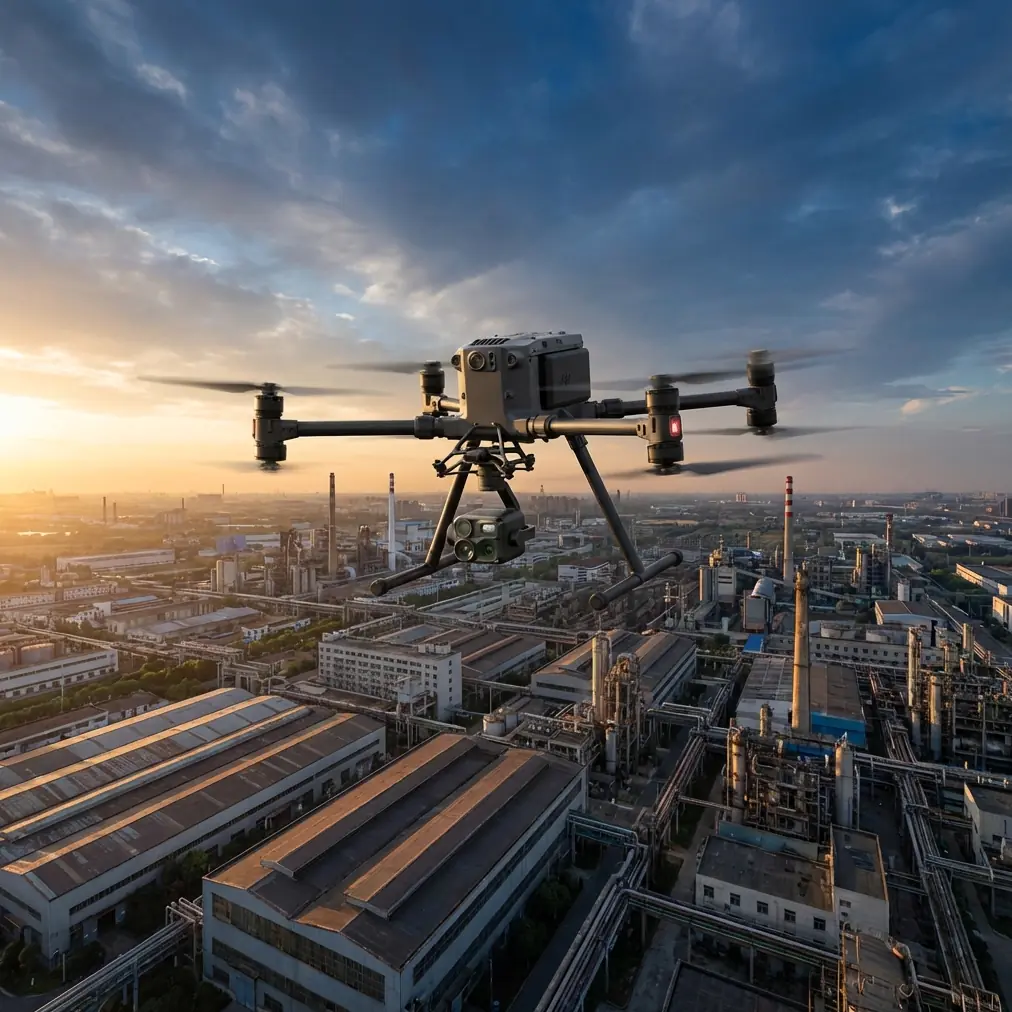
Matrice 4T in Complex Terrain: A Field Report for Solar Farm Filming
META: Expert field report on using the DJI Matrice 4T for solar farm filming in complex terrain, with practical insight on thermal signature capture, photogrammetry, O3 transmission, AES-256 security, hot-swap batteries, and BVLOS workflows.
When a solar site looks simple from the highway, that usually means the hard parts are hidden. Terraced rows, drainage cuts, service roads with uneven elevation, reflective surfaces, heat shimmer, fencing, substations, and the long geometry of panel strings all complicate aerial work. For crews filming or documenting solar farms in broken terrain, the aircraft matters less as a brochure object and more as a field tool that keeps data clean, keeps the mission moving, and does not force tradeoffs between cinematic coverage and inspection value.
That is where the Matrice 4T deserves a close look.
I have been asked, more than once, whether the Matrice 4T is really the right platform for filming solar farms when the mission sits halfway between media production and technical assessment. My answer is yes, but not for the obvious reason. Its advantage is not just that it can see more. Its advantage is that it reduces the number of compromises you have to accept when terrain, weather, and operational pressure begin to stack up.
This matters because solar farm filming in complex topography is rarely just about pretty overheads. Owners, EPC teams, O&M contractors, insurers, and investors often want footage that can do several jobs at once. One stakeholder wants a smooth site flyover. Another wants thermal signature evidence around suspect strings or combiner areas. A third wants terrain-aware visuals that can be aligned with photogrammetry outputs. If your aircraft forces separate flights, separate payload logic, or repeated battery cycles to achieve that, the day gets longer and the risk of inconsistency rises.
What changes in hilly or irregular solar sites
Flat sites are forgiving. Complex sites are not.
As soon as a project steps across ridgelines or shallow valleys, line of sight becomes dynamic. Panel rows can disappear behind grade changes. Wind behaves differently on each side of a slope. Shadows stretch unevenly. Thermal behavior also stops being visually intuitive. A hot component on a raised row may present differently than the same fault lower on the site where reflected heat and airflow vary.
This is one reason the Matrice 4T stands out against lighter competitor platforms that are often marketed as all-purpose solutions. Smaller aircraft can produce acceptable video in easy conditions, but they start to show strain when you need stable framing over uneven ground, reliable transmission near terrain obstructions, and inspection-grade thermal context in the same operational window. The Matrice 4T is stronger precisely because it is built for mixed-use fieldwork rather than single-purpose capture.
Its thermal capability is not just a spec-sheet extra. On solar jobs, thermal signature is often the missing layer that turns attractive footage into useful footage. If a flight can reveal an anomalous panel cluster, a suspicious connector area, or a heat pattern near electrical infrastructure while also collecting visual material for reporting or public documentation, the mission becomes far more valuable. That dual role is where this aircraft begins to separate itself.
Why transmission reliability is not a side issue
For solar farms spread across complex terrain, transmission is operational infrastructure. It is not a comfort feature.
The inclusion of O3 transmission is significant because terrain interrupts weak links first. Crews working along ridges, access tracks, and fenced utility corridors need a command link and image feed that remains stable as the aircraft moves relative to topography. When the feed degrades, the pilot becomes conservative for good reason. The camera operator shortens shots. The mission planner drops lower-value passes. The team skips viewpoints that would have improved the final deliverable.
With O3 in the loop, the Matrice 4T supports more confident route execution in uneven landscapes. That does not remove the need for disciplined mission planning, and it certainly does not override airspace or visual observer requirements, but it does improve the practical ceiling for useful work. In a solar environment, that means more repeatable orbits around substations, smoother traverses across long panel corridors, and fewer interrupted takes when the terrain starts masking signal pathways.
This becomes even more relevant in discussions around BVLOS-style workflow planning. Regulations govern what is actually allowed, and operators must follow local rules, but many enterprise teams still build mission architecture around the realities that BVLOS programs are trying to solve: distance, repeatability, corridor efficiency, and reduced repositioning. The Matrice 4T fits that operational mindset better than aircraft that feel like adapted consumer tools.
Thermal work is only valuable if the visual context holds up
One of the recurring failures in solar drone work is false separation between thermal and visual outputs. Teams collect thermal images, then realize later that the corresponding visual context is too loose, too shaky, or too disconnected from the site geometry to support efficient decision-making.
The Matrice 4T helps because it supports a more integrated approach. A hotspot in isolation is only moderately useful. A hotspot tied to row position, slope orientation, nearby access features, and visible installation context is far more actionable. When filming complex terrain, those layers need to stay connected during acquisition, not reconstructed later through guesswork.
This is also where photogrammetry enters the conversation in a practical way rather than as a buzzword. At many solar sites, especially those with grading complexity, retaining walls, drainage planning, or expansion phases, stakeholders benefit from imagery that can support mapping outputs alongside cinematic or inspection deliverables. If your workflow includes photogrammetry, the discipline of overlap, path consistency, and camera geometry sharpens the entire mission. The Matrice 4T is valuable because it can live in that disciplined environment while still delivering the thermal context many competing aircraft force you to outsource to another platform.
A strong operator will often add GCPs to tighten map accuracy on difficult sites. That point matters. Ground control points are not glamorous, but on sloped or segmented solar farms they can make the difference between a map that looks aligned and one that actually supports engineering interpretation. The aircraft alone does not guarantee survey utility. But when the platform is stable enough to support repeatable capture and the crew uses GCPs intelligently, the output becomes materially better.
The battery question decides real productivity
Ask field teams what slows a solar mission and they will usually mention repositioning, waiting, and power management before they mention camera quality.
Hot-swap batteries are one of those details that sound procedural until you spend a day on a utility-scale site. Then they become decisive. Solar farms in complex terrain often require long transit paths between launch points. If every battery change forces an awkward operational reset, momentum disappears. Timing slips. Light changes. Thermal conditions drift. Coordination with site staff gets harder.
Hot-swap capability helps preserve continuity. That is operationally significant for two reasons. First, it shortens the dead space between sorties, which protects consistency in visual and thermal acquisition. Second, it reduces pressure on pilots to stretch a battery window just to complete one more line or orbit. Better battery logistics usually mean better decisions.
On solar jobs, that matters even more because thermal conditions are time-sensitive. You may have a productive inspection window linked to irradiance, panel loading, or temperature contrast. Losing chunks of that window to slow turnarounds is expensive in the only sense that matters in the field: missed opportunity.
Security belongs in the planning brief
A surprising number of solar projects now involve stakeholders who care deeply about data governance. Utility infrastructure, generation performance, and site layout information do not move casually anymore. That is why AES-256 is not a box-ticking detail. It has operational significance, especially on projects involving critical infrastructure, utility interconnection areas, or clients with internal compliance requirements.
When a platform supports AES-256, it gives project managers and enterprise operators a clearer answer when the question of transmission or data security comes up. That answer will not replace sound data handling practices, but it helps establish the aircraft as an enterprise tool rather than a convenience device. For many solar operators, especially those working under utility or institutional oversight, that distinction affects whether a drone gets approved for deployment at all.
Where the Matrice 4T beats lighter rivals
Competitor aircraft often win attention with portability. That has real value. If your solar assignment is a short promotional pass over an easy-access site with minimal thermal relevance, a smaller platform may be enough.
But on broken ground, the Matrice 4T excels because it is less fragile as a workflow choice.
It is better suited to flights where the operator must combine thermal review, terrain-sensitive visual capture, and mapping discipline without swapping to an entirely different operational logic. It is better suited to long sites where transmission confidence affects shot design. It is better suited to crews that need enterprise-grade security language in front of clients. It is better suited to days when repeated battery turnover is inevitable and downtime punishes the mission.
That is the core comparison. The Matrice 4T is not simply “more advanced.” It is more forgiving of real field complexity.
A practical field sequence for solar filming
If I were building a mission profile for a solar farm in mixed terrain, I would start with a structured reconnaissance leg rather than immediately chasing hero shots. Use the first segment to read slope behavior, identify interference points, verify reflective trouble zones, and watch how panel geometry presents from different headings. Capture thermal references early enough to see where anomalies may deserve a second pass.
After that, split the mission into three intent-based layers.
The first layer is the narrative pass: broad establishing footage that explains the site’s terrain and scale. This is where elevation changes, road access, and array orientation should be obvious in the frame.
The second layer is the technical pass: closer lines that preserve enough consistency to support photogrammetry-friendly use later. This does not mean every flight becomes a mapping mission. It means flying with enough discipline that the footage and stills remain analytically useful.
The third layer is the exception pass: thermal-driven revisits, substation context shots, drainage-sensitive slopes, and any areas where grade changes or installation irregularities create operational interest.
That kind of sequencing is where the Matrice 4T performs well. It lets one platform carry the day rather than forcing a handoff between creative and technical aircraft. If your team wants to compare workflows or sanity-check a site plan before deployment, it can help to message a field workflow specialist and validate the mission architecture in advance.
Human factors still decide the outcome
No aircraft saves a weak plan.
The best Matrice 4T results on solar farms come from teams that understand heat behavior, not just thermal palettes; terrain logic, not just waypoint tools; and site operations, not just flight controls. They know when glare will flatten visual contrast, when wind over a ridge will disrupt a lateral move, and when a thermal anomaly needs corroboration rather than immediate interpretation.
They also understand that utility-scale filming is often a coordination exercise. Site managers care about vehicle movement, restricted areas, live electrical zones, and work crews below. An aircraft with strong transmission, secure links, and efficient battery handling helps, but the mission still depends on the discipline of the operator.
That said, better tools improve the margin for good work. The Matrice 4T gives that margin in the places that matter: transmission robustness through O3, secure operation via AES-256, reduced downtime through hot-swap batteries, and a thermal layer that makes footage do more than just look good.
For solar farms in complex terrain, that combination is not cosmetic. It changes what a single day in the field can produce.
The real strength of the Matrice 4T is that it respects how these missions actually unfold. Not in marketing diagrams. On slopes, in glare, with changing heat, under operational pressure, while multiple stakeholders want different answers from the same flight. That is why it earns a place in serious solar work, and why it outperforms lighter alternatives when the site stops being simple.
Ready for your own Matrice 4T? Contact our team for expert consultation.