
Matrice 4T in Windy Solar Farm Conditions
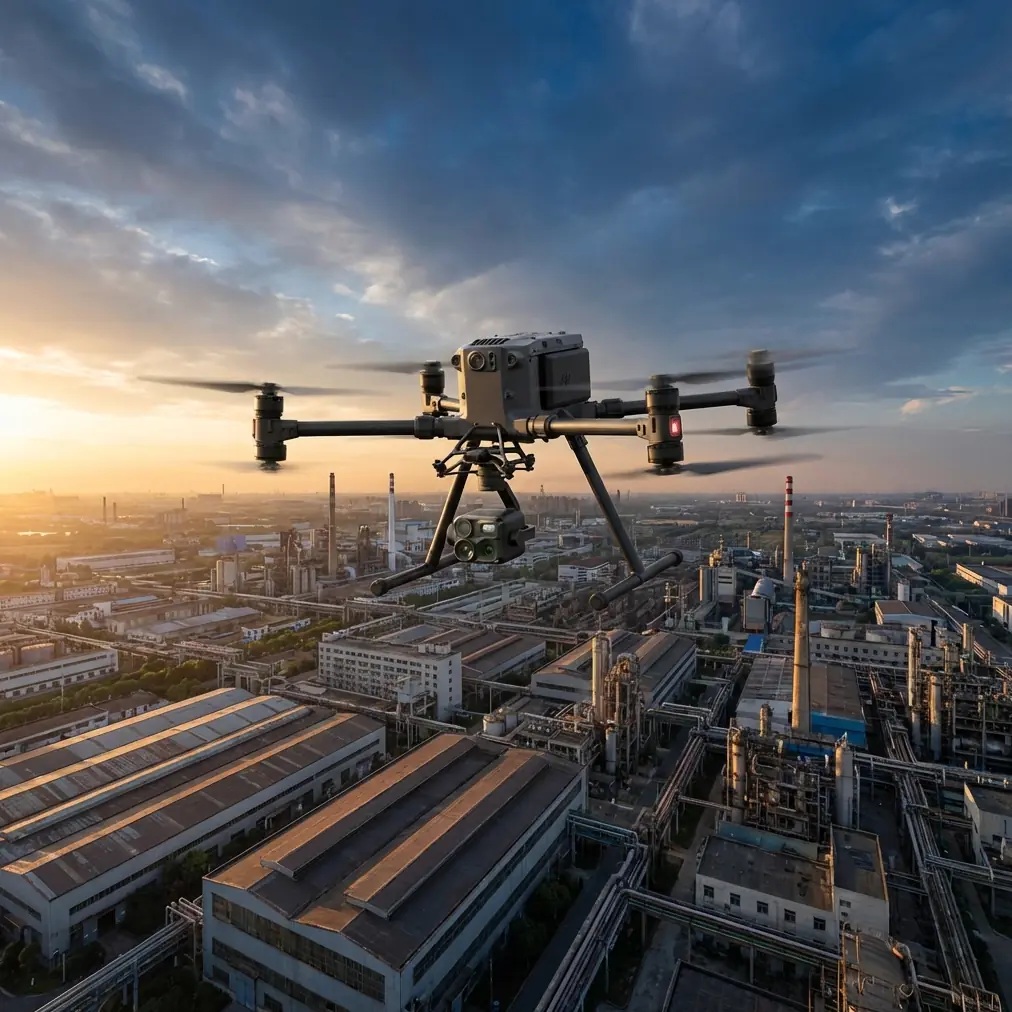
Matrice 4T in Windy Solar Farm Conditions: A Field Case Study on Thermal Accuracy, Stability, and Mid-Flight Weather Changes
META: Expert case study on using the DJI Matrice 4T for windy solar farm filming, thermal inspection, mapping accuracy, and safe mission execution when weather shifts mid-flight.
I took the Matrice 4T to a solar site on a day that looked manageable on paper and felt less polite once the rotors were spinning.
The assignment was straightforward at first glance: capture visual footage for asset documentation, collect thermal imagery to flag suspect panels, and build a clean map that the operations team could align with previous inspection data. The catch was the environment. Utility-scale solar farms create their own kind of flying problem. Long panel rows channel wind. Heat shimmer builds above the arrays. Dust lifts fast. And when the weather changes, it can change unevenly across the site, leaving one section calm and another suddenly rough.
That combination is exactly where the Matrice 4T becomes interesting—not because it makes bad conditions disappear, but because it gives the pilot enough control, sensing flexibility, and link reliability to keep a mission useful when conditions stop behaving.
The mission profile: one aircraft, three deliverables
For this job, the Matrice 4T was not just a camera platform. It was the center of a mixed inspection workflow.
We needed three things from one deployment window:
- stable oblique and overhead footage for stakeholder reporting
- thermal data to isolate abnormal heat patterns across panel strings
- mapping outputs that could be tied back to survey control for repeatable analysis
That matters because solar farm teams do not benefit much from pretty footage alone. If a hotspot appears in one section of the site, the real value comes from placing that anomaly precisely enough that a maintenance crew can walk straight to the affected area, verify the issue, and decide whether it is a cracked cell, a connector problem, a bypass diode issue, or a balance-of-system fault.
The Matrice 4T is well suited to that blend of work because it sits at the intersection of inspection and documentation. You can move from visual situational awareness to thermal signature analysis without changing aircraft or rebuilding the entire flight plan around a single sensor type.
Why wind changes the solar inspection equation
People often talk about wind as a simple stability problem. On a solar farm, it is more than that.
Wind affects:
- framing consistency during video capture
- overlap quality for photogrammetry
- thermal interpretation if altitude and angle vary too much
- battery planning across long linear flight paths
- pilot workload when maintaining safe standoff from structures and perimeter fencing
A mild breeze over open land can become a crosswind corridor between rows. That can push the aircraft off the most efficient track and force more corrections than expected. Those corrections matter. In mapping, even small deviations can reduce image consistency. In thermal work, inconsistent stand-off distance and angle can muddy how a hotspot appears from one pass to the next.
This is where the Matrice 4T’s stability and control behavior earn their keep. On this flight, the aircraft held its line well enough that we did not lose mission confidence when gusts started to build. It was not perfectly smooth—no honest field report should claim that—but it remained predictable. Predictability is what lets a pilot keep data quality high under pressure.
The moment the weather turned
The forecast suggested a usable window, and the first segment of the mission backed that up. Early passes were clean. O3 transmission stayed solid across the working area, which was critical because the site stretched wide enough that link confidence could not be treated as an afterthought. On a solar farm, it is easy to get lulled into thinking the terrain is simple just because it is flat. In reality, reflective surfaces, distance, and infrastructure can complicate visual orientation and command link management.
Roughly midway through the inspection, the conditions shifted. A darker band of cloud moved in from the west, surface wind picked up, and the smooth air we had during the first mapping leg disappeared. You could see it in the vegetation at the perimeter before you fully felt it in the controls.
The Matrice 4T handled that change the way a serious enterprise aircraft should: not by pretending nothing changed, but by giving clear, stable behavior when the pilot needed to re-prioritize.
The immediate adjustment was operational, not dramatic. I shortened the next leg, changed the direction of the runs to reduce unnecessary crosswind exposure, and tightened the battery reserve threshold. That last point is easy to underestimate. Wind rarely hurts you all at once. It chips away at the plan—longer corrections, slightly slower progress, more power spent holding track, more concentration spent on timing the turns. If you keep flying the original plan after the weather changes, you are usually solving the wrong problem.
Because the aircraft remained stable and the transmission link stayed dependable, I could focus on mission decisions instead of fighting the platform. That is the kind of difference that does not always look exciting in a spec sheet, but it shows up immediately in the field.
Thermal signature work in unstable air
Thermal inspection at a solar site only becomes useful when the data is operationally trustworthy.
The temptation in windy conditions is to rush the thermal pass once the weather starts to deteriorate. That usually creates more work later. A poor thermal dataset can produce false confidence or false alarms, neither of which helps the maintenance team. The Matrice 4T’s thermal payload gave enough clarity to continue, but only because the flight discipline adjusted with the conditions.
Two details mattered most:
First, holding a consistent viewing geometry remained possible even after the gusts arrived. That reduced the risk of turning normal variance into a misleading thermal anomaly. For panel inspections, apparent heat differences can be influenced by angle, reflection, and environmental change. A platform that wanders too much in wind makes interpretation harder.
Second, the aircraft’s transmission stability through O3 helped preserve confident control during the thermal segment. Thermal work often demands slower, more deliberate flight than general video capture. If the link feels uncertain, pilots naturally become conservative in ways that can break inspection rhythm. Here, the control feel stayed composed enough that we could complete targeted passes over suspect rows rather than abandoning the thermal objective entirely.
That had direct operational significance. One cluster showed a heat pattern that was subtle in the wide view but distinct enough on follow-up observation to justify a maintenance ticket. Without stable repositioning and consistent thermal framing, it could easily have been written off as environmental noise.
Photogrammetry, GCP discipline, and why mapping still mattered
A lot of operators separate thermal inspection from mapping. On large solar assets, that is a mistake.
Thermal tells you what may be wrong. Photogrammetry helps show exactly where it sits in relation to the broader site and creates a reference layer for future comparison. If a client plans repeat inspections, consistency becomes as valuable as the first discovery.
For this mission, GCP placement was part of the workflow because the site team wanted outputs they could align with previous survey-grade references. That one step changes the usefulness of the final deliverables. Without good control, a map may look sharp and still drift just enough to create confusion when crews try to match anomalies to the physical layout on the ground.
Wind complicates mapping because overlap and image geometry can degrade when the aircraft is forced into constant small corrections. The Matrice 4T gave us enough stability to preserve a workable capture pattern despite the weather shift, though we did adapt the mission profile rather than stubbornly flying the original grid.
That matters in practical terms. A high-quality photogrammetry set tied to GCPs allows the operations team to compare panel condition over time, cross-reference fault locations, and layer thermal findings onto something spatially reliable. If a hotspot appears near the same section in multiple inspections, the team can move from isolated observation to trend analysis. That is a very different level of decision support than a one-off thermal screenshot.
Hot-swap batteries and time management under pressure
Battery swaps do not sound glamorous until the weather starts to close in.
On this job, hot-swap batteries were not just a convenience feature. They were part of how the mission stayed productive. When conditions change mid-flight, every minute on the ground has a cost. You are watching cloud movement, wind trend, irradiance change, and site priorities all at once. A slow turnaround can erase the usable window.
Fast battery handling let us reset and get back into the air while the conditions were still workable. That directly supported the inspection sequence: finish the essential thermal follow-up first, then gather the final visual material needed for reporting. In solar work, sequencing matters. If conditions are trending worse, the highest-value data should go first.
This is where enterprise aircraft separate themselves from hobby-minded workflows. The drone is not there to simply stay airborne. It is there to help the team make better use of a limited operational window.
Security and site sensitivity are not side issues
Solar farm operators are increasingly aware that aerial data is not generic footage. It can reveal asset layout, infrastructure details, maintenance conditions, and site vulnerabilities.
That is why features such as AES-256 matter in real operations. Security is often treated as a compliance checkbox, but on infrastructure sites it is part of client trust. When a drone is collecting detailed imagery and thermal data over critical energy assets, secure transmission and responsible data handling are not optional extras. They are part of professional practice.
The same logic extends to discussions around BVLOS. Even when a mission is not conducted under a BVLOS framework, the platform characteristics that support controlled, reliable long-range operations still matter. Solar farms often push pilots into broad-area coverage tasks where situational awareness, link integrity, and disciplined operational planning become central. A platform built with those realities in mind gives the operator more room to work methodically rather than improvising.
What the Matrice 4T actually proved that day
The strongest argument for the Matrice 4T on windy solar farm work is not that it can fly in less-than-ideal weather. Plenty of aircraft can stay in the air.
The real question is whether it can preserve the usefulness of the mission once the environment becomes less cooperative.
On this site, it did.
It maintained enough stability for credible thermal signature capture. It held transmission confidence through changing conditions using O3. It supported a workflow that combined visual documentation, thermal inspection, and photogrammetry with GCP-backed mapping. And the hot-swap battery design helped us protect the shrinking weather window instead of wasting it.
That combination is what matters to serious operators. A drone earns its place on a utility-scale job when it reduces compromise. Not all compromise can be eliminated. Wind still affects mission design. Thermal interpretation still requires discipline. Mapping still depends on overlap, control, and processing quality. But the Matrice 4T gave us room to adapt intelligently rather than simply retreat.
If you are planning similar inspection work and want to compare field setups or mission logic, you can message me here.
Final takeaway for windy solar environments
Solar farms are deceptively demanding. Wide open space invites complacency, yet the work itself requires precision. Wind stresses the aircraft. Heat affects interpretation. Scale punishes weak planning.
The Matrice 4T fits this environment because it supports multi-layered inspection work without forcing the operator into constant tradeoffs between visual quality, thermal usefulness, and mapping reliability. In this case, the day did what field days often do: it changed its mind halfway through. The aircraft did not solve the weather, but it gave us the stability, transmission reliability, secure data handling, and fast turnaround needed to finish with results that were still worth delivering.
That is the difference between getting airborne and getting the job done.
Ready for your own Matrice 4T? Contact our team for expert consultation.