
Matrice 4T for Remote Solar Farm Work: A Technical Review
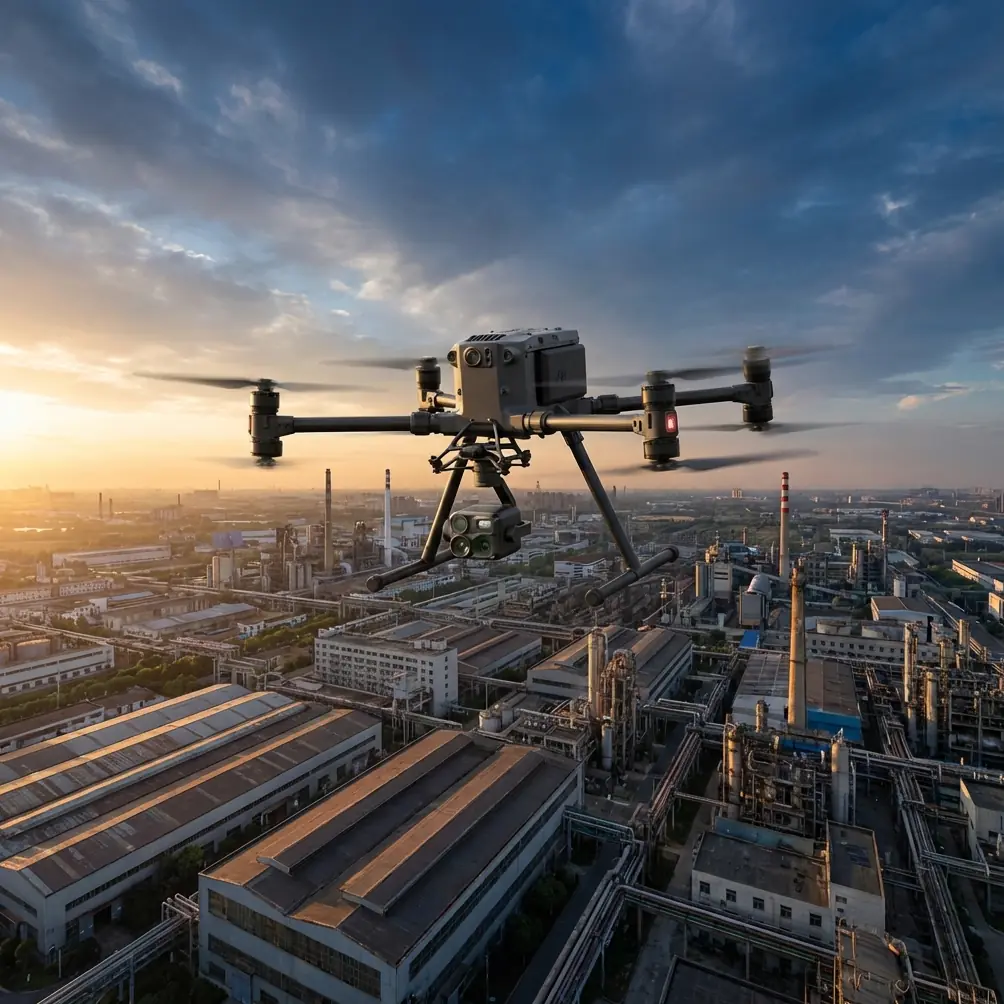
Matrice 4T for Remote Solar Farm Work: A Technical Review from an Airframe-First Perspective
META: Expert review of the Matrice 4T for remote solar farm inspection, with practical analysis of thermal workflows, transmission, reliability, airport adaptability concepts, and why its design logic matters in the field.
When people evaluate the Matrice 4T for solar farm operations, they usually start with the payload. Thermal camera, zoom, wide camera, transmission range, battery routine. That is understandable, but it misses the deeper reason this aircraft fits remote photovoltaic sites so well.
A better way to judge the platform is to look at it like an aircraft designer would.
The reference material behind this review is not product marketing. It comes from civil aircraft design handbooks, including one volume focused on overall aircraft design and another on aerodynamic design. Those texts highlight a few themes that matter far more in the field than glossy spec sheets: control-system integration, maintenance across the full life cycle, airport and operating-environment adaptability, and the aerodynamic behavior of the aircraft as a whole rather than isolated components. That framework is surprisingly useful for understanding why the Matrice 4T works so well on remote solar farms.
Why solar farms expose weak drone design
Solar sites are repetitive in geometry but unforgiving in logistics. Large arrays stretch across rough access roads, low vegetation, dust, heat shimmer, and long distances from charging infrastructure. The inspection task sounds simple—find thermal anomalies, verify strings, document hotspots, produce usable reports—but the flight environment punishes any weakness in stability, battery handling, or link reliability.
A drone for this job does not just need a thermal signature on a panel. It needs to hold a repeatable line over row after row, manage image consistency in changing surface temperatures, and give the operator confidence that one interruption will not collapse the mission plan.
That is where the Matrice 4T separates itself from lighter or more consumer-leaning alternatives. Competitors may offer acceptable thermal imagery on paper, but in remote utility-scale work, the full system matters more than one sensor headline. The aircraft has to behave like an integrated working tool.
The civil-aircraft design lens explains the Matrice 4T surprisingly well
One of the source documents points to “active control and fly-by-wire systems” in Chapter 11, with entries around core concepts at page 427, system features at 428, and advantages of fly-by-wire at 430. Another section points to “integrated design and management” around page 430 as well. Those details come from manned civil aircraft design, yet the operational logic carries directly into a modern enterprise UAV.
Why does that matter for a solar farm?
Because panel inspection is less about aggressive flying and more about smooth, disciplined control. A platform with mature control integration is better at maintaining stable tracks, preserving overlap for photogrammetry, and reducing small oscillations that can soften thermal interpretation. In a large array, even slight inconsistency compounds. If the aircraft is hunting in yaw or rolling more than it should, the thermal record becomes harder to compare across strings and sections.
The aerodynamic reference adds another useful clue. The handbook section on directional control surfaces appears at page 108, and compensation design for control surfaces appears at page 110. In plain terms, good aircraft do not just move; they move cleanly, with balance. For drone operators, that translates into fewer corrections, tighter line discipline, and more predictable sensor pointing during waypoint missions. On a remote solar farm, where you may be flying long passes over repetitive geometry in bright and thermally active conditions, that level of steadiness is operationally significant.
This is one reason the Matrice 4T feels more “finished” than many alternatives in real inspection work. It is not only about having thermal and zoom. It is about how the flight system supports the sensor task.
Thermal work is only useful if the aircraft lets you trust the thermal story
Solar inspections live and die by context. A hotspot is easy to spot. The hard part is proving whether it reflects a bad cell, a connector issue, temporary shading, soiling pattern, or an artifact caused by angle, heat loading, or flight inconsistency.
The Matrice 4T’s value here is that it gives you a disciplined multi-sensor workflow. You can isolate a suspicious thermal signature, then immediately verify with visible imagery and zoom detail without shifting to a different aircraft or restarting the mission logic. That sounds obvious, but on a remote site it changes productivity. One launch can move from broad thermal screening to targeted verification.
This matters most when your client expects actionable maintenance outputs rather than a folder of interesting pictures. A competent operator can flag suspect modules, classify severity, and support engineering decisions faster when the aircraft’s imaging stack and flight behavior remain aligned.
That is also where photogrammetry and GCP planning come into the conversation. The Matrice 4T is not a pure mapping specialist in the way some dedicated survey platforms are, but for solar farm documentation it can still support structured data capture when the operator builds the job correctly. If you are generating orthomosaic context for fault localization, consistent overlap and disciplined path control matter as much as the camera itself. Ground control points tighten the positional reliability of your output, especially when site owners need defect locations tied to specific rows, combiner zones, or maintenance tickets.
In practice, the most useful workflow is often hybrid: thermal screening first, visible verification next, and photogrammetric context where the maintenance team needs a georeferenced defect layer. The Matrice 4T handles that kind of mixed mission better than many drones that are optimized for only one of those tasks.
Remote operations reward transmission discipline, not just range claims
Anyone who has flown around utility-scale energy infrastructure knows that “range” is the wrong first question. Link stability matters more. You are often dealing with reflective surfaces, terrain undulation, service roads, inverter structures, and broad open spaces that can fool people into overconfidence.
That is where O3 transmission and AES-256 become more than brochure terms. O3 helps maintain a resilient control and video link across larger inspection footprints, while AES-256 matters because utility operators are increasingly serious about data governance. Inspection video and thermal findings are operational assets. They may reveal underperformance zones, maintenance schedules, or asset conditions that the owner does not want casually exposed.
For a remote solar farm contractor, that means the Matrice 4T can fit more comfortably into enterprise workflows where connectivity and data handling are scrutinized. Not every competitor in this class inspires the same confidence when customers ask hard questions about signal robustness and information security.
If you are planning a remote deployment and want to sanity-check your site workflow, battery rotation, or transmission assumptions, message a UAV specialist here.
Battery architecture matters more on a solar farm than in many other sectors
Remote sites make every interruption expensive. That is why hot-swap batteries deserve more respect than they usually get.
This is another place where the aircraft-design references help frame the issue. One document explicitly points to “maintenance design across the full life cycle” at page 553. Even though that chapter belongs to the civil aircraft world, the principle is universal: the best aircraft are not only good in the air; they are designed to stay useful over repeated operational cycles.
For a Matrice 4T crew at a solar farm, hot-swap battery handling reduces dead time between sorties and helps keep thermal windows usable. Thermal inspection is time-sensitive because module temperatures shift with irradiance, cloud cover, and wind. If you lose too much time during battery changes, you are no longer comparing like with like across the site. One block may have been captured under a different thermal condition than the next.
This is where the Matrice 4T outperforms many less mature systems. Faster turnaround preserves mission continuity. It also reduces the temptation to rush preflight discipline because the team feels pressed by downtime. In field operations, that kind of procedural stability is not glamorous, but it is what makes inspection datasets more defensible.
Adaptability to operating environment is a bigger deal than people realize
The overall design handbook’s Chapter 12 is devoted to airport adaptability and landing gear flotation, with environment sections around pages 487 and 488, PCN reporting at 520, and unrestricted-use adaptability at 528. Obviously a drone operating at a solar farm is not negotiating airliner pavement classifications, but the design philosophy is still relevant: aircraft must suit the surfaces, access constraints, and operating environment they are expected to face.
That is exactly the challenge at remote solar farms.
Launch areas are often improvised. Ground conditions vary from compacted dirt to gravel shoulders to rough service pads. Dust, crosswind exposure, and heat loading are normal. A platform that tolerates these realities without turning every launch into a fragile ritual has immediate operational value.
The Matrice 4T earns points here because it behaves like a field platform rather than a delicate camera carrier. In competitor aircraft, especially those that feel closer to prosumer design language, crews often spend more effort managing environmental compromise: selecting launch spots, protecting the airframe from contamination, compensating for less confident station-keeping, or accepting more interrupted missions. On large solar sites, that friction accumulates.
The source handbook’s emphasis on environmental adaptability is a good reminder that aircraft design is always contextual. A remote solar farm is not just “another open area.” It is a repetitive, heat-active, logistics-heavy operating environment. The Matrice 4T makes sense because its overall system behavior matches that reality.
Aerodynamics still matter, even in a multirotor conversation
A lot of drone discussions treat aerodynamics as secondary because the aircraft hovers. That is lazy thinking.
The aerodynamic design reference includes sections on fuselage design requirements at page 118 and whole-aircraft lift data, including clean and landing configurations, around pages 190 to 246. Again, this is fixed-wing handbook material. Still, the lesson is relevant: aircraft performance emerges from the interaction of the whole platform, not a single spec.
For the Matrice 4T operator, that shows up in subtler ways. Stability in transit legs. Predictability in crosswinds. Efficient path following. Sensor usability while repositioning. The aircraft does not need to be a fixed-wing machine for design integration to matter. On solar missions, where sorties may involve repeated lane transitions and long pattern work, aerodynamic and control harmony reduce operator workload.
That matters for image quality, but it also matters for fatigue. Remote site work can mean long days, repetitive planning, and multiple battery cycles. An aircraft that asks fewer corrections from the pilot leaves more attention available for reading the thermal scene and catching anomalies that software alone may miss.
Where the Matrice 4T stands against competitors
Here is the practical comparison.
Some competing drones can produce decent thermal imagery. Some may even offer respectable endurance or compact transport advantages. But for utility-scale solar work, they often fall short in one of four places: transmission confidence, multi-sensor verification speed, battery turnaround, or enterprise workflow maturity.
The Matrice 4T’s edge is not one flashy capability. It is the way these pieces reinforce each other.
- Thermal detection is matched by fast visual confirmation.
- O3 transmission supports remote-site confidence rather than just marketing distance.
- AES-256 aligns with enterprise asset sensitivity.
- Hot-swap batteries preserve inspection tempo.
- Stable flight behavior makes photogrammetric context and repeat inspection more reliable.
That combination is why the aircraft tends to outperform lighter alternatives when the job shifts from “capture some thermal footage” to “inspect a large remote solar asset with repeatable, client-ready outputs.”
And if your operation is moving toward BVLOS frameworks where regulations permit, system maturity becomes even more important. You need a platform that already behaves predictably in disciplined workflows, not one that only feels good in short-range demo conditions. The Matrice 4T is better positioned for that progression than many drones in its category.
The real reason this platform works
The strongest case for the Matrice 4T is not that it has advanced sensors. Plenty of aircraft have good sensors.
Its real strength is that the airframe, control logic, battery workflow, transmission stack, and imaging package feel designed to support a professional mission rather than a feature checklist. That is exactly the lesson embedded in the civil aircraft references: successful aircraft are integrated systems. Control integration around pages 427 to 430, environmental adaptability near 487 to 488, and life-cycle maintenance thinking at 553 are not abstract theory. They describe the same operational truths drone crews face on the ground.
For remote solar farm filming and inspection, that systems-first logic is what turns the Matrice 4T into a dependable tool instead of just another thermal drone.
Ready for your own Matrice 4T? Contact our team for expert consultation.