
Matrice 4T at a Dusty Solar Farm: The Small Pre
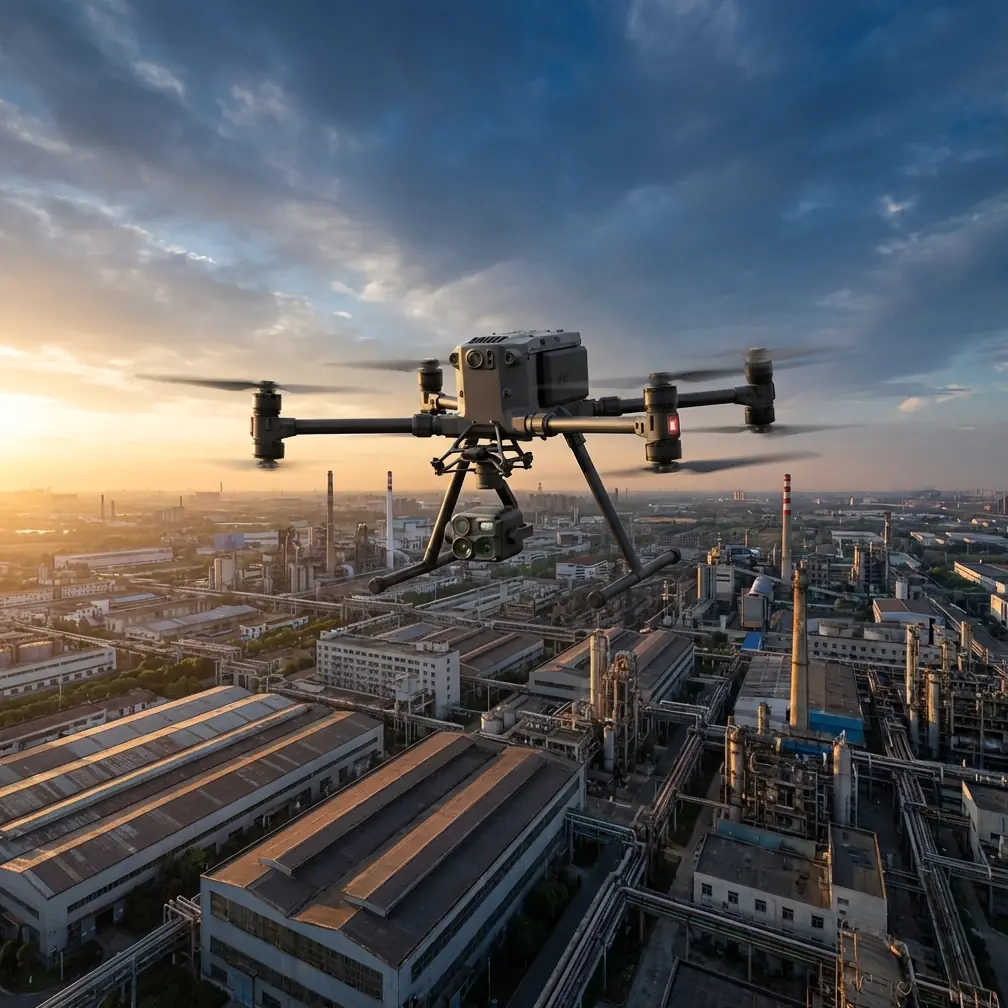
Matrice 4T at a Dusty Solar Farm: The Small Pre-Flight Checks That Save the Whole Shoot
META: A field-based Matrice 4T case study for filming dusty solar farms, with practical pre-flight workflow, payload reliability insights, thermal capture discipline, and why precision inspection habits matter.
Dust is rarely dramatic. It does not announce itself as a failure point. It settles on lenses, creeps into hinges, rides static onto exposed surfaces, and turns a routine solar farm flight into a long afternoon of compromised footage, suspect thermal data, and repeated sorties.
That is why, when I think about using the Matrice 4T at utility-scale solar sites, I do not start with flight modes or camera specs. I start with discipline on the ground.
A good example came from a solar documentation job where the brief sounded simple enough: capture clean visual footage across several rows, pull thermal views on selected strings, and produce material that both engineering and stakeholder teams could actually use. The site itself was the real complication. Dry surface. Fine airborne grit. Repetitive geometry. Heat shimmer later in the day. Very little forgiveness for sloppy setup.
The Matrice 4T is well suited to this kind of work, but the aircraft alone is not the story. The story is whether your workflow respects how sensitive imaging, stabilization, and control systems behave in a dirty environment.
The pre-flight cleaning step most crews treat as optional
Before the first battery went in, we spent extra time on what many crews rush through: a deliberate cleaning and inspection pass around the aircraft, payload windows, gimbal movement path, vent areas, arm joints, and battery contact surfaces.
That sounds mundane until you consider what solar farm work actually demands. You are often trying to capture subtle thermal signature differences between adjacent modules or strings, while also collecting polished visual footage over a highly repetitive scene. A faint smear on the thermal window or particulate buildup near a moving assembly can quietly degrade the mission. Not enough to trigger an obvious fault. Enough to ruin confidence in the output.
This is where old-school aircraft design logic still teaches the right lesson. In one helicopter design reference, the guidance is blunt: moving linkages across the full control range need to maintain safe angular relationships within 45° to 135°, and there must be enough clearance at extreme combinations of movement to prevent interference with surrounding structures. That is not about drones specifically, but the operational principle transfers perfectly. Before a dusty-site flight, you are not just cleaning for appearance. You are confirming that all moving parts still have the freedom and clearance they need to behave predictably.
On the Matrice 4T, that means checking that the gimbal path is unobstructed, no grit is impeding smooth initialization, and no contamination has built up in ways that could affect stabilization during low-altitude passes. On a solar farm, you feel these issues first in the footage: micro-hesitations, inconsistent horizon behavior, or framing drift that should not be there.
Why solar farms punish lazy capture habits
Solar assets look organized from the access road. Once airborne, they become visually repetitive in a way that can hide errors until post-processing. The rows are regular, reflective, and often visually monotonous. If your flight planning, overlap discipline, and camera cleanliness are inconsistent, the data set may still look usable at first glance. Then the stitching starts. Or the thermal review begins. Or an engineer asks whether a hotspot was real or just capture noise.
This is where the Matrice 4T earns its place if the operator respects the workflow. A mixed mission over solar infrastructure typically asks one aircraft to do several jobs without confusion:
- establish broad visual context
- isolate suspect thermal behavior
- maintain stable transmission across a large site
- move efficiently between repeated passes without wasting battery cycles
In practical terms, features like O3 transmission matter because a solar farm is often wider than it looks, and signal reliability becomes part of image reliability. When you are framing across long aisles of panels, a robust link does more than preserve pilot comfort. It protects continuity in the mission. If you are capturing thermal and visual references that need to line up with later reporting, you want fewer interruptions, fewer repositions, and less improvisation.
The same goes for hot-swap batteries in longer field sessions. On paper, battery change efficiency sounds like a convenience feature. On a hot, dusty site, it is a data integrity feature. Faster turnarounds mean you can preserve lighting consistency, maintain a repeatable inspection rhythm, and reduce the number of times the aircraft and payload are left exposed on the ground while crews reset.
What we borrowed from traditional structural test discipline
One of the more useful habits in drone operations comes from fields that predate UAVs by decades: if measurement quality matters, treat preparation as part of measurement.
A second aircraft design reference, this time on strain-gauge testing, makes that point with unusual precision. It recommends matching components in the same measurement bridge so their resistance difference stays within 0.10, and after installation it calls for protecting the setup against moisture while maintaining insulation resistance above roughly 40 to 50 megaohms. It also describes preloading a test article three times at about 5% to 10% over the intended load to verify behavior before formal measurement begins.
Again, not drone-specific. But the mindset is gold.
For the Matrice 4T on a dusty solar farm, we applied the same logic in a field-appropriate way:
1. Standardize before trusting data
We did not mix cleaning methods, filters, or capture settings casually between flights. If one sortie is thermal-heavy and the next is mostly visual, inconsistency in preparation can produce output differences that look like site conditions when they are actually operator-created.
2. Protect the sensing chain
The strain-gauge reference emphasizes insulation and contamination control because moisture corrupts readings. Dust does the equivalent in drone imaging. It affects optical clarity, surface temperature interpretation, and confidence in edge detail. On the M4T, every sensor-facing surface deserves the same respect test engineers give instrumentation.
3. Run a “preload” equivalent
Before the formal mission, we flew a short verification pattern. Not for the client. For ourselves. A few controlled movements, a quick gimbal sweep, thermal check on known panel zones, transmission verification, and a review of stabilization under real site conditions. That is the drone version of loading a system three times before recording the real numbers.
Most bad data announces itself early, if you bother to look.
Thermal work over panels is less forgiving than cinematic work
Many crews treat thermal capture as a side mode: switch views, scan for anomalies, move on. That is not enough at a solar farm. The operational value of thermal imagery depends on consistency in altitude, angle, pace, and environmental timing.
The Matrice 4T is compelling here because it allows one platform to connect visual context with heat behavior in a single field workflow. But that advantage disappears if the aircraft launches dirty, if the lens surfaces are compromised, or if the crew allows unnecessary loiter time in swirling dust near service roads and inverter pads.
This is also why I prefer to brief solar clients honestly. Thermal signature interpretation is only as clean as the collection method. If a team wants footage for presentation and thermal references for maintenance planning, those are related outputs, not identical ones. The mission profile has to respect both.
At one point on this project, we paused a launch because a thin film of dust had settled again during setup. Some people hate these delays. I see them as the cheapest quality-control measure in the day. Re-cleaning a lens or checking a cooling inlet takes moments. Re-flying several blocks because the thermal pass lacks confidence costs far more in time and trust.
Dust changes battery behavior and crew behavior
Not always dramatically, but enough that it should shape scheduling.
Crews tend to become less patient as turnaround pressure increases. Batteries are swapped faster. The aircraft spends more time on the ground with compartments open. Cases are left cracked while operators review footage. On a dusty solar site, those habits accumulate contamination right where you do not want it.
That is why the Matrice 4T’s hot-swap workflow matters in a practical sense. The less awkward and exposed your battery exchange is, the less contamination you invite, and the faster you get back into a stable mission tempo. I advise crews to stage swaps with a clean surface protocol and to inspect contacts every cycle, not because failure is inevitable, but because reliability is built from boring repetition.
If your team is setting up a solar inspection video workflow and wants a field checklist that actually fits dusty sites, I usually point them to this direct ops chat rather than a generic brochure.
The transmission and security side that operators should not ignore
Solar farms are commercial infrastructure. That does not mean every mission is highly sensitive, but it does mean clients increasingly ask how imagery is handled, transmitted, and stored.
Here the Matrice 4T benefits from modern enterprise expectations. AES-256 support is not just a line item for procurement teams. It matters when the operation involves infrastructure imagery, thermal findings, layout documentation, or progress records that should not be casually exposed. Pair that with dependable O3 transmission, and the aircraft becomes easier to justify not just to pilots, but to IT and operations stakeholders.
This is especially relevant as some operators push toward more advanced workflows, including larger-site planning and eventual BVLOS program development where regulations allow. Even when today’s solar job remains within direct visual operations, clients often want to know the platform can fit into a broader professional framework later. Secure transmission, structured data handling, and repeatable field procedures build that confidence.
Photogrammetry at a solar farm is not just for maps
A lot of people hear photogrammetry and think terrain models or marketing orthomosaics. On solar sites, it is often more useful than that. Repetitive panel geometry benefits from disciplined capture if you need a site-wide visual baseline, construction progress comparison, drainage observation around rows, or asset context around substations and access routes.
The caveat is that repetitive surfaces can confuse weaker capture discipline. If you are using GCP workflows or tying outputs into engineering references, consistency matters more than speed. The M4T can support hybrid missions well, but only if the operator separates cinematic instincts from survey instincts. Flying pretty lines is not the same as collecting dependable geometry.
That was another reason our pre-flight routine was stricter than normal. Dust contamination that merely softens a shot can also reduce confidence in image matching and panel-edge clarity. On a site with thousands of repeating shapes, tiny losses in image quality multiply quickly.
The real takeaway from this case
The Matrice 4T did exactly what it should at the solar farm. It delivered stable visual coverage, usable thermal references, efficient battery transitions, and reliable long-site control. But the mission worked because the team treated cleanliness, motion clearance, and data validation as operational priorities rather than afterthoughts.
The two reference points I keep coming back to are not glamorous:
- the helicopter design rule that moving mechanical relationships must stay inside a controlled 45° to 135° envelope with adequate clearance at extreme motion
- the test-engineering habit of controlling measurement quality through matched setup, contamination protection, and repeated verification before formal collection
Applied to the Matrice 4T, those ideas become practical field habits. Clean before power-up. Inspect every moving path. Verify the gimbal’s freedom. Protect sensor surfaces from dust. Run a short validation sortie before the real mission. Keep battery swaps controlled. Treat thermal imagery as measurement, not just imagery.
That is the difference between flying a capable drone and running a credible solar farm operation with one.
Ready for your own Matrice 4T? Contact our team for expert consultation.