
Matrice 4T for Low-Light Venue Filming: A Practical Field
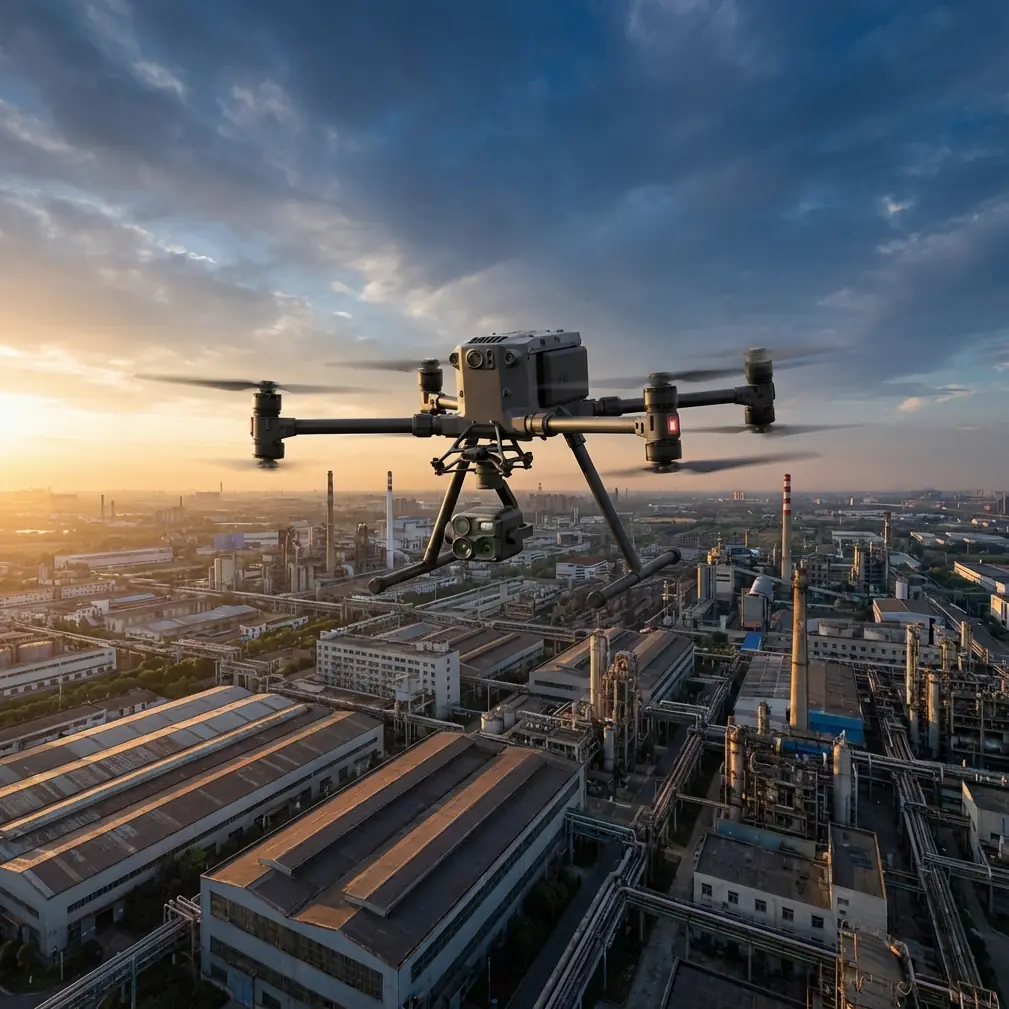
Matrice 4T for Low-Light Venue Filming: A Practical Field Workflow That Actually Holds Up
META: Learn how to use the DJI Matrice 4T for low-light venue filming, from thermal scouting and O3 transmission strategy to battery planning, payload setup, and safer night operations.
If you are filming venues in low light, the usual advice around drone shooting tends to break down fast. Most guidance assumes daylight, open airspace, and clean visual contrast. Real venue work is rarely that tidy. You are dealing with dim parking lots, uneven rooftop lighting, reflective glass, service roads, security constraints, and clients who want footage that feels polished without turning the site into a floodlit set.
That is where the Matrice 4T becomes interesting.
Not because it is simply “good at night,” but because it lets you work with multiple layers of scene awareness at once. A venue after dusk is not just a visual subject. It is also a thermal environment, a radio environment, a battery management problem, and sometimes a mapping problem if the client wants more than cinematic clips. The Matrice 4T sits in that overlap unusually well, especially when the job requires both storytelling footage and operational discipline.
This guide is built around that reality: how to use the Matrice 4T to film venues in low light without treating the aircraft like a flying tripod.
Why the Matrice 4T fits low-light venue work
For this specific kind of work, the headline feature is not one camera. It is the combination of sensing options and the way they support decision-making before and during flight.
The first operational advantage is thermal signature visibility. At a dim event space, sports complex, resort, warehouse venue, or live performance location, thermal data can reveal human movement, vehicle activity, HVAC hotspots, lighting rigs, and roof-level equipment that disappear into darkness on a standard visual feed. That matters even if your final deliverable is conventional video. Thermal is not only for inspection. It is a powerful scouting layer.
The second is transmission reliability. Low-light filming often pushes pilots into more cautious stand-off positions because obstacles become harder to judge visually. Stable O3 transmission matters here because it helps maintain situational awareness while you frame from safer offsets. When you are navigating around lighting poles, structural trusses, temporary staging, or the edge of a stadium lot, a weak link is not just annoying. It changes flight decisions.
The third is security. Many venue projects involve embargoed layouts, VIP movement patterns, or events that have not been publicly announced. AES-256 encryption is not a marketing extra in that context. It is part of how you keep live feeds and captured operational information from becoming an unnecessary risk. If you are filming a closed rehearsal, a private estate activation, or a controlled industrial venue, that detail has real client significance.
Those are not abstract specs. They shape how a low-light shoot gets planned and executed.
Start with a two-pass mindset, not a hero shot mindset
The fastest way to waste a night shoot is to launch chasing dramatic footage before you understand the venue. With the Matrice 4T, a better method is to divide the operation into two passes.
Pass one is reconnaissance. Pass two is image-making.
During reconnaissance, use the aircraft to learn the venue’s heat map and movement patterns. Look for pedestrian clusters, parked vehicles that are still active, warm rooftop machinery, generators, catering zones, late-arriving traffic, and dark edges where visual depth is weak. This is where thermal signature becomes more than an inspection buzzword. It gives you a living map of the site.
On a venue job, that map helps answer practical questions:
- Which side of the building has the cleanest approach path?
- Where are people accumulating after dark?
- Which roofline elements are hard to separate from the background in visible light?
- Are there warm mechanical units that will create ugly shimmer or compositional distractions?
- Which service lanes remain active longer than the schedule suggested?
You can then switch into pass two with intent. Instead of hunting angles, you know where the clean movement corridors are and which sections of the venue tell the strongest visual story.
This sounds simple, but it changes the night. The best low-light aerial footage usually comes from fewer, better-informed flights, not from more experimentation in the dark.
Build your venue shot list around contrast, not brightness
Low-light filming is not about making everything look bright. It is about managing contrast.
The Matrice 4T helps because it is designed for multi-sensor awareness, but the operator still has to think like a cinematographer. A venue becomes legible at night through contrast cues: pools of light, traffic movement, architectural outlines, illuminated signage, active entrances, and the geometry of parking and pathways.
That means your shot list should prioritize scenes where the venue separates itself from the environment. Good examples include:
- A slow reveal from a darker perimeter into a lit main entrance
- Elevated oblique passes that show circulation routes and arrival flow
- Roofline slides where practical lighting defines the building shape
- Wide establishing shots that use surrounding darkness to isolate the site
- Layered compositions combining lit foreground structures with distant city glow
What the Matrice 4T adds is confidence in the areas between those frames. You can use thermal to understand dead zones and active zones before committing to a path. You can use reliable O3 transmission to hold framing farther from obstacles when direct visual interpretation is weaker. Those two details, taken together, reduce guesswork in exactly the part of night flying that tends to erode shot quality.
A third-party accessory that genuinely improves results
One of the most useful upgrades for this type of work is a high-output strobe from a third-party maker such as Firehouse Technology. Not because it improves the footage directly, but because it improves the operation around the footage.
At night, conspicuity matters. A properly selected anti-collision strobe makes the aircraft easier for spotters, security teams, and nearby personnel to track without relying on a verbal description of where the drone is in the sky. In venue environments with mixed lighting and visual clutter, that cuts down confusion immediately.
The practical payoff is smoother coordination. Ground teams know where you are. Security is less likely to overreact to an unexpected aircraft movement. You spend less time pausing to reassure people and more time flying the planned sequence.
This is especially useful on larger campuses or controlled sites where the flight path crosses areas with different stakeholder groups. If you need help deciding what accessory setup makes sense for your specific venue workflow, you can message our ops desk here.
The key is to choose an accessory that supports safety and coordination without compromising balance, endurance, or mission discipline. Add-ons should solve an operational problem, not create one.
Battery strategy matters more at night than many crews admit
The phrase hot-swap batteries gets thrown around casually, but for low-light venue work it has real tactical value.
Night windows are short. The best moments often happen in narrow bands: just after the venue lights settle into full operation, during guest arrival, during a performance intermission, or when traffic patterns create clean movement lines. If you lose that window because your turnaround is clumsy, you do not get it back.
A hot-swap workflow helps preserve momentum between passes. That means you can complete reconnaissance, land, refresh power, confirm revised flight paths, and get airborne again while the visual conditions still match the brief. For event-driven work, those minutes matter.
It also supports better battery discipline in colder night conditions, where performance assumptions can become optimistic very quickly. Instead of pushing a pack because the next shot is “just one more orbit,” you can cycle batteries with less friction and stay conservative.
This is one of those details that separates tidy night operations from stressful ones. The aircraft may be capable, but if the battery workflow is sloppy, the whole mission feels rushed.
When venue filming turns into mapping
A lot of low-light venue assignments do not stay purely cinematic. Clients often ask for planning outputs after they see what the aircraft can do. They may want roof documentation, access road layouts, parking utilization views, or post-event site records.
That is where photogrammetry enters the conversation, even if it was not part of the original brief.
The Matrice 4T is not just useful for dramatic footage; it can support structured capture workflows that feed site analysis. If the venue owner or event contractor wants repeatable geometry, then GCP placement becomes part of the professional conversation. Ground control points are especially relevant when the final deliverable needs stronger spatial reliability rather than just visual appeal.
For low-light work, though, you need to be honest about the limits. Photogrammetry depends on image consistency and feature clarity. Night conditions make both harder. In practice, the better use of the Matrice 4T for after-dark venue jobs is often a hybrid workflow: gather cinematic footage at night, then schedule a daylight mapping pass with properly distributed GCPs if the client needs survey-grade context.
That recommendation itself builds trust. It shows you understand the difference between what looks good and what measures well.
BVLOS language gets mentioned too loosely
Venue operators and media teams sometimes throw around BVLOS because they assume a larger enterprise aircraft automatically opens that door. That is not how professional flight planning should work.
For low-light venue filming, the smarter approach is to treat BVLOS as a regulatory and operational framework, not a casual capability label. If your mission genuinely requires extended stand-off or limited direct visual reference, then it needs the correct approvals, risk controls, communication plan, and crew structure. The Matrice 4T may have the transmission and systems sophistication to support more complex operations, but that does not replace compliance.
This matters at night because darkness magnifies the consequences of lazy assumptions. O3 transmission can provide confidence in link stability, but it is not a substitute for lawful operational design. Serious clients notice the difference between a crew that understands that and one that talks as if signal range solves everything.
A practical low-light workflow for the Matrice 4T
Here is the field method I recommend for venue filming after dark:
Arrive before full darkness. Walk the perimeter while ambient detail is still visible. Confirm obstacles, likely RF interference sources, access restrictions, and safe launch positions.
Fly a short reconnaissance pass first. Use the Matrice 4T’s thermal capability to identify active zones, hidden movement, rooftop heat sources, and dead space that may complicate framing.
Build the creative sequence from those findings. Do not force a prewritten shot list if the venue’s night behavior tells a different story.
Prioritize clean, repeatable moves. At night, precision reads better than aggression. Slow lateral reveals, controlled ascents, and deliberate pullbacks usually outperform fast action moves.
Keep the transmission margin healthy. O3 is an operational asset, not a dare. Use it to maintain safer distance and cleaner judgment around obstacles.
Use hot-swap battery discipline to protect your best visual windows. Plan battery changes around event timing, not just state of charge.
Document secure handling expectations. If the venue footage is sensitive, make AES-256 part of the operating discussion from the start so security teams know you are thinking beyond camera settings.
Add the right accessory, not every accessory. A proven strobe can improve safety and team coordination. Extra hardware with vague purpose usually degrades the workflow.
That combination gives you something many night shoots lack: control.
What clients actually notice in the final result
Most clients will never ask whether you used thermal as a scouting layer or whether AES-256 protected the link. They will not praise your battery rotation strategy either.
What they do notice is that the footage feels calm, deliberate, and informed. The building reads clearly. Human activity looks intentional rather than chaotic. The approach shots avoid awkward surprises. Rooflines are clean. Parking flow makes sense. The venue appears alive, but not messy.
That polished outcome is usually the result of invisible operational choices.
This is why the Matrice 4T is such a strong fit for low-light venue filming. It supports the hidden part of the job: understanding the site, managing risk, preserving timing, and giving the pilot enough layered information to make sharper creative decisions. The aircraft’s value is not just in what it records. It is in how it helps the crew see the venue before the audience ever does.
If you are filming venues after dark, that difference is not theoretical. It is the difference between bringing back footage that looks expensive and bringing back footage that merely proves the drone went up.
Ready for your own Matrice 4T? Contact our team for expert consultation.