
Matrice 4T in Coastal Venue Filming: A Field Report
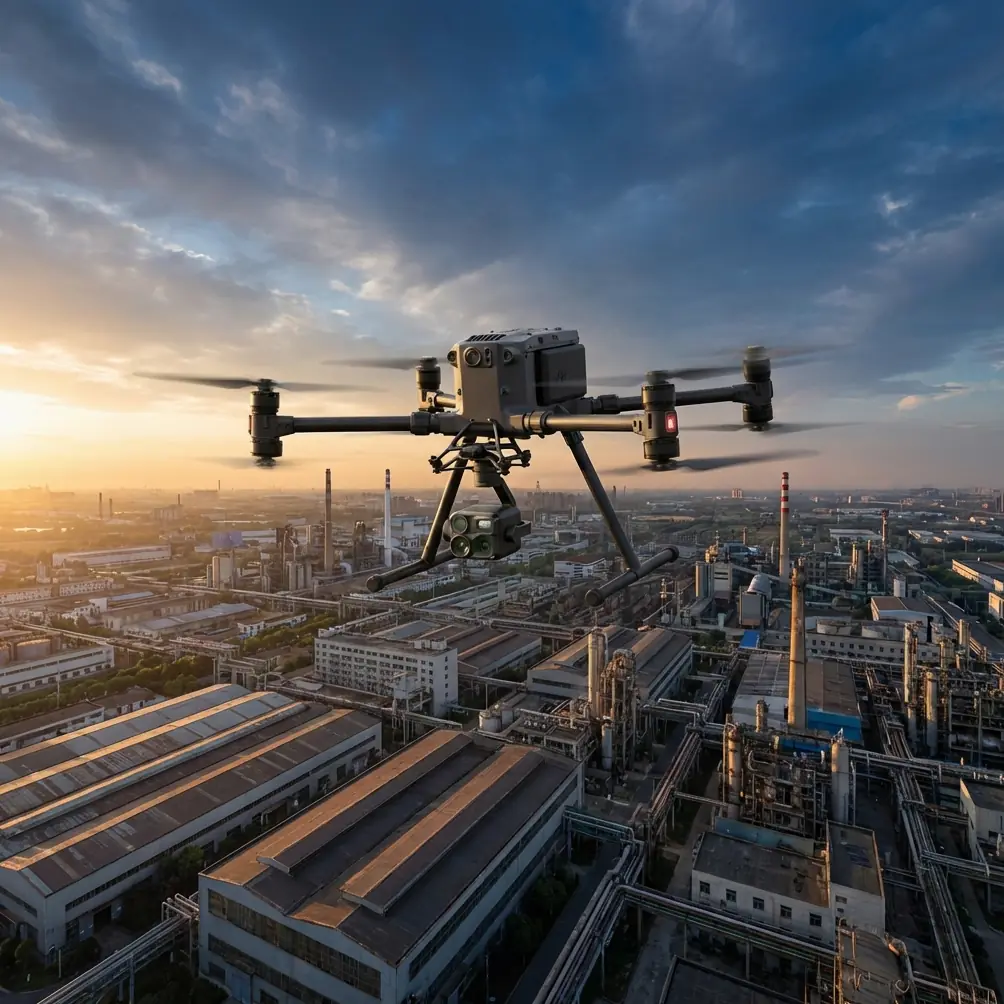
Matrice 4T in Coastal Venue Filming: A Field Report from the Edge of Wind, Salt, and Signal
META: Expert field report on using the DJI Matrice 4T for coastal venue filming, covering thermal workflow, EMI handling, O3 transmission stability, GCP planning, and secure data capture.
Coastal venue filming looks deceptively simple from the parking lot. Open horizon. Plenty of light. Dramatic water. A client who wants sweeping reveal shots, shoreline context, and a clean visual record of the property before the tide, wind, and foot traffic shift the scene. Once the aircraft is in the air, though, the coastline starts showing its real character. Salt haze softens detail. Gusts arrive from odd angles off building faces. Steel structures, lighting rigs, communications equipment, and marine electronics create pockets of electromagnetic noise that can turn a stable link into a distracted one.
That is where the Matrice 4T earns attention.
This is not a generic “best drone for everything” claim. In a coastal venue workflow, the Matrice 4T stands out because it handles mixed mission demands without forcing the crew to swap platforms halfway through the day. A single site visit often needs cinematic context shots, roof and facade checks, perimeter mapping, thermal signature review around mechanical systems, and secure data handling if the venue hosts high-profile events. The aircraft is most useful when those tasks overlap. At coastal properties, they usually do.
I have been using a field-report mindset with the Matrice 4T rather than treating it as a pure inspection tool or a pure camera ship. That distinction matters. Venue work near the water is operationally messy. You may launch at sunrise for low-angle light, pivot by mid-morning into thermal review before surfaces heat up, and finish with photogrammetry passes once pedestrian activity drops. The value is not just the sensor package. It is the ability to move through those phases with minimal friction and maintain confidence in the aircraft’s link, positioning discipline, and data hygiene.
The first operational detail worth emphasizing is transmission integrity. In a coastal environment, people tend to think only about distance and wind. Signal quality is often the hidden variable. The Matrice 4T’s O3 transmission capability is especially relevant when filming venues with multiple interference sources nearby. This is not just about range on a specification sheet. It is about keeping a stable downlink and command path when you are working around rooftop HVAC, event lighting infrastructure, marina electronics, public Wi-Fi saturation, and reinforced building materials.
On one recent shoreline venue survey pattern, the aircraft behaved perfectly over open sand and then started showing intermittent link quality degradation as it approached a terrace area loaded with steel framing and mounted communications gear. The fix was not dramatic. It rarely is. I adjusted pilot position to improve line-of-sight geometry and made a deliberate antenna alignment change to keep the controller oriented more directly toward the aircraft’s path rather than the building face. That small correction reduced the interference effect enough to restore a more reliable feed. This is the sort of fieldcraft that gets skipped in glossy overviews. In real operations, antenna adjustment is not a footnote. It can be the difference between a clean pass and a broken sequence.
The second detail that deserves serious attention is AES-256 encryption. Venue filming in coastal regions often involves more than pretty footage. You may capture guest circulation routes, security perimeters, service access roads, rooftop layouts, temporary staging zones, or utility infrastructure. For event sites, resorts, clubs, and private compounds, secure transmission and secure handling are not abstract technical benefits. They are operational requirements. AES-256 matters because it reduces exposure when you are collecting sensitive imagery around a property that does not want raw aerial data casually leaking into the wrong channel. If the mission includes thermal work, that security layer becomes even more valuable. Thermal imagery can reveal occupancy patterns, equipment conditions, and structural anomalies that clients do not want floating around unsecured.
Thermal signature work itself is often misunderstood in venue filming. People assume thermal is only for emergency response or industrial inspection. In coastal sites, it can be quietly useful. Early in the day, before sun loading flattens the temperature contrast, the Matrice 4T can help identify roof moisture zones, HVAC irregularities, insulation weak points, or heat-producing electrical equipment on structures that are expensive to access manually. Near the shoreline, salt exposure accelerates wear. That means small thermal anomalies can point a facility manager toward maintenance issues before they become visible failures.
There is an operational caveat, and it matters: thermal imagery must be timed intelligently. Along the coast, surfaces change temperature fast. A roof that shows excellent separation at dawn can become noisy or misleading once direct sunlight starts driving broad heating patterns. If I am building a flight plan for a venue team, I usually reserve the first window for thermal signature capture, then move into visual collection once ambient conditions are friendlier to true-color detail. The Matrice 4T supports that sequencing well because it lets the operator stay on mission instead of restructuring the entire workflow around a sensor change.
For teams who also need site modeling, photogrammetry with the Matrice 4T can be practical if expectations are set correctly. This is not about forcing one aircraft to be a laboratory-grade survey machine in every context. It is about using the platform intelligently for venue-grade deliverables. Coastal properties often need updated site context for planning temporary structures, drainage review, parking flow, shoreline setback analysis, or maintenance documentation. In those cases, combining photogrammetry with carefully placed GCPs can tighten consistency and give planners a much more trustworthy site model.
GCP discipline is not optional when the venue has repetitive surfaces or shoreline features that confuse reconstruction. Sand, water edges, reflective paving, and low-texture roofs can all degrade model quality. A few well-distributed ground control points placed outside heavy foot traffic zones can dramatically improve alignment confidence. Operationally, that means less time second-guessing measurements later. It also means the model remains useful beyond marketing. Architects, event managers, and maintenance teams can all work from the same spatial reference instead of arguing over whether a feature drifted in the reconstruction.
Battery workflow is another area where the Matrice 4T fits coastal venue work unusually well. Hot-swap batteries sound like a small convenience until you are filming a property with changing tide lines, booked time windows, or weather that is only cooperative in short bursts. In these settings, every minute of delay can force a compromised flight plan. Hot-swap capability helps the crew preserve tempo. You can bring the aircraft down, exchange power, and get back into the air without rebuilding the mission from scratch or losing the continuity needed for repeatable passes. That is especially valuable for photogrammetry grids or comparative facade runs where consistent overlap matters.
There is also a safety and compliance angle here. Coastal venues are often crowded, segmented, and bordered by no-go spaces: roads, water, piers, rooftops, private terraces. A mission can expand quickly from straightforward line-of-sight filming into more complex operational planning. BVLOS discussions enter the picture in larger coastal estates or infrastructure-adjacent properties, but that should never be romanticized. If a site demands extended coverage, the operator has to think carefully about legal framework, observers, airspace, site-specific hazards, and command-link confidence. The Matrice 4T provides tools that support professional operations, but the aircraft does not erase the need for disciplined decision-making.
Wind management deserves its own paragraph because coastal work punishes bad assumptions. The Matrice 4T is not intimidated by moderate coastal conditions, but venue pilots still need to fly the site, not the forecast. Wind accelerates around corners, spills over parapets, and rotates unexpectedly near open-sided structures. I prefer to take the first pass at a conservative altitude and watch how the aircraft responds along building edges before committing to lower or more aggressive lines. If the mission includes detailed facade or terrace work, I also map out likely turbulence pockets during the pre-flight walk. That one habit has prevented more reshoots than any camera setting tweak.
The same goes for salt. It changes maintenance priorities. Coastal crews should treat post-flight cleaning and inspection as part of the mission, not as a nice-to-have. Salt residue can build gradually and then appear all at once in the form of connector issues, degraded contacts, or sensor contamination. A Matrice 4T assigned regularly to waterfront operations needs a stricter cleaning rhythm than one flying inland construction sites. That is not a flaw in the platform. It is simply the reality of marine-adjacent operations.
What makes the Matrice 4T compelling for this kind of work is that it supports layered outcomes from one deployment. A venue operator may start the day wanting “aerial footage.” By the end of the session, the same aircraft may have delivered shoreline context imagery, early thermal data on rooftop plant, a partial photogrammetric model anchored with GCPs, and secure documentation ready for internal review. That consolidation has real operational significance. Fewer launches. Fewer platform changes. Fewer opportunities for error. Better continuity across datasets.
If your team is trying to structure a coastal capture workflow and wants a practical second opinion, this field operations chat is a sensible place to start the conversation.
The broader lesson is simple. Coastal venue filming is not just cinematography with prettier backgrounds. It is a compound mission set shaped by interference, weather, reflective surfaces, fast-changing light, and the need for credible data. The Matrice 4T works best here when it is treated as a professional field platform rather than a flying camera alone. O3 transmission helps maintain control and video reliability where electromagnetic interference can sneak up on you. AES-256 supports secure handling when the imagery has operational sensitivity. Thermal signature capture opens a maintenance layer that many venue operators overlook. GCP-backed photogrammetry turns flyover footage into something planners can actually use. Hot-swap batteries keep the day moving when conditions and access windows are tight.
That combination is why the aircraft deserves serious consideration for coastal venue teams. Not because it promises perfection, and not because the environment gets easier. It deserves consideration because it remains useful after the glamour of the location fades and the real work begins.
Ready for your own Matrice 4T? Contact our team for expert consultation.