
Matrice 4T for Filming in Windy Venues: A Practical Field
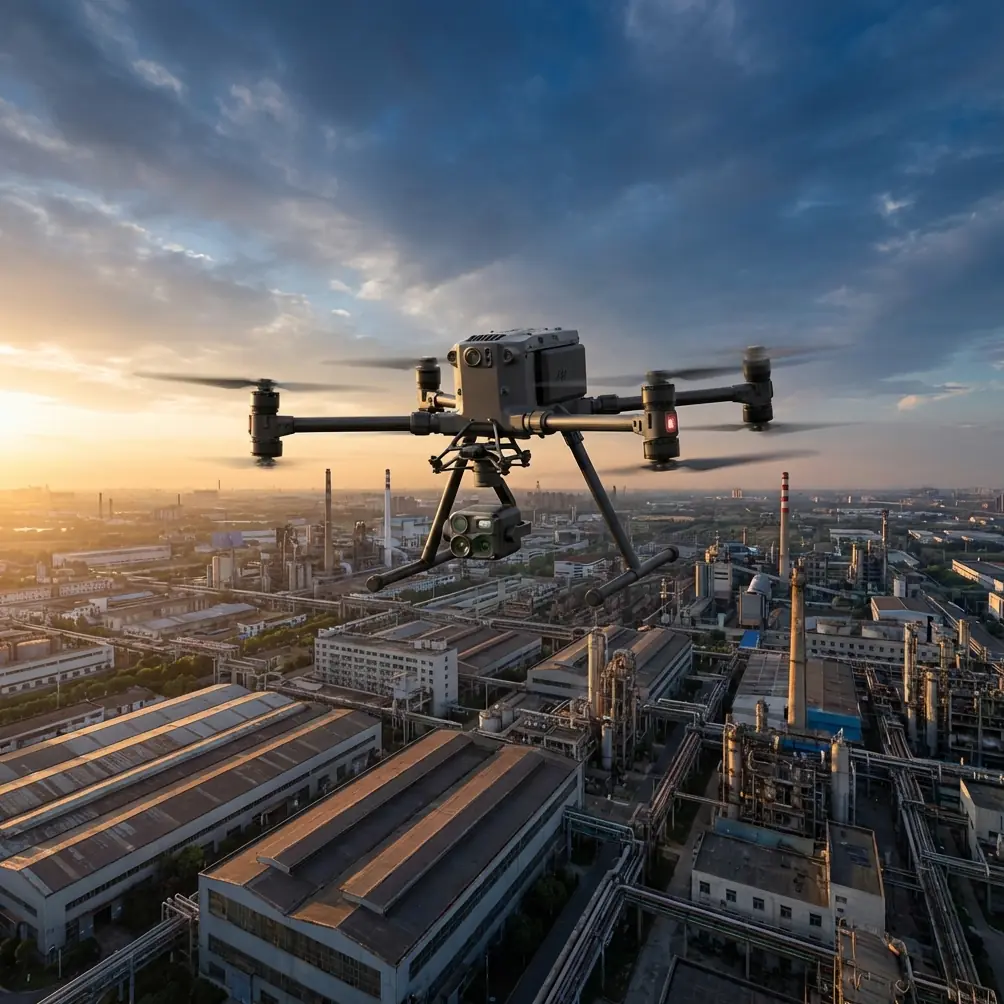
Matrice 4T for Filming in Windy Venues: A Practical Field Method That Protects Image Quality
META: Learn how to use the DJI Matrice 4T for filming in windy venues with better stability, cleaner data capture, safer flight planning, and smarter payload setup.
Wind changes everything on a shoot.
Not just the obvious part, where the aircraft has to work harder to hold position. Wind changes lens choices, takeoff location, battery planning, return routes, hover time, thermal interpretation, and even whether your footage is usable for photogrammetry afterward. For crews working with the Matrice 4T in exposed venues, that matters more than most people admit.
The Matrice 4T is often discussed as a compact enterprise platform, but windy-location filming reveals what actually separates an enterprise aircraft from a basic camera drone. It is not only about getting a shot. It is about holding a repeatable line, preserving transmission integrity, protecting sensitive footage, and collecting visual and thermal data that remains useful after the flight.
I approach this as a field operations problem, not a spec-sheet exercise.
If your venue sits on a ridge, beside open water, between tall buildings, or around large stadium-like structures, here is how to make the Matrice 4T work harder for you without turning every flight into a battery-burning wrestling match.
Start with the venue, not the drone
Wind at a venue is rarely uniform. That is the first mistake many crews make.
A weather app may say conditions are acceptable, yet one side of the property is calm while the roofline or grandstand edge creates rolling turbulence. For venue filming, the operational question is not “Can the Matrice 4T fly in this wind?” It is “Where are the wind gradients, and what will they do to the shot?”
Before launch, break the site into three zones:
Clean airflow zones
Open areas where wind direction is predictable.Mechanical turbulence zones
Spaces downwind of walls, trusses, lighting towers, seating banks, or roof edges.Compression corridors
Gaps between structures where wind accelerates and pushes the aircraft off heading faster than expected.
This matters because the Matrice 4T can maintain stable flight extremely well, but stable flight and stable footage are not the same thing. Turbulence can trigger constant micro-corrections. The aircraft may still hold safely while your image reveals tiny yaw shifts or gimbal recovery artifacts, especially during slow cinematic passes.
For this reason, my first recommendation is simple: fly a short reconnaissance pattern at multiple heights before committing to the real shot list.
Build your windy-venue shot plan around transmission confidence
A windy venue can tempt pilots to stay lower and closer to structures for shelter. Sometimes that helps. Sometimes it destroys link quality.
The Matrice 4T benefits from O3 transmission, which is operationally significant in venue filming because wind often forces you to reposition farther from the ideal pilot location. Strong transmission performance gives the crew more flexibility to stand where launch and recovery are safer rather than where the signal is merely convenient. That can be the difference between a professional setup and a rushed one near traffic, fencing, or moving equipment.
Still, transmission quality in a windy site is not only about distance. Structures, scaffold, lighting rigs, metal roofing, and crowd-control infrastructure can create messy RF behavior. In practical terms:
- Keep your control position elevated when possible.
- Maintain clear line-of-sight to the aircraft during key passes.
- Avoid flying behind major steel structures during precision lateral moves.
- Watch not just signal bars, but latency feel and video consistency.
If you are collecting footage for clients who care about confidentiality, the aircraft’s AES-256 data security also deserves attention. This is not a flashy feature, but it matters. Venue shoots often involve unreleased stage layouts, industrial sites, restricted-access infrastructure, or proprietary event builds. Strong encryption means your downlink and handling workflow are better aligned with commercial clients who treat imagery as sensitive operational material, not casual content.
That detail becomes especially useful when filming private facilities where thermal and visual outputs may reveal more than aesthetics alone.
Use wind to shape your flight path instead of fighting it
The cleanest windy-day flights usually look less ambitious on paper.
Many pilots try to force symmetrical camera paths into asymmetrical air. That creates inconsistent groundspeed, unstable framing, and unnecessary battery drain. The smarter method is to assign each shot one of three wind relationships:
1. Headwind setup pass
Use this when you need the most controlled approach speed and precise framing. Flying into wind can slow the aircraft naturally, which helps with gradual reveals and measured pushes. The tradeoff is higher power draw.
2. Tailwind exit pass
Best for smooth pullaways where the aircraft can move with less effort. The risk is overspeed relative to your intended visual tempo, so rehearse it before recording.
3. Crosswind orbit or sideline move
This is where weaker pilots lose consistency. In a crosswind, the aircraft is continuously correcting laterally. If the venue edge creates rotor wash or turbulence, your orbit may drift in radius and spoil repeatability.
The Matrice 4T is capable enough for these moves, but your job is to reduce how much correction it must perform. That often means widening your curve, increasing standoff distance, and avoiding the exact height where structures shed unstable air.
A good rule: if your first take required visible control input throughout the move, redesign the path. Do not just try to “fly it better.”
Protect battery margin with shorter, modular flights
Wind punishes indecision.
Long hovering discussions, repositioning without purpose, repeated altitude changes, and deadhead returns all become expensive when the aircraft is constantly compensating. This is where hot-swap batteries become more than a convenience. In windy venue work, they change the pace of the operation.
Operationally, hot-swapping lets you break the mission into tight segments rather than chasing too many shots in one sortie. That has two direct benefits:
- You keep safer reserve margins because each flight has a narrower objective.
- You avoid heat buildup and power anxiety that can push crews into rushed recoveries.
I generally recommend a modular structure:
- Flight 1: wind reconnaissance and exposure check
- Flight 2: wide establishing passes
- Flight 3: medium-altitude tracking and reveal shots
- Flight 4: thermal or detail capture if needed
- Flight 5: repeatable backup passes from the cleanest airflow corridor
That rhythm works far better than trying to improvise everything in a single extended session. Wind rewards discipline.
Thermal is not just for inspection crews
The Matrice 4T’s thermal capability is easy to misunderstand in a filming context. People hear “thermal signature” and assume it belongs only to utility inspection or search-style workflows. In reality, venue filming in wind can benefit from thermal capture in several civilian scenarios.
If you are documenting a large outdoor property, a festival ground under setup, a solar-adjacent venue, a logistics yard, or a mixed-use industrial event space, thermal helps identify heat patterns that visual footage will miss. Roof equipment, generator clusters, HVAC discharge, recently occupied zones, and temporary power infrastructure all show up differently.
Why does wind matter here? Because wind changes how thermal signatures read.
A breezy roof may cool surfaces quickly and reduce contrast. Sheltered corners may retain heat longer. Exhaust plumes can drift, smearing interpretation. So if your client wants both visual footage and thermal context, your thermal passes should not simply mirror your cinematic flight lines. They should be planned around airflow and surface cooling behavior.
This is one reason the Matrice 4T is a better fit for serious venue documentation than a standard filming drone. You are not just collecting pretty footage. You are building a layered record of the site.
If photogrammetry is part of the deliverable, fly for overlap, not drama
Some venue projects start as filming assignments and quietly become mapping assignments after the client realizes they want a measurable record of the site. That is where operators get into trouble. Cinematic footage rarely translates cleanly into survey-grade outputs.
If the Matrice 4T footage may support photogrammetry, treat that as a separate objective. Wind introduces angle variation, speed inconsistency, and motion blur risk. All three can degrade reconstruction.
A few field rules help:
- Fly mapping legs perpendicular to the dominant wind if groundspeed remains manageable.
- If drift becomes inconsistent, switch to a grid that reduces frequent heading changes.
- Increase image redundancy rather than trusting a marginal pass.
- Use GCP strategy when positional confidence really matters.
GCP use is especially significant around venues with repetitive surfaces such as roofing, parking lots, turf, or concrete aprons. Those textures can confuse automated reconstruction. Ground control points provide stable reference anchors so the model does not wander when wind has introduced slight image inconsistency. That can make the difference between a visual approximation and a dataset your client can actually use for planning.
The bigger lesson is this: the Matrice 4T can support mixed capture missions, but only if the pilot separates cinematic logic from mapping logic.
Choose accessories that solve a real windy-day problem
Accessory choices often make more difference than pilots expect.
One third-party addition I have seen work well on exposed venues is a high-visibility landing pad with weighted edge anchors from aftermarket enterprise accessory suppliers. It sounds simple, almost too simple, yet in windy conditions it improves launch and recovery discipline immediately. You create a predictable touchdown reference, reduce rotor wash debris ingestion, and avoid scrambling to recover on rough ground or loose gravel.
Another useful category is a sun hood or monitor shading accessory for the remote display. In bright, windy venues, pilots often squint through washed-out screens while trying to assess fine framing and signal quality. Better screen visibility reduces unnecessary hover time and cuts down on repeated takes caused by poor on-site monitoring.
The best accessories are not the most exotic. They are the ones that remove friction from the workflow.
If you are planning a site-specific setup and want a fast operational opinion, this is a practical place to message a Matrice 4T field specialist and sanity-check the payload and accessory combination before shoot day.
Watch your gimbal strategy in gusts
A windy shot often fails before the aircraft itself looks unstable.
The issue is usually over-ambitious gimbal behavior layered on top of gust response. If the aircraft is making constant corrections, and the operator is also making frequent tilt changes, the visual result can feel nervous even when the drone is technically flying well.
My rule is to simplify one axis whenever wind becomes variable.
If the aircraft is moving through a complex crosswind segment, lock in the gimbal angle and let the path create the reveal. If the shot depends on a tilt move, choose a straighter air corridor so the aircraft is not also fighting lateral displacement.
This sounds basic, but it is one of the easiest ways to make Matrice 4T footage look deliberate in bad air.
Do not overpromise BVLOS-style thinking at a venue
The phrase BVLOS gets tossed around too casually in enterprise drone conversations. In a venue environment, the operational mindset behind BVLOS planning can still be useful even when you are flying within normal visual conditions.
What I mean is this: think ahead like a pilot who cannot rely on improvisation.
Pre-brief alternate recovery points. Plan wind-favored return legs. Define no-hover zones above crowds, temporary structures, or fragile equipment. Decide in advance which sides of the venue become unacceptable if gusts increase. That level of planning is borrowed from more advanced operational culture, and it improves normal venue work dramatically.
The Matrice 4T rewards crews who think this way. It has the transmission reliability, battery workflow, and enterprise-grade security features to support disciplined operations. But the aircraft does not remove the need for judgment. It magnifies the value of good judgment.
A practical windy-venue checklist for the Matrice 4T
Before launch:
- Identify turbulence sources at the venue
- Walk the launch and recovery area for loose debris
- Confirm transmission line-of-sight and fallback pilot position
- Define battery minimums more conservatively than on calm days
- Separate cinematic objectives from thermal or mapping objectives
During flight:
- Use the wind direction to shape each shot
- Avoid extended hovers in disturbed air
- Watch for repeated yaw corrections during lateral moves
- Rehearse one pass before committing to the main take
- Land early if the venue creates stronger gusts at higher altitude than expected
After flight:
- Review footage for micro-jitter before moving on
- Check whether thermal imagery remains interpretable under current cooling conditions
- Confirm whether any photogrammetry capture needs reflight due to overlap inconsistency
- Swap batteries and reset the next mission instead of stacking too many goals into one sortie
The real advantage of the Matrice 4T in windy filming
For venue work in wind, the Matrice 4T’s advantage is not one isolated feature. It is the way several enterprise traits work together.
O3 transmission gives flexibility in where the crew can safely stand. AES-256 supports clients who treat imagery as sensitive. Hot-swap batteries make shorter, safer, more disciplined flights realistic. Thermal capture adds another layer of site understanding. And if the job expands into documentation, careful use of photogrammetry methods and GCPs can turn the same platform into a measurement tool.
That combination is what makes the aircraft useful in the real world.
A windy venue is a stress test. It exposes weak planning, lazy shot design, and overconfidence quickly. Used properly, the Matrice 4T does not just survive those conditions. It gives experienced crews room to deliver footage and site data that still holds up after the gusts have passed.
Ready for your own Matrice 4T? Contact our team for expert consultation.