
Filming Dusty Vineyards with the Matrice 4T
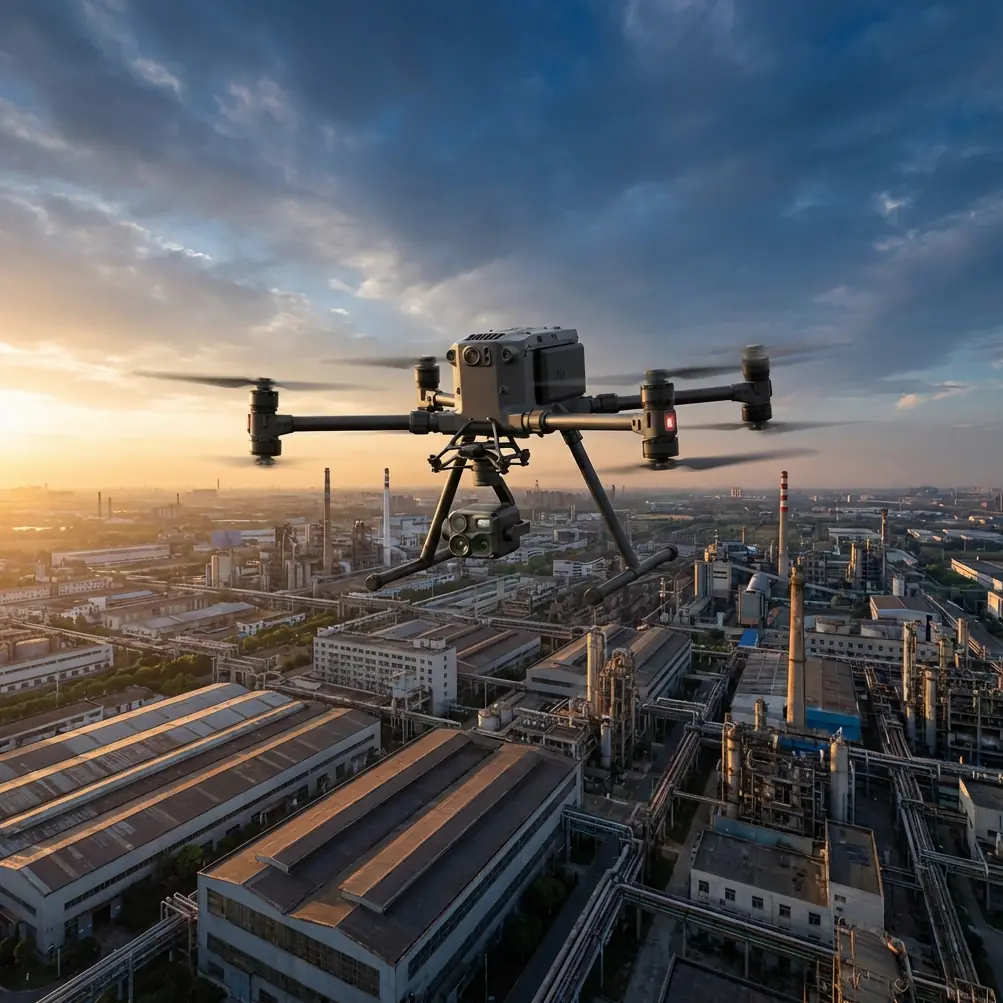
Filming Dusty Vineyards with the Matrice 4T: A Field Case Study from the Row Ends
META: A practical case study on using the DJI Matrice 4T for vineyard filming in dusty conditions, with workflow insights on thermal imaging, O3 transmission, AES-256 security, hot-swap batteries, and field efficiency.
Dust changes everything.
Anyone who has filmed vineyards in late summer knows that the beautiful part of the job is only half the story. The light is great. The rows create natural leading lines. The terrain gives you elevation changes that can make even simple passes feel cinematic. Then the tractors start moving, the access roads dry out, the wind picks up, and the aircraft spends the day working through suspended dust, heat shimmer, and a lot of repeated repositioning between blocks.
That combination used to slow us down more than the vineyard itself.
I have worked on projects where the brief sounded straightforward: capture a mix of promotional footage, block-level condition visuals, and a few thermal passes to help the grower compare stressed rows against healthier sections. On paper, that is a clean one-day operation. In practice, vineyards are fragmented environments. You are moving between narrow lanes, lifting from uneven ground, relaunching often, and trying to maintain a dependable image link while the crew and vehicles spread out across the property.
This is exactly the kind of assignment where the Matrice 4T starts to make sense, not as a headline feature list, but as a tool that reduces friction in the field.
The challenge wasn’t flight. It was continuity.
A few seasons ago, the real bottleneck in vineyard filming was not getting airborne. It was keeping the mission flowing once the conditions turned messy.
Dusty takeoff zones forced us to think carefully about every landing. Battery swaps interrupted momentum. Heat haze in the middle of the day made visual assessment less reliable than clients expected. And if the team wanted both polished video and useful agricultural insight, that usually meant juggling separate workflows or making compromises.
The Matrice 4T changes that equation because it is built around multi-sensor utility rather than a single-image priority. For vineyard work, that matters.
The obvious value is that you can capture conventional visual footage and thermal data in one field deployment. But the operational significance runs deeper. In a vineyard, the subject is not static. Water stress patterns, canopy density variations, and localized heat signatures often only become obvious when you can compare sections quickly and consistently. A platform that lets you move from cinematic overview to thermal signature analysis without changing aircraft saves more than time. It preserves context.
You are looking at the same block, from the same mission window, under the same environmental conditions.
That is a big deal if the grower wants content for marketing and the operations team wants usable observations.
Why thermal matters more in vineyards than many crews expect
A lot of people hear “thermal” and assume it is a specialist feature for inspections alone. In vineyards, it can be surprisingly practical.
Under dusty and dry conditions, visual footage may show color variation, but thermal can reveal differences in plant stress that are not immediately obvious to the naked eye, especially across long rows where subtle changes disappear in the pattern. A thermal signature is not a diagnosis by itself, and it should never be treated as one, but it can help identify where to look closer. For growers managing irrigation, canopy uniformity, or localized vine stress, that first layer of heat-based visibility can guide the next step.
For filming crews, it adds another deliverable without requiring a second sortie with another system.
That dual-role capability is where the Matrice 4T becomes more than a camera platform. It becomes a bridge between media production and operational observation.
In one recent style of workflow, we used morning flights for cleaner visual passes while the air was still relatively stable, then returned later for thermal comparisons once solar loading had changed the field conditions. The same aircraft handled both objectives. That reduced setup complexity and made it easier to maintain continuity in framing, altitude logic, and route planning.
Dusty vineyards reward aircraft that waste less time on the ground
This is where hot-swap batteries stop being a specification and become a practical advantage.
In vineyard environments, you may be hopping between blocks all day. Every shutdown and restart slows the crew, especially if the client is moving you between parcels with little downtime. Hot-swap batteries help keep the aircraft active while you exchange power packs, which means less waiting for a full reboot cycle and less interruption to the day’s rhythm.
The operational significance is simple: fewer dead minutes between flights.
That matters more in dusty conditions because each unnecessary landing exposes the system to more particulate contamination and more handling on rough ground. If you can keep battery changes efficient, you reduce the amount of time spent kneeling beside cases in a dirt lane while wind pushes dust through your setup area.
People often underestimate how much field productivity comes from small efficiencies. In vineyards, those small efficiencies stack up quickly.
O3 transmission is not just about range
Vineyard filming often involves uneven topography, tree lines at parcel edges, utility structures, farm buildings, and support vehicles moving between rows. Even when your flight path is not technically demanding, maintaining a stable live view can become frustrating if the image link is inconsistent.
That is where O3 transmission earns its keep.
A robust transmission system helps the pilot and camera operator make better decisions in real time, especially when flying elongated row patterns or repositioning around a hillside property. The value is not simply that the link goes far. The real benefit is that a dependable feed supports cleaner route execution, more precise reframing, and fewer interrupted takes.
When filming vineyards, that translates directly into smoother reveal shots, better orbit consistency around slope contours, and more confidence when transitioning from one block to the next.
If the assignment also includes photogrammetry, transmission stability matters for a different reason. Mapping missions depend on consistency. A reliable control and video link helps the team monitor mission progress, verify coverage, and catch issues before they turn into gaps in the dataset.
Security is easy to ignore until a vineyard client asks about it
Commercial vineyard projects are not only about visuals. In some regions, growers and estate managers increasingly care about where flight data goes and how footage is handled, particularly if imagery may reveal irrigation layouts, access roads, infrastructure, or experimental cultivation blocks.
That is why AES-256 is worth mentioning in serious discussions around the Matrice 4T.
For many operators, encrypted transmission is one of those details that sits quietly in the background. For clients, it can be a trust signal. The operational significance is straightforward: when you are transmitting imagery and flight data on an active commercial site, strong encryption supports a more secure workflow and a more credible professional standard.
It will not make the vines look better on camera. It will make your operating posture more defensible.
And that becomes useful when you are working with larger estates, contract farming groups, or agricultural consultants who expect a more formal data-handling conversation.
A single aircraft can support both filming and measurement
This is where vineyard jobs become interesting.
Many crews start with a visual brief and later discover that the client also wants block maps, condition records, or a repeatable way to compare sections over time. The Matrice 4T is not just relevant to filming because of its optics. It is relevant because it can sit inside a broader survey workflow.
If you are producing photogrammetry outputs, accurate planning still matters. Ground control points, or GCPs, remain one of the most effective ways to improve positional confidence in mapping projects when the site demands higher reliability. In a vineyard, that can be especially useful if the client wants to compare row spacing, terrain features, drainage patterns, or infrastructure placement across seasons.
The practical point here is not that every filming job should become a full mapping assignment. It is that the Matrice 4T can support a more layered service model when the vineyard needs more than footage.
You can start with media capture, then build toward repeatable data collection without changing the whole platform strategy.
That flexibility is valuable for operators who serve agricultural clients over long growing cycles rather than one-off shoots.
BVLOS conversations are creeping into agriculture, but the real issue is planning
BVLOS remains a regulated topic and depends entirely on the rules in your area, so vineyard operators should treat it as an authorization and compliance matter, not a casual capability discussion.
Still, the reason it appears in agricultural conversations is obvious. Vineyards can stretch across large properties, and the efficiency gains from broader mission planning are appealing. Even when operations stay within standard visual line-of-sight requirements, the Matrice 4T’s communication and mission-oriented design push crews toward a more structured way of thinking.
That is useful.
A vineyard shoot becomes easier when the crew plans it like a grid of objectives rather than a collection of improvised flights: hero footage at sunrise, thermal sweeps later, block-by-block mapping where needed, battery rotation timed around vehicle movement, and launch points selected to minimize dust exposure.
The aircraft helps, but the real improvement is what it encourages the team to do.
What changed for us in the field
The biggest difference after moving to a platform like the Matrice 4T was not image quality alone.
It was the reduction in compromise.
We no longer had to choose between filming the property attractively and collecting useful thermal observations. We no longer had to build the day around clumsy transitions between specialized tools. Hot-swap battery support kept the schedule moving. O3 transmission made long row-aligned flights less stressful. AES-256 gave us a stronger answer when commercial clients asked how their operational imagery was protected.
Those are very different features, but they all point in the same direction: less operational drag.
And in dusty vineyards, drag is what ruins a shooting day. Not dramatic failures. Just small, repeated inefficiencies that burn time, battery cycles, and client confidence.
A realistic vineyard workflow with the Matrice 4T
If I were setting up a typical dusty vineyard filming day around this aircraft, the workflow would look something like this:
Start early, before airborne dust and thermal turbulence build. Use that window for your cleanest hero footage and low-angle row reveals. Keep launch and landing zones away from active vehicle traffic wherever possible.
Move into structured block coverage once the light hardens. If the client may want comparison data later, fly with repeatability in mind from the start. Even your cinematic work benefits when routes are intentional.
Use thermal passes strategically rather than treating them as a novelty. Focus on transitions between healthy and suspect areas, irrigation boundaries, slope changes, and any section the grower has already flagged.
If mapping is part of the brief, establish GCPs before the dust and crew traffic become disruptive. It is a simple step that can strengthen downstream photogrammetry results.
Rotate batteries efficiently. The less time the aircraft spends unnecessarily powered down in a dusty lane, the smoother your day will go.
And if the client needs quick field coordination while moving between parcels, sharing a direct WhatsApp line can save a lot of back-and-forth; we have used this contact route in live vineyard scheduling: https://wa.me/85255379740
The Matrice 4T fits vineyard work because it respects the reality of vineyard work
That may sound obvious, but not every drone does.
Vineyards are repetitive in pattern and unpredictable in operation. They look calm from above and feel chaotic at ground level. The aircraft that performs well there is not just the one with good cameras. It is the one that lets a crew adapt without constantly rebuilding the mission.
The Matrice 4T earns its place in that environment by combining thermal capability, mission-friendly battery handling, stable O3 transmission, and AES-256 security into a platform that can support both footage and field intelligence. Add the possibility of structured photogrammetry with GCP-backed workflows, and it becomes clear why this model fits agricultural visual work better than a simpler camera-only system.
For dusty vineyard filming, that combination is not theoretical.
It means fewer interruptions, more usable outputs, and a day that holds together from the first takeoff to the last battery change.
Ready for your own Matrice 4T? Contact our team for expert consultation.