
Matrice 4T on Harsh Coastlines: A Field Case Study in Heat
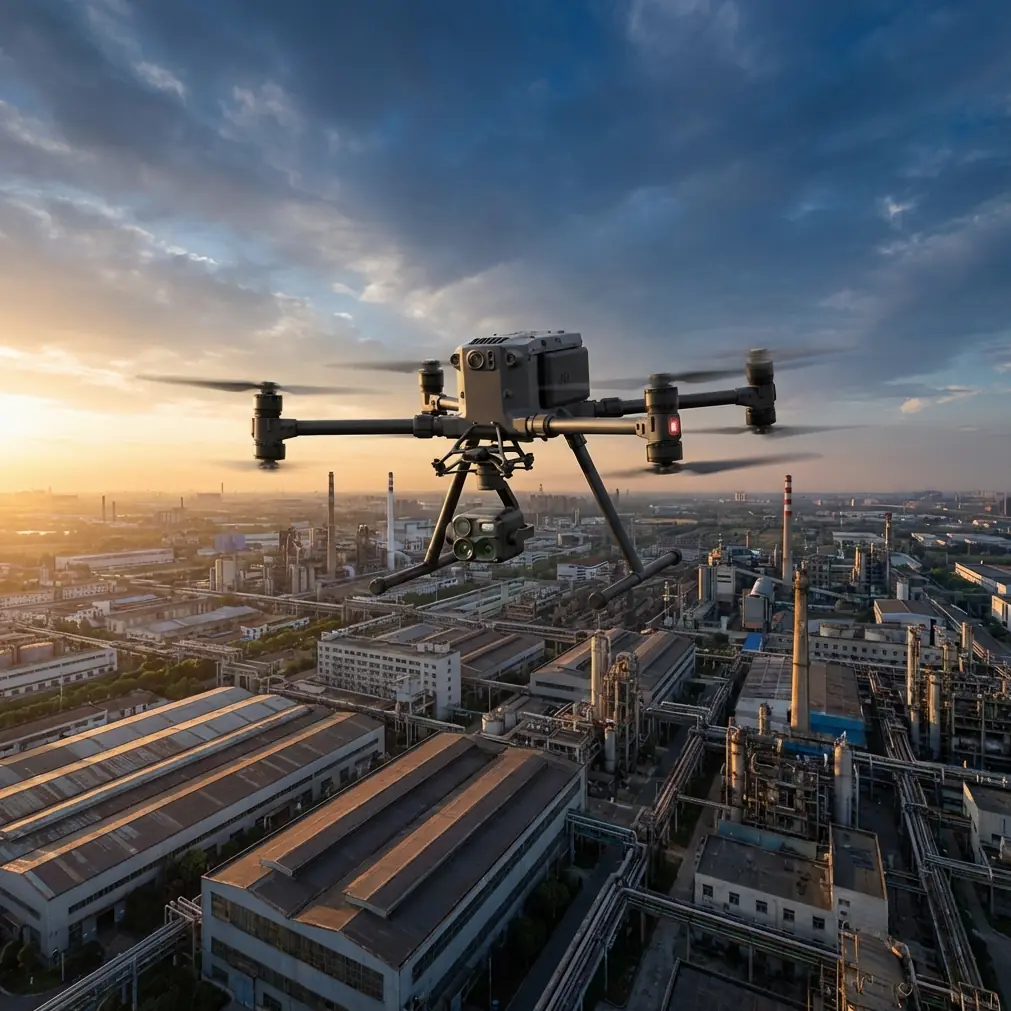
Matrice 4T on Harsh Coastlines: A Field Case Study in Heat, Salt, and Reliable Data
META: A specialist case study on using Matrice 4T for coastline inspection in extreme temperatures, with practical insights on thermal workflows, pre-flight cleaning, transmission stability, battery strategy, and data quality.
Coastline inspection looks simple on paper. Fly the line, capture imagery, log anomalies, go home. In practice, it is one of the more punishing civilian drone jobs you can hand to an airframe.
Salt hangs in the air. Wind shifts off the water faster than inland forecasts suggest. Surfaces heat unevenly. Signal conditions can change from open-sky perfect to cluttered and reflective near port structures, sea walls, tanks, bridges, and cliff faces. If the assignment happens during a temperature extreme, the margins narrow again.
That is where the Matrice 4T becomes interesting—not as a generic “all-in-one” platform, but as a tool whose value shows up when environmental stress starts affecting the quality of decisions.
I’ve been advising inspection teams on thermal and visual drone workflows for years, and one lesson keeps repeating itself: the drone matters, but the discipline around the drone matters just as much. For coastline missions, especially in heat or cold, the difference between a usable survey and a compromised one often begins before takeoff.
The overlooked first step: cleaning before calibration
One of the most practical habits I recommend for coastal operators is a short pre-flight cleaning routine focused on safety-critical and sensing surfaces. It sounds minor. It isn’t.
Salt residue and fine moisture deposits can build on exposed surfaces long before contamination becomes obvious to the naked eye. On a thermal inspection mission, even a thin film on optical surfaces can soften image quality, reduce contrast at the edges of hot targets, and complicate thermal signature interpretation. On a visual mapping pass, the same contamination can reduce sharpness and make photogrammetry outputs less consistent when the software tries to identify matching points across frames.
So the sequence matters:
- inspect and clean the camera window and thermal sensor cover with approved materials
- check obstacle sensing surfaces for salt haze or debris
- inspect battery contacts and external seals
- verify the airframe is dry before power-up if the drone moved from an air-conditioned vehicle into humid sea air
This routine is not just housekeeping. It is risk control.
That emphasis on physical integrity echoes a principle long recognized in aircraft system design: performance depends on the quality of interfaces and support structures, not just the headline component itself. One engineering reference in the source material specifies that a fixed support point in a powered control system should have structural stiffness of at least 9.8 × 10^5 N/cm when structural feedback is absent. Another detail from the same reference limits total radial clearance at a fixed articulated support point to less than 0.06 mm. Those numbers come from conventional aircraft control-system thinking, not drones directly, but the operational lesson transfers cleanly: tiny mechanical degradations can become flight-control or sensing problems under load.
On a coast, salt and temperature swings are exactly the kind of stressors that exploit small weaknesses first.
The mission profile: thermal inspection across a mixed shoreline
Let’s ground this in a real-world operating pattern.
A utilities and infrastructure team needs to inspect several kilometers of coastline in summer heat. Their scope includes rock-armored shoreline sections, drainage outlets, retaining structures, rooftop equipment on nearby facilities, and a short marina perimeter. They want thermal data to identify abnormal heating in electrical assets and water ingress patterns near concrete interfaces, while also capturing visible imagery suitable for location verification and selective photogrammetry.
This is a demanding brief because the coastline is not thermally stable. Wet areas cool differently than dry concrete. Metal heats quickly. Tidal timing changes the thermal backdrop. Wind strips surface heat from some targets but not others. If you launch at the wrong time or interpret the scene lazily, you can mistake environmental noise for a maintenance problem.
The Matrice 4T is useful here because it lets one team move fluidly between thermal inspection logic and broader site context. The thermal feed helps isolate suspicious zones. The visual payload supports confirmation. If specific areas need measurement-grade reconstruction, the team can follow up with a planned photogrammetry segment, using GCP-supported workflows where positional rigor matters.
That last point is worth stressing. Not every coastal mission needs photogrammetry, but when erosion progression, crack mapping, or revetment displacement needs to be documented over time, a repeatable visual capture plan becomes far more valuable than a simple collection of photos. GCP strategy, overlap discipline, and tide-aware timing do more for defensible reporting than any amount of post-flight guesswork.
Extreme temperatures change how you read thermal data
Many new operators assume thermal sensors become more useful as conditions get more dramatic. Sometimes the opposite happens.
In high ambient heat, the environment itself becomes noisier. Concrete, asphalt, metal roofs, utility boxes, and even dark rock faces all hold or radiate heat differently. Thermal contrast can collapse if the target and background converge. In cold conditions, by contrast, certain anomalies become easier to isolate, but battery management and airframe readiness become more sensitive.
This is why coastline inspection should not treat “thermal” as a magic answer. It is a method, and methods depend on timing.
The right Matrice 4T workflow usually includes:
- selecting a flight window that preserves target-to-background contrast
- planning angles that reduce reflective or mixed thermal readings from water-adjacent structures
- keeping enough standoff distance for safe obstacle margins while still preserving useful pixel density
- cross-checking thermal anomalies with visible imagery before logging them as findings
A hot drainage outfall structure at midday may simply be sun-loaded. A warm seam on a concrete wall after sunset may be telling a more interesting story. The aircraft helps you see, but the mission plan determines whether you understand what you are seeing.
Why transmission reliability matters more on the coast
Open shoreline can be deceptively friendly for command and video links. Yes, there may be broad line-of-sight corridors. But there are also reflective surfaces, vessel traffic, steel infrastructure, abrupt terrain changes, and occasional dead zones near built-up marine assets.
That is where stable O3 transmission becomes operationally significant. Not because it sounds impressive on a spec sheet, but because coastline work often demands long, visually repetitive tracking passes where the pilot and sensor operator must stay mentally fresh. A clean feed reduces hesitation during repositioning, supports better anomaly verification, and lowers the chance of re-flying sections simply because the team lacked confidence in what they saw live.
For organizations working with infrastructure imagery, security also matters. If the mission involves sensitive commercial sites, encrypted data handling is not an abstract IT feature. AES-256 support has practical value when teams are capturing thermal and visual records of assets that clients do not want casually exposed. Inspection credibility is not only about image sharpness. It is also about chain-of-custody and responsible data stewardship.
The battery strategy that saves coastal missions
Battery management in extreme temperatures is where good teams separate themselves from merely licensed teams.
On long shoreline assignments, hot-swap batteries are not a convenience. They are a continuity tool. Coastal inspections often involve narrow environmental windows: low glare, favorable tide state, stable winds, and a thermal contrast period that may only last so long. If every battery change becomes a reset that burns time and breaks focus, the mission quality suffers.
A disciplined battery plan for the Matrice 4T should cover:
- storage and transport temperature control before arrival
- acclimatization before flight
- clear battery rotation sequencing
- conservative reserve thresholds near water and wind-exposed sections
- post-flight inspection for residue and contact cleanliness
Again, this connects back to a principle hidden inside the aircraft design references: system behavior depends on matching the characteristics of connected parts, not merely optimizing one element in isolation. One source discusses how the parameters of a powered input section—friction, damping, inertial effects—must be properly matched with the connected control segment, even if simplified engineering models sometimes ignore that relationship early on. For drone operations, the field analogue is straightforward: aircraft, battery, operator rhythm, weather window, and sensor tasking need to be matched. If one runs out of sync, the whole mission becomes less trustworthy.
A note on BVLOS and coastline corridors
Some commercial coastline programs naturally point toward BVLOS operations because linear inspection routes can stretch for significant distances. That can make sense in approved civilian frameworks with proper risk assessment, communications discipline, and compliance structures in place.
But even when a team is operating within standard visual constraints, planning the route as if it were a corridor mission improves outcomes. Segment the coastline into logic-based blocks. Define battery exit points before launch. Assign anomaly confidence levels during flight rather than after memory fades. Build a handoff system between thermal review and photogrammetry follow-up.
The Matrice 4T benefits from this kind of structured thinking because it is most effective when used as part of a workflow, not as a flying camera waiting for inspiration.
Case detail: when the thermal anomaly was real—and when it wasn’t
On one summer shoreline operation, the inspection team flagged three apparent hotspots along a concrete retaining edge near service equipment. At first glance, all three looked similar in the thermal feed. Same general shape, same apparent intensity, same location relative to the wall face.
They were not the same.
The first was solar loading on a surface patch that had dried faster than adjacent sections. The second was a metal bracket conducting heat from nearby equipment. The third remained anomalous after angle change, visual confirmation, and a second pass later in the flight window. That third area ultimately justified a closer engineering review.
This is the practical strength of a platform like the Matrice 4T in coastal work: not that it “finds problems,” but that it helps a skilled team discard false positives faster.
The best operators know that thermal interpretation near the sea is a filtering exercise. Wind, spray, material transitions, wetness, and sun angle all compete for attention. A stable aircraft, reliable transmission, and efficient payload switching make that filtering process faster and more defensible.
Building better reports from one flight
Clients rarely care how hard the conditions were. They care whether the report is clear.
A strong Matrice 4T coastline report should not dump raw media into a folder and call it done. It should tie each finding to a location, a thermal context, a visible reference image, and a confidence statement. If a section was suitable for photogrammetry, mention whether GCP control was used and whether environmental factors such as tide stage could affect comparison with prior surveys.
For repeat inspections, consistency beats volume. Fly the same height bands when possible. Reuse similar look angles. Note ambient conditions. Keep your cleaning and calibration process documented. Small procedural consistency creates long-term data value.
If your team is refining this workflow and needs a practical discussion around thermal interpretation, battery rotation, or corridor planning for shoreline assets, you can message a Matrice inspection specialist here.
What makes the Matrice 4T a serious coastline tool
The answer is not a single feature.
It is the way the platform supports a chain of operational needs under environmental stress:
- thermal and visual inspection in one field workflow
- dependable transmission for repetitive coastal passes
- encrypted handling for sensitive commercial infrastructure imagery
- battery continuity that respects narrow weather and thermal windows
- enough system maturity to support disciplined repeat inspections instead of one-off flights
But none of that replaces fieldcraft. Clean before flight. Respect thermal timing. Treat batteries like mission-critical components. Use photogrammetry only when the capture plan can support it. Verify anomalies instead of falling in love with them.
Coastline inspection punishes shortcuts. The Matrice 4T, in the hands of a careful team, gives you a better chance of leaving the site with data you can defend.
Ready for your own Matrice 4T? Contact our team for expert consultation.