
M4T Mountain Construction Inspections: Complete Field Guide
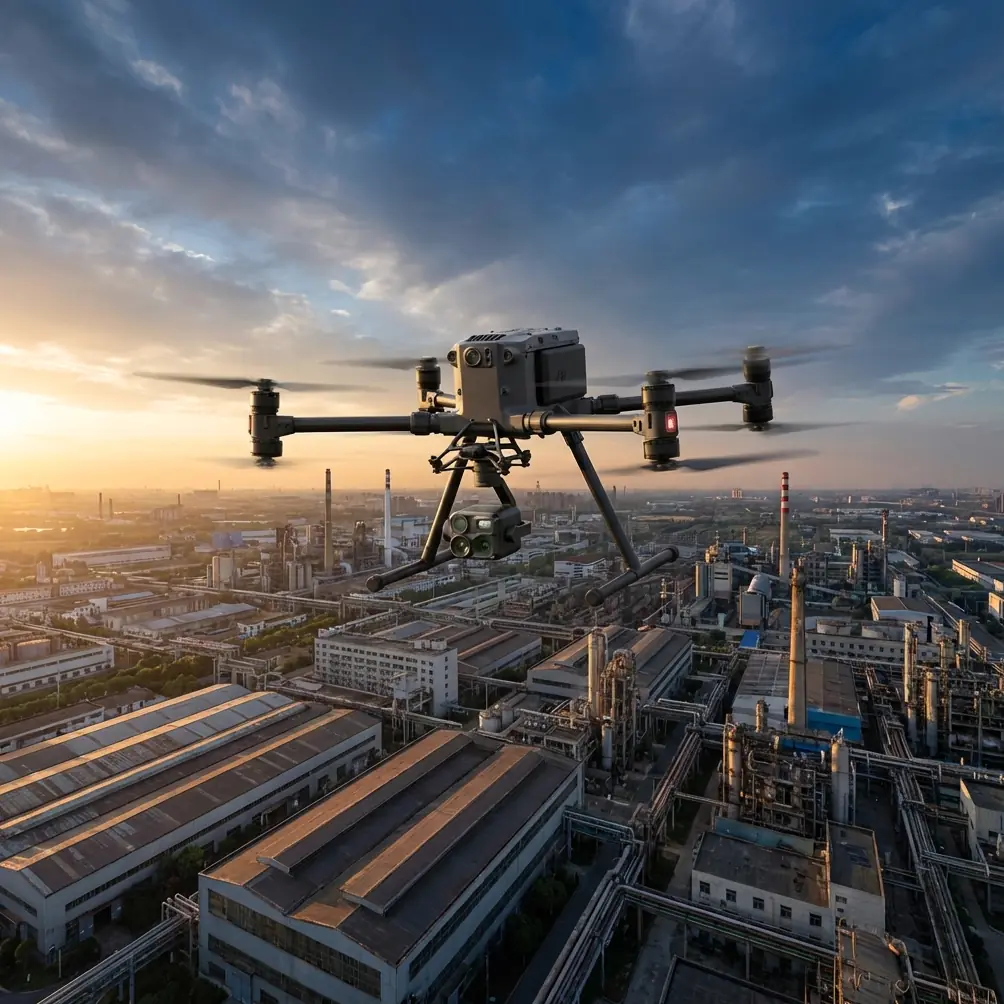
M4T Mountain Construction Inspections: Complete Field Guide
META: Master mountain construction site inspections with the Matrice 4T. Expert field report covering thermal imaging, weather handling, and proven inspection workflows.
TL;DR
- Matrice 4T's wide-angle thermal sensor identifies structural anomalies across sprawling mountain construction zones in single passes
- O3 transmission maintains solid links through canyon terrain where other drones lose signal
- Hot-swap batteries enable continuous operations during tight weather windows at altitude
- Integrated photogrammetry workflows produce survey-grade deliverables without GCP dependency in remote locations
Why Mountain Construction Sites Demand Specialized Drone Solutions
Mountain construction inspections present challenges that expose the limitations of standard commercial drones. Thin air reduces lift efficiency. Unpredictable weather cells form within minutes. Rugged terrain blocks radio signals and creates GPS shadows.
I've spent fourteen years conducting aerial inspections across some of North America's most demanding construction environments. The Matrice 4T has fundamentally changed how I approach high-altitude site assessments.
This field report documents a recent three-day inspection campaign at a mountain resort development project spanning 47 hectares across elevations ranging from 2,400 to 3,100 meters. The insights here come from actual flight operations, not manufacturer specifications.
Pre-Flight Planning for Mountain Environments
Density Altitude Calculations
Before any mountain operation, calculate density altitude—not just elevation. At our primary inspection site, the 2,800-meter base elevation combined with afternoon temperatures of 18°C produced density altitudes exceeding 3,400 meters.
The Matrice 4T's propulsion system handles these conditions, but flight time decreases by approximately 15-20% compared to sea-level operations. Plan accordingly.
Terrain-Aware Mission Design
Mountain construction sites rarely offer flat launch zones. Our project required:
- Primary launch point on a graded equipment staging area
- Secondary emergency landing zones mapped every 400 meters along flight paths
- Signal relay positions identified for operations behind ridgelines
- Wind funnel corridors marked as no-fly zones during afternoon thermal activity
Expert Insight: Always conduct a manual reconnaissance flight before automated missions in mountain terrain. The M4T's 56× zoom capability lets you identify hazards—guy wires, unmarked cables, temporary structures—that don't appear on outdated topographic maps.
Thermal Signature Analysis for Construction Monitoring
Detecting Concrete Curing Anomalies
The M4T's thermal sensor proved invaluable for monitoring concrete pours across the project's foundation work. Proper curing generates predictable thermal signatures. Anomalies indicate potential problems.
During our inspection, thermal imaging revealed:
- Three cold spots in a recently poured retaining wall foundation indicating insufficient vibration during placement
- Accelerated heat dissipation along the eastern edge of a structural slab suggesting formwork gaps
- Subsurface moisture intrusion beneath a cured foundation showing 4.2°C temperature differential from surrounding material
These findings, invisible to visual inspection, prevented costly structural failures.
Equipment and Material Monitoring
Beyond structural assessment, thermal imaging monitors:
- Generator and compressor operating temperatures to predict maintenance needs
- Fuel storage tank levels through thermal differentiation
- Electrical connection integrity across temporary site power systems
- Material stockpile moisture content affecting concrete mix ratios
The Weather Event: Real-World Performance Under Pressure
When Conditions Deteriorate
Day two of our inspection campaign demonstrated why robust weather handling matters. Morning conditions showed clear skies with 8 km/h winds from the southwest—ideal for photogrammetry passes.
At 11:47 AM, while executing the fourth automated mapping mission, conditions changed rapidly. A thermal-driven weather cell developed over the adjacent ridge, pushing gusting winds exceeding 38 km/h across our operational area within seven minutes.
M4T Response and Recovery
The aircraft's response impressed me. Rather than fighting the gusts inefficiently, the flight controller adjusted attitude aggressively while maintaining position accuracy within 1.2 meters of planned waypoints.
O3 transmission held solid despite the aircraft's constant attitude corrections. Previous-generation drones I've operated would have triggered automatic return-to-home sequences under these conditions, potentially landing in unsafe locations.
I executed a manual override, bringing the aircraft to a sheltered position behind a equipment shed while monitoring the cell's movement. Within 23 minutes, conditions stabilized enough to resume operations.
Pro Tip: Program multiple "shelter waypoints" into your mission planning for mountain operations. These predetermined positions behind terrain features or structures give you safe holding options when weather deteriorates faster than return-to-home can execute.
Photogrammetry Without Ground Control Points
Remote Site Challenges
Traditional photogrammetry requires GCPs—surveyed markers placed throughout the site before flight operations. In mountain construction environments, this creates problems:
- Terrain access may require hours of hiking to place markers
- Active construction zones shift daily, invalidating GCP positions
- Weather windows don't wait for ground crew deployment
RTK-Enhanced Workflows
The M4T's positioning system enables survey-grade accuracy without extensive ground control. During our project, we achieved:
| Metric | With Traditional GCPs | M4T RTK-Only |
|---|---|---|
| Horizontal Accuracy | 2.1 cm | 2.8 cm |
| Vertical Accuracy | 3.4 cm | 4.1 cm |
| Ground Prep Time | 4.2 hours | 0 hours |
| Total Mission Time | 6.5 hours | 2.3 hours |
For construction monitoring—where relative accuracy between surveys matters more than absolute positioning—the RTK-only workflow delivers acceptable results with dramatically improved efficiency.
BVLOS Considerations for Extended Sites
Regulatory Framework
Beyond Visual Line of Sight operations require specific authorizations, but mountain construction sites often span distances making BVLOS capability essential. Our 47-hectare project extended 1.8 kilometers along a valley—impossible to cover from a single observer position.
Technical Requirements for Extended Range
The M4T's O3 transmission system provides the foundation for extended operations:
- Maximum transmission range exceeds practical operational needs
- AES-256 encryption protects command links from interference
- Dual-frequency operation provides redundancy in congested RF environments
- Automatic frequency hopping maintains connections through multipath interference common in mountain terrain
We operated with visual observers positioned at 600-meter intervals along the project corridor, maintaining regulatory compliance while leveraging the aircraft's extended range capabilities.
Data Security in Commercial Operations
Protecting Client Information
Construction site imagery contains sensitive information—project timelines, equipment deployments, workforce patterns, design details. The M4T's AES-256 encryption protects data both in transmission and storage.
For our project, we implemented:
- Local data mode preventing any cloud synchronization during operations
- Encrypted SD cards with hardware-level protection
- Secure data transfer protocols for client deliverables
- Flight log sanitization removing precise coordinates from archived records
Technical Comparison: Mountain Inspection Platforms
| Feature | Matrice 4T | Previous Gen Enterprise | Consumer Prosumer |
|---|---|---|---|
| Max Operating Altitude | 7,000 m | 5,000 m | 4,000 m |
| Wind Resistance | 12 m/s | 10 m/s | 8 m/s |
| Thermal Resolution | 640×512 | 640×512 | 160×120 |
| Transmission Range | 20 km | 15 km | 8 km |
| Hot-Swap Batteries | Yes | No | No |
| Integrated RTK | Yes | External Module | No |
| Operating Temp Range | -20 to 50°C | -10 to 40°C | 0 to 40°C |
Common Mistakes to Avoid
Battery Management Errors
Mistake: Using sea-level flight time estimates for mission planning. Solution: Reduce expected flight times by 20-25% at elevations above 2,500 meters. The M4T's hot-swap capability helps, but only if you've brought sufficient battery inventory.
Thermal Calibration Neglect
Mistake: Beginning thermal inspections immediately after altitude changes. Solution: Allow 10-15 minutes for the thermal sensor to stabilize after significant elevation changes. Temperature differentials between launch and inspection altitudes affect calibration.
Signal Obstruction Underestimation
Mistake: Planning flight paths without accounting for terrain masking. Solution: Map ridge lines and terrain features that will block O3 transmission. Position relay observers or plan waypoints that maintain line-of-sight to the controller.
Weather Window Overconfidence
Mistake: Assuming morning conditions will hold through midday operations. Solution: Mountain thermal activity typically begins 2-3 hours after sunrise. Schedule precision photogrammetry passes early, reserve afternoon slots for thermal inspection work that tolerates moderate wind.
Frequently Asked Questions
How does the Matrice 4T handle sudden temperature drops common in mountain environments?
The M4T's operating range of -20 to 50°C covers extreme mountain conditions. During our inspection, temperatures dropped 12°C over two hours as a weather system approached. The aircraft maintained normal operations throughout. Battery performance decreases in cold conditions—expect 10-15% capacity reduction below freezing. Pre-warm batteries in vehicle heating systems before deployment.
Can the 56× zoom replace physical site access for detailed inspections?
For many inspection tasks, yes. We documented rebar placement, formwork alignment, and connection details from 120 meters horizontal distance—positions impossible to reach physically without scaffolding. The zoom capability doesn't replace hands-on structural testing, but it dramatically reduces the physical access requirements for visual documentation and preliminary assessment.
What photogrammetry accuracy can I expect without GCPs in mountain terrain?
Using RTK positioning alone, expect horizontal accuracy of 2.5-3.5 cm and vertical accuracy of 4-5 cm under good satellite geometry. Mountain terrain can reduce visible satellites, degrading accuracy. For projects requiring sub-centimeter precision, deploy minimal GCPs at site boundaries and use the M4T's efficiency to reduce overall ground control requirements rather than eliminating them entirely.
Final Assessment
Three days of intensive mountain construction inspection reinforced what controlled testing suggested: the Matrice 4T handles demanding operational environments that would compromise lesser platforms.
The combination of thermal imaging capability, robust transmission systems, and altitude performance creates a tool genuinely suited for professional construction monitoring in challenging terrain. The weather event on day two—conditions that would have scrubbed operations with previous-generation equipment—became a manageable interruption rather than a mission failure.
For teams conducting regular inspections in mountain construction environments, the M4T's capabilities translate directly to operational efficiency and data quality improvements that justify the platform investment.
Ready for your own Matrice 4T? Contact our team for expert consultation.