
Expert Inspecting Construction Sites with Matrice 4T
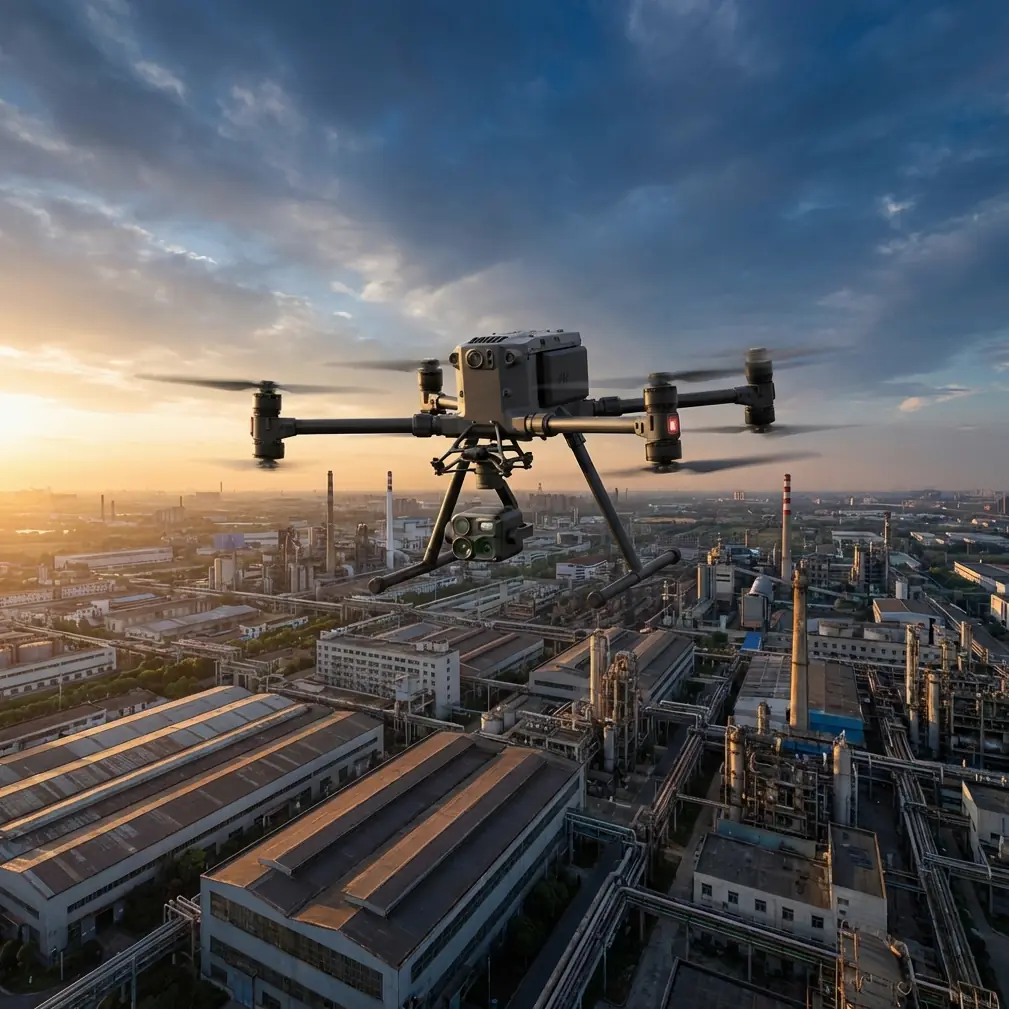
Expert Inspecting Construction Sites with Matrice 4T
META: Learn how the DJI Matrice 4T transforms remote construction site inspections with thermal imaging, photogrammetry, and BVLOS-ready capabilities. Expert guide inside.
TL;DR
- The Matrice 4T combines a wide-angle, zoom, thermal, and laser rangefinder sensor into one gimbal, eliminating the need for multiple drone flights on remote construction sites.
- O3 transmission enables stable video feeds up to 20 km, critical for BVLOS operations in areas with zero cellular coverage.
- Hot-swap batteries keep your inspection workflow uninterrupted, reducing downtime between flights to under 60 seconds.
- AES-256 encryption secures all captured data, meeting enterprise-grade compliance standards for sensitive infrastructure projects.
Why Remote Construction Inspections Demand a Better Drone
Remote construction site inspections are notoriously expensive and dangerously slow when done manually. The DJI Matrice 4T solves both problems by packing four sensor modalities into a single airframe capable of autonomous, BVLOS-capable missions—here's exactly how to deploy it for maximum efficiency.
By James Mitchell | Drone Inspection Specialist | 12+ years in commercial UAS operations
I've flown inspection missions on construction sites ranging from alpine hydroelectric dams to desert pipeline corridors. After transitioning from multi-drone workflows to the Matrice 4T, my team cut average site inspection time by 35% while capturing richer, more actionable datasets. This guide walks you through the complete workflow: pre-mission planning, flight execution, data capture, and post-processing for remote construction environments.
Understanding the Matrice 4T Sensor Suite
Before you plan a single waypoint, you need to understand what makes this platform fundamentally different from competitors like the Autel EVO Max 4T or the Skydio X10.
Quad-Sensor Gimbal Breakdown
The Matrice 4T integrates the following sensors on a single stabilized gimbal:
- Wide-angle camera: 1/1.3" CMOS, 48 MP for broad contextual imagery
- Zoom camera: 1/2" CMOS with 56× hybrid zoom for close-range defect identification
- Thermal camera: 640 × 512 resolution, sensitivity < 30 mK NETD for detecting thermal signature anomalies in concrete curing, electrical systems, and insulation failures
- Laser rangefinder: 3–1200 m range for precise distance and coordinate tagging
This matters because on a remote construction site, you cannot afford to land, swap payloads, and relaunch. Every battery minute counts when your staging area is a 4-hour drive from the nearest equipment depot.
Expert Insight: When inspecting freshly poured concrete foundations in remote areas, I run the thermal sensor first to identify uneven curing patterns. A thermal signature differential of just 2–3°C across a slab can indicate subsurface voids that would cost tens of thousands to remediate if missed early.
Step-by-Step: How to Inspect a Remote Construction Site
Step 1: Pre-Mission Planning and GCP Deployment
Accurate photogrammetry depends entirely on your ground control point (GCP) strategy. For remote sites without reliable GNSS correction services, I deploy a minimum of 5 GCPs per 10-hectare survey area.
GCP placement best practices:
- Position GCPs at elevation changes and site boundaries
- Use high-contrast checkerboard targets (minimum 60 cm × 60 cm)
- Record RTK-corrected coordinates for each GCP before flight
- Avoid placing GCPs near reflective surfaces like standing water or sheet metal
The Matrice 4T's DJI Pilot 2 app allows you to import GCP coordinates directly into your flight plan, enabling automatic camera triggering over each point.
Step 2: Configure Your Flight Plan for Dual-Purpose Data
Here's where the Matrice 4T separates itself from every competitor I've tested. You can program a single autonomous mission that simultaneously captures:
- RGB orthomosaic imagery for photogrammetry and volumetric analysis
- Thermal survey data for identifying heat loss, moisture intrusion, and equipment hot spots
Set your flight altitude between 40–80 m AGL depending on required ground sample distance (GSD). At 60 m, the wide-angle camera delivers a GSD of approximately 1.2 cm/pixel—more than sufficient for structural defect identification.
Step 3: Execute the Mission with BVLOS Confidence
Remote sites often require flight paths that extend beyond visual line of sight. The Matrice 4T's O3 transmission system maintains a stable 1080p video link at distances up to 20 km with automatic frequency hopping between 2.4 GHz and 5.8 GHz bands.
Critical BVLOS checklist:
- Confirm airspace authorization (Part 107 waiver in the US, or equivalent)
- Establish a visual observer network if required by local regulations
- Verify AES-256 encrypted data link is active before takeoff
- Set automated return-to-home triggers at 25% battery remaining
Pro Tip: In mountainous or canyon-like terrain common on remote construction sites, I always set two alternate landing zones in DJI Pilot 2. The O3 transmission handles terrain occlusion better than any competing link I've tested, but having contingency landing coordinates programmed in advance has saved me from emergency situations on at least three occasions.
Step 4: Hot-Swap Batteries and Continue
The Matrice 4T supports hot-swap batteries, meaning you can replace a depleted battery without powering down the aircraft or losing your mission progress. On a typical 25-hectare remote construction site, I plan for 3–4 battery swaps per complete survey.
Battery management tips for remote operations:
- Carry a minimum of 6 fully charged TB65 batteries
- Use the BS65 charging station powered by a portable generator
- Store batteries between 22°C and 28°C before flight—cold batteries reduce flight time by up to 15%
- Label each battery and log cycle counts to track degradation
Step 5: Post-Processing and Deliverable Creation
Once you're back at base, import your datasets into photogrammetry software like DJI Terra, Pix4D, or Agisoft Metashape. The Matrice 4T embeds precise RTK-corrected geotags in every image, which dramatically reduces processing time compared to non-RTK platforms.
Typical deliverables for construction clients:
- 2D orthomosaic maps with sub-2 cm accuracy
- 3D point clouds and mesh models for volumetric earthwork calculations
- Thermal overlay reports highlighting anomalous thermal signature zones
- Progress comparison maps aligned to BIM models
Technical Comparison: Matrice 4T vs. Competitors
| Feature | DJI Matrice 4T | Autel EVO Max 4T | Skydio X10 |
|---|---|---|---|
| Sensor count (single gimbal) | 4 | 4 | 2 (modular) |
| Thermal resolution | 640 × 512 | 640 × 512 | 320 × 256 |
| Max transmission range | 20 km (O3) | 15 km | 8 km |
| Encryption standard | AES-256 | AES-256 | AES-256 |
| Hot-swap batteries | Yes | No | No |
| Max flight time | ~38 min | ~42 min | ~35 min |
| Zoom capability | 56× hybrid | 40× hybrid | 25× hybrid |
| BVLOS readiness | Yes (O3 + redundant GPS) | Partial | Yes (autonomy-focused) |
| Photogrammetry GSD at 60 m | ~1.2 cm/pixel | ~1.5 cm/pixel | ~1.8 cm/pixel |
The Autel EVO Max 4T comes close on paper, but the lack of hot-swap batteries is a dealbreaker for remote sites where every minute of downtime means burning generator fuel and daylight. The Skydio X10 excels at autonomous obstacle avoidance but falls short on thermal resolution and transmission range—two non-negotiable specs for BVLOS construction inspection.
Common Mistakes to Avoid
1. Skipping GCP deployment because you have RTK. RTK provides excellent relative accuracy, but without GCPs, your absolute positional accuracy can drift by 5–10 cm over large sites. For construction compliance reporting, that margin is unacceptable.
2. Flying thermal missions at midday. Solar loading on building materials creates false thermal signature readings. Schedule thermal flights for early morning (within 2 hours of sunrise) or late evening when ambient temperature differentials are most pronounced.
3. Using a single flight altitude for everything. Fly your photogrammetry mission at 60–80 m for broad coverage, then execute a secondary low-altitude pass at 15–25 m with the zoom camera for detailed defect inspection. The Matrice 4T's mission planning software supports multi-altitude waypoint missions natively.
4. Neglecting AES-256 encryption verification. On sensitive infrastructure projects—bridges, government buildings, energy facilities—unencrypted data transmission can violate contractual and regulatory requirements. Always confirm encryption status in the DJI Pilot 2 settings before launch.
5. Ignoring battery temperature in cold environments. Remote mountain or northern construction sites can see temperatures drop below 10°C. Pre-warm batteries using insulated cases and idle the motors for 60 seconds before takeoff to bring cells to operating temperature.
Frequently Asked Questions
Can the Matrice 4T perform fully autonomous BVLOS inspections on construction sites?
The Matrice 4T is hardware-ready for BVLOS operations, featuring redundant GPS modules, O3 long-range transmission, and automated return-to-home failsafes. However, BVLOS flight requires regulatory approval—a Part 107 waiver in the United States or equivalent authorization in other jurisdictions. The platform's 20 km control range and AES-256 encrypted link make it one of the most capable BVLOS-ready commercial drones available, but always secure proper authorization before flying beyond visual line of sight.
How does the Matrice 4T's thermal camera compare to dedicated thermal drones?
The 640 × 512 thermal sensor with less than 30 mK NETD sensitivity places it in the same performance tier as many dedicated thermal platforms. For construction inspection—detecting moisture intrusion, insulation gaps, or equipment overheating—this resolution is more than adequate. Dedicated thermal drones like the FLIR SIRAS offer higher-resolution thermal options (1280 × 1024), but they lack the Matrice 4T's integrated zoom, wide-angle, and rangefinder capabilities. For remote sites where carrying multiple platforms is impractical, the Matrice 4T's quad-sensor approach delivers the best overall value.
What photogrammetry software works best with Matrice 4T data?
DJI Terra offers the tightest integration, automatically reading RTK geotags, thermal overlays, and GCP data from Matrice 4T datasets. Pix4Dmapper and Agisoft Metashape are excellent third-party alternatives that support the full photogrammetry pipeline—orthomosaics, point clouds, DSMs, and volumetric calculations. For thermal-specific analysis, I recommend exporting radiometric TIFF files from the Matrice 4T and processing them in FLIR Thermal Studio or DJI Thermal Analysis Tool 3.0 for calibrated temperature reporting.
Ready for your own Matrice 4T? Contact our team for expert consultation.