
How I Use Matrice 4T for Mountain Construction Site Inspecti
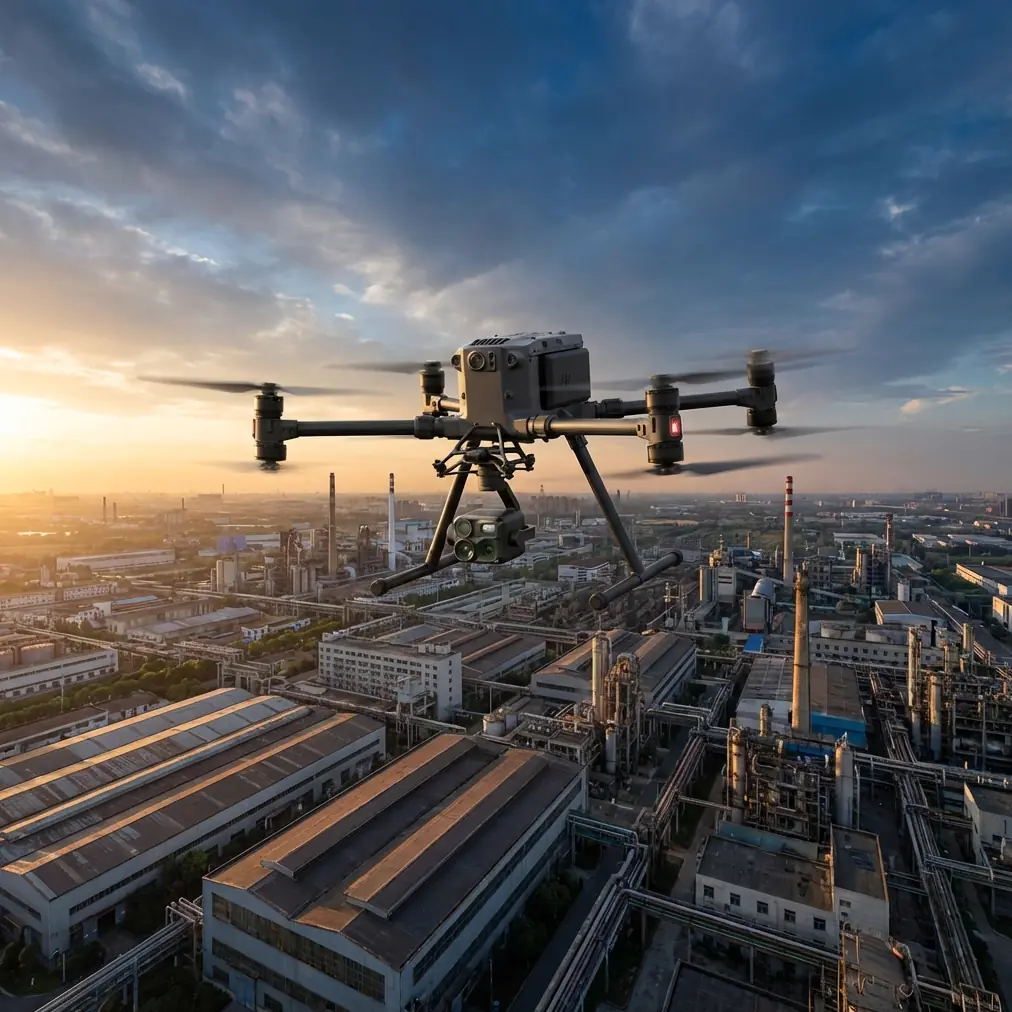
How I Use Matrice 4T for Mountain Construction Site Inspections
META: Practical Matrice 4T tips for mountain construction inspections, including thermal workflows, photogrammetry planning, GCP strategy, transmission reliability, and battery discipline in difficult terrain.
Mountain construction sites expose every weak point in an inspection workflow. Wind curls around cut slopes. Light changes fast. Access roads are narrow or gone entirely. Crews are spread across switchbacks, retaining walls, tower foundations, temporary drainage, and material staging zones that may sit at different elevations on the same project.
That is exactly where the Matrice 4T starts to make sense.
I’m not talking about drones in the abstract. I mean the daily reality of getting reliable site intelligence without sending people repeatedly onto unstable ground, unfinished haul roads, or steep embankments. If your job is to inspect construction progress in the mountains, the aircraft is only part of the system. The real advantage comes from how you structure the mission: thermal signature review, visible-light documentation, photogrammetry passes, battery rotation, transmission discipline, and data handling that keeps the information useful after the flight.
There is an old aviation lesson buried in the source material behind this discussion. One reference describes how variable-speed constant-frequency power systems replaced more mechanically complex arrangements in aircraft because they improved reliability, maintenance performance, and power quality, with frequency regulation reaching 400 ± 0.04 and efficiency in the 82% to 86% range. Another detail explains how dual channels could switch power with no interruption by using a brief parallel overlap of about 50 to 60 milliseconds before exiting the parallel state. Those facts come from manned aircraft electrical design, not drones, but the operational message carries over cleanly: in tough environments, continuity and system stability matter more than spec-sheet theater.
That is the lens I use for the Matrice 4T on mountain projects. Not as a flying camera, but as a continuity tool.
1. Start by splitting the mountain site into inspection layers
A lot of teams fail before takeoff because they treat a mountain site as one mission. It never is.
With the Matrice 4T, I separate the work into four layers:
- Safety and access scan
- Thermal anomaly review
- Detailed visual inspection
- Photogrammetry capture for measurement and records
Each layer has a different flight geometry, altitude, speed, and camera priority.
For example, your first pass is not for beautiful media. It is for situational awareness. I usually fly a broad perimeter and then a stepped elevation route that follows the slope rather than forcing a flat-altitude pattern. In the mountains, flat-altitude flying often wastes line of sight and creates blind angles behind berms, spoil piles, or rock faces.
The thermal pass comes next, especially in the early morning when temperature contrast helps reveal water intrusion, recently stressed electrical components, overheated machinery zones, curing irregularities in concrete sections, or uneven moisture in newly stabilized slopes. Thermal signature data is not magic, but on mountain jobs it can quickly narrow where your engineering team should spend its ground time.
After that, I move into close visual work around retaining structures, scaffold interfaces, drainage channels, temporary road edges, and material stockpiles. Only then do I launch the photogrammetry pattern if the weather and light are stable enough for mapping.
That order saves time and reduces reflight risk.
2. Use thermal first when the terrain is lying to your eyes
Mountain construction creates deceptive visuals. A slope can look intact from one side and unstable from another. Wet areas can disappear under gravel. Runoff paths often hide behind temporary works.
The Matrice 4T’s thermal capability gives you a second reading of the site. On one mountain road project, we were checking fresh cut stabilization after overnight rain. Visually, the upper section looked fine. Thermal revealed a cooler irregular streak running downslope behind a section of erosion control. That pattern suggested trapped moisture and drainage concentration, which later matched what the ground team found.
This is why I never frame thermal as a novelty payload. On mountain sites, it helps prioritize risk.
A small but memorable reminder came during one dawn inspection near a forested boundary. As we traced a new access road and retaining wall line, the thermal view picked up movement near the spoil edge before the visual camera made sense of it. It turned out to be a wild boar moving along the brush line below the site. That mattered for two reasons. First, it kept the flight path clear of unnecessary low-altitude passes over active wildlife. Second, it reminded the crew that early-morning site access on foot carried a hazard the drone had already seen.
People sometimes treat sensor fusion as a buzzword. In the mountains, it is just good field practice.
3. Plan photogrammetry differently than you would on flat ground
Photogrammetry in mountainous terrain breaks the habits people develop on flat industrial sites.
If you fly a simple grid at a constant height relative to takeoff point, your overlap and ground sample consistency can fall apart fast. Parts of the site will be too close, others too far, and vertical faces will be underrepresented. The Matrice 4T can support strong documentation workflows, but only if you build the mission around terrain changes.
My approach is straightforward:
- Divide the site into elevation bands
- Run separate mapping blocks for road benches, pads, and slopes
- Add oblique capture where retaining walls, cut faces, or stockpiles matter
- Place GCPs where they can actually survive site traffic and remain visible from multiple angles
The GCP point is worth stressing. On mountain projects, bad GCP placement is one of the quietest ways to ruin useful output. If your markers sit too close to a single bench or cluster around easy-access areas, the model may look acceptable but perform poorly where grade changes are sharp. Spread them across elevation transitions and near the features you expect to measure later.
I also tell teams not to force one monster mission when light is moving across the valley. Split the capture. Harsh contrast on one face and shadow on another can make the reconstruction messy. Several smaller, controlled flights usually produce better engineering value than one ambitious pass.
4. Treat transmission margin as a safety asset, not just a convenience
Mountain terrain eats signal quality. Ridgelines, rock cuts, tower cranes, temporary steel, and changing aircraft orientation all affect link stability.
This is where O3 transmission matters operationally. Not because “long range” sounds impressive, but because stable feed continuity supports better judgment. On a mountain site, you may need to inspect around a partially obstructed slope while maintaining a conservative position. A robust transmission system gives the pilot cleaner awareness and reduces the temptation to push too close just to regain visual confidence.
That old aviation electrical reference mentioned uninterrupted channel transfer using a 50 to 60 millisecond temporary parallel method. Again, not a drone feature, but a useful analogy. In mountain inspections, every system that reduces interruption has value. Stable control link, stable video feed, stable battery planning, stable handoff of data to the engineering team. The Matrice 4T earns its keep when it helps remove breaks in that chain.
If your site team is setting up a mountain inspection workflow and wants a practical field checklist rather than a brochure version, I usually point them to a quick WhatsApp briefing here: message our mountain inspection desk.
5. Build battery strategy around elevation and wind, not just minutes
Battery management in the mountains is where experienced operators separate themselves quickly.
Published endurance figures are one thing. Climbing along a stepped work zone with wind shear, repeated hover checks, and camera work is another. The Matrice 4T’s hot-swap batteries are operationally valuable because they reduce downtime between sorties, especially when the inspection requires multiple short, targeted flights rather than one long mission.
That sounds mundane until you’re halfway through a weather window.
On mountain jobs, I prefer a battery plan with three categories:
- Primary mission pairs
- Reserve pairs for rechecks
- Contingency pairs for delayed retrieval or unexpected findings
The hot-swap capability matters because it preserves momentum in the field. If the first thermal pass shows an abnormal drainage pattern on a lower cut and a separate heat signature near a generator bank at the upper camp, you do not want your entire schedule collapsing into long turnaround delays.
This is where the aircraft-as-system mindset returns. In legacy aviation power design, removing mechanically complex constant-speed hardware improved maintainability and reliability. Different machine, same principle: fewer workflow interruptions usually mean more dependable operations. The Matrice 4T supports that mentality well when your team is disciplined about battery temperatures, rotation logs, and not stretching a sortie just because the weather is currently cooperative.
6. Use AES-256 thinking where project confidentiality actually matters
Construction teams often underestimate how sensitive site data can be. Mountain projects frequently involve critical infrastructure corridors, new utility routes, private development plans, geotechnical issues, or schedule-sensitive progress imagery.
That’s why secure transmission and handling matter. AES-256 is not the most glamorous topic in drone operations, but if you are collecting thermal and visual records of unfinished infrastructure in difficult terrain, secure data practices belong in your standard operating method, not as an afterthought.
For me, that means:
- limit unnecessary live-feed sharing
- control who receives exported imagery
- separate draft field review files from final engineering archives
- document chain of custody for key inspections
The drone gives you access. Your data discipline determines whether that access creates value or risk.
7. Know when BVLOS discussions are practical and when they are not
BVLOS gets mentioned a lot in serious drone circles, often too casually. On mountain construction sites, there are cases where extended corridor work would clearly benefit from BVLOS frameworks, especially for long access roads, utility alignments, or repeated progress surveys over segmented terrain.
But mountain environments also punish overconfidence. Terrain masking, micro-weather, and shifting crew positions complicate things fast.
So here is the practical position: if your regulatory environment and operational approvals support BVLOS, the Matrice 4T can fit into a more advanced inspection program. If not, do not force a pseudo-BVLOS workflow by flying to the edge of comfort and pretending it is efficient. It usually is not. A disciplined sequence of line-of-sight launches from smart staging points often produces better data with less operational strain.
8. What to inspect on every mountain construction flight
I keep a simple repeatable checklist for Matrice 4T site work in mountain terrain:
Slope and earthworks
Look for fresh scarp lines, runoff concentration, settlement patterns, erosion control gaps, and moisture anomalies.
Retaining structures
Check wall alignment, drainage outlets, toe conditions, backfill zones, and any thermal irregularity that may suggest water concentration.
Temporary roads
Review edge breakdown, culvert inlets, standing water, rut development, and traffic pinch points.
Material staging
Monitor stockpile geometry, access clearance, and proximity to unstable edges.
Site utilities and equipment areas
Use thermal to screen for abnormal heat around temporary power setups, generators, or heavily loaded components.
Environmental boundary zones
Watch for runoff escape, disturbed vegetation, and wildlife movement near active work fronts.
That last point gets missed too often. The wild boar encounter I mentioned earlier was not dramatic, but it was useful. Sensors that help you see beyond the obvious do more than improve image capture. They improve site behavior.
9. The real value of Matrice 4T on mountain jobs
The Matrice 4T is most effective on mountain construction sites when you stop expecting one flight to solve everything.
Its value comes from layering tasks intelligently:
- thermal for anomaly detection
- visual zoom for targeted confirmation
- photogrammetry for measurable records
- secure transmission and data handling for project control
- hot-swap battery workflow for field continuity
That combination matters because mountain sites are rarely forgiving. You get narrow weather windows, changing shadows, unstable footing, and teams asking for answers quickly.
The source material behind this article highlighted a classic engineering truth: better systems are not just about raw performance. They are about reliability, maintainability, and uninterrupted function when conditions get complicated. One reference even emphasized that replacing older mechanical arrangements improved maintenance and service life while supporting stable output quality. That is exactly the mindset you want when building a drone inspection program for mountain construction. Not spectacle. Stability.
If you approach the Matrice 4T that way, it becomes more than a sensor platform. It becomes a field decision tool that helps the project move with fewer blind spots.
Ready for your own Matrice 4T? Contact our team for expert consultation.