
Matrice 4T for Low-Light Construction Inspections
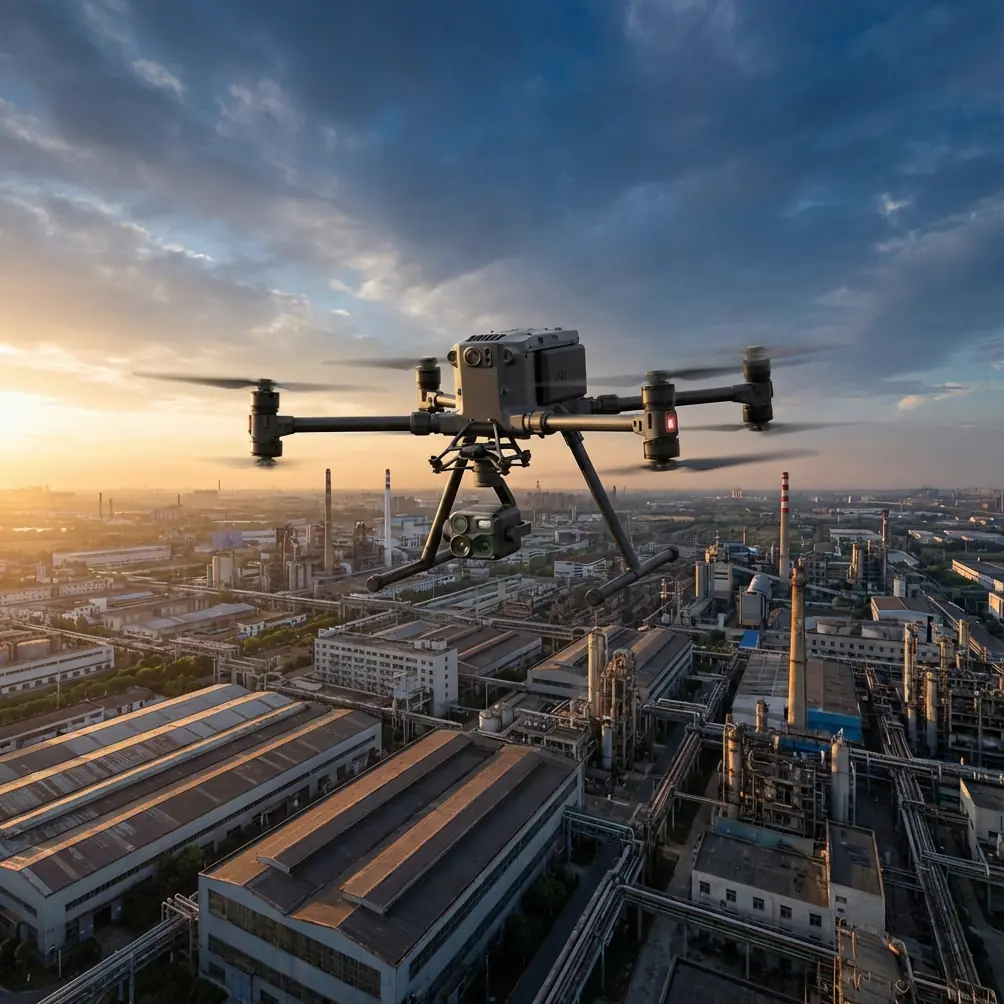
Matrice 4T for Low-Light Construction Inspections: What Actually Matters on Site
META: Expert analysis of using the Matrice 4T for low-light construction inspections, with practical insight on thermal signature capture, transmission reliability, battery workflow, and visibility-critical operator setup.
Construction sites look different after sunset. Steel keeps its heat. Fresh concrete cools unevenly. Temporary electrical runs become harder to verify visually. And the same job that feels routine at 2 p.m. can turn messy under work lights, dust, and deep shadow.
That is where the Matrice 4T earns its place—not as a generic “night drone,” but as a practical inspection aircraft for teams who need usable information when visible light starts working against them.
The interesting part is not just the aircraft itself. It is the full inspection chain: how operators see the controls, how the drone holds a stable link around cranes and partially enclosed structures, how thermal data gets interpreted, and how small workflow decisions reduce misses. For low-light construction work, those details decide whether an evening flight saves time or creates another return visit.
The problem: low light makes ordinary site checks unreliable
On a live project, low-light inspections usually fail in three places.
First, visual ambiguity. A standard RGB view can show “something unusual” on roofing membranes, façade joints, temporary drainage, or loaded electrical cabinets, but not enough to classify the issue confidently.
Second, cockpit workload. When an operator is moving between thermal, zoom, map, checklist items, and airspace awareness, poor screen readability or awkward control lighting increases friction. That sounds minor until you are trying to verify a hotspot on a mechanical plant deck in a narrow time window.
Third, continuity. Construction inspections often involve multiple short flights from shifting launch points. If the aircraft, batteries, or link budget are not managed well, the mission becomes fragmented.
The Matrice 4T addresses much of this, but only if it is set up around the real constraints of the site rather than used like a general camera drone.
Why the Matrice 4T fits this job
For low-light construction inspection, the Matrice 4T’s value starts with sensor fusion. Thermal signature data helps you find anomalies that visible imagery can miss entirely: moisture intrusion behind exterior finishes, overloaded temporary power components, heat loss around newly installed envelope sections, or uneven temperature patterns in rooftop systems.
That matters because at night, the thermal layer is not just “extra context.” It often becomes the primary detection layer.
Then the visible and zoom cameras help answer the second question every site manager asks after detection: what exactly am I looking at? A hotspot without visual confirmation is only half an inspection. The Matrice 4T closes that gap by letting crews move from detection to interpretation in one aircraft instead of splitting tasks across separate tools.
For larger construction sites, transmission quality also matters more than people admit. O3 transmission gives operators a more dependable live view when they are working around steel, concrete cores, tower cranes, and temporary site offices—environments that are unfriendly to clean signal paths. If your aircraft feed hesitates while you are evaluating a thermal edge case, confidence drops fast. A stable downlink is not a convenience feature in this context; it is inspection quality control.
Security is part of the fit as well. Construction documentation can include unfinished critical infrastructure, internal layouts, utility routes, and progress records tied to contract milestones. AES-256 support matters because not every site wants imagery and telemetry floating around with casual protections. For contractors working on utilities, transport nodes, data facilities, or large commercial builds, that level of encryption helps align drone operations with broader information-handling expectations.
The overlooked lesson from aircraft design manuals
There is a useful engineering lesson hidden in older aircraft design references, and it maps surprisingly well to modern drone inspection work.
One of the source documents discusses flutter behavior and notes that when coupled motion becomes strong, the critical speed can drop below what it would be without the external load. It also highlights that some systems can show more than one flutter mode, with a sudden mode change once a parameter crosses a critical value. Operationally, that means attached masses, stiffness, and coupling effects can change behavior in ways that are not obvious if you only think in straight-line performance terms.
Why does that matter for a Matrice 4T on a construction site?
Because third-party accessories are not neutral. Add a payload mount, beacon, speaker, RTK fixture, spotlight, or protective cage, and you are changing mass distribution, drag, and sometimes vibration behavior. On paper it can look minor. In real flight, especially in gusty evening conditions around unfinished structures, the aircraft may not “feel” like the baseline machine anymore.
That does not mean accessories are a bad idea. It means they should be selected with discipline.
I have seen teams improve low-light performance dramatically with a well-integrated third-party high-output strobe/position-light accessory. Not for spectacle. For visibility and safer aircraft tracking during operations near tall structures and cluttered work zones. The accessory helped observers maintain visual awareness during repositioning legs and reduced hesitation during handoff moments between pilot and visual observer. But the benefit only holds if the mount is secure, balanced, and tested in the exact configuration used on site.
That older aeroelastic lesson—coupling changes behavior, and mode shifts can appear abruptly—is still relevant. Any accessory that extends capability should earn its way onto the aircraft through test flights, not assumptions.
The operator side matters more than people expect
The second source document is about cockpit lighting design, and while it comes from manned aviation, the principles translate cleanly to serious drone operations.
It emphasizes clear markings, low scatter, uniform illumination, thin low-maintenance lighting solutions, and continuously adjustable brightness rather than crude fixed settings. That is not trivia. It speaks directly to how an operator should configure the ground control environment for low-light inspections.
When you are flying a Matrice 4T at dusk or at night, screen brightness that is too high destroys dark adaptation. Too low, and thermal palette interpretation suffers. Lighting around the controller should be controlled, even, and free of glare. Checklists and mission notes need to be readable without flooding the work area with stray light.
This sounds simple, but it has real operational significance. The aircraft manual features get the attention; the quality of the operator’s visual environment usually does not. Yet the aviation reference makes the point clearly: controlled, continuously adjustable illumination is preferable because the mission environment changes, and the display system has to adapt with it.
On construction inspections, that translates into a better field setup:
- dimmable task lighting for the takeoff table or tailgate workspace
- anti-glare screen positioning
- readable labels and accessories without scatter light
- consistent brightness for notes, batteries, and controller management
The source also notes that thinner, lower-maintenance illumination approaches reduce weight and service burden in aircraft systems. On the ground side, the equivalent is choosing simple lighting gear that works every time and does not add another point of failure to a night operation.
If your team wants a practical field setup recommendation for low-light construction work, you can message an operator specialist here and compare controller, hood, and lighting configurations before buying random accessories that create more clutter than value.
A real low-light workflow with the Matrice 4T
A strong Matrice 4T workflow on construction sites usually starts before takeoff.
1. Define the thermal question first
Do not launch just to “scan the site.” Decide what thermal signature would indicate a problem.
For example:
- elevated heat at temporary distribution boards
- moisture-related cooling patterns on roofs
- insulation discontinuities on façade sections
- abnormal temperature differences across HVAC components
- warm bearing or motor conditions on site machinery used in fixed areas
The reason is simple: thermal data is easy to collect and easy to misread. A clear objective makes interpretation sharper.
2. Build a visible-light reference layer
Even at low light, RGB still matters. Capture obliques and context frames that explain where the anomaly sits relative to structural gridlines, roof penetrations, duct runs, or panel seams. If the site needs measurable deliverables, integrate photogrammetry during daytime or twilight windows and tie it to GCP-based control where required.
This is where some teams miss the opportunity. They treat thermal inspection and photogrammetry as separate departments. On construction sites, they often belong in the same reporting package. Thermal identifies a likely issue; mapped context shows exactly where the remedial work needs to happen.
3. Use hot-swap batteries to preserve continuity
Night inspections tend to be chopped into shorter missions: one façade elevation, one plant area, one roof section, then another launch from a different access point. Hot-swap batteries reduce downtime between these segments and help preserve the mission rhythm, especially when thermal conditions are time-sensitive.
That matters more than convenience. If you are documenting a cooling trend across a building envelope after sunset, long pauses can change the thermal story. Fast battery exchange keeps your data consistent.
4. Protect the data path
Enable secure workflows from the start. AES-256 is relevant not only for the flight itself, but for client confidence. Large construction projects often involve multiple subcontractors, consultants, and owners. Imagery control, access discipline, and chain-of-custody habits make the drone program look professional rather than improvised.
5. Plan for tomorrow’s operations, even if you fly VLOS today
Many enterprise teams discussing Matrice 4T deployment are also thinking about BVLOS readiness in the long term. For construction, that may apply to linear infrastructure spurs, large industrial campuses, utility corridors feeding the site, or repeated perimeter monitoring. You do not need to fly beyond visual line of sight to benefit from planning around those standards now. Stable procedures, consistent logs, robust communications, and disciplined battery handling make eventual scaling much easier.
Where the Matrice 4T is strongest on construction projects
The aircraft is especially effective when the inspection target combines thermal relevance with difficult access.
That includes:
- elevated mechanical equipment
- roof seams and drainage transitions
- curtain wall transitions
- temporary site power infrastructure
- warehouse or industrial shell envelope checks
- post-install verification on solar-related construction elements
- water ingress screening after weather events
The Matrice 4T is less about creating dramatic imagery and more about collapsing multiple inspection steps into one deployment. You can locate the issue, verify it visually, georeference it, and hand a contractor a useful finding before the crew has packed up for the night.
That speed has a direct cost in less rework, fewer lift-based checks, and fewer “we need to go back and confirm” conversations.
The hidden risk: treating the platform like a simple camera drone
Low-light inspection is where weak operating discipline shows up fast.
A team that ignores accessory effects, launches without a thermal hypothesis, uses uncontrolled screen brightness, and mishandles battery turnover will still collect data. They just may not collect trustworthy data.
The two aviation references behind this discussion point to exactly that kind of systems thinking.
One source warns that coupled systems can behave differently when external masses and structural interactions are involved, even to the point of lower critical thresholds and abrupt modal changes. For Matrice 4T operators, the practical takeaway is to respect every modification to the aircraft and validate it.
The other source argues for clear, low-scatter, controllable illumination tailored to mission demands. For drone teams, that translates into a cleaner operator environment, better display interpretation, and fewer avoidable mistakes during low-light flights.
Neither point is glamorous. Both improve the quality of construction inspections.
Final take
The Matrice 4T is well suited to low-light construction inspections because it combines thermal detection, visual confirmation, secure transmission practices, and efficient field workflow in one enterprise platform. But the aircraft alone is not the full answer.
The winning setup is a systems approach:
- thermal objectives defined before launch
- visible imagery captured for context
- photogrammetry and GCP workflows used where measurable site documentation matters
- O3 transmission leveraged for stable situational awareness
- AES-256 used where project sensitivity demands it
- hot-swap batteries used to preserve mission continuity
- accessories tested carefully, not bolted on casually
- operator lighting and controller ergonomics treated as part of inspection quality
That is how the Matrice 4T moves from being a capable drone to being a dependable construction inspection tool after dark.
Ready for your own Matrice 4T? Contact our team for expert consultation.