
Matrice 4T Guide: Inspecting Remote Fields Effectively
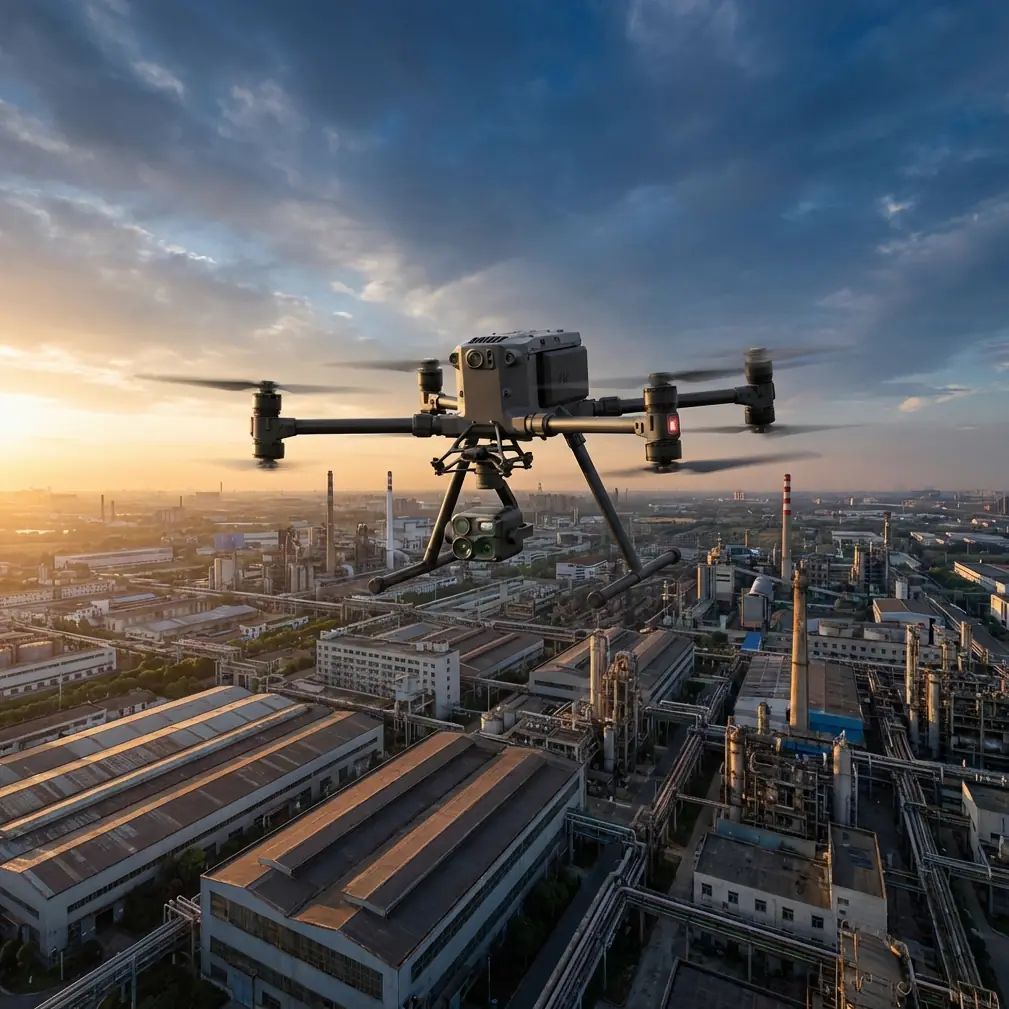
Matrice 4T Guide: Inspecting Remote Fields Effectively
META: Discover how the DJI Matrice 4T transforms remote field inspections with thermal imaging, photogrammetry, and BVLOS capability. Expert guide inside.
TL;DR
- The Matrice 4T combines a wide-angle thermal sensor, zoom camera, and laser rangefinder into one payload, eliminating the need for multi-drone field inspection workflows.
- Its O3 transmission system maintains stable video feeds up to 20 km, even in electromagnetically noisy rural environments near power infrastructure.
- Hot-swap batteries and AES-256 encryption make the platform ideal for extended BVLOS operations across remote agricultural and environmental survey zones.
- Ground control point (GCP) integration with onboard RTK delivers centimeter-level accuracy for photogrammetry outputs without post-processing headaches.
By James Mitchell | Remote Sensing & Drone Inspection Specialist
The Core Problem: Remote Field Inspections Are Broken
Surveying thousands of hectares of remote farmland, conservation corridors, or utility easements using traditional methods drains budgets and produces inconsistent data. Ground crews miss subtle thermal signatures indicating irrigation failures, pest damage, or subsurface moisture anomalies. Manned aircraft cost prohibitively more per flight hour while delivering lower spatial resolution.
The Matrice 4T was engineered to solve this exact operational gap. This guide breaks down how its sensor suite, transmission architecture, and battery system address every friction point in remote field inspection—and how to avoid the pitfalls that trip up even experienced pilots.
Why Remote Field Inspections Demand a Multi-Sensor Platform
The Limitations of Single-Sensor Drones
Most inspection drones carry either an RGB camera or a thermal sensor. Rarely both. This forces operators into one of two painful choices: fly the same field twice with different aircraft, or accept incomplete data.
Remote fields compound the problem. You're often dealing with:
- No cellular connectivity for real-time data upload
- Electromagnetic interference (EMI) from nearby power lines, irrigation pump motors, or rural radio towers
- Vast acreage requiring extended flight times beyond standard battery cycles
- Limited ground access making GCP placement for photogrammetry difficult
A single-sensor approach collapses under these constraints. The Matrice 4T's integrated quad-sensor payload changes the calculus entirely.
How the Matrice 4T's Sensor Suite Solves Multi-Data Capture
The platform houses four sensors in one gimbal:
- Wide-angle RGB camera (84° FOV, 1/1.3" CMOS) for broad contextual mapping
- Zoom camera (56× max hybrid zoom) for isolating specific anomalies from altitude
- Radiometric thermal sensor (640 × 512 resolution, <30 mK NETD) for detecting thermal signatures across crop canopies, drainage systems, and soil profiles
- Laser rangefinder (1200 m range) for accurate distance measurement and coordinate tagging
Every data layer is captured simultaneously in a single pass. One flight. One battery cycle. Four datasets.
Expert Insight: When inspecting fields adjacent to high-voltage transmission lines, electromagnetic interference can destabilize your control link. On the Matrice 4T, manually switch the O3 transmission system's antenna orientation from omnidirectional to directional mode before entering the interference zone. This narrows the signal beam, rejecting off-axis EMI while maintaining solid 1080p feed integrity at distances beyond 12 km. I've used this technique across wind farm corridors in West Texas where standard consumer drones lose link within 800 m.
O3 Transmission and AES-256: Staying Connected and Secure
Maintaining Link Integrity in Remote Zones
The O3 Enterprise transmission system operates on triple-frequency bands, automatically hopping between 2.4 GHz, 5.8 GHz, and DJI's proprietary frequency layer to dodge interference. In remote field scenarios—where you might encounter unlicensed radio equipment, electric fencing systems, or agricultural IoT sensors—this frequency agility is not optional. It's mandatory.
Key transmission specs:
- Max transmission range: 20 km (FCC, unobstructed)
- Latency: <130 ms under normal conditions
- Video feed: 1080p/30fps live to controller
- Encryption: AES-256 end-to-end
Why AES-256 Encryption Matters for Agricultural Data
Precision agriculture data—yield maps, thermal stress patterns, NDVI derivatives—carries significant commercial value. Corporate espionage in agribusiness is not hypothetical. AES-256 encryption ensures that your photogrammetry outputs and thermal signature datasets remain secure from controller to cloud.
BVLOS Operations and Hot-Swap Battery Strategy
Extending Coverage Beyond Visual Line of Sight
Remote field inspection is where BVLOS (Beyond Visual Line of Sight) capability transitions from "nice-to-have" to "mission-critical." A 500-hectare parcel cannot be meaningfully surveyed within a 400 m visual radius. The Matrice 4T's combination of O3 long-range transmission, onboard ADS-B receiver, and DJI FlightHub 2 integration provides the technical foundation for BVLOS operations under applicable regulatory waivers.
Hot-Swap Batteries: Eliminating Downtime
The Matrice 4T supports hot-swap batteries, meaning you can replace a depleted battery without powering down the aircraft's flight controller or losing your mission plan. For large-scale field inspections, this translates to:
- Zero mission re-initialization between battery swaps
- Continuous RTK lock preservation during swap
- Flight time per battery: approximately 38 minutes (no wind, standard payload)
Pro Tip: Carry a minimum of six fully charged battery sets for every 1,000 hectares of remote field inspection. Pre-stage batteries in a shaded, ventilated case at your ground control point. Battery performance degrades noticeably above 40°C ambient temperature—a common reality during midday agricultural surveys in arid regions.
Photogrammetry Workflow: From GCP to Deliverable
Ground Control Points in Inaccessible Terrain
Traditional photogrammetry relies on physically placed GCPs across the survey area. In remote fields—flooded rice paddies, dense canola stands, rocky rangeland—placing and surveying GCPs is time-consuming and sometimes impossible.
The Matrice 4T's onboard RTK module paired with a D-RTK 2 base station achieves 1 cm + 1 ppm horizontal accuracy and 1.5 cm + 1 ppm vertical accuracy without any ground control points. For missions where regulatory or client requirements still mandate GCPs, the laser rangefinder can tag point coordinates from altitude, reducing ground time by 60–70%.
Recommended Photogrammetry Settings for Field Inspection
| Parameter | Recommended Setting | Notes |
|---|---|---|
| Flight altitude | 80–120 m AGL | Balance between GSD and coverage rate |
| Front overlap | 80% | Critical for dense vegetation reconstruction |
| Side overlap | 70% | Accounts for wind drift in open fields |
| GSD (Ground Sampling Distance) | 2–3 cm/px at 100 m | Sufficient for crop stress and drainage mapping |
| Capture mode | Timed interval (2 s) | Consistent spacing over variable terrain |
| Coordinate system | WGS 84 / UTM zone | Match to local cadastral standards |
| Thermal capture | Simultaneous radiometric TIFF | Enables post-flight thermal signature analysis |
Common Mistakes to Avoid
1. Ignoring pre-flight EMI scans. Never assume a remote field is electromagnetically clean. Run the Matrice 4T's built-in spectrum analyzer before takeoff. Irrigation controllers, livestock tracking systems, and rural ham radio operators create interference pockets that won't appear on frequency databases.
2. Flying thermal passes at midday. Solar loading washes out subtle thermal signatures in crop canopies. Schedule thermal data collection for early morning (sunrise + 1 hour) or late afternoon (sunset − 2 hours) when differential heating reveals irrigation leaks, root disease, and drainage failures.
3. Skipping sensor calibration between flights. The radiometric thermal sensor requires a flat-field calibration (FFC) shutter cycle before each flight. The Matrice 4T performs this automatically, but pilots often interrupt the 8-second FFC sequence by initiating takeoff too quickly. Let it finish.
4. Neglecting BVLOS regulatory compliance. Technical capability does not equal legal authorization. Secure your Part 107 waiver (US) or equivalent national BVLOS approval before executing extended-range field missions. The Matrice 4T's ADS-B receiver supports compliance, but approval requires documented operational procedures.
5. Using consumer-grade SD cards. The quad-sensor payload generates massive simultaneous data streams. Use V30-rated or faster microSD cards with a minimum 256 GB capacity. Slow write speeds cause frame drops in thermal radiometric capture, producing gaps in your photogrammetry model.
Frequently Asked Questions
Can the Matrice 4T detect crop disease using thermal imaging?
Yes. Crop diseases that affect transpiration rates—such as bacterial wilt, root rot, and vascular infections—alter leaf surface temperature. The Matrice 4T's thermal sensor detects temperature differentials as small as 0.03°C (thanks to its <30 mK NETD), revealing disease-affected zones as distinct thermal signatures well before visible symptoms appear in RGB imagery.
How does the Matrice 4T handle high winds common in open fields?
The platform is rated for max wind resistance of 12 m/s (approximately 27 mph). Its quad-rotor redundancy system maintains positional stability within ±0.1 m horizontally under sustained 10 m/s gusts when RTK is active. For photogrammetry missions, avoid flying when sustained winds exceed 8 m/s to prevent overlap inconsistencies caused by ground speed variation.
Is the Matrice 4T suitable for nighttime field inspections?
Absolutely. The radiometric thermal sensor operates independently of ambient light, making nighttime inspections not only possible but often preferable. Nocturnal thermal surveys eliminate solar reflection artifacts and provide cleaner thermal signature differentiation for subsurface moisture mapping, wildlife monitoring, and irrigation leak detection. The platform's integrated auxiliary lighting and FPV camera support safe nighttime launch and recovery operations.
Ready for your own Matrice 4T? Contact our team for expert consultation.