
Matrice 4T Field Inspection Tips at High Altitude
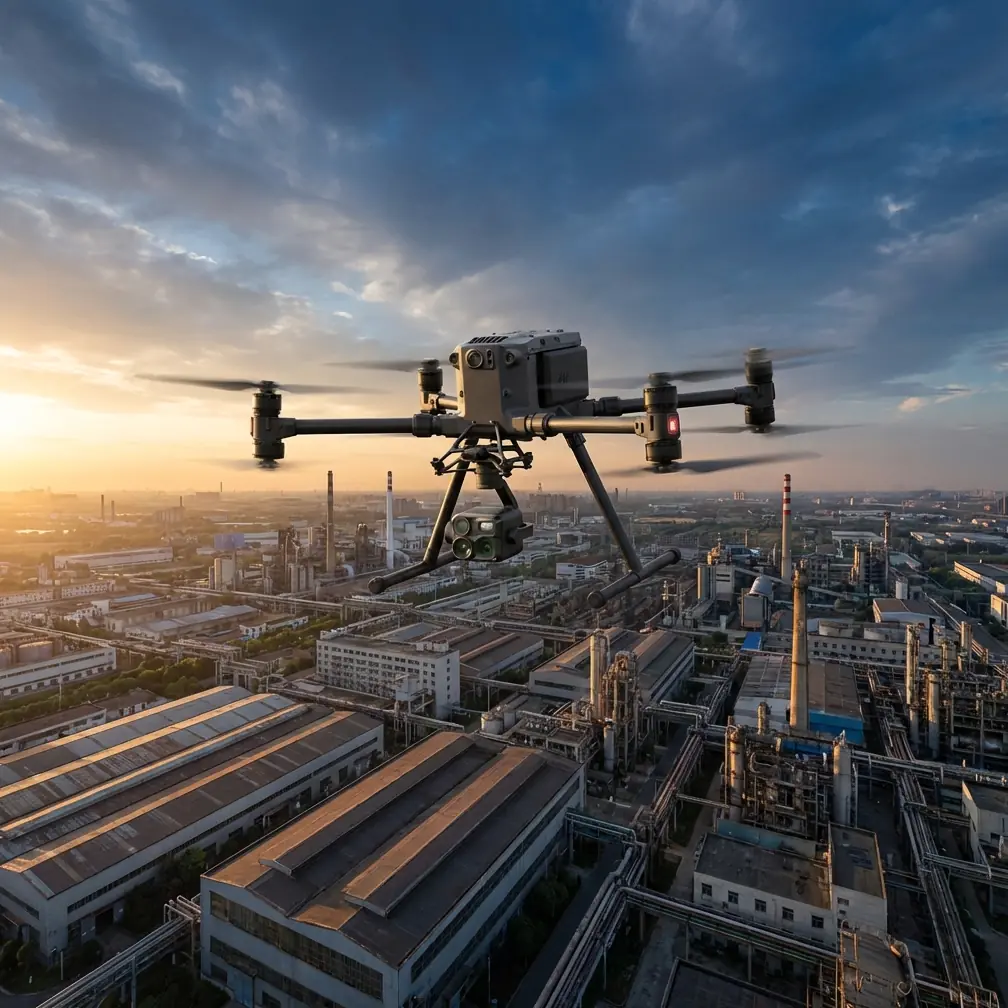
Matrice 4T Field Inspection Tips at High Altitude
META: Discover how the DJI Matrice 4T transforms high-altitude field inspections with thermal imaging, BVLOS capability, and interference-resistant O3 transmission. Expert tips inside.
By Dr. Lisa Wang, Remote Sensing & Agricultural Inspection Specialist
TL;DR
- High-altitude field inspections above 3,000 meters introduce thin air, electromagnetic interference, and rapid weather shifts that ground most commercial drones—the Matrice 4T is purpose-built to handle all three.
- The wide-angle thermal sensor captures detailed thermal signatures across vast crop fields, detecting irrigation failures and pest damage invisible to the naked eye.
- O3 transmission maintains a stable 20 km video link even when electromagnetic interference threatens signal integrity, and a simple antenna adjustment technique can recover signal in seconds.
- Hot-swap batteries and AES-256 encryption keep missions continuous and data secure from field to office.
The High-Altitude Field Inspection Problem No One Talks About
Crop stress doesn't announce itself. By the time a farmer spots yellowing in a highland barley field at 3,500 meters, the underlying root rot or irrigation leak has already spread across hectares. Traditional ground scouting at altitude is slow, physically exhausting, and dangerously incomplete.
Aerial inspection solves the coverage problem, but altitude introduces a cascade of new ones. Thinner air reduces rotor efficiency, cutting flight times. Temperature swings from +25°C at midday to -5°C by late afternoon strain batteries and electronics. And here's the challenge most operators underestimate: high-altitude plateaus—especially those near power infrastructure or mineral-rich geology—generate unpredictable electromagnetic interference (EMI) that can sever your drone's control link mid-flight.
This guide breaks down exactly how to configure and operate the DJI Matrice 4T for reliable, high-yield field inspections at altitude, including a field-tested technique for handling EMI that has saved more than one of my missions.
Why the Matrice 4T Excels at Altitude
Engineered for Thin Air Performance
The Matrice 4T operates at a maximum service ceiling of 7,000 meters. That isn't a marketing number—it reflects actual propulsion headroom. At 4,000 meters, where air density drops roughly 40% compared to sea level, the M4T's propulsion system still delivers responsive, stable flight.
The airframe's IP55 rating handles dust kicked up by highland winds and the sudden rain squalls common to mountainous agricultural regions. When you're 8 km into a BVLOS corridor over terraced quinoa fields, you need to trust that a passing cloud won't end your mission.
Thermal Imaging That Reveals What RGB Misses
The M4T's integrated thermal camera captures thermal signatures at a resolution of 640 × 512 pixels with a sensitivity (NETD) of ≤30 mK. In agricultural inspection, this matters enormously.
Key thermal applications for field inspection at altitude:
- Irrigation leak detection: Water-saturated soil reads 2-4°C cooler than surrounding dry ground. At altitude, where water resources are scarce and irrigation systems span kilometers, catching a leak early saves entire harvests.
- Pest and disease mapping: Infected crops exhibit altered transpiration rates, producing distinct thermal contrasts against healthy vegetation.
- Frost damage assessment: After overnight freezes common at 3,000+ meters, thermal passes at dawn reveal which zones dropped below critical tissue-damage thresholds.
- Drainage pattern analysis: Thermal gradients map subsurface water flow that photogrammetry alone cannot detect.
Expert Insight: Schedule thermal flights during the first two hours after sunrise. At high altitude, solar heating is aggressive—by mid-morning, ground surface temperatures equalize rapidly, and subtle thermal signatures from irrigation faults or early-stage blight become unreadable. The narrow thermal contrast window at altitude is shorter than at sea level.
Handling Electromagnetic Interference: The Antenna Adjustment Technique
This is the section I wish someone had written before my first plateau mission in Tibet's Shannan Prefecture. I was running a photogrammetry grid over highland wheat at 3,800 meters when the O3 transmission feed dissolved into static at 4.2 km range. Telemetry showed full battery. Weather was clear. The problem was EMI—likely from a nearby rural transformer station combined with the mineral-rich basalt geology beneath the field.
Here's the technique that recovered my link in under 15 seconds and has worked consistently across dozens of high-altitude missions since:
Step-by-Step Antenna Recovery Protocol
- Don't panic-RTH. The M4T's O3 transmission system uses adaptive frequency hopping. Give it 5 seconds to attempt automatic recovery.
- Rotate your remote controller so the antennas face the drone's last known position. The RC's antennas are directional—even a 30-degree misalignment at long range can drop signal below threshold.
- Tilt both antennas to a 45-degree V-shape rather than keeping them parallel. This broadens the reception lobe and captures reflected signals bouncing off terrain.
- Physically move 3-5 meters laterally. EMI often creates localized null zones. A few steps to the left or right can shift you out of a standing wave.
- If link isn't restored within 20 seconds, initiate RTH. The M4T's onboard flight controller will execute a safe return using its pre-programmed altitude and path.
This protocol works because the O3 system's dual-antenna diversity and auto-switching between 2.4 GHz and 5.8 GHz bands give it remarkable resilience—but only if the ground-side antennas are properly oriented.
Pro Tip: Before every high-altitude mission, perform a 360-degree slow rotation with your RC at the launch point while monitoring signal strength in DJI Pilot 2. Note the heading with the weakest signal—that's your primary EMI source. Plan your flight path to keep the drone on the opposite side whenever possible.
Building a High-Altitude Photogrammetry Workflow
Accurate photogrammetry at altitude demands more discipline than at sea level. Thinner air means faster ground speed at the same airspeed setting, which changes your overlap geometry.
Ground Control Point (GCP) Strategy for Highland Fields
GCP placement is non-negotiable for centimeter-accurate orthomosaics. At altitude, terrain is rarely flat, and GPS accuracy can degrade due to fewer visible satellites near the horizon.
Recommended GCP protocol:
- Place a minimum of 5 GCPs for fields under 50 hectares, increasing to 8-10 for larger areas
- Use high-contrast checkerboard targets (minimum 60 cm × 60 cm) that remain visible from 120 meters AGL
- Survey each GCP with an RTK receiver—do not rely on the drone's onboard GPS alone for control
- Distribute GCPs at the perimeter and center of the survey area, never clustered in one zone
- Re-survey GCPs if operations span multiple days, as freeze-thaw cycles at altitude can shift ground markers by several centimeters overnight
Flight Parameter Adjustments
| Parameter | Sea-Level Default | High-Altitude Adjusted | Reason |
|---|---|---|---|
| Flight altitude (AGL) | 80-100 m | 100-120 m | Compensates for terrain variability |
| Forward overlap | 75% | 80-85% | Accounts for increased ground speed |
| Side overlap | 65% | 70-75% | Prevents gaps from wind drift |
| Gimbal angle | -90° (nadir) | -80° to -85° | Captures oblique data for terrain modeling |
| Speed | 10-12 m/s | 8-10 m/s | Reduces motion blur in thin-air turbulence |
| Battery swap threshold | 25% | 30-35% | Reserves power for altitude-related efficiency loss |
Technical Comparison: Matrice 4T vs. Alternative Inspection Platforms
| Feature | Matrice 4T | Platform B | Platform C |
|---|---|---|---|
| Max service ceiling | 7,000 m | 5,000 m | 4,500 m |
| Thermal resolution | 640 × 512 | 640 × 512 | 320 × 256 |
| Transmission system | O3 (20 km) | Proprietary (15 km) | Wi-Fi (8 km) |
| Data encryption | AES-256 | AES-128 | None |
| Hot-swap batteries | Yes | No | No |
| BVLOS capability | Supported | Limited | Not certified |
| IP rating | IP55 | IP43 | IP44 |
| Zoom camera | 56× hybrid | 30× hybrid | 20× digital |
The M4T's combination of AES-256 encryption and hot-swap batteries is particularly relevant for agricultural clients operating under data-privacy regulations or conducting multi-hour surveys where downtime between battery changes costs money.
Data Security in the Field
Agricultural data—yield predictions, irrigation maps, pest distribution models—carries significant commercial value. When you're transmitting live feeds over O3 transmission and storing terabytes of multispectral data on removable media, security matters.
The Matrice 4T applies AES-256 encryption to all transmission streams. This is the same encryption standard used by government agencies. For field inspections where data is transferred to a client's agronomist or uploaded to cloud processing platforms, this encryption ensures that intercepted signals yield nothing usable.
Best practices for field data security:
- Enable local data mode in DJI Pilot 2 to prevent any cloud sync during flight
- Use encrypted SD cards for onboard storage
- Transfer data via hardwired connection, not wireless, when processing in the field
- Maintain a chain-of-custody log for all storage media
Common Mistakes to Avoid
1. Ignoring density altitude calculations. A field at 3,500 meters on a hot afternoon has an effective density altitude closer to 4,200 meters. Flight time drops accordingly. Always calculate density altitude, not just elevation, before planning mission duration.
2. Using sea-level overlap settings. As detailed above, thin air increases true ground speed. Using default 75%/65% overlap at altitude creates gaps in your orthomosaic that no software can fill.
3. Skipping the EMI scan at the launch site. Five minutes of antenna rotation and signal monitoring prevents catastrophic link loss mid-mission. Make it part of your preflight checklist.
4. Relying solely on RGB for crop health assessment. Highland crops often show stress in thermal channels days before visible symptoms appear. Flying without the thermal sensor active is leaving critical data on the table.
5. Neglecting hot-swap battery conditioning. At altitude, batteries cool faster. Keep spare hot-swap batteries in an insulated bag at 20-25°C until the moment of insertion. Cold batteries deliver less energy and report inaccurate charge levels.
6. Failing to set GCPs before flying. Retroactively correcting photogrammetry data without GCPs introduces errors that compound across the entire mosaic. Always place and survey ground control before the first takeoff.
Frequently Asked Questions
How does the Matrice 4T handle sudden weather changes common at high altitude?
The M4T's IP55 rating protects against wind-driven rain and dust, but it is not designed for flight in thunderstorms or heavy precipitation. The best practice is to monitor local weather radar and set conservative wind-speed limits—10 m/s sustained is a reasonable threshold at altitude. The drone's onboard sensors will trigger automatic warnings if wind exceeds safe parameters, and the RTH function ensures recovery even if conditions deteriorate mid-mission.
Can I conduct BVLOS field inspections legally with the M4T?
BVLOS operations are regulated differently by each national aviation authority. The Matrice 4T supports BVLOS from a technical standpoint—its O3 transmission range of 20 km, onboard collision avoidance, and reliable RTH capability meet or exceed the technical requirements of most BVLOS waiver applications. You will need to secure the appropriate waiver or authorization from your local authority, which typically requires a documented safety case, trained observers, and risk mitigation procedures specific to your operating environment.
What photogrammetry software works best with M4T data for agricultural analysis?
The M4T outputs geotagged imagery compatible with all major photogrammetry platforms, including DJI Terra, Pix4Dfields, and Agisoft Metashape. For agricultural field inspection specifically, DJI Terra offers streamlined integration with the M4T's metadata, including thermal calibration data. For advanced multitemporal analysis—comparing crop health across multiple flights over a growing season—Pix4Dfields provides specialized vegetation index tools optimized for agricultural workflows.
Ready for your own Matrice 4T? Contact our team for expert consultation.