
Matrice 4T in Coastal Field Inspection: What Actually
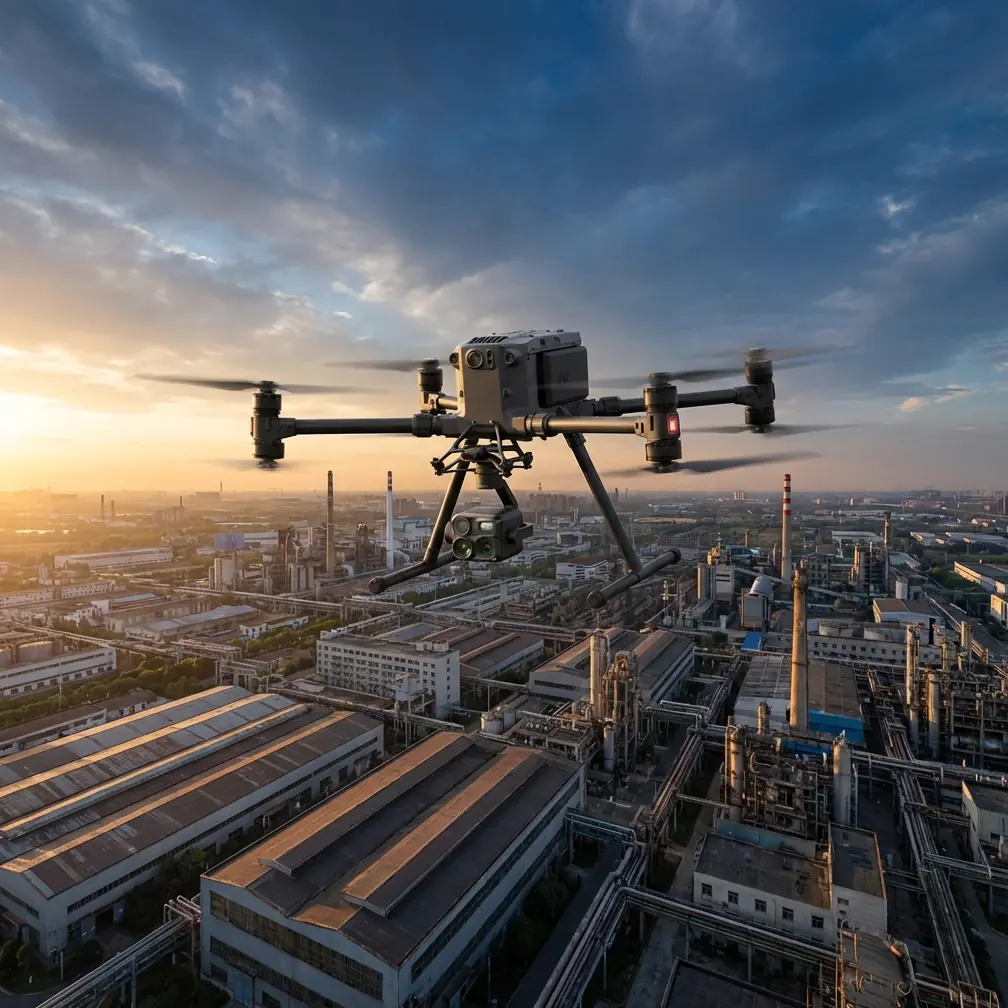
Matrice 4T in Coastal Field Inspection: What Actually Matters Before You Launch
META: A technical review of the DJI Matrice 4T for coastal field inspection, covering thermal performance, photogrammetry workflow, O3 transmission, AES-256 security, battery strategy, and the pre-flight cleaning steps that protect reliability.
Coastal field inspection punishes shortcuts. Salt hangs in the air, humidity creeps into connectors, wind shifts fast, and reflective surfaces can confuse both visual interpretation and thermal judgment. In that setting, the value of the Matrice 4T is not just that it carries a thermal payload. The real question is whether it can deliver repeatable, defensible inspection data when the environment is actively working against your aircraft, your optics, and your workflow.
That is where the Matrice 4T earns attention.
I approach this from the perspective of a field operator who cares less about brochure language and more about the chain of evidence from takeoff to final report. If you are inspecting coastal farmland, drainage corridors, aquaculture edges, irrigation lines, greenhouse perimeters, or field infrastructure exposed to sea air, the Matrice 4T sits in an interesting position. It is not merely a thermal drone. It is a multi-sensor inspection platform that becomes most useful when you treat the thermal camera, visible imaging, transmission system, and battery logistics as one coordinated system rather than separate specs.
The first operational point is simple and usually overlooked: pre-flight cleaning is not housekeeping. On the coast, it is a safety and data-integrity step.
Salt residue on the aircraft body is one problem; salt film on the vision sensors, obstacle sensing windows, and camera glass is a more expensive one. A thin haze can degrade image contrast enough to reduce your confidence in edge definition during photogrammetry missions. On thermal jobs, contamination on the lens can distort the apparent thermal signature of small targets or make minor temperature gradients harder to trust. Before launch, the aircraft deserves a wipe-down with attention to sensor windows, gimbal housing, landing gear, battery contacts, and airframe seams where residue tends to accumulate. If your inspection program depends on automated safety features and stable obstacle awareness, clean sensing surfaces are not optional. They are part of risk control.
That small habit matters more in coastal work because many field inspections happen under narrow weather windows. Teams rush. The aircraft comes out of the case, batteries go in, and everyone wants to get airborne before the wind picks up. Yet the cases where operators most need reliable situational awareness are the same cases where grime, moisture, and salt can quietly compromise it. A five-minute cleaning routine can be the difference between a confident mission and a report full of avoidable uncertainty.
The Matrice 4T’s strength in this environment is sensor fusion. For field inspection, thermal alone rarely tells the full story. A heat anomaly may indicate irrigation leakage, blocked drainage, stressed vegetation, compromised electrical equipment near pumping stations, or nothing more than a sun angle artifact on wet ground. Thermal signatures gain meaning when cross-checked against high-resolution visible imagery and, when needed, georeferenced outputs from a photogrammetry workflow.
This is where the platform becomes operationally efficient. Instead of sending one aircraft for thermal sweeps and another for mapping, operators can work from a single ecosystem. On a coastal site, that matters because conditions change by the hour. Tide influence, cloud cover, wind direction, and ground moisture can all alter what you see. If you can collect thermal observations and visible context in one mission window, you reduce interpretive drift and improve the credibility of your findings.
Photogrammetry is especially relevant in coastal agriculture and land management because field problems are often spatial problems before they are thermal problems. Water pooling patterns, erosion lines, berm degradation, access-road settlement, and irrigation layout irregularities all become clearer when the imagery is stitched into a usable map. If you are working with GCPs, the Matrice 4T fits neatly into a disciplined survey workflow where thermal observations can be tied back to known coordinates instead of loose visual estimates. That changes the conversation with farm managers and site engineers. You are no longer saying, “There seems to be a warm patch near the edge.” You are saying, “The anomaly is recurring at this mapped location, adjacent to this drainage feature, and correlates with visible surface stress.”
That level of traceability matters in coastal environments because small issues spread. A minor breach in water management can lead to salinity creep into root zones. A localized thermal anomaly around a pump or panel can become downtime during peak irrigation demand. A drainage failure at the edge of a field can turn into a broader access problem after one storm. Drones are often treated as observation tools. In practice, the better ones are decision tools, and the Matrice 4T is most valuable when it helps an operator move from seeing to proving.
Transmission reliability is another area where coastal operations expose weak systems. Open terrain can look easy on paper, but it often comes with strong crosswinds, sparse shelter, long visual corridors, and signal conditions that shift as you move around levees, embankments, storage structures, or tree lines. O3 transmission matters here not as a marketing phrase, but as a practical layer of operational stability. Stable live video and telemetry reduce hesitation during long inspection legs, especially when you are tracking subtle thermal differences or trying to verify a feature without repeated passes.
For teams managing dispersed assets across large properties, transmission quality also affects fatigue. If the feed drops, stutters, or loses clarity at the wrong moment, operators compensate by flying slower, circling more, and second-guessing what they saw. That costs time and battery. In windy coastal zones, wasted passes are not a minor inconvenience. They compress your safe operating margin.
Security is often discussed vaguely in drone conversations, but for commercial field inspection it should be discussed concretely. If your operation handles sensitive agricultural layouts, infrastructure imagery, or inspection records tied to client sites, encrypted workflows are part of professional practice. AES-256 support is a meaningful detail because it aligns the drone operation with broader expectations around data protection. On a modern inspection contract, especially where third-party land managers, engineering consultants, or agribusiness stakeholders are involved, security is not just an IT concern. It affects trust, approvals, and how freely teams can integrate drone-derived findings into decision-making.
Battery handling is where many technically sound inspection plans either stay efficient or fall apart.
Hot-swap batteries are one of those features that can seem procedural until you operate in a coastal field with a tight weather window and a long asset list. If the mission plan involves multiple sectors, repeated thermal checks at different times, or a combination of general overview passes and close inspection work, minimizing turnaround between flights becomes a real advantage. Hot-swap capability keeps the aircraft in rotation and helps preserve focus. The team can change batteries quickly, verify mission parameters, and relaunch without rebuilding the entire workflow from scratch.
That matters even more when the purpose of the flight is comparative. A field manager may want morning thermal signatures compared against later conditions after irrigation or changing sunlight. An engineer may need repeat passes over drainage channels as water movement changes. In these cases, the aircraft is not simply collecting isolated images. It is participating in a time-sensitive inspection sequence. Fast battery exchange preserves continuity.
There is also a subtle safety benefit. The less rushed your battery handling becomes, the fewer mistakes happen around seating, contact inspection, and restart checks. In salty air, those checks deserve extra attention. Clean contacts, dry surfaces, and firm installation are basic, but on coastal jobs basic is where reliability starts.
BVLOS is often mentioned whenever operators discuss large agricultural areas, but the responsible civilian takeaway is narrower and more practical: the Matrice 4T is well suited to operations that prioritize broad-area awareness and efficient corridor coverage, subject to the rules and approvals that apply in your region. Coastal field inspection often involves long drainage lines, fragmented plots, access roads, retention zones, and utility points that are awkward to inspect from the ground. A platform that supports efficient stand-off observation helps teams cover more terrain with less disruption to crops and less time spent moving vehicles through soft or unstable ground.
Still, the aircraft only solves part of the problem. The rest is mission design.
If I were building a coastal inspection protocol around the Matrice 4T, I would structure it in layers. First, a pre-flight cleaning and sensor check. Not glamorous, absolutely necessary. Second, a short hover verification to confirm gimbal behavior, image clarity, thermal readability, and transmission stability in actual site conditions. Third, a broad visual pass to understand surface context before over-interpreting thermal variations. Fourth, targeted thermal inspection on zones that show either visible stress or known historical issues. Fifth, if mapping accuracy matters, a photogrammetry pass tied to GCPs for stronger spatial accountability. That order keeps interpretation anchored in evidence rather than excitement.
This is also the right way to avoid one of the most common mistakes in thermal field inspection: assuming every warm or cool area signals a fault. On the coast, surface moisture, wind exposure, soil composition, and recent sun loading can all reshape thermal patterns. A good platform helps, but a good method helps more. The Matrice 4T gives operators the sensor mix needed to separate likely issues from background noise.
Another practical point: coastal jobs often involve stakeholders who are not drone specialists. Farm owners, site supervisors, irrigation managers, and maintenance teams want findings they can act on quickly. The Matrice 4T supports that requirement because its outputs can be translated into plain operational terms. A thermal anomaly can be matched to a mapped feature. A visible-image concern can be rechecked from the same platform. A route can be repeated after maintenance. That continuity makes reporting clearer and follow-up more efficient.
For teams still deciding whether the platform fits their inspection program, the better question is not whether the Matrice 4T can fly over coastal fields. It can. The real question is whether your workflow is ready to use its capabilities well. If you are not cleaning sensors before launch, documenting GCP placement where accuracy matters, planning around wind and moisture effects on thermal signature, and managing battery changeovers with discipline, you are leaving too much value on the table.
The aircraft itself is capable. The coastal environment simply demands that operators be equally serious.
If you need a second opinion on configuring a coastal inspection workflow, this direct WhatsApp line for field questions is a practical place to start.
The Matrice 4T makes the most sense for coastal inspection teams that need one aircraft to bridge thermal assessment, visible verification, and mapping-grade context without turning the mission into a juggling act. Its O3 transmission supports steadier decision-making in open, wind-affected terrain. AES-256 helps protect sensitive inspection records. Hot-swap batteries support tighter sortie cycles. And when paired with a disciplined photogrammetry workflow using GCPs, the aircraft can produce outputs that stand up far better in maintenance planning and site documentation.
What separates a useful drone from an expensive one is not the label on the airframe. It is whether the platform continues to produce trustworthy information when the environment is messy, the timing is tight, and the people waiting for answers need specifics, not impressions. For coastal field inspection, that is exactly the standard the Matrice 4T should be judged against.
Ready for your own Matrice 4T? Contact our team for expert consultation.